





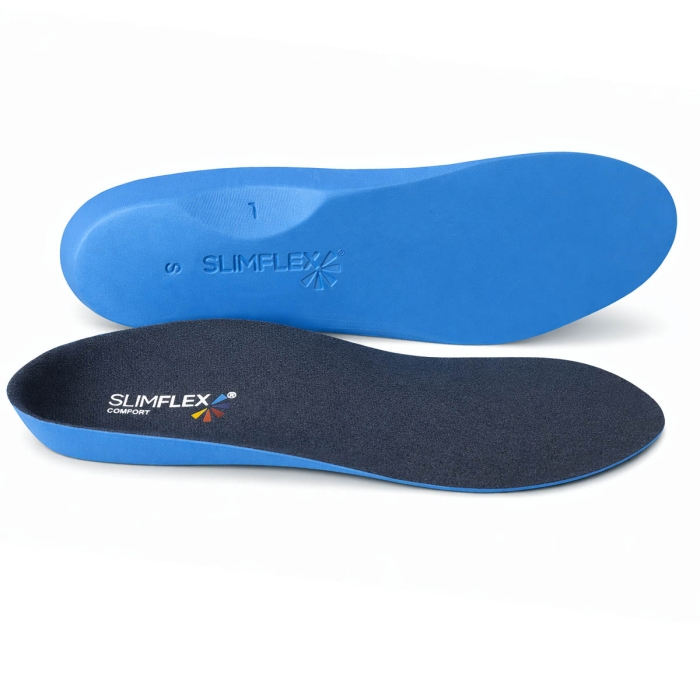
Slimflex Comfort Plantar Fasciitis Insoles - Medium Density for Most People
Plantar Fasciitis Insoles with medium-density orthotic support – balanced cushioning and stability suitable for most foot conditions.
Deep heel cup helps stabilise the rearfoot and improve foot alignment.
Easily customised with wedges, posts and adjustments.
Trusted by UK podiatrists and stocked within the NHS.
Sold: Sold per Pair
Incl. VAT Exl. VAT
Product Description
Slimflex Comfort - Medium Density: The NHS's preferred everyday insole for multiple foot conditions
A medium-density foot orthotic designed for people who need more than basic cushioning but do not necessarily need a very firm device. It combines structured arch and heel support with everyday comfort, making it a practical option for plantar fasciitis, heel pain, flat feet, overpronation and general biomechanical strain.
The deep heel cup helps steady the rearfoot, while the EVA shell supports foot alignment and helps reduce stress through the plantar fascia. For clinicians, the flat base, heat-mouldable shell and grindable construction also make it a flexible chairside option for posting and adjustment.
Key Selling Points
- Medium-density support that balances control and day-to-day comfort
- Deep heel cup to help stabilise the rearfoot and improve alignment
- EVA shell for structured orthotic support under the heel and arch
- Brush nylon top cover for a softer feel in everyday footwear
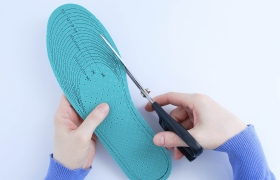
- Heat mouldable and grindable for chairside clinical modification
- Flat base suitable for wedges, posts, heel lifts and metatarsal additions
- Suitable for a broad range of common foot and lower limb presentations
- Frequently prescribed by UK podiatrists and stocked within the NHS
Why This Density Matters
Medium density is often the most versatile starting point when a patient needs support, but not an especially aggressive orthosis. It offers more control than a soft comfort insole, while remaining easier to tolerate than a firmer device for many everyday users.
This makes it well suited to mixed use cases such as daily walking, work footwear and general symptom management where comfort and compliance matter just as much as biomechanical support.
What It Does and How It Works
This orthotic works by supporting the foot rather than simply padding it. The EVA shell sits beneath the foot to help guide load more evenly through the heel and arch, while the deep heel cup helps steady rearfoot motion during standing and walking.
For people with plantar fasciitis, this matters because excessive motion and poor control at heel strike can increase strain through the plantar fascia. By improving rearfoot stability and supporting the foot’s structure, the insole can help reduce repeated stress on irritated tissues and improve walking comfort over time.
It is also useful beyond plantar heel pain. The same combination of arch support, heel control and modifiable geometry can be valuable where clinicians need a prefabricated orthotic that can be adapted for broader biomechanical management.
Common Problems It May Help With
Plantar fasciitis and heel pain
Helps reduce strain through the plantar fascia by improving heel control and supporting the arch during walking and standing.
Flat feet and overpronation
Provides structured support that can help control excessive inward motion and improve foot stability inside the shoe.
Posterior tibial tendon dysfunction
Supports the medial arch and may help reduce load where foot collapse is contributing to discomfort or fatigue.
High arches and pressure-related fatigue
Can help improve contact and stability under the foot, which may make walking and standing more comfortable in supportive footwear.
Shin splints and lower limb strain
Better foot alignment can reduce unwanted stress travelling up the kinetic chain during repeated daily activity.
Lateral ankle instability
The deep heel cup helps improve rearfoot control, which may support a steadier base during gait.
Applications and Suitability
This orthotic is suitable for retail dispensing, podiatry practice and general everyday use where a supportive full-length insole is needed. It can be worn straight from the pack, but it also suits clinical environments where the device may need to be posted, wedged, heat adjusted or otherwise modified.
- People with plantar fasciitis who need structured support rather than soft cushioning alone
- Users looking for an orthotic that works in trainers, walking shoes and supportive work footwear
- Clinicians who want a prefabricated base that can be altered chairside
- Patients who need a balanced device for common biomechanical presentations
- Everyday users who want one orthotic for long periods of standing, walking and routine use
Because medium-density orthoses are suitable for a large proportion of users, this is often a sensible choice when comfort, tolerability and support all need to be considered together.
Who It May Not Suit
This device is not the best choice for every foot or every shoe. A firmer, softer, shorter or more specialised device may be more appropriate depending on symptoms, footwear and clinical need.
- People who require a very firm orthosis for higher levels of control
- People who need a softer device for very sensitive feet or low tolerance to structured support
- Users wearing shallow, tight or highly fashion-led shoes with limited internal depth
- Patients with complex foot deformity, severe gait issues or cases needing fully custom orthotic management
- Anyone with diabetes, circulation concerns or significant foot pathology who has not yet had professional assessment
Slimflex Comfort



Product Specifications
| Product name | Slimflex Comfort Orthotic Insoles |
|---|---|
| Orthotic density | Medium density |
| Shell material | EVA foam |
| Top cover | Brush nylon fabric |
| Heel design | Deep heel cup for rearfoot control |
| Modification | Heat mouldable and grindable |
| Posting compatibility | Flat base suitable for wedges and posts |
| Dispensing | Retail packed |
| Clinical use | Prescribed by UK podiatrists and stocked within the NHS |
| Supply format | Sold per pair |
Usage Instructions
- Remove the existing insole from the shoe where possible.
- Place the orthotic flat inside the footwear and check that the heel sits fully back in the shoe.
- Wear for short periods at first, then build up use gradually over several days as the foot adapts to the support.
- For best results, use in shoes with removable insoles and enough depth to accommodate a full-length orthotic comfortably.
- Where clinically indicated, the device can be heat moulded, ground or modified with posts, wedges, heel lifts or metatarsal additions.
Supportive trainers, walking shoes and work footwear are usually the easiest fit. Very shallow or tight shoes may reduce comfort or prevent the orthotic from sitting correctly.
Benefits
Better heel control
The deep heel cup helps steady the rearfoot and can reduce excessive motion that contributes to tissue strain.
Balanced support
Medium-density EVA gives a useful middle ground between comfort and control, which improves day-to-day wearability.
Everyday comfort
The brush nylon top cover gives a softer interface against the foot and supports routine daily use.
Clinical flexibility
The flat base and modifiable shell make it easier to adapt for individual biomechanical requirements.
Broad suitability
Useful across a wide range of common presentations including plantar fasciitis, flat feet, high arches and lower limb strain.
Trusted orthotic format
Regularly used in clinical settings where a reliable prefabricated orthotic is needed for both dispensing and treatment planning.
Contraindications & Warnings
- If you have diabetes, circulation problems or significant foot deformity, seek professional advice before use.
- Discontinue use and seek assessment if pain increases, rubbing develops or symptoms do not improve.
- This product may not be suitable for shallow footwear or shoes without enough internal depth.
- Where symptoms are severe, persistent or changing, orthotic use should not replace professional diagnosis.
Frequently Asked Questions
Are these insoles actually suitable for plantar fasciitis?
Yes, they are specifically positioned as a plantar fasciitis orthotic and the design supports that use well. The deep heel cup and structured arch support help reduce strain through the plantar fascia, which is often one of the main goals when managing plantar heel pain.
They are best thought of as a supportive orthotic rather than a soft comfort insole. That makes them more useful for people who need control and stability as well as cushioning.
What does medium density feel like compared with a soft insole or a firm orthotic?
Medium density usually feels more supportive than a soft comfort insole and less aggressive than a firmer corrective device. It is often a good middle-ground option for users who need structure but still want something wearable in day-to-day footwear.
For many people, that balance makes it easier to stay consistent with wear. Consistency matters because even a well-designed orthotic will not help much if it is uncomfortable and left in the cupboard.
Can these be modified by a clinician?
Yes. The orthotic is heat mouldable and grindable, and the flat base is suitable for wedges, posts, heel lifts and metatarsal additions.
That makes it useful in clinic where a prefabricated device needs to be adapted quickly for individual biomechanics. It can also be dispensed as supplied when modification is not required.
What type of footwear works best with this orthotic?
They usually work best in footwear with removable insoles and enough internal depth to accept a full-length orthotic properly. Trainers, walking shoes and supportive work footwear are typically the easiest fit.
Very shallow shoes, tight dress shoes and footwear with little internal space may not accommodate the orthotic comfortably. Fit inside the shoe is just as important as the orthotic itself.
Who is this product most suitable for?
It is a good option for people with plantar fasciitis, heel pain, flat feet, overpronation and other common biomechanical issues who need a supportive full-length orthotic. It also suits clinics and practitioners who want a modifiable medium-density device for broad day-to-day use.
Because medium-density orthoses are often appropriate for a large proportion of users, this style is commonly chosen where there is no clear reason to go especially soft or especially firm at the outset.
When should someone look for a different orthotic instead?
A different orthotic may be better where the user needs either much firmer control, much softer accommodation, a 3/4 length profile or a more custom-led solution. Footwear limitations can also make another style more suitable.
People with significant deformity, complex pathology or poor tolerance to standard prefabricated devices are usually better served by professional assessment and a more tailored orthotic plan.
Can these help with flat feet and overpronation as well?
Yes. The design is not limited to plantar fasciitis and is also used for flat feet, overpronation and related lower limb issues where improved alignment and rearfoot control are useful.
That wider suitability makes it a practical option when symptoms overlap. Many users with heel pain also have broader biomechanical factors that need managing at the same time.
Do I need to break them in gradually?
Yes, that is usually the best approach with supportive orthotics. Start with shorter wear periods and increase gradually to allow the feet, lower limbs and footwear fit to adapt properly.
This is especially helpful for first-time orthotic users or anyone moving from a soft flat insole to a more supportive device. A gradual break-in period can improve comfort and long-term compliance.
Related Links
Product Summary
Slimflex Comfort Plantar Fasciitis Insoles are medium-density EVA orthotic insoles designed to provide balanced support, heel control and everyday comfort. With a deep heel cup, brush nylon top cover and flat modifiable base, they are suitable for plantar fasciitis, heel pain, flat feet, overpronation and other common biomechanical problems.
They can be worn as supplied or clinically modified with wedges and posts, making them suitable for both everyday users and practitioners who need a dependable prefabricated orthotic. Best used in footwear with removable insoles and adequate depth, they offer a versatile solution where comfort and control need to work together.
Frequently bought together
Sold: Sold per Pair
Incl. VAT Exl. VAT
Sold: Sold per Pair
Incl. VAT Exl. VAT
Sold: Pack of 10
Incl. VAT Exl. VAT
Sold: 5 Pairs
Incl. VAT Exl. VAT
Sold: Pair
Incl. VAT Exl. VAT
Sold: Sold per Pair
Incl. VAT Exl. VAT
Sold: Sold per Pair
Incl. VAT Exl. VAT
Sold: Pair
Incl. VAT Exl. VAT
Sold: 5 Pairs
Incl. VAT Exl. VAT
Sold: Sold per Pair
Incl. VAT Exl. VAT
Sold: Sold per Pair
Incl. VAT Exl. VAT
Sold: Sold per Pair
Incl. VAT Exl. VAT
Sold: Sold per Pair
Incl. VAT Exl. VATSold: Sold per Pair
Incl. VAT Exl. VAT
Sold: Sold per Pair
Incl. VAT Exl. VAT
Sold: Sold per Pair
Incl. VAT Exl. VAT
Sold: Pair
Incl. VAT Exl. VAT
Sold: Sold per Pair
Incl. VAT Exl. VAT
Sold: Sold per Pair
Incl. VAT Exl. VAT
Sold: Pack of 6
Incl. VAT Exl. VAT
Sold: Sold per Pair
Incl. VAT Exl. VAT
Sold: Sold per Pair
Incl. VAT Exl. VAT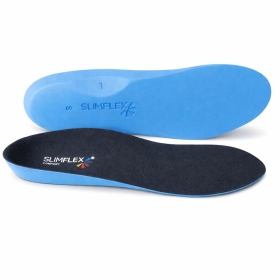
Sold: Sold per Pair
Incl. VAT Exl. VAT
Sold: Pack of 5 Pairs
Incl. VAT Exl. VAT
Sold: Pack of 10 pairs
Incl. VAT Exl. VAT






Sold: Sold per Pair
Incl. VAT Exl. VAT