





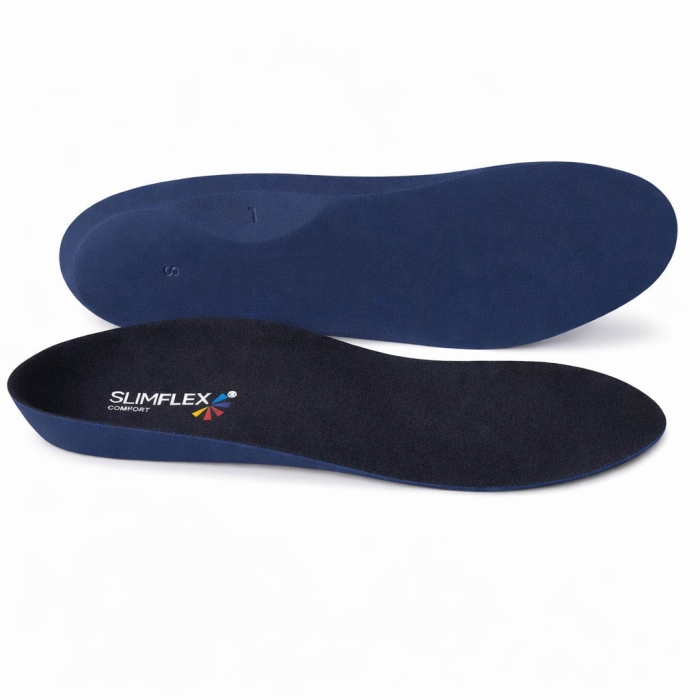
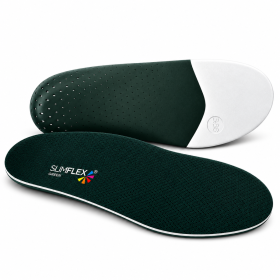
Slimflex Comfort Plantar Fasciitis Insoles - High Density for Heavier Users and Sports
Our highest density insoles from Slimflex provide maximum foot control and arch support for highly pronated feet (flat feet).
Flat base for adhering wedging and lifts.
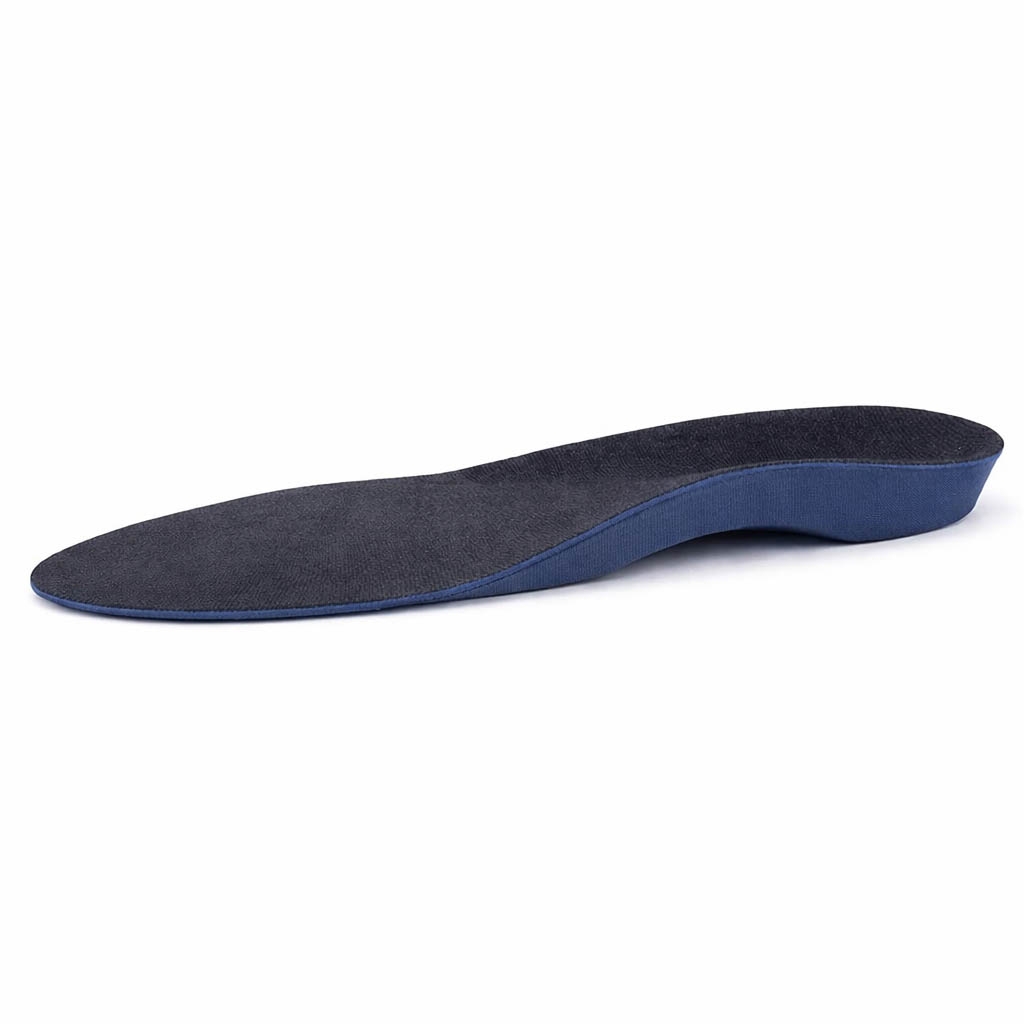
Deep heel cup for greater heel control.
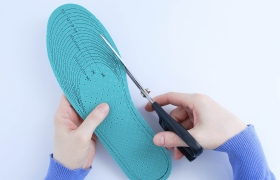
Fully heat mouldable and grindable.
Sold: Sold per Pair
Incl. VAT Exl. VAT
Product Description
Slimflex Comfort Plantar Fasciitis Insoles - High Density
These firm full-length orthotic insoles are designed for people who need stronger foot control, reliable arch support and better rearfoot stability in everyday footwear. They are particularly suited to active users, heavier patients and anyone who needs a more structured alternative to soft cushioning insoles.
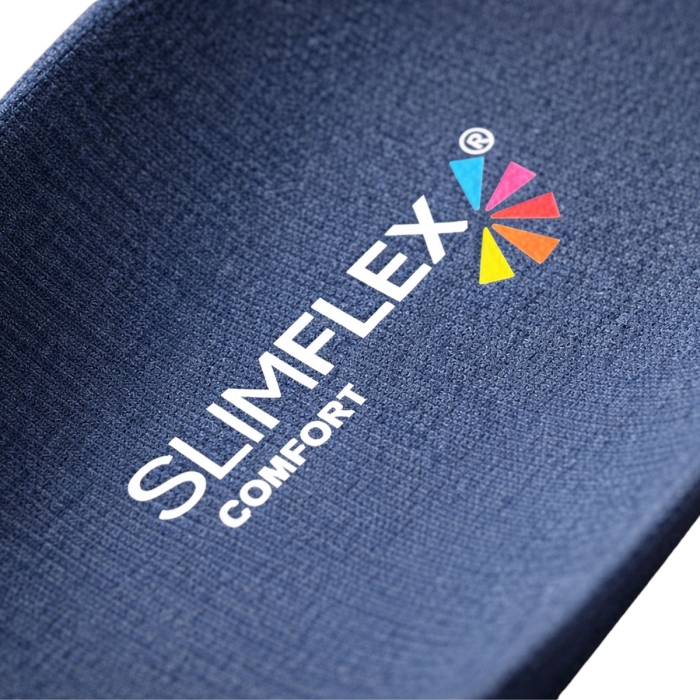
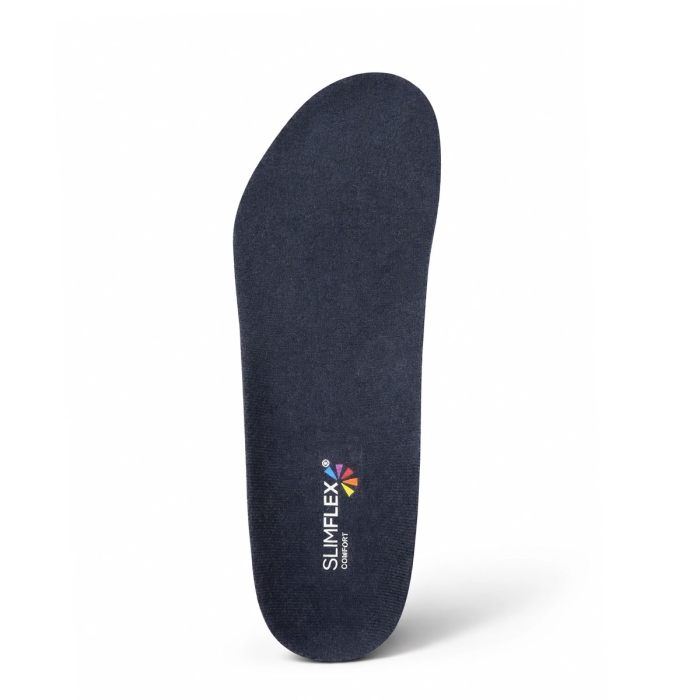
The high-density EVA construction helps support foot alignment, manage excessive pronation and improve stability through the heel and arch. For users dealing with plantar fasciitis, flat feet, overpronation or activity-related foot strain, this insole offers a more controlling orthotic profile with a slimline fit and a comfortable brush nylon top cover.
Key Selling Points
Maximum support for stronger control needs
The firm high-density construction is designed for users who need more structure than a soft comfort insole can provide.
Deep heel cup for improved stability
A deep rearfoot cradle helps position the heel more securely and supports steadier foot function during walking.
Full-length orthotic support
The full-length format helps support the foot through the arch and forefoot while still fitting many everyday shoes with removable insoles.
Clinic-friendly and modifiable
Heat mouldable and grindable construction allows chairside adjustment, with a flat base suitable for lifts, wedges and posting where needed.
What It Does and How It Works
This orthotic works by combining a firm supportive shell with a contoured foot shape that helps guide the foot into a more controlled position inside the shoe. Instead of only adding softness underfoot, it supports the arch, stabilises the heel and helps manage the excessive motion that can overload soft tissues during gait.
The deep heel cup helps improve heel positioning, while the arch profile supports the medial side of the foot and helps reduce collapse through the midfoot. This may help reduce strain associated with plantar fascia overload, Achilles tendon stress and other conditions linked with poor foot control or repeated pronation.
Common Problems It May Help With
Plantar fasciitis
Firm arch support and rearfoot control may help reduce strain on the plantar fascia during standing and walking.
Flat feet and overpronation
The orthotic profile is designed to improve foot alignment and reduce excessive inward rolling of the foot.
Achilles tendon loading issues
By improving foot control, the insole may help reduce excessive forces that can contribute to tendon strain.
Hallux limitus and mild hallux rigidus
A firmer structure may help support gait mechanics where reduced first toe joint function is affecting comfort.
Shin splints and lower-limb fatigue
Improved control through the foot and heel can support more efficient loading during daily activity and sport.
Lateral ankle instability
A more stable rearfoot platform may help improve confidence and control in users who feel unsteady through the heel.
Applications and Suitability
- Suitable for active users who need firmer biomechanical support during daily walking, work or sport.
- Well suited to heavier individuals who often need more structural control from an orthotic device.
- Useful for people with plantar fasciitis, flat feet, overpronation or arch collapse.
- Can be used by clinicians as a prefabricated orthotic that is ready to dispense or adapt chairside.
- Suitable for many everyday shoes, trainers and work footwear with enough internal depth and, ideally, removable insoles.
- Helpful where a slimline but firm orthotic is preferred over a soft cushioning insert.
Who It May Not Suit
- Not ideal for users looking primarily for soft cushioning or shock absorption.
- May feel too firm for very sensitive feet or for people who struggle to tolerate structured orthoses.
- Not the best first choice where footwear has very limited depth or cannot accommodate a full-length orthotic.
- Anyone with severe deformity, ulceration, unexplained pain or complex foot pathology should seek professional assessment before use.
.
Product Specifications
| Product type | Prefabricated full-length orthotic insole |
|---|---|
| Material | High-density EVA (A65) |
| Top cover | Brush nylon comfort fabric |
| Support profile | Firm orthotic support for stronger foot control |
| Heel support | Deep heel cup for rearfoot stability |
| Design | Full-length slimline orthotic insole |
| Modifiability | Heat mouldable and grindable |
| Base | Flat base suitable for wedges, lifts and posting |
| Supply | Sold as a pair |
| Typical use | Everyday wear, active use and clinic-based orthotic adaptation |
Usage Instructions
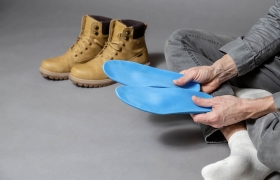
- Remove the existing insole from the shoe where possible.
- Place the orthotic into the footwear with the fabric side facing upward.
- Ensure the heel of the insole sits fully back into the heel area of the shoe.
- Begin with short periods of wear and build up gradually, especially if you are new to firm orthotic support.
- Check comfort, fit and shoe depth before extended daily use.
- Seek clinical advice if symptoms persist, worsen or if further modification is required.
Benefits
Improves foot control
The firm EVA shell helps reduce excessive pronation and gives a more stable base during gait.
Supports heel and arch alignment
The heel cup and contoured profile work together to support more balanced loading through the foot.
Fits many everyday shoes
The slimline full-length design is easier to accommodate than bulkier orthotics in many standard shoe types.
Adaptable for professional use
Its heat mouldable and grindable construction makes it practical for clinicians who need a modifiable prefabricated base.
Suitable for higher support demands
This is a useful option where softer insoles are not giving enough control for activity level, body weight or foot mechanics.
Comfort finish for regular wear
The brush nylon top cover helps improve day-to-day wearability without losing the firm structural feel underneath.
Contraindications & Warnings
- This is a very firm orthotic and may not suit users seeking a soft comfort insole.
- People with diabetes, circulatory problems, neuropathy, ulcers or complex foot conditions should use orthotic devices under professional guidance.
- Discontinue use if irritation, rubbing, increased pain or pressure areas develop.
- Persistent foot, ankle or lower-limb pain should be assessed by a qualified healthcare professional.
FAQs
Who are these insoles best suited to?
They are best suited to people who need firm orthotic control rather than soft cushioning. This includes users with overpronation, flat feet, plantar fasciitis or higher support needs linked to activity level or body weight.
Are they good for plantar fasciitis?
They are designed to support the arch and stabilise the heel, which may help reduce mechanical strain linked with plantar fascia overload. They are particularly useful for users who need a firmer, more controlling orthotic rather than a soft padded insert.
How firm are these compared with comfort insoles?
These are significantly firmer than standard cushioning insoles because they are built for structural control. The top cover adds comfort, but the overall feel remains supportive and purposeful rather than soft or squishy.
Can they help with flat feet and overpronation?
Yes, that is one of their main uses. The orthotic profile is designed to support the arch and improve rearfoot control, which can help manage excessive inward rolling of the foot.
Will they fit in most shoes?
They have a slimline shape, so they will fit many everyday shoes, trainers and work shoes. Shoes with removable insoles and reasonable depth usually give the best fit and make the orthotic easier to position correctly.
Can clinicians modify these insoles?
Yes, they are heat mouldable and grindable, making them suitable for chairside adaptation. The flat base also allows the addition of lifts, wedges and other posting components where clinically appropriate.
Are they suitable for heavier or very active users?
Yes, this type of high-density orthotic is often chosen where greater structural support is needed. The firmer construction is better able to provide control for users who place higher loads through the foot.
Do they need a break-in period?
Usually yes, especially if you are moving from a soft insole to a firm orthotic. Wearing them for shorter periods at first helps your feet and lower limbs adjust more comfortably to the new support profile.
Related Links
Product Summary
Slimflex Comfort Plantar Fasciitis Insoles - High Density are firm full-length orthotic insoles designed for stronger foot control, arch support and heel stability. They are suited to active users, heavier patients and people with plantar fasciitis, flat feet or overpronation who need a slimline but highly supportive orthotic that can also be modified in clinic when required.
Frequently bought together
Sold: Sold per Pair
Incl. VAT Exl. VAT
Sold: Sold per Pair
Incl. VAT Exl. VAT
Sold: Sold per Pair
Incl. VAT Exl. VAT
Sold: Sold per Pair
Incl. VAT Exl. VAT
Sold: Sold per Pair
Incl. VAT Exl. VAT
Sold: Sold per Pair
Incl. VAT Exl. VATSold: Sold per Pair
Incl. VAT Exl. VAT
Sold: Pair
Incl. VAT Exl. VAT
Sold: 5 Pairs
Incl. VAT Exl. VAT
Sold: Sold per Pair
Incl. VAT Exl. VAT
Sold: Sold per Pair
Incl. VAT Exl. VAT
Sold: Pair
Incl. VAT Exl. VAT
Sold: Sold per Pair
Incl. VAT Exl. VATSold: Sold per Pair
Incl. VAT Exl. VAT
Sold: Sold per Pair
Incl. VAT Exl. VAT
Sold: Sold per Pair
Incl. VAT Exl. VAT
Sold: Pack of 10 pairs
Incl. VAT Exl. VAT
Sold: Sold per Pair
Incl. VAT Exl. VAT
Sold: Sold per Pair
Incl. VAT Exl. VAT
Sold: Sold per Pair
Incl. VAT Exl. VAT
Sold: Sold per Pair
Incl. VAT Exl. VAT
Sold: Pack of 10
Incl. VAT Exl. VAT
Sold: Pair
Incl. VAT Exl. VAT
Sold: Each
Incl. VAT Exl. VAT



Sold: Sold per Pair
Incl. VAT Exl. VAT