




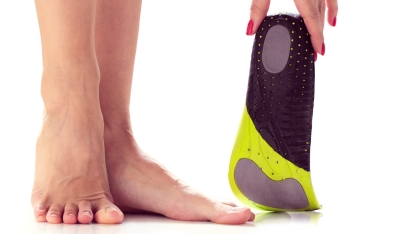
Why You Should Avoid High Street Insoles (and What to Choose Instead)
A research-led, high-level consumer guide to getting real support - without falling for 'one-size-fits-most' marketing.
High street insoles are mass-market inserts sold in general retail (pharmacies, sports chains, supermarkets, generic online marketplaces). They usually aim for broad appeal rather than a precise match to your foot type, biomechanics and symptoms.
If you’ve got sore feet, the high street is convenient. Pop in, grab a pair that says 'arch support', and hope for the best. The problem is that foot pain is rarely that simple - and research suggests it’s common and meaningful: population studies report foot pain prevalence estimates ranging from 17% to 30%. (Journal of Foot and Ankle Research, 2018)
“Foot pain is reported as common in the general population with prevalence estimates… ranging from 17 to 30%.” Journal of Foot and Ankle Research (background). Source: link.springer.com/article/10.1186/s13047-018-0290-1
So yes, lots of people try high street insoles. And yes, some people feel a bit better for a while. But if your goal is reliable support -not just a temporary 'ahh' - there are several evidence-backed reasons to be cautious.
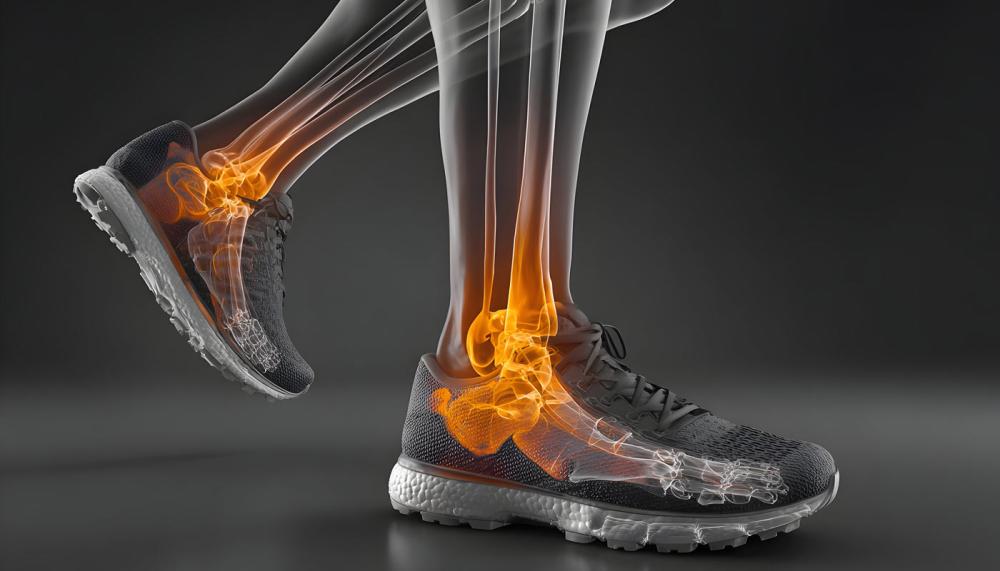
1) Generic design can’t reliably match your biomechanics
High street insoles are built for the average foot. Real feet are… not average. Arch height, heel alignment, flexibility, pressure points, and walking pattern vary enormously. This matters because supportive insoles don’t just 'pad' the foot - they influence how forces move through the foot and up the chain.
If an insole doesn’t match your mechanics, it may do nothing - or worse, shift load into the wrong areas. That can mean persistent heel pain, irritated arches or new discomfort in the ankles, knees, hips or lower back.
Evidence summaries for plantar heel pain (including plantar fasciitis) consistently treat orthoses as purposeful interventions with defined design intent (shape, stiffness, contour, heel cup, etc.). Retail inserts often don’t disclose these parameters clearly, making it difficult for consumers to choose appropriately - or for clinicians to recommend them with confidence. (NHS Scotland evidence portal)
Source: rightdecisions.scot.nhs.uk/the-orthotics-evidence-portal/adult-musculoskeletal/areas-of-the-body/plantar-heel/evidence-for-orthotic-treatment-of-the-plantar-heel/
2) 'Soft and comfy' can be a trap (support fades when materials compress)
High street products often sell comfort first: squishy foam, gel pads, plush top covers. Comfort is great, but support requires structure - and structure depends on material performance over time. Look at Poron Urethanes for evidence.
Research on insole/orthosis materials (including EVA) highlights that properties like hardness influence comfort and how loads are handled at the foot–insole interface, meaning material choice isn’t cosmetic; it’s functional. (Heliyon review/overview)
Source: sciencedirect.com/science/article/pii/S2405844021005867
What you feel: the insole seems “flat”, the arch feels softer, and pain starts creeping back.
What’s happening: cushioning materials fatigue and the insole’s support profile changes. Support should be judged by performance after weeks of use—not just how it feels in the shop for 30 seconds.
3) Evidence supports targeted selection - not random selection
Here’s the nuanced truth: not all off-the-shelf devices are useless. Clinical trials often compare prefabricated orthoses, custom orthoses, and sham (placebo) insoles—showing that design intent and matching matter.
A randomised controlled trial in plantar heel pain compared custom foot orthoses, prefabricated orthoses, and sham inserts—reflecting an important point: people don’t just need “an insole”; they need the right intervention for their condition. (JAPMA RCT)
Source: japmaonline.org/abstract/journals/apms/105/4/13-122.1.xml
Another RCT comparing customised and prefabricated EVA orthoses for plantar fasciitis over 8 weeks reported no significant difference in pain between the two—suggesting that a well-chosen prefabricated orthosis can be a valid first-line option. But that still doesn’t validate generic high street buys: it supports purposeful, evidence-informed prefabricated orthoses. (Arch Phys Med Rehabil, 2009)
Source: sciencedirect.com/science/article/pii/S0003999309000677
| Option | Typical goal | Strengths | Common pitfalls |
|---|---|---|---|
| Basic high street 'comfort' insole | Extra cushioning | May reduce pressure points briefly | Often lacks a stable heel cup/arch structure; unclear specs; compresses quickly |
| Quality prefabricated orthotic (matched to need) | Support + alignment + load redistribution | Good first-line option for many; predictable geometry | Still needs correct sizing/footwear compatibility |
| Custom orthoses (clinically assessed) | Individualised biomechanics | Tailored control/support; useful for persistent/complex cases | Higher cost; depends on assessment quality and adherence |
4) The 'cheap now' option can cost more later
Buying bargain insoles repeatedly can add up. But the bigger cost is time: persistent pain limits activity, disrupts work, and encourages compensation.
Survey analyses of diagnosed plantar fasciitis pain reported 0.85% prevalence and, among those affected, substantial day-to-day impact—over 61% reported daily pain and almost 54% reported interference with normal work. (NCCIH summary of Journal of Pain analysis)
“More than 61% reported having pain every day… and almost 54% reported that their pain interfered with normal work activities.” NCCIH research summary. Source: nccih.nih.gov/research/research-results/analysis-of-data-on-the-prevalence-and-pharmacologic-treatment-of-plantar-fasciitis-pain
If pain is severe, sudden, associated with swelling/heat, numbness, or you can’t weight-bear - don’t self-treat with insoles. Get assessed promptly (podiatry, physiotherapy, GP, or urgent care depending on symptoms).
5) Marketing often blurs 'comfort' and 'orthotic' (they’re not the same)
In clinical and research contexts, orthoses are devices intended to alter function: improve alignment, reduce strain on specific tissues, and redistribute pressure. Many high street products borrow clinical language without offering clinical-level specificity.
Green flags (worth paying for)
- Structured arch profile and stable heel cup
- Materials that match your use (work boots vs trainers vs dress shoes)
- Clear sizing + fitting instructions
- Condition-led selection (e.g., plantar heel pain vs forefoot pain)
Red flags (classic high street pitfalls)
- 'One insole for everyone' claims with minimal design detail
- Ultra-soft feel presented as “arch support”
- No guidance on footwear compatibility or symptom matching
- Slipping, bunching, or rapid flattening
What to choose instead: a staged, sensible approach
You don’t always need custom orthoses immediately. A sensible, evidence-informed approach looks like this:
- Define the problem: heel pain, arch pain, forefoot pain, fatigue, or general cushioning.
- Check the basics: footwear fit, heel counter stability, midsole wear, and shoe suitability.
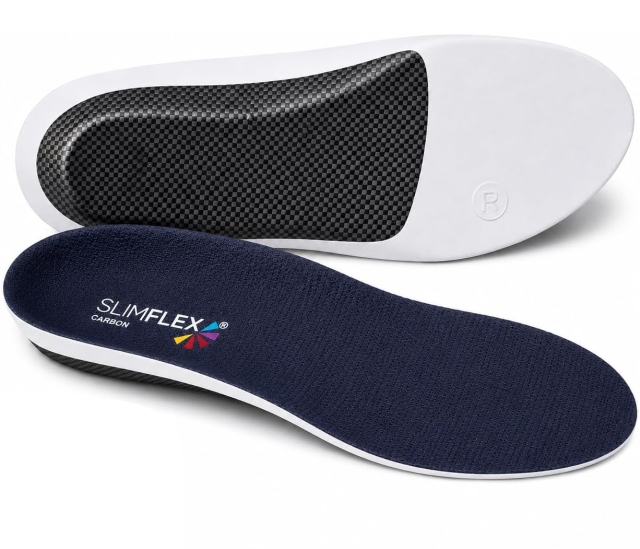
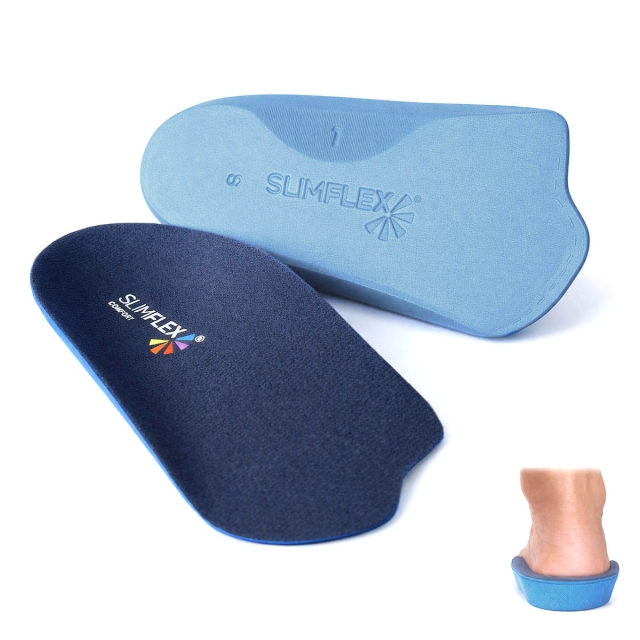
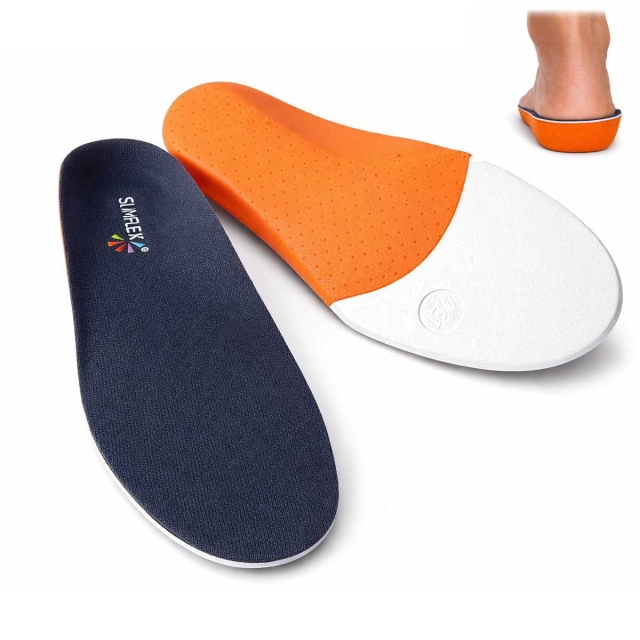
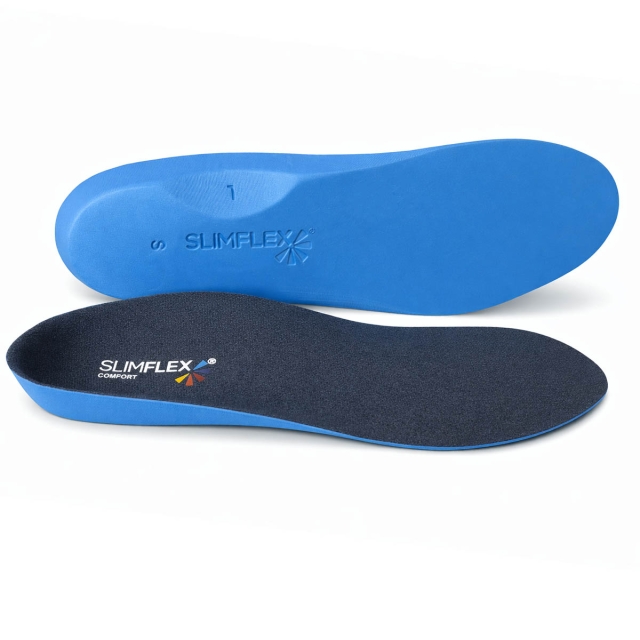
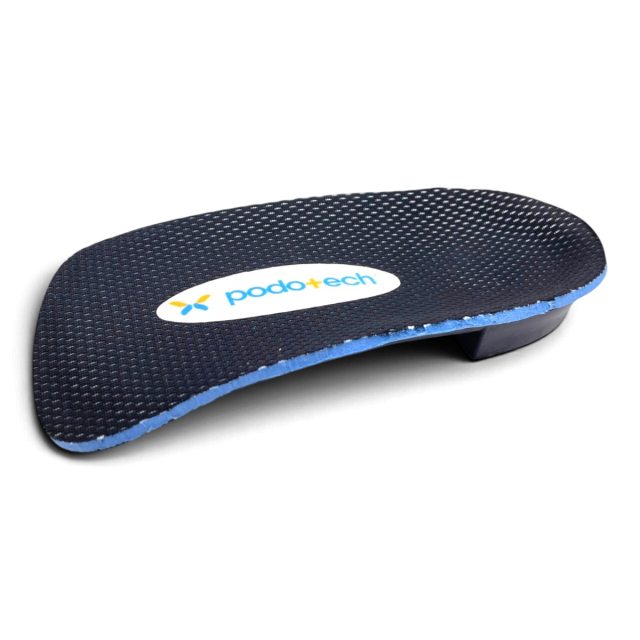
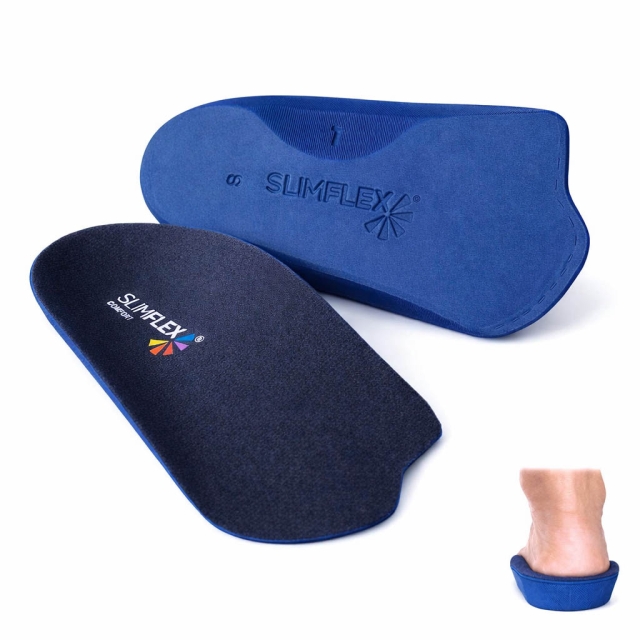
- Start with a quality prefabricated orthotic matched to your need: stable heel cup + appropriate arch contour + durable materials.
- Review at 2–6 weeks: pain trend, daily function, comfort, and whether the insole is holding its shape.
- Escalate if needed: persistent symptoms, recurrent pain, complex biomechanics, or multiple joints affected.
| Self-check | What good looks like | If not… |
|---|---|---|
| Support after a full day? | Arch/heel still stable; comfort lasts | Material too soft or fatiguing—move to more structured support |
| Is pain trending down weekly? | Less morning pain + less end-of-day ache | Reassess fit/footwear/diagnosis; consider clinician input |
| Does it fit your shoes properly? | No heel lift, toe crowding, or slipping | Choose a lower-volume orthotic or different footwear |
| Any new knee/hip/back pain? | No new discomfort | Stop and reassess—your mechanics may be shifting poorly |
Higher-stakes note: If you have diabetes, neuropathy, inflammatory arthritis, or a history of ulcers, pressure management is more complex - seek professional advice rather than experimenting.
FAQ
Are all high street insoles bad?
Not always. Some are fine for mild comfort and reducing shoe friction. The problem is relying on generic inserts to solve a biomechanical or tissue-load problem (e.g., plantar heel pain) without matching the insole to your needs.
Do I need custom orthotics for foot pain?
Not necessarily. Many people improve with high-quality prefabricated orthoses matched to their symptoms and footwear, plus exercise and shoe changes. Custom devices are more relevant when symptoms persist or biomechanics are complex.
How long should supportive insoles last?
It varies by materials, body weight, activity, and footwear. A practical rule: if the cushioning feels “dead”, the arch collapses, or pain returns, the insole is no longer doing the job and should be reviewed or replaced.
What should I look for in a good orthotic insole?
A stable heel cup, a structured arch profile suitable for your foot, durable materials, the right thickness/volume for your shoes, and guidance on choosing based on (a) symptoms and (b) activity level.
Key takeaways
- High street insoles tend to be generic and inconsistent—OK for comfort, unreliable for true support.
- Soft does not automatically mean supportive; structure and durability matter.
- Evidence supports orthoses in conservative care for plantar heel pain, and well-chosen prefabricated devices can be a strong starting point.
- Use a staged approach: footwear + quality orthotic + reassessment, then escalate if needed.
References
- Journal of Foot and Ankle Research (2018). Foot pain prevalence estimates 17–30%. Source: link.springer.com/article/10.1186/s13047-018-0290-1
- NCCIH (analysis summary). Prevalence and impact stats for plantar fasciitis pain (0.85% diagnosed with pain; 61% daily pain; ~54% interference with work). Source: nccih.nih.gov/research/research-results/analysis-of-data-on-the-prevalence-and-pharmacologic-treatment-of-plantar-fasciitis-pain
- NHS Scotland Right Decisions: evidence summary for orthotic treatment of plantar heel pain. Source: rightdecisions.scot.nhs.uk/the-orthotics-evidence-portal/adult-musculoskeletal/areas-of-the-body/plantar-heel/evidence-for-orthotic-treatment-of-the-plantar-heel/
- Baldassin V, Gomes CR, Beraldo PS. (2009). Prefabricated vs customised EVA orthoses for plantar fasciitis (Arch Phys Med Rehabil). Source: sciencedirect.com/science/article/pii/S0003999309000677
- Wrobel JS, et al. (2015). RCT comparing custom, prefabricated and sham insoles for plantar heel pain (JAPMA). Source: japmaonline.org/abstract/journals/apms/105/4/13-122.1.xml
- MDPI Life (2021). Systematic review on plantar fasciitis epidemiology. Source: mdpi.com/2075-1729/11/12/1287
- Heliyon (2021). Overview of design factors affecting foot–insole interface and material considerations. Source: sciencedirect.com/science/article/pii/S2405844021005867
- Frontiers in Pain Research (2023). Population burden of musculoskeletal pain (includes foot pain). Source: frontiersin.org/journals/pain-research/articles/10.3389/fpain.2023.1197810/full
Educational content only; not a substitute for personalised medical advice. If symptoms persist or worsen, seek clinical assessment.
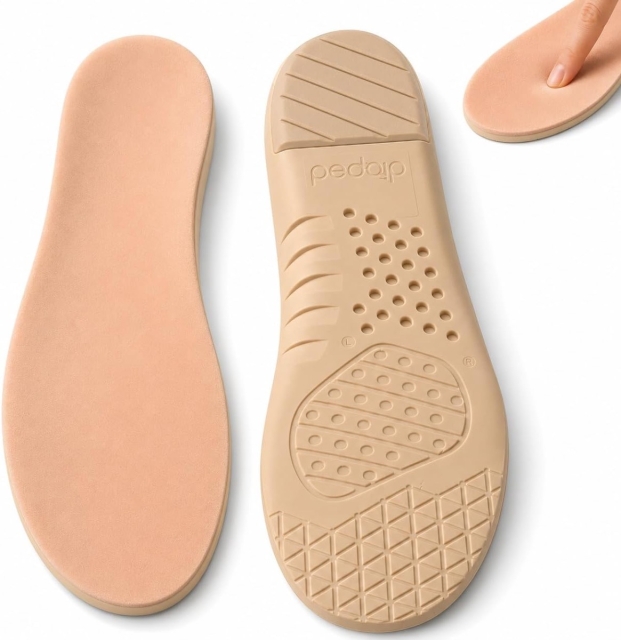
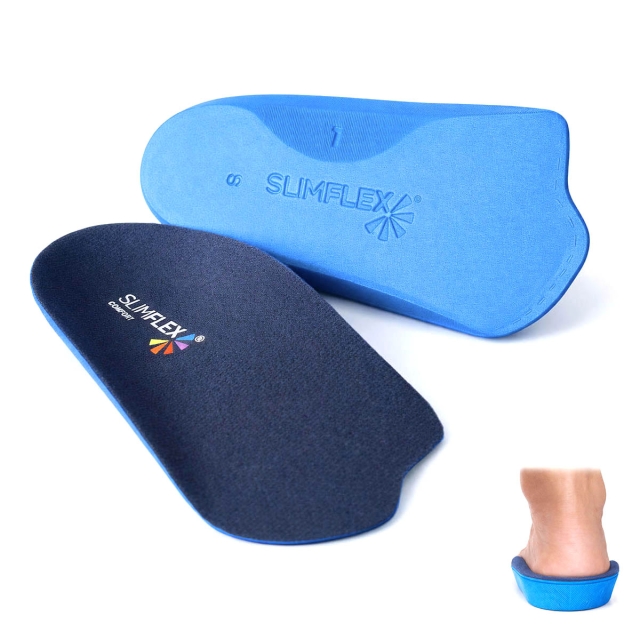
Sold: Sold per Pair
Incl. VAT Exl. VAT