




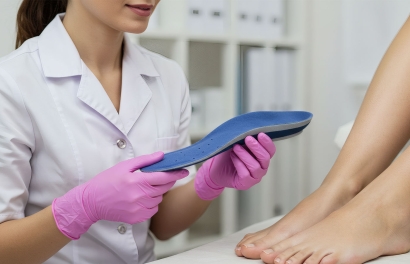
Plantar fasciitis is one of the most common causes of heel pain, often worst with the first steps in the morning. The right insole can reduce painful strain by supporting the arch, cushioning the heel and improving load distribution during standing and walking.
Definition
Plantar fasciitis (often described as plantar fasciopathy) is an overuse-related condition involving pain at or near the plantar fascia’s attachment at the heel. Symptoms typically include localised medial heel pain, tenderness and “start-up” pain with the first steps after rest.
How insoles work - and why they matter
Most plantar fascia pain is load-related. When the arch flattens excessively (overpronation) or the tissues are simply overloaded by standing, running, weight gain or sudden activity changes, the plantar fascia can be repeatedly strained. Supportive insoles aim to reduce that strain by:
- Supporting the medial arch to limit excessive elongation of the plantar fascia.
- Cushioning the heel to reduce peak impact at initial contact.
- Improving load distribution so pressure is spread more evenly across the foot.
- Influencing foot mechanics by altering rearfoot and midfoot motion where appropriate.
Evidence and clinical guidelines consistently place foot orthoses alongside exercise-based care, activity modification and supportive footwear in plantar heel pain management.
What users say
On Algeos product pages, many “Verified Customer” reviews are written by clinicians purchasing for patients or by active users managing day-to-day heel pain. These short comments are useful because they highlight real-world fit, comfort and tolerance across footwear types.
“These are not too expensive and are well tolerated by patients.”
Interpod Vari-Force Foot Orthotics review excerpt (Verified Customer).
“My choice for a heavier patient or for when force required.”
Interpod Vari-Force Foot Orthotics review excerpt (Verified Customer).
“I had to renew my insoles as I’d developed fasciitis in my right heel. The extra surround supports my heel well - so the product is helping with acute pain.”
Slimflex Green Orthotic Insoles review excerpt (Verified Customer).
“A must have insole to stock in any podiatry clinic.”
Slimflex Comfort LD 3/4 length review excerpt (Verified Customer).
“Good orthotics to use when bespoke not required. Allows easy addition of pads etc.”
Podotech Stars Sirius review excerpt (Verified Customer).
Top 5 Algeos insoles commonly selected for plantar fasciitis
Below are five options clinicians often choose based on symptom irritability, footwear constraints and the amount of control needed. Where possible, start with a device the patient will actually wear most days - consistency usually beats “perfect” biomechanics.
Interpod Vari-Force Foot Orthotics
A variable-force option designed for “patient-type” selection. Useful when you want a more supportive device for higher loads, sport or heavier patients, or a lower-force option for comfort-first prescription.
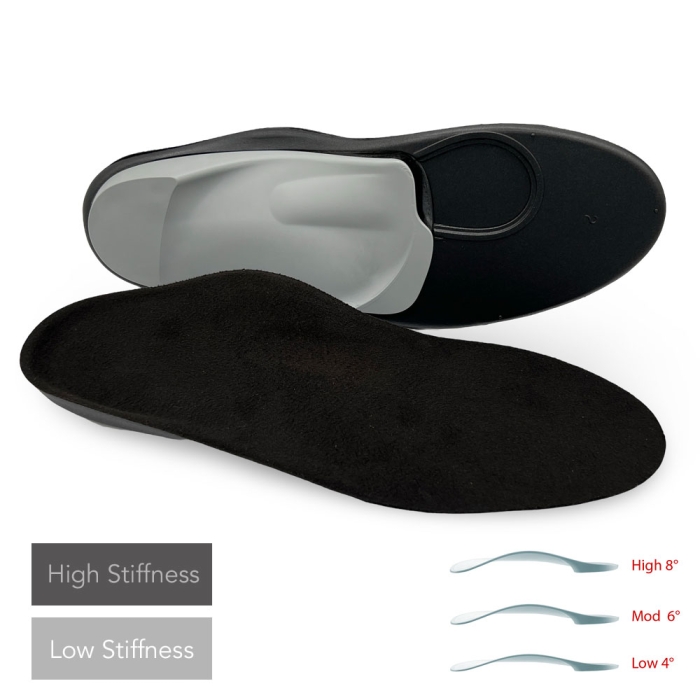
Review highlight: “These are not too expensive and are well tolerated by patients.”
Interpod Flex 6° Foot Orthotics with Heel Cup
A rigid device designed for situations where maximum control is required, including plantar fasciitis in higher-demand cases. The deeper heel cup can help stabilise rearfoot motion and improve comfort in more structured footwear.
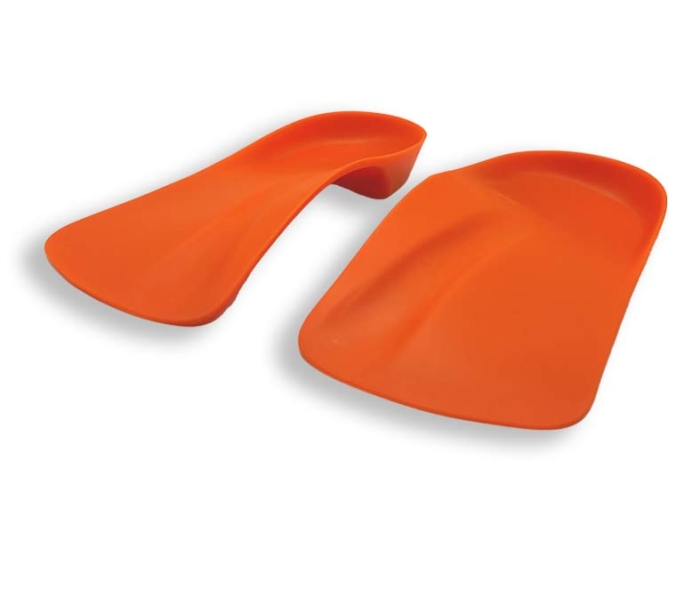
Review highlight: “Regularly use these devices with good results.”
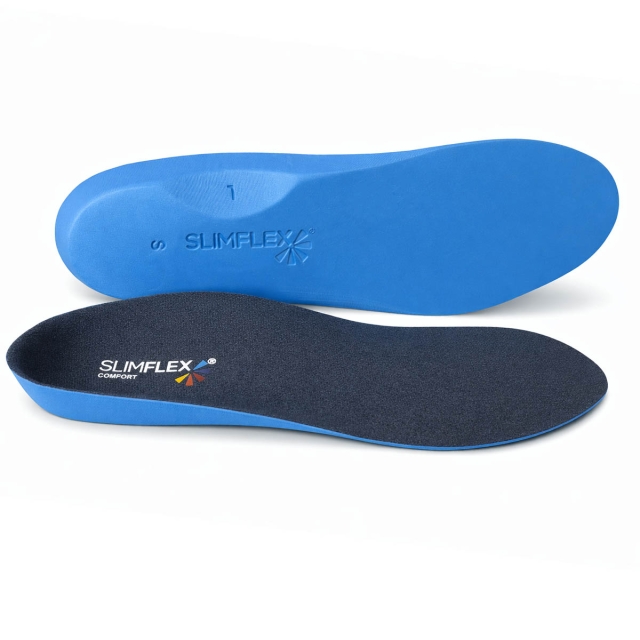
Slimflex Green Orthotic Insoles
A versatile option with integrated arch and heel support, positioned as a practical insole for plantar fasciitis and day-to-day discomfort. Often chosen when you want moderate support, broad footwear compatibility and good value for ongoing use.
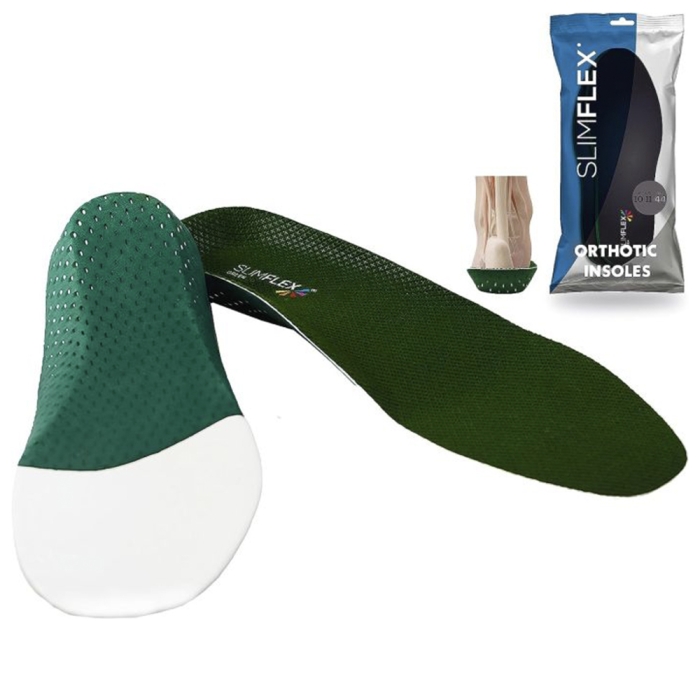
Review highlight: “The extra surround supports my heel well - so the product is helping with acute pain.”
Slimflex Amber Orthotic Insoles (rearfoot control and rigid arch contour)
A firmer option designed for rearfoot control and rigid arch support. Clinically, this is often selected when plantar fasciitis is being driven by significant overpronation and the patient tolerates a more controlling device.
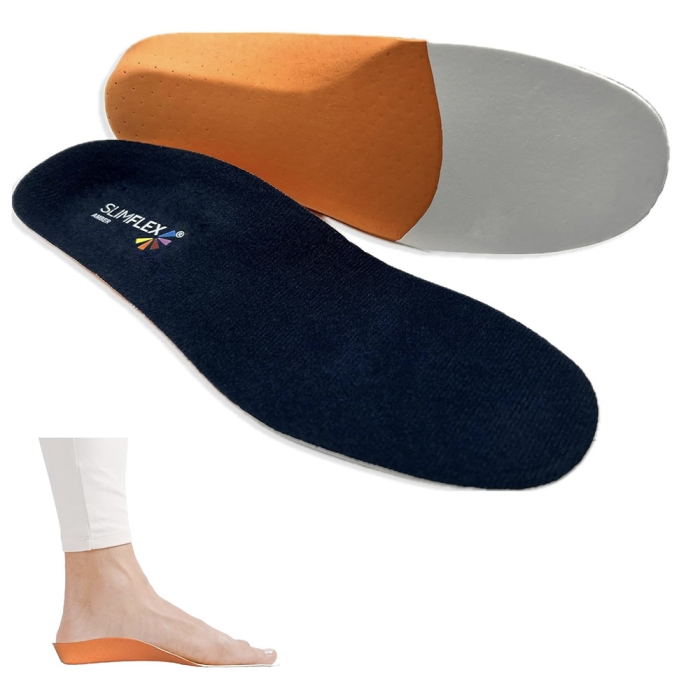
Review highlight: “A must have insole to stock in any podiatry clinic.”
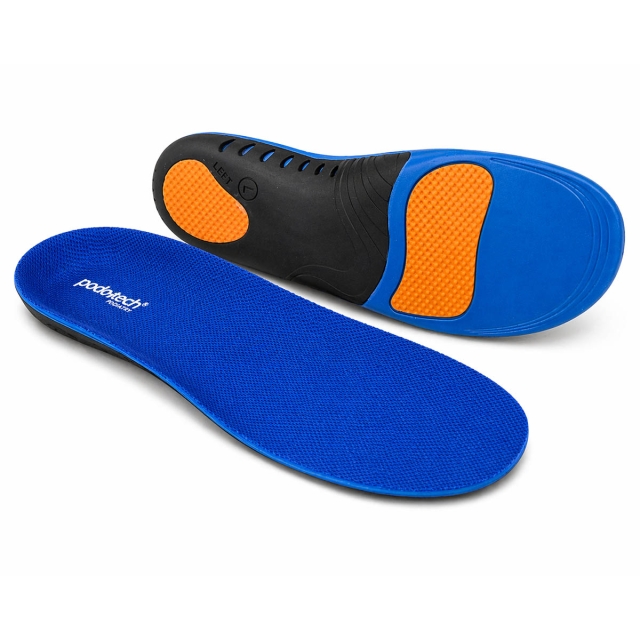
Podotech Stars Sirius Semi-Bespoke Orthotic Insoles
A semi-bespoke platform with an open forefoot for adaptations. This is a strong choice when you want an off-the-shelf base that can be modified chairside or in the workshop for plantar fasciitis cases that need padding, posting or forefoot additions.
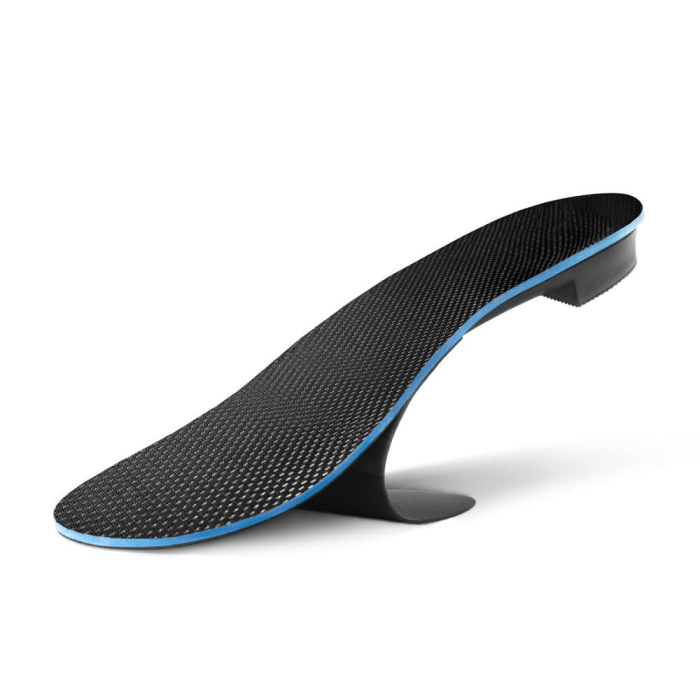
Review highlight: “Good orthotics to use when bespoke not required. Allows easy addition of pads etc.”
Step-by-step guide: choosing and using insoles for plantar fasciitis
- Screen for red flags and alternative diagnoses
Consider differential diagnoses if pain is atypical (night pain, neurological symptoms, significant swelling or trauma). NICE CKS provides assessment pointers and differentials for plantar fasciitis presentations. - Match the insole to the patient’s irritability and footwear
High-irritability cases often prefer a more cushioned option first, while more stable and chronic presentations may tolerate firmer control. Also check shoe depth, heel counter stiffness and whether the patient can remove the factory liner. - Decide on “comfort-first” vs “control-first”
If the key driver is load sensitivity, start with cushioning and modest arch support (often higher adherence). If mechanics and overpronation clearly aggravate symptoms, a more controlling device may be appropriate. - Fit check in clinic or at home
The heel should sit fully in the heel cup, the arch should feel supportive but not sharp and the forefoot edge should not dig in. Re-lace shoes to lock the heel back if needed. - Break-in gradually
Increase wear time progressively over 1-2 weeks. This is especially important for rigid devices or high-arch profiles. Minor adaptation discomfort can occur early, but persistent pain is a reason to pause and reassess. - Pair insoles with evidence-based exercise
Guidelines emphasise combining orthoses with stretching and strengthening, plus load management. The 2023 heel pain clinical practice guideline is a helpful reference for clinicians. - Review at 2-6 weeks
Track morning pain and functional tolerance. If improving, continue and progress activity. If static, consider changing stiffness, adding posting, reviewing footwear or escalating care.
Comparison tables
| Product | Best for | Feel | Why clinicians pick it |
|---|---|---|---|
| Interpod Vari-Force | Variable support needs, heavier patients, sport | Choice of force level | Lets you match support to patient demand and tolerance |
| Interpod Flex 6° with Heel Cup | Maximum control cases, high-load biomechanics | Rigid and controlling | Deep heel cup and stiffness when control is the priority |
| Slimflex Green | Everyday plantar heel pain, mixed footwear | Moderate support | Practical balance of heel support, arch support and value |
| Slimflex Amber | Overpronation-led strain patterns | Firmer rearfoot control | When you need stronger rearfoot and arch control |
| Podotech Stars Sirius | Semi-bespoke workflows, adaptable prescriptions | Structured base for modifications | Open forefoot and adaptation friendly design |
| If the patient says... | Consider | Why |
|---|---|---|
| “It hurts most first thing in the morning.” | Supportive insoles plus calf and plantar fascia loading plan | Targets start-up pain patterns and reduces peak strain |
| “Firm arches feel sharp.” | Moderate support first, slower break-in | Tolerance drives adherence and outcomes |
| “I’m on my feet all day.” | Durable control option or variable-force selection | Higher cumulative load often needs more structured support |
FAQ
Do insoles cure plantar fasciitis?
Insoles rarely work as a stand-alone “cure”. They help by reducing load and improving comfort while tissues settle. Combine them with a structured exercise plan and footwear changes for best results. You can view all our Plantar Fasciitis solutions here.
How quickly should I expect improvement?
Some people feel early relief within days, but meaningful improvement often takes weeks. If symptoms are unchanged after 4-6 weeks of consistent use and exercise-based care, reassess the diagnosis and the device choice.
Should I wear insoles at home?
If hard floors trigger symptoms, supportive footwear indoors can help reduce repeated irritation. NHS advice also emphasises self-care strategies and reducing aggravating load.
Are custom orthotics always better than prefabricated?
Not always. Research shows orthoses can reduce pain in plantar heel pain, but the best device is often the one that fits well, is worn consistently and matches the person’s needs. Prefabricated options can be an effective first-line choice.
Can I trim these insoles?
Many insoles are designed to be size-adjusted, but follow the product guidance. Semi-bespoke platforms are typically more modification friendly, especially in a clinical or workshop setting.
When should I seek further help?
Seek assessment if pain is severe, persistent, or associated with neurological symptoms, swelling, systemic features, diabetes-related risk or suspected alternative diagnoses. NICE CKS outlines assessment points and differential diagnoses.
References and research sources
- NICE CKS: Plantar fasciitis
- NICE CKS: Assessment (diagnosis)
- NICE CKS: Differential diagnosis
- NHS: Plantar fasciitis
- Heel Pain - Plantar Fasciitis: Revision 2023 (Clinical Practice Guideline PDF)
- Whittaker et al. Foot orthoses for plantar heel pain: systematic review and meta-analysis (BJSM)
- NHS Scotland Right Decisions: Evidence for orthotic treatment of the plantar heel
Sold: Each
Incl. VAT Exl. VAT