


Clinical guide | Sports injury rehabilitation
How to Treat a Calf Strain (Gastrocnemius and Soleus)
A calf strain can turn an ordinary step, hill or short sprint into a surprisingly painful movement. Most recover with sensible protection followed by progressively challenging exercise, while kinesiology tape may offer optional comfort rather than a shortcut to healing.
Definition: What is a calf strain?
A calf strain is damage to fibres in the gastrocnemius, soleus or their muscle-tendon connections. It usually follows a forceful push-off or an unexpected increase in workload and can cause local pain, swelling, bruising and difficulty rising onto the toes.
Gastrocnemius or soleus: why the difference matters
The gastrocnemius crosses the knee and ankle, helping generate powerful push-off. The deeper soleus crosses the ankle only and works extensively during standing, walking and distance running. Both contribute to plantarflexion and join the Achilles tendon.
Sudden pain during acceleration may point towards the gastrocnemius, while discomfort building during sustained running can suggest soleus involvement. These are clues, not diagnostic tests. Achilles injury, a blood clot and other causes can resemble muscle strain.
| Clinical feature | Gastrocnemius | Soleus |
|---|---|---|
| Position | Superficial, prominent upper calf | Deeper, underneath gastrocnemius |
| Typical loading demand | Sprinting, jumping, rapid push-off | Longer-duration walking and running |
| Rehabilitation emphasis | Progressive straight-knee calf loading | Progressive bent-knee calf loading |
| Important limitation | Both muscles work in both knee positions. Pain location alone cannot confirm which structure is injured. | |
How healing works and why loading matters
Early recovery involves a repair response around disrupted muscle fibres. As symptoms settle, gradually increasing contraction and movement helps restore strength and tolerance to everyday forces. Doing too much too early can aggravate the injury; doing nothing for too long can leave the calf weak.
Research and NHS rehabilitation guidance favour a function-led progression. The target is not simply a pain-free calf at rest. It is a calf that can withstand repeated heel raises, walking, impact and finally the speed demanded by your activity.
First, exclude problems that should not be taped
Seek urgent assessment for new unexplained one-sided calf swelling, throbbing pain, warmth or unusual skin colour because these can indicate deep vein thrombosis (DVT). Call 999 for chest pain or breathlessness alongside suspected DVT symptoms. A sudden snap, major weakness, inability to walk or a suspected Achilles rupture also needs prompt assessment.
Step-by-step: treating a calf strain
- Protect the first few days. Stop painful running or jumping. For roughly 48-72 hours, consider protection, relative rest, wrapped ice, comfortable compression and elevation where useful. Avoid aggressive massage, heat and forceful stretching in the very early stage.
- Keep gentle movement. Move the ankle up and down within comfort several times daily. Walk only as far as you can without a pronounced limp; temporary support or crutches may be appropriate after a more painful injury.
- Restart calf contractions. Begin with comfortable seated calf raises or gentle isometric pushes. Increase to supported two-leg heel raises when tolerated, then controlled single-leg work. Do not push through sharp pain.
- Train both knee angles. Use straight-knee and bent-knee heel raises, progressing repetitions, range and resistance gradually. When body weight becomes easy, additional resistance may be required to rebuild full capacity.
- Reintroduce impact. Once walking, strength and calf control have recovered, add small hops, jogging intervals and eventually faster running. Build hills, sprinting and changes of direction last if your sport requires them.
- Review the following morning. Increased limping, swelling or marked stiffness after a session indicates that the last increase may have been excessive. Reduce the load and seek physiotherapy advice if progress stalls.
See the NHS calf rehabilitation exercise guidance for illustrated exercise progressions.
Can kinesiology tape help a calf strain?
Flexible kinesiology tape moves with the skin and may change how an area feels during activity. However, a 2026 overview found very low-certainty evidence for its clinical effects across musculoskeletal conditions. There is no established evidence that tape reconnects torn calf fibres or accelerates their healing.
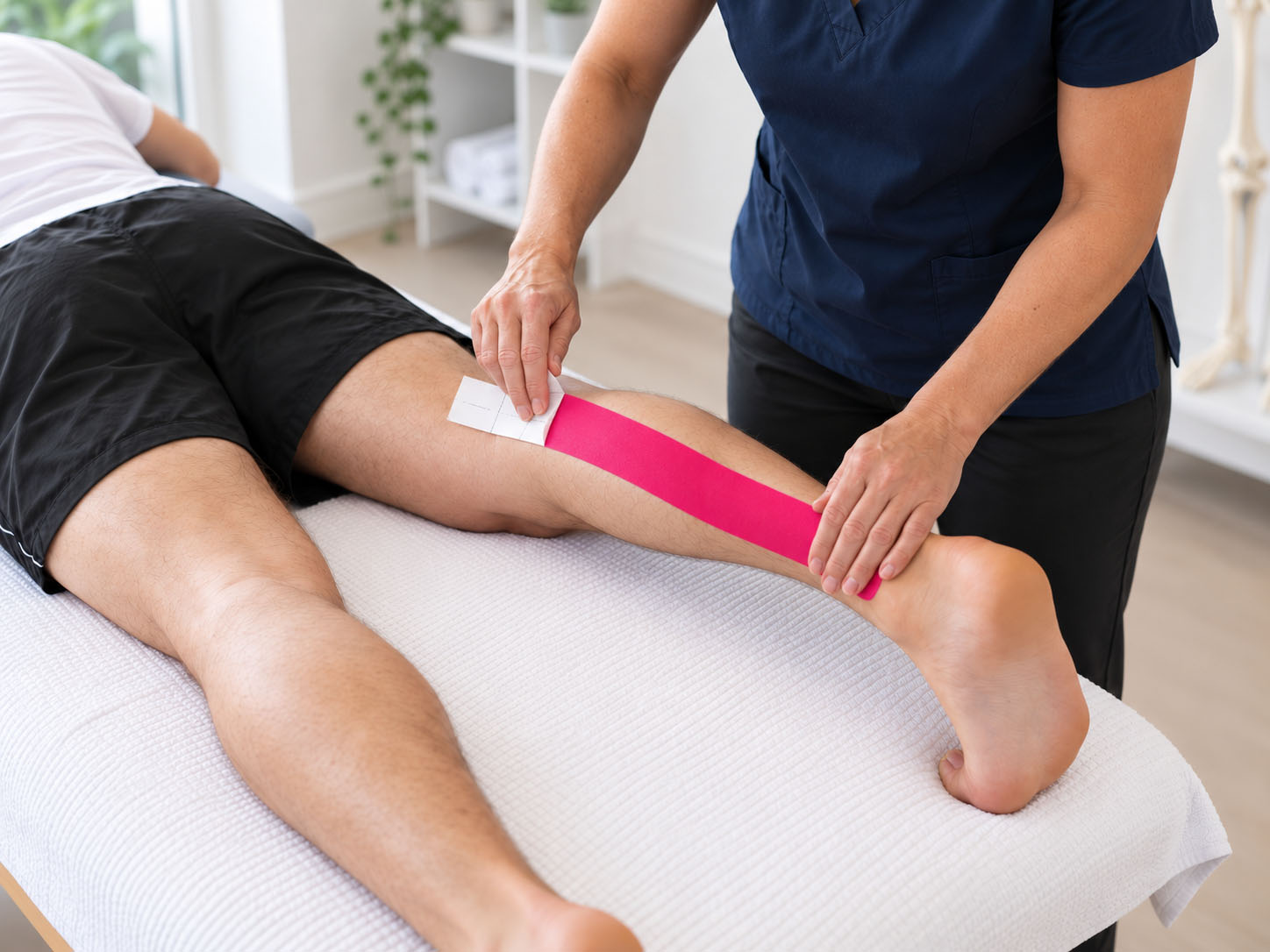
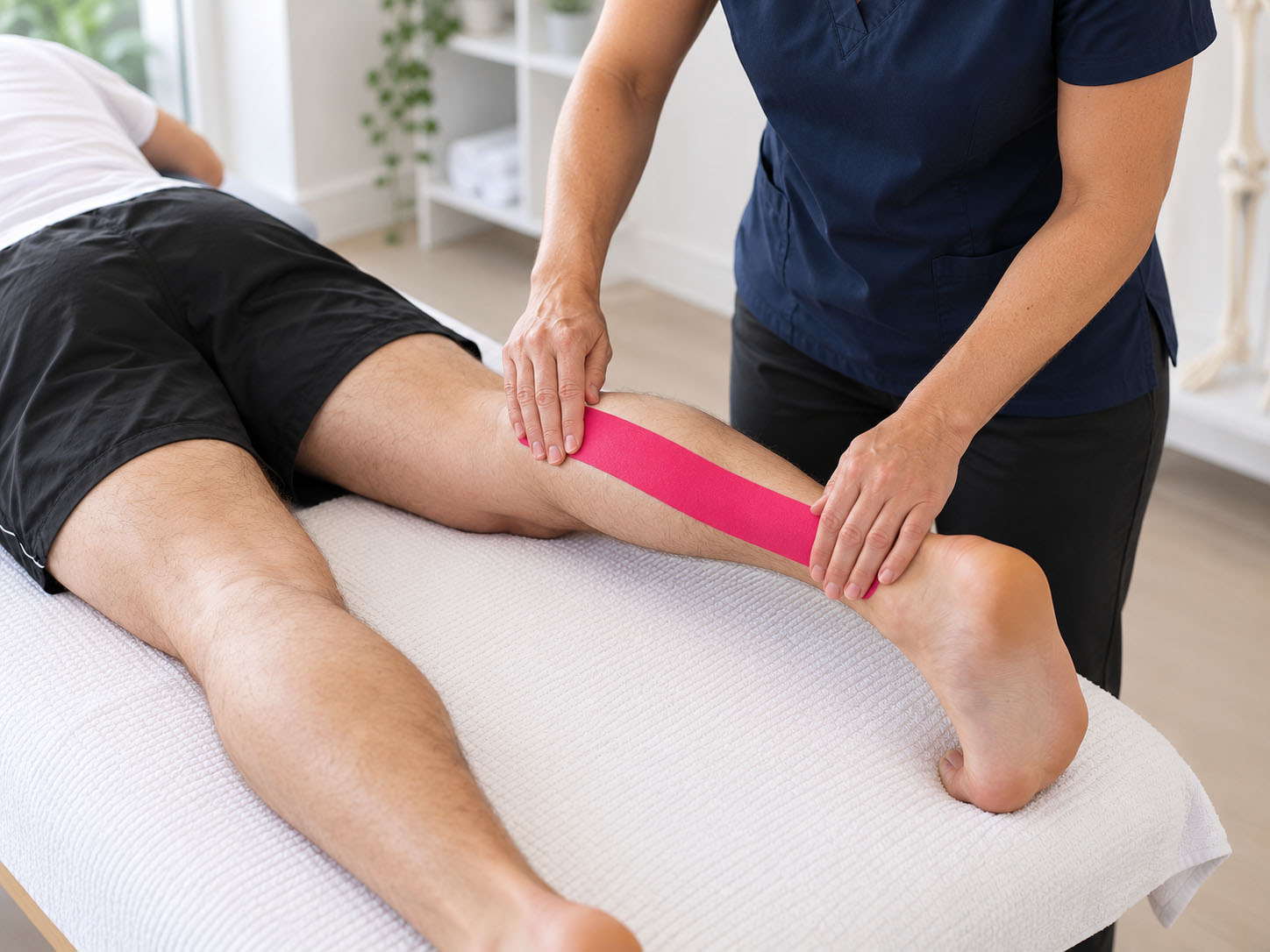
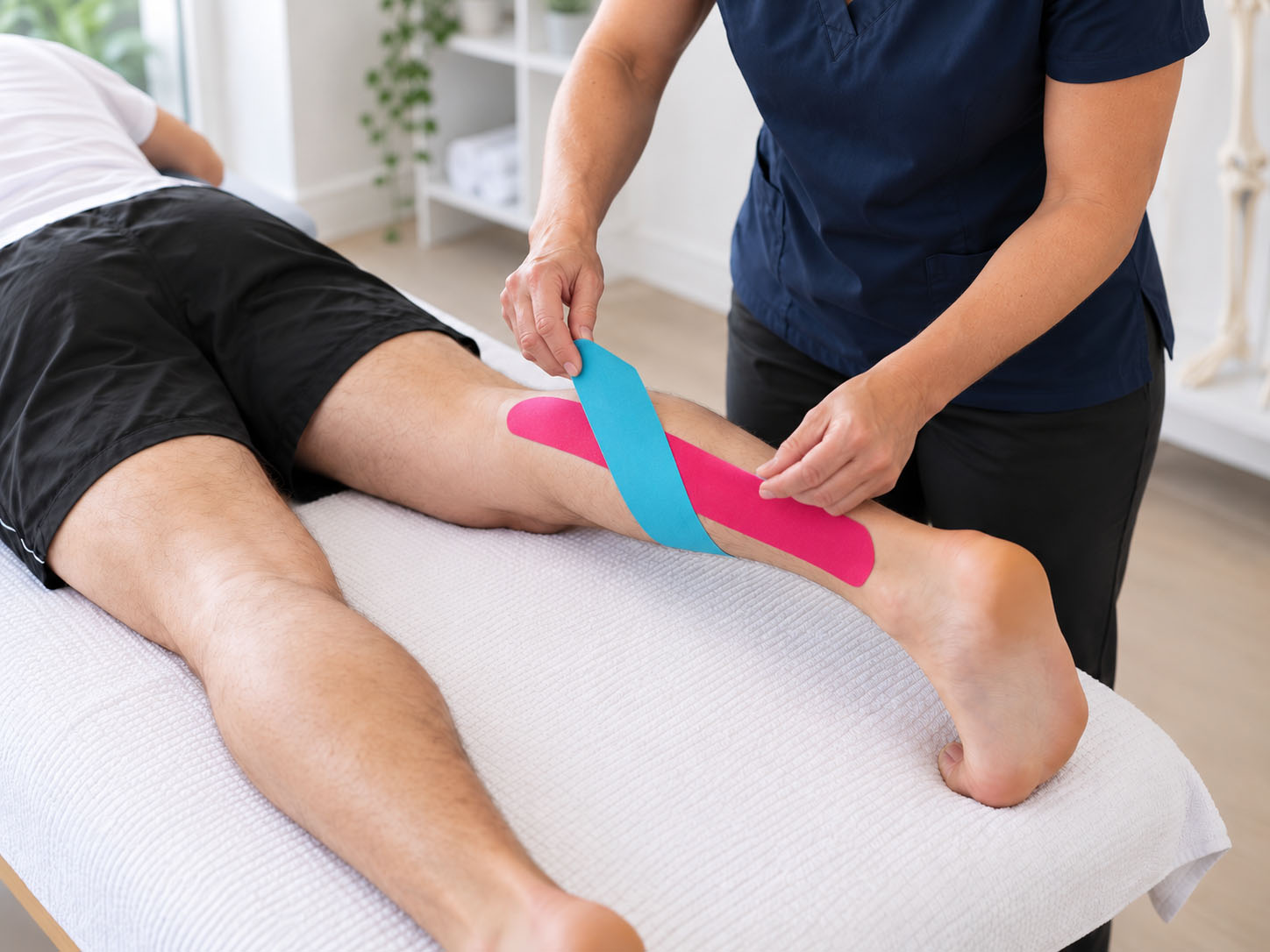
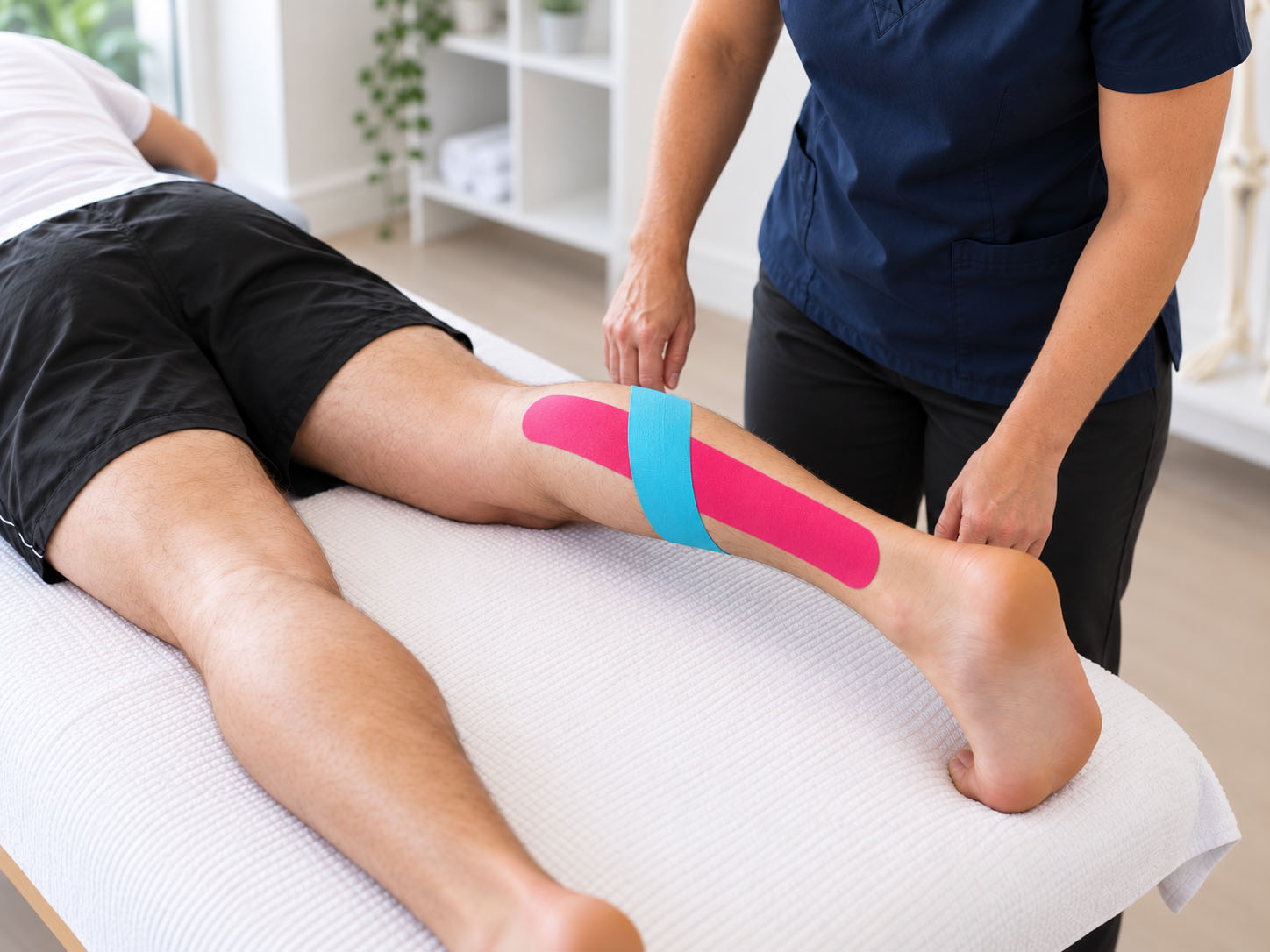
In John Gibbons' calf taping demonstration, a long supporting strip follows the calf and a shorter strip crosses the painful area. The demonstration uses substantial stretch on the cross-strip, but that is not proof that greater tension produces better outcomes.
 |
 |
 |
 |
A cautious two-strip application
- First confirm the diagnosis is suitable for taping. Clean and dry intact skin and consider a small adhesive patch test.
- Cut a long I-strip and a shorter cross-strip, rounding the corners to discourage lifting.
- With the ankle comfortably positioned, apply the first strip from near the inner Achilles region towards the calf, following the painful area. Use minimal tension and unstretched ends.
- Place the shorter strip across the local tender region with gentle, comfortable tension. Keep both ends unstretched rather than copying a high-tension technique without supervision.
- Rub the tape lightly to help adhesion. Check circulation, sensation and skin comfort; remove it for itching, blistering, numbness or worsening pain.
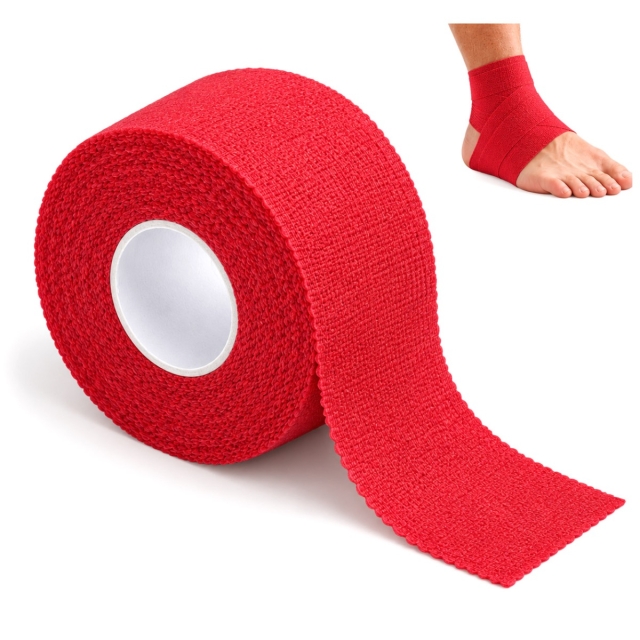
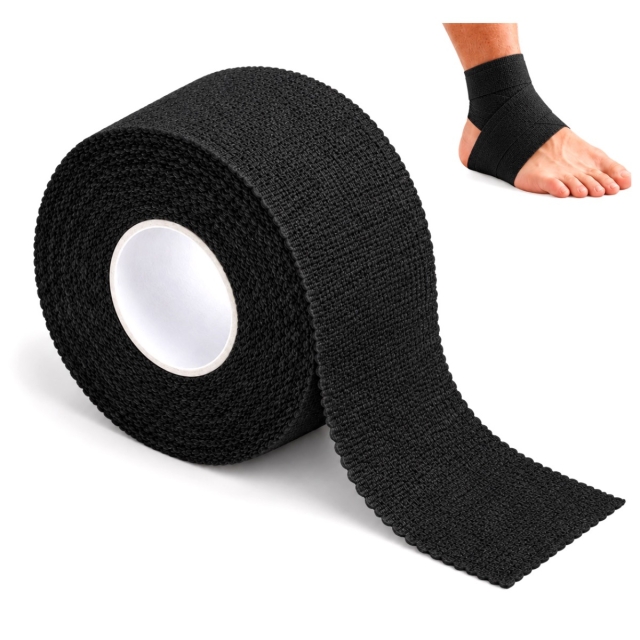
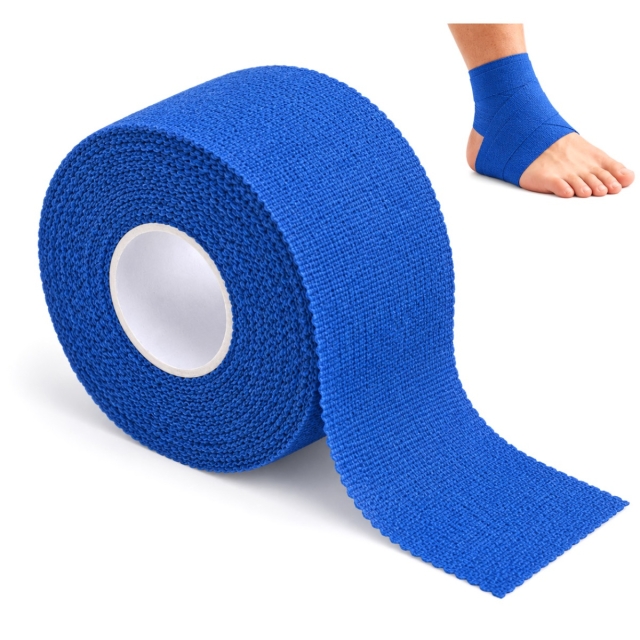
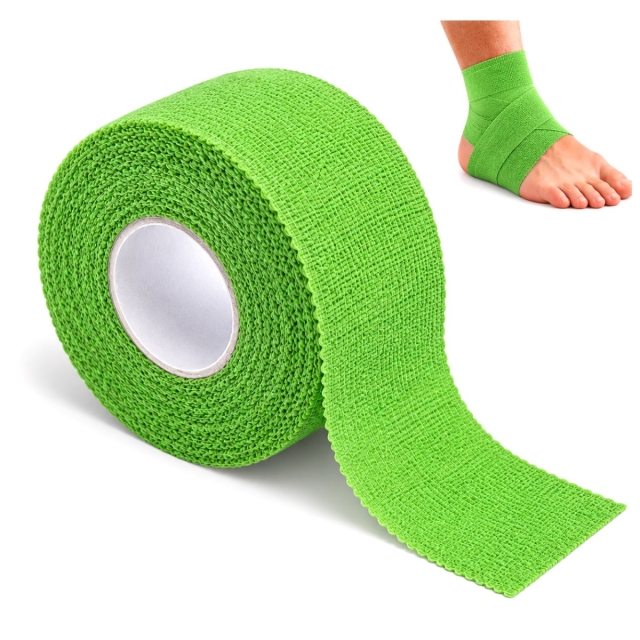
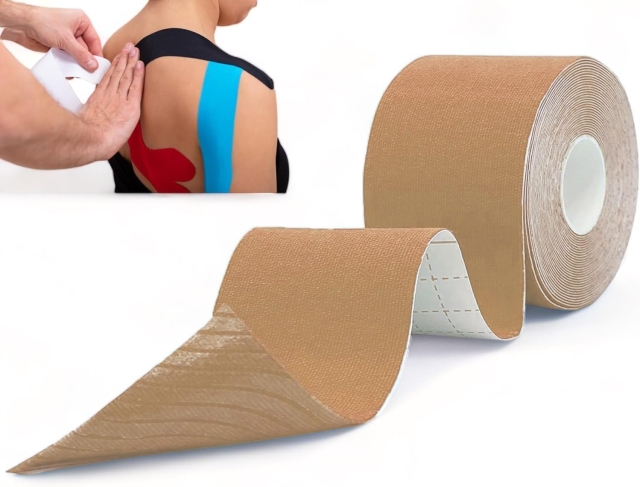
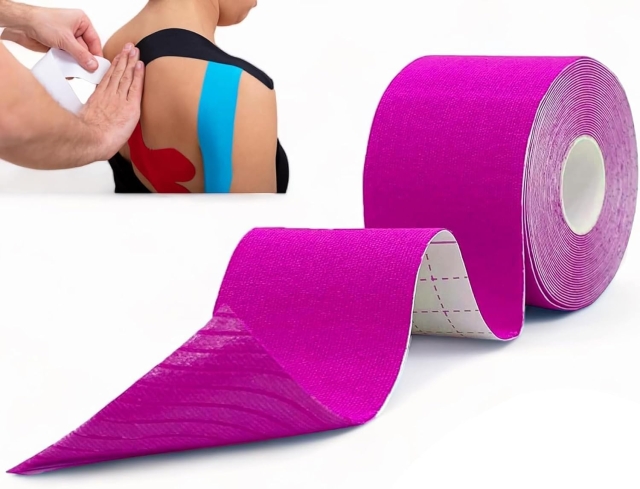
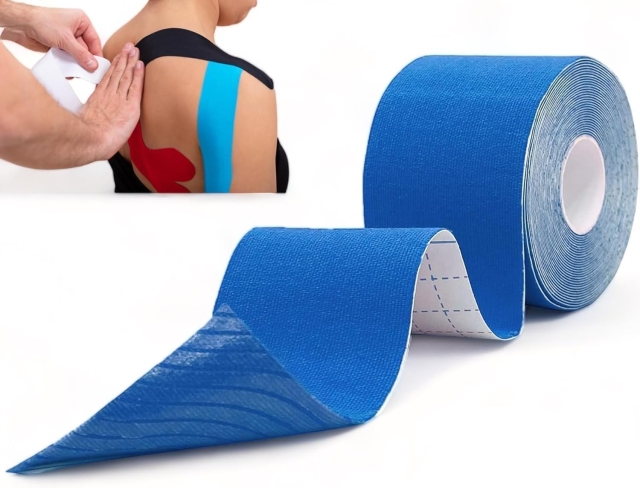
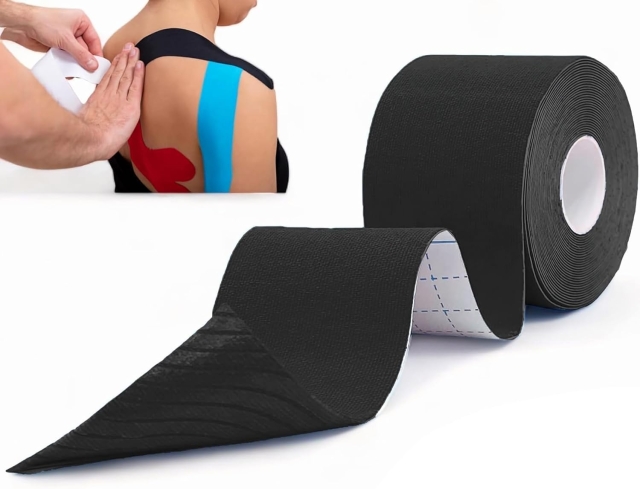
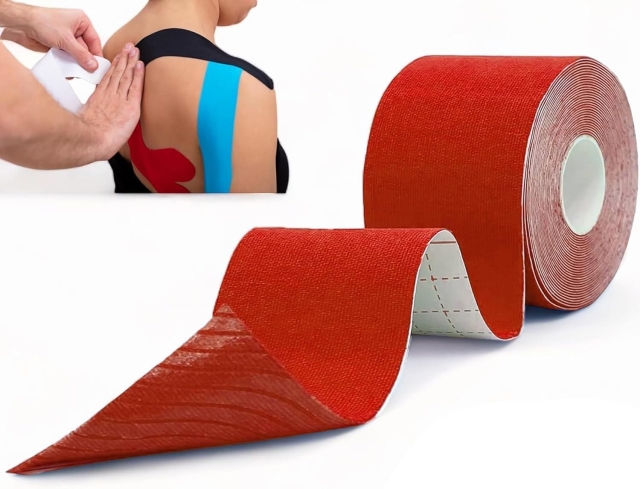
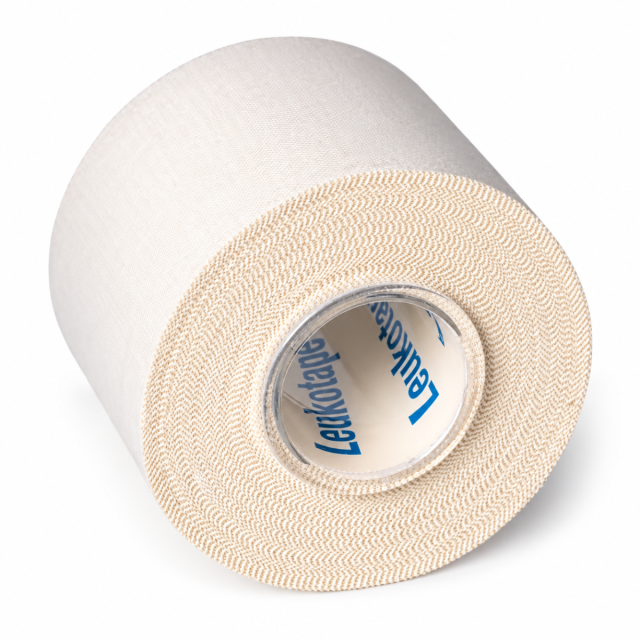
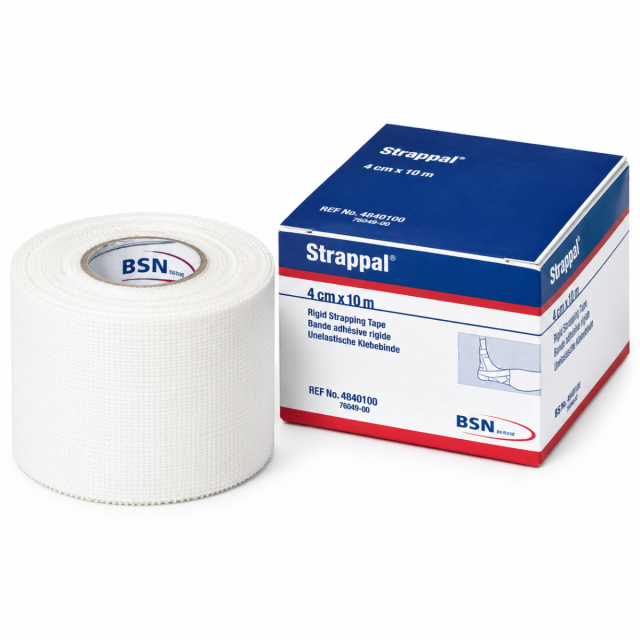
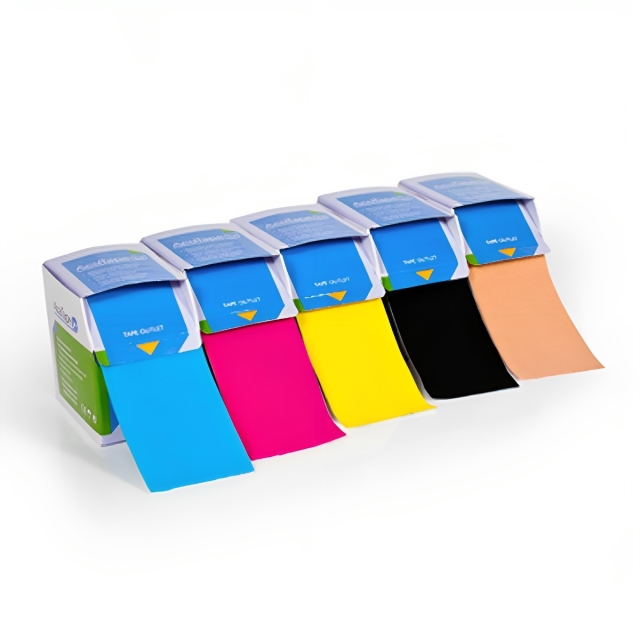
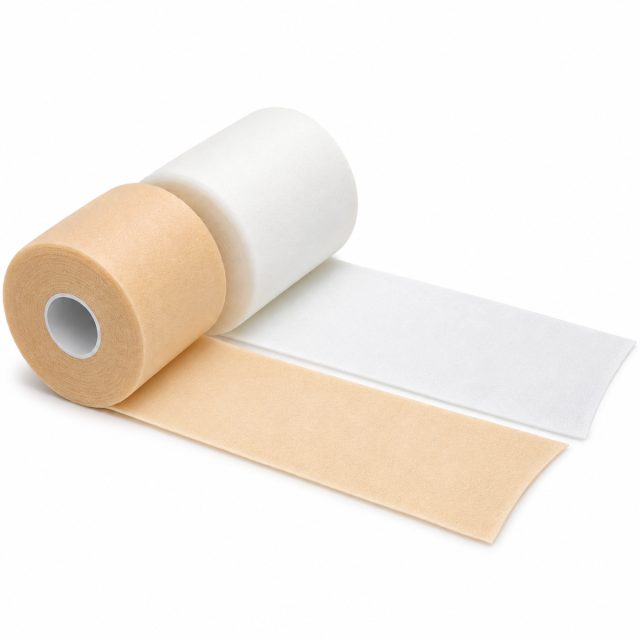
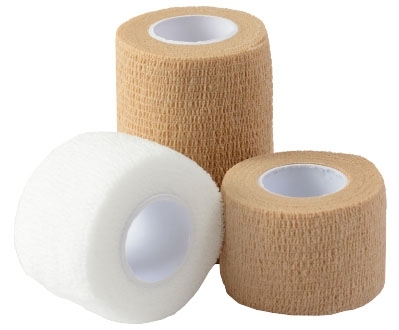
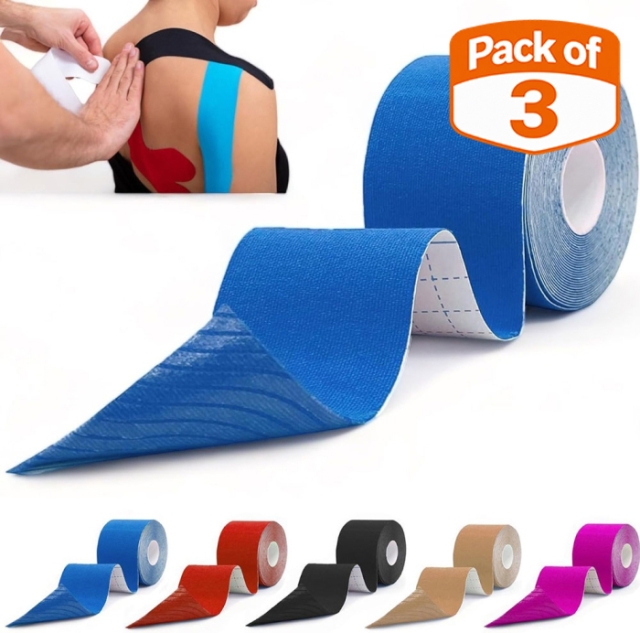
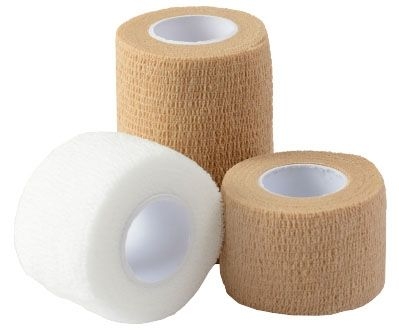
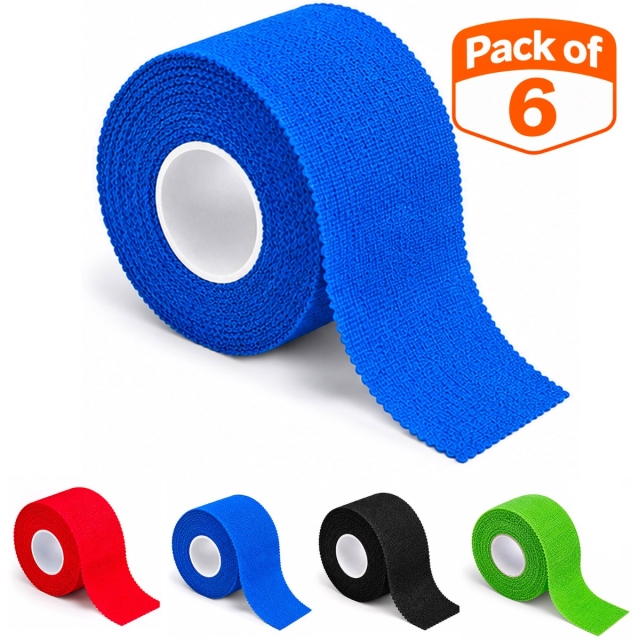
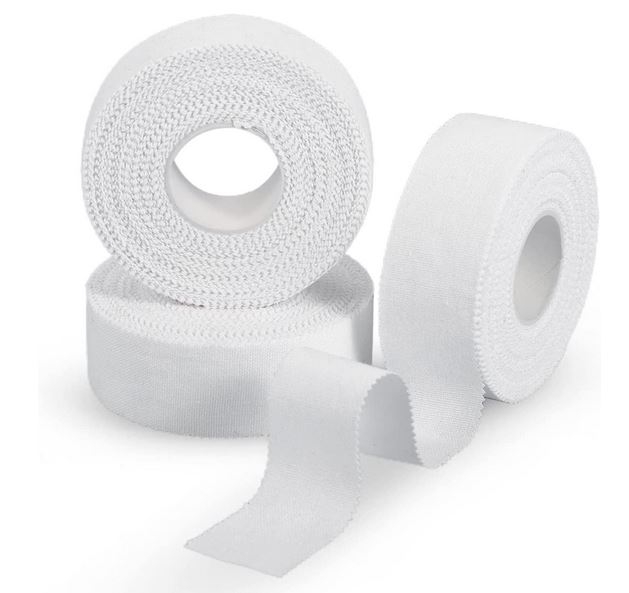
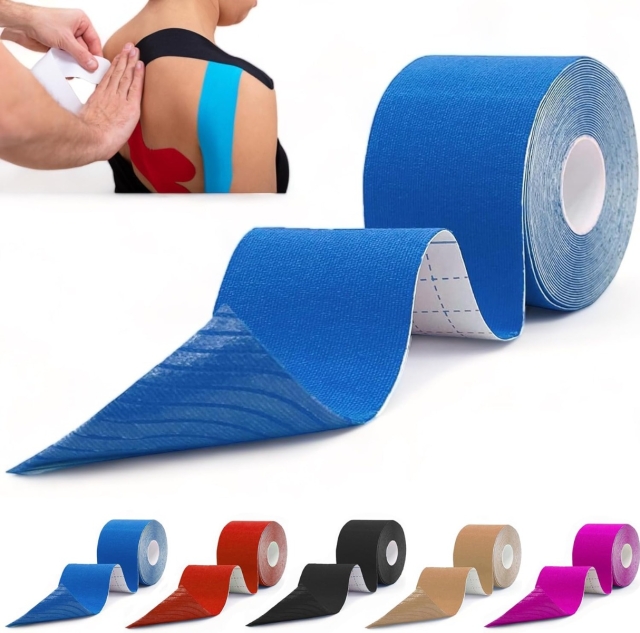
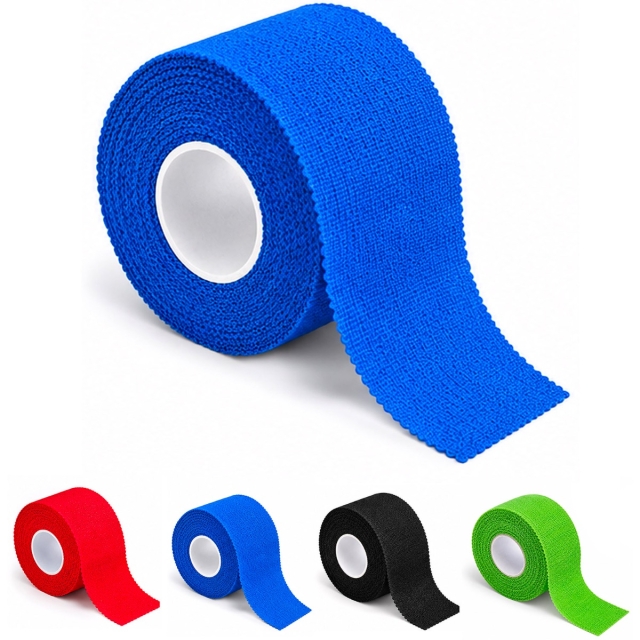
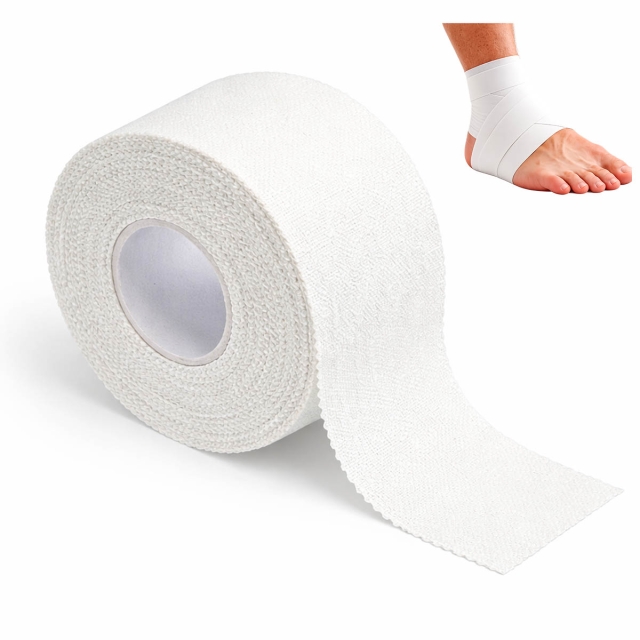
Tape is optional. Explore safe KT tape application and Algeos' sports and physio tapes for suitable materials.
The three-check calf record: a practical way to judge progress
A useful distinction is between feeling better and being ready for more load. Try recording three observations after each new rehabilitation level: how naturally you walk, how controlled a supported calf raise feels and how the calf responds the next morning.
Record three answers, not just a pain score
- Walking: Was your stride normal or noticeably shortened?
- Capacity: Could you control the movement without compensating?
- Recovery: Did swelling, stiffness or limping increase by the next morning?
This is an original practical tracking prompt, not a validated medical scoring system. It keeps attention on load tolerance without pretending that one pain rating can predict tissue readiness. A clinician can adapt it to work, age and sporting demands.
What users say: the real questions behind recovery
Three concerns regularly shape decisions about calf injury: “I can walk, so why can't I run?”, “It feels supported with tape, so is it healed?” and “Why is it stiffer the next day?” These are illustrative patient questions, not attributed customer reviews.
The answers are connected. Running places faster and repeated demands on the calf than walking. Tape may change comfort without restoring strength. A next-day flare suggests the current workload needs reviewing. For background on tape expectations, see the science behind kinesiology tape.
Recovery time and return to running
Many calf strains recover over approximately six to 12 weeks, although milder cases may improve sooner and substantial tears can require months. A calendar cannot replace assessment. Before jogging, aim for comfortable brisk walking, near-normal ankle movement and convincing calf strength and control.
Introduce alternating short walk-jog intervals on level ground. Increase one demand at a time, such as duration before pace. If symptoms worsen during the session or the following morning, scale back. Repeated setbacks, a persistent lump or unexplained pain warrant assessment by a physiotherapist or doctor.
Frequently asked questions
How long does a calf strain take to heal?
Often around six to 12 weeks, with substantial variation by injury severity, age, medical history and activity demands. Severe injuries may take longer.
How do I know whether my gastrocnemius or soleus is injured?
A sudden sprinting injury may suggest gastrocnemius involvement; a deeper pain developing with sustained running may suggest soleus. Assessment is needed for certainty.
Should I stretch a strained calf immediately?
Do not force a painful stretch early on. Start with comfortable ankle movement and introduce gentle stretching once the injury tolerates it.
Does kinesiology tape heal a calf tear?
No. Tape may offer temporary comfort but there is no convincing evidence that it speeds muscle healing or replaces strengthening.
When can I run after a calf strain?
After comfortable brisk walking, restored movement, adequate calf strength and controlled impact. Begin with walk-jog intervals and monitor the next-day response.
Can calf pain be a blood clot rather than a strain?
Yes. New one-sided swelling, warmth, colour change or unexplained calf pain needs urgent medical advice. Chest pain or breathlessness requires 999.
References and research sources
- Hull University Teaching Hospitals NHS Trust: Soft Tissue Injury - Calf Strain (updated June 2025).
- Calderdale and Huddersfield NHS Foundation Trust: Calf Muscle Strain.
- University Hospitals of Derby and Burton NHS: Calf Strain.
- NHS: Sprains and Strains.
- NHS: Deep Vein Thrombosis.
- Mo Q et al. Effectiveness and clinical relevance of kinesio taping in musculoskeletal disorders. BMJ Evidence-Based Medicine (2026).
- John Gibbons: How to Treat a Calf Strain Using Kinesiology Tape (video demonstration).



Sold: Each
Incl. VAT Exl. VAT