




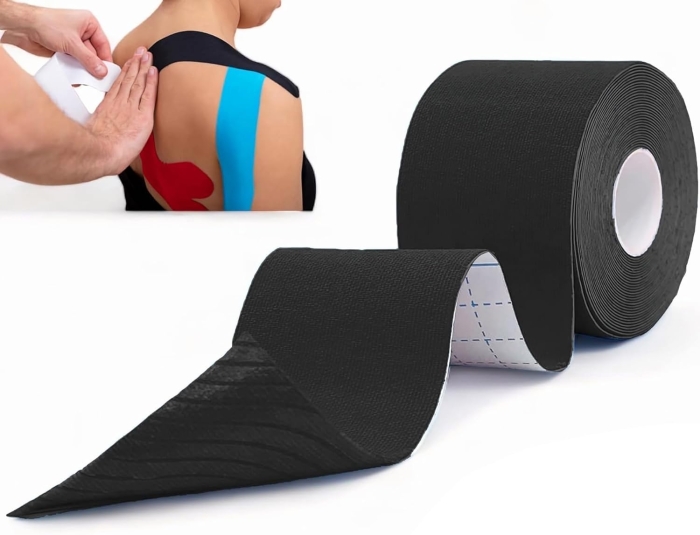
Physioworx Black Kinesiology Physio Tape - Single Roll
KT Kinesiology Tape provides strong support for active joints and muscles - A premium strapping solution from Physioworx.
Buy today to stabilise muscles and joints, preventing injuries during physical activity.
Used daily by the NHS and high street Physiotherapists.

Product Description
Flexible Support for Muscles and Joints - Black
Support your movement without the bulk of a traditional brace. This flexible kinesiology tape is designed to follow the body's natural contours, providing lightweight muscle and joint support during sport, exercise, physiotherapy and everyday activity.
Made from soft, breathable cotton with an adhesive backing, it is suitable for taping shoulders, knees, calves, ankles, wrists and other areas where comfortable, movement-friendly support is needed.
The stretchable construction allows normal functional movement, while the water-repellent surface and secure adhesive make it a practical option for active routines.
Product format: One 5cm x 5m roll, cut to length as required. Latex-free construction.
Key Selling Points
Flexible Support Without Restriction
Elastic fabric moves with the body, providing a lightweight alternative to bulky supports where rigid movement control is not required.
Secure Hold During Activity
The adhesive backing helps keep the tape in position during exercise, training and everyday movement when applied correctly.
Comfortable, Low-Profile Fit
Soft, breathable cotton conforms to body contours and can be worn discreetly beneath suitable clothing.
Water-Repellent Surface
Designed to help manage normal perspiration and everyday moisture exposure during active use.
Latex-Free Construction
A practical option for people avoiding latex-containing tapes. As with any adhesive product, individual skin sensitivity should still be considered.
Versatile 5cm x 5m Roll
Cut the tape into strips to suit different body areas and taping methods, making one roll useful for a variety of applications.
What Does Kinesiology Tape Do and How Does It Work?
Kinesiology tape, often called KT tape or physio tape, is an elastic adhesive tape applied directly to the skin to provide flexible support around muscles and joints.
Unlike rigid sports strapping, which is generally used to limit movement, kinesiology tape stretches with the body. This makes it suitable for situations where freedom of movement is important.
When correctly positioned, the tape provides gentle contact and tension across the skin. This can offer sensory feedback, helping users become more aware of the area being supported during movement.
The tape may also help some users feel more comfortable or supported during selected activities. The effects vary between individuals and conditions, and kinesiology tape should be viewed as a supplementary support rather than a treatment that directly repairs injured tissue.
KT Tape or Rigid Sports Tape?
Choose kinesiology tape when flexible, low-profile support and continued functional movement are priorities.
Consider rigid strapping or a brace when firmer joint control or substantial restriction of movement is required. A clinician can help determine the appropriate level of support following injury.
Common Problems Kinesiology Tape May Help With
Kinesiology tape is commonly used as part of a broader approach to managing minor movement-related discomfort, muscle loading and rehabilitation.
Muscle Fatigue and Overuse
May provide a supportive sensation around muscles experiencing increased demand during training, exercise or repetitive movement.
Knee Discomfort During Activity
Can be incorporated into selected knee taping techniques for runners, cyclists and active individuals requiring flexible support.
Shoulder and Upper Back Discomfort
Frequently used in shoulder and upper-back taping applications where muscle support and movement awareness are priorities.
Calf and Achilles Loading
May be used alongside appropriate exercise and load management when additional support around the calf or Achilles region is considered helpful.
Heel and Plantar Fascia Discomfort
Specific foot taping techniques may form part of a wider management programme for heel pain or plantar fasciitis, alongside footwear advice and rehabilitation.
Return to Activity
Can provide light support and tactile feedback during an appropriate return-to-exercise programme following a minor musculoskeletal problem.
Important: Taping may help with comfort or perceived support, but it does not guarantee pain relief, prevent injury or replace strengthening, rehabilitation or medical assessment.
Applications and Who It Is Suitable For
This kinesiology tape is designed for a broad range of sporting, clinical and everyday applications where lightweight support is preferred.
Common Applications
- Running: Taping techniques for the calves, knees, ankles and feet.
- Gym and strength training: Supporting selected muscle groups during controlled movement.
- Racket and throwing sports: Shoulder, wrist and forearm taping applications.
- Physiotherapy and rehabilitation: Supplementary taping within an exercise or recovery programme.
- Everyday activity: Low-profile support for suitable muscle and joint concerns.
Typical Users
- Physiotherapists and sports therapists.
- Podiatrists and rehabilitation professionals.
- Athletes, runners and sports participants.
- Gym users and fitness enthusiasts.
- Individuals following an appropriate home rehabilitation plan.
- Active consumers who want flexible support without wearing a bulky brace.
Who May Not Be Suitable for Kinesiology Tape?
Kinesiology tape is not appropriate for every person, injury or skin condition.
- Known adhesive sensitivity: Avoid use if you have previously reacted to similar adhesives, unless a healthcare professional has advised otherwise.
- Broken or damaged skin: Do not apply over open wounds, cuts, skin infections or actively irritated areas.
- Fragile or highly reactive skin: Seek advice where adhesive removal could damage the skin.
- Serious joint instability: Flexible tape is not a substitute for rigid stabilisation when this is clinically required.
- New or unexplained symptoms: Significant pain, swelling, weakness, numbness or restricted movement should be assessed rather than simply taped.
- Reduced skin sensation or circulation concerns: Seek professional guidance before application.
If you are uncertain whether kinesiology tape is appropriate for your condition, consult a physiotherapist, podiatrist or other suitable healthcare professional.
View the flexible tape construction and examples of common application methods. The illustrated placements are examples only; the correct taping technique depends on the body area and intended use.


Product Specifications
| Specification | Details |
|---|---|
| Product Type | Elastic kinesiology / physiotherapy tape |
| Roll Width | 5cm |
| Roll Length | 5m |
| Pack Quantity | 1 roll |
| Fabric | Stretchable, breathable cotton |
| Adhesive | Adhesive-backed tape for direct skin application |
| Latex | Latex-free |
| Surface | Water-repellent |
| Backing | Removable paper backing with printed cutting guides |
| Support Type | Flexible, non-rigid muscle and joint support |
| Application | Cut to size and apply directly to intact skin |
| Reuse | Single-use application |
| Common Use Areas | Shoulders, back, knees, calves, ankles, feet and wrists |
| Typical Settings | Sport, exercise, physiotherapy, rehabilitation and everyday activity |
Buying guidance: This product is supplied as a single 5-metre roll. Select your preferred available colour or product option before adding it to your basket. For regular clinic use or repeated applications, a multi-roll pack may be more convenient.
How to Apply Kinesiology Tape
Correct preparation and application are important for comfort, adhesion and the intended support. The precise tape pattern and amount of stretch will vary depending on the body area and treatment objective.
Step-by-Step Application
- Prepare the skin. Make sure the application area is clean, dry and free from creams, oils and perspiration.
- Check the skin. Do not tape over cuts, rashes or irritated areas. If you have sensitive skin, consider a small preliminary skin test.
- Measure and cut. Cut the required length from the roll. Round the corners where practical to help reduce premature lifting.
- Apply the first anchor. Remove part of the backing and position the starting section on the skin without stretch.
- Apply the main section. Follow the intended muscle or joint taping pattern using gentle, controlled tension. Avoid excessive stretching.
- Finish without tension. Apply the final anchor section without stretch to improve comfort and reduce pulling at the ends.
- Secure the adhesive. Smooth and rub the tape gently with your hand to help the backing adhere securely.
- Check comfort. Move the area gently and ensure the tape is comfortable, without pinching, excessive tightness or altered sensation.
Application Tip
More stretch does not automatically mean better support. Excessive tension can reduce comfort, irritate the skin and cause the tape to lift prematurely. Use a taping method suited to the area being supported, ideally following professional guidance.
How Long Can It Be Worn?
Kinesiology tape is commonly worn for several hours and, where skin tolerance and adhesion allow, sometimes for a few days. Actual wear time varies according to skin condition, activity, perspiration and application technique.
Check the skin regularly. Remove the tape if it causes irritation, becomes uncomfortable or loses its hold. Do not keep tape in place simply to reach a particular wear duration.
How to Remove Kinesiology Tape
- Support the surrounding skin with one hand.
- Slowly roll or peel the tape back on itself rather than pulling sharply upwards.
- Work gradually in the direction of hair growth.
- Use a suitable tape remover or a little oil to help loosen stubborn adhesive if required.
- Clean and dry the area gently after removal.
Use a fresh piece of tape for each application. Do not attempt to reuse removed tape.
Benefits for Sport, Rehabilitation and Everyday Use
Freedom to Move
The elastic construction allows flexible movement, making it suitable where rigid immobilisation is not required.
Lightweight Everyday Comfort
The low-profile cotton fabric provides an alternative to bulkier supports for suitable applications.
Adaptable to Different Body Areas
Strips can be measured and cut for a variety of commonly used muscle and joint taping patterns.
Practical for Active Environments
The secure adhesive and water-repellent surface make the tape convenient for routine activity and sport.
Useful Within Rehabilitation Plans
Can complement appropriate exercise, movement retraining and other recommended support strategies.
Suitable for Professional and Home Use
A versatile format for therapists and individuals familiar with the correct application techniques.
Contraindications and Important Warnings
- For external application to intact skin only.
- Do not apply over open wounds, infected skin, rashes or areas of significant skin irritation.
- Do not use if you have a known allergy to the tape or its adhesive components.
- Latex-free does not mean that an adhesive reaction cannot occur.
- Discontinue use if redness, itching, burning, blistering or a rash develops.
- Remove immediately if the tape causes numbness, tingling, increased pain or unusual tightness.
- Avoid excessive tension, particularly at the beginning and end of the strip.
- Do not use kinesiology tape to immobilise an unstable joint or manage a suspected serious injury without clinical advice.
- Seek professional advice before use if you have fragile skin, reduced sensation, circulation concerns or a condition that increases the risk of skin damage.
- Store unused tape in a cool, dry location away from direct sunlight and excess moisture.
Clinical reminder: Kinesiology tape is a supplementary support product. It should not delay diagnosis or appropriate treatment of an injury, and its benefits may differ between individuals.
Frequently Asked Questions About KT Kinesiology Tape
1. What is kinesiology tape used for?
Kinesiology tape is used to provide flexible support around muscles and joints during movement. It is commonly applied in sport, physiotherapy, rehabilitation and everyday activities. Depending on the application, it may help with perceived support, comfort or awareness of the taped area, but results vary and it does not replace appropriate treatment.
2. How is kinesiology tape different from ordinary sports tape?
Kinesiology tape is elastic and is designed to stretch with the body while allowing functional movement. Traditional rigid sports tape is generally used when firmer strapping or greater movement restriction is needed. The right option depends on the body area, activity and level of stability required.
3. Can I use KT tape for running, gym workouts and sport?
Yes, kinesiology tape is commonly used for running, strength training, racket sports and other physical activities. The flexible construction allows movement without the bulk of a conventional support. Correct positioning is important, and the tape should not be relied upon to make an injured joint safe for sport.
4. Can kinesiology tape help with knee pain or plantar fasciitis?
Selected taping techniques may help some users manage comfort or provide a supportive sensation around the knee or foot. For plantar fasciitis, taping may be combined with stretching, footwear changes, activity management and orthotic support. Persistent, worsening or unexplained pain should be assessed by an appropriate healthcare professional.
5. How long does kinesiology tape stay on?
Wear time depends on the skin, activity level, perspiration and quality of application. Some users wear kinesiology tape for several hours, while others may tolerate it for a few days. Remove it sooner if the edges lift significantly, the tape becomes uncomfortable or skin irritation develops.
6. Is this kinesiology tape waterproof?
The tape has a water-repellent surface designed for normal perspiration and everyday moisture exposure. This does not make it a fully waterproof dressing, and adhesion can vary when exposed to water. Ensure the skin is completely dry before application and replace the tape if it no longer remains secure.
7. Is the tape suitable for sensitive skin or latex allergies?
The tape is latex-free and made with soft, breathable cotton, making it an option for users avoiding latex-containing products. However, the adhesive can still cause a reaction in sensitive individuals. Anyone with a history of adhesive allergy or particularly reactive skin should seek advice and avoid continuing use if irritation occurs.
8. Can I apply kinesiology tape myself?
Many straightforward taping applications can be performed at home once the correct method has been learned. Start with clean, dry skin and apply the ends of the strip without tension. For injury-specific techniques or difficult-to-reach areas, guidance from a physiotherapist or other qualified professional is recommended.
9. Is one 5cm x 5m roll enough for multiple applications?
A single 5-metre roll can be cut into multiple strips, with the number of applications depending on the length and quantity of tape used each time. Smaller applications generally use less tape than more extensive shoulder, back or leg patterns. For clinics, sports teams or frequent use, a multi-roll pack may offer a more convenient supply.
10. Can I wear kinesiology tape every day?
Kinesiology tape may be used for regular activities when the skin tolerates it and the application is appropriate. Check the skin between applications and allow it to recover if any irritation appears. Repeated taping should not become a substitute for investigating persistent discomfort, weakness or instability.
Related Products and Helpful Guides
Explore further taping options, application advice and sports support products to help select the most appropriate solution.
Related Products and Categories
- KT Kinesiology Tape – Pack of 3 – A multi-roll option for regular taping, clinics and repeat applications.
- KT Tape for Kinesiology – Browse flexible taping products for physiotherapy and sport.
- Zinc Oxide Sports Tape – Explore rigid strapping options where firmer movement control is needed.
- Sports and Physiotherapy Tapes – Compare kinesiology tape, rigid tape and elastic strapping options.
Application Advice and Further Reading
- How to Use KT Tape – Practical advice on preparation and common taping techniques.
- What Does Kinesiology Tape Do? – Learn more about its uses and role in muscle and joint support.
- Physiotherapy Tape: Uses, Types and Tape Selection – Guidance on choosing between common physiotherapy and sports taping products.
Product Summary
KT Kinesiology Tape is a flexible, breathable cotton sports and physiotherapy tape designed to provide lightweight muscle and joint support while allowing natural movement. Supplied as a single 5cm x 5m roll, it has a secure adhesive backing, water-repellent surface and latex-free construction.
Suitable for a range of sports, rehabilitation and everyday taping applications, it can be cut to length for use around the shoulders, back, knees, calves, ankles, feet and wrists. It is commonly used by physiotherapists, sports therapists, athletes and active individuals as a supplementary support product.
Best suited to: Flexible, low-profile taping where functional movement is important. Not intended to replace rigid joint stabilisation, medical assessment or appropriate rehabilitation.
Frequently bought together
Sold: Each
Incl. VAT Exl. VAT
Sold: Each
Incl. VAT Exl. VAT
Sold: Pack of 3
Incl. VAT Exl. VATSold: Pack of 3
Incl. VAT Exl. VAT
Sold: Single roll 5m
Incl. VAT Exl. VAT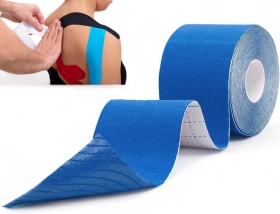
Sold: Each
Incl. VAT Exl. VAT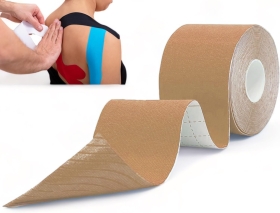
Sold: Each
Incl. VAT Exl. VAT
Sold: Per Roll
Incl. VAT Exl. VAT
Sold: Each
Incl. VAT Exl. VAT