



How proprioception and balance training work
Following injury, pain, swelling and reduced activity can alter sensory feedback and motor control. A person may have adequate strength but still struggle to stand on one leg, negotiate uneven ground or land confidently after a jump.
Rehabilitation exposes the nervous system to progressively more demanding tasks. Supported standing develops basic postural control; single-leg reaches challenge coordinated hip, knee and ankle movement; hopping and changes of direction add speed and unpredictability. The aim is not simply to remain upright on an unstable surface. It is to produce reliable movement during activities that matter.
Why balance training matters in lower limb recovery
After ankle sprain: structured exercise including neuromuscular and balance training is recommended to restore function. The 2021 ankle sprain clinical practice guideline also supports proprioceptive and balance-focused training to reduce subsequent injury risk. A systematic review found preventive benefits in sporting populations, although individual results and programmes vary.[1] [2]
After ACL reconstruction: motor-control exercises may improve measured knee proprioception, but adding them does not consistently improve strength or functional outcomes beyond conventional rehabilitation. The Aspetar guideline recommends combining motor control with strengthening rather than treating either as sufficient alone.[3]
For people at risk of falls: NICE recommends tailored, progressive programmes addressing balance, coordination, strength and power. This is especially relevant when mobility limitations, previous falls or reduced confidence affect everyday independence.[4]
Assess before progressing
Record pain, swelling, permitted weight-bearing, walking quality, joint range and strength. Then assess a relevant balance task such as supported single-leg stance, tandem standing or a supervised reach test. The Star Excursion Balance Test can quantify dynamic motor control, but it should not be presented as a direct measurement of proprioception alone.[5]
Repeat assessments using consistent footwear, instructions and support. Include a patient-reported goal, such as stepping off a kerb without hesitation. Return-to-sport decisions need a wider evaluation of pain, impairments, confidence, sensorimotor control and sport performance.[6]
Step-by-step balance training progression
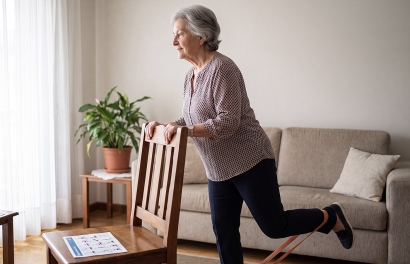
The following is an illustrative framework, not a universal post-operative protocol. Begin only when weight-bearing and exercise have been cleared as appropriate. Keep a stable chair, rail or wall within reach.
Figure 1. Increase task complexity when movement remains controlled and symptoms settle appropriately.
- Establish control: Stand with feet hip-width apart and shift weight gently from side to side for 30-60 seconds. Repeat twice. Use hand support if needed and avoid compensating by leaning heavily through the trunk.
- Challenge the base of support: Practise tandem stance or a single-leg hold for 5-20 seconds, repeating three times per side. Focus on level hips, quiet foot control and steady breathing. The NHS balance exercises offer accessible starting examples.
- Add purposeful movement: Progress to step-ups, shallow single-leg knee bends or three-direction toe reaches. Begin with two sets of five controlled repetitions. Prioritise alignment and movement quality over distance or speed.
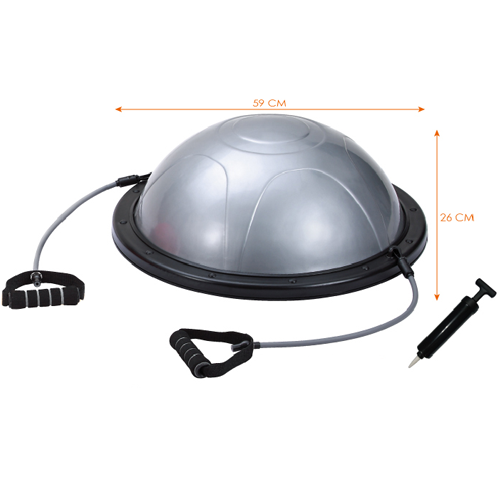
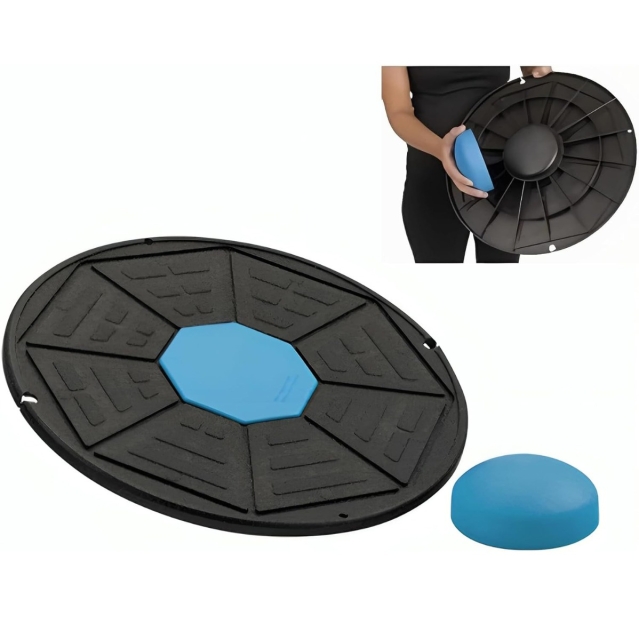
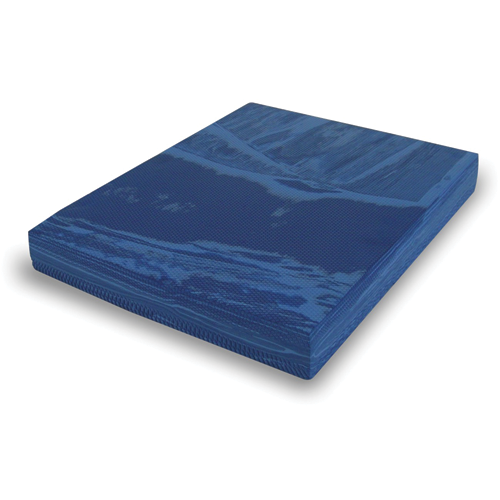
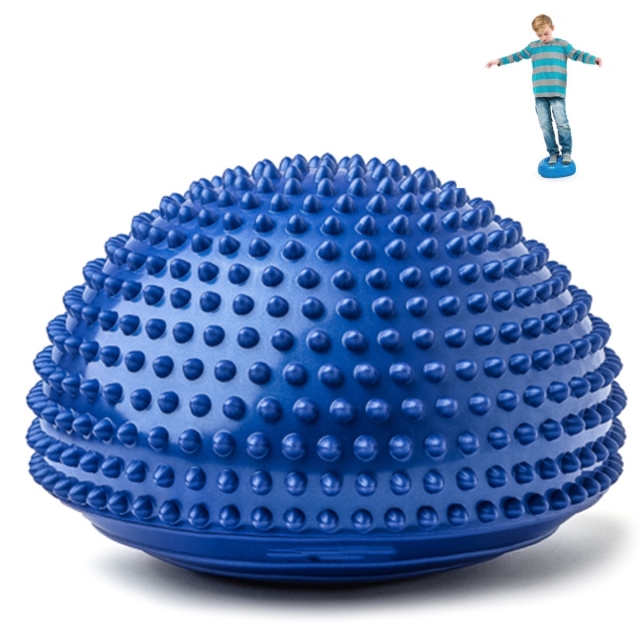
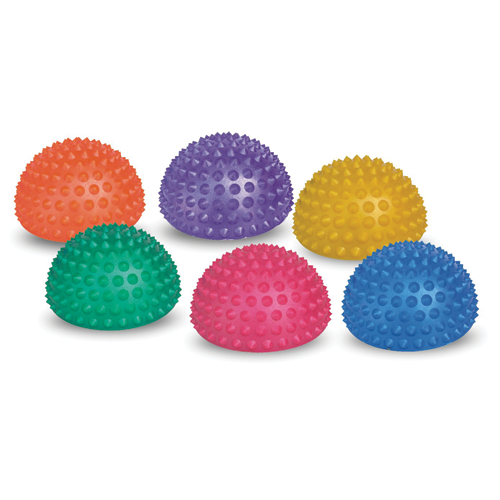
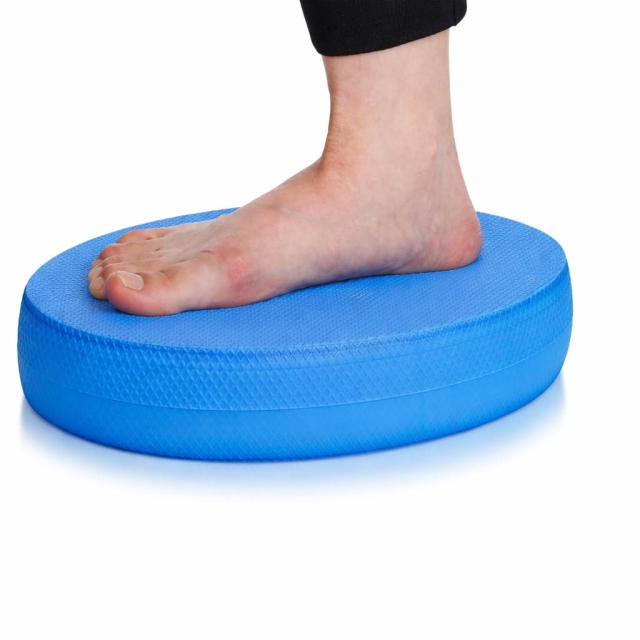
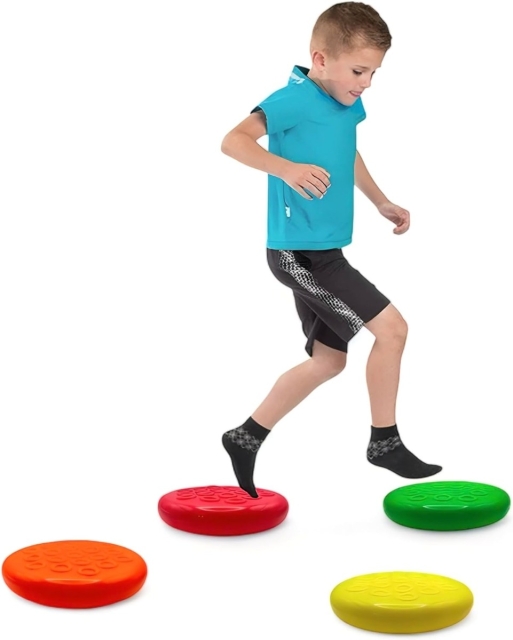
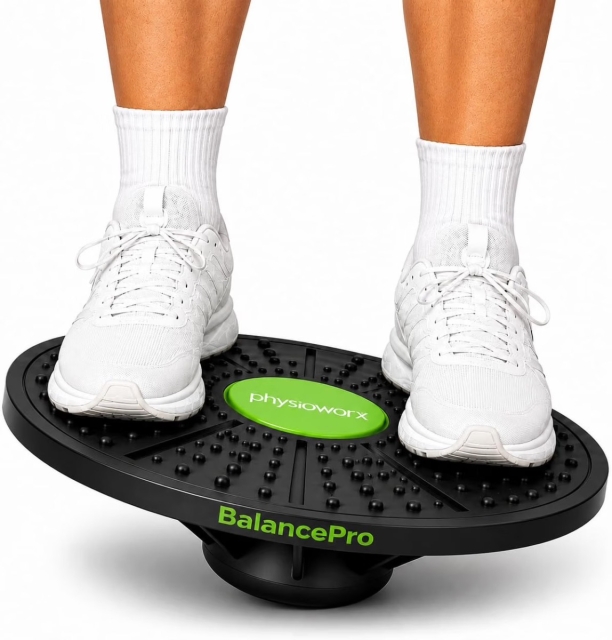
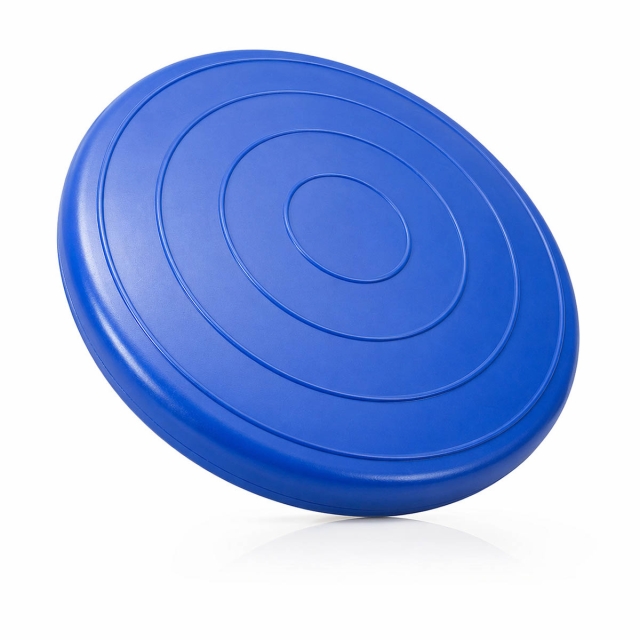
- Introduce equipment selectively: A foam balance pad adds a modest surface challenge. A two-in-one balance board allows controlled tilting. Use these only when firm-ground tasks are safe and stable.
- Prepare for real activity: Add walking turns, controlled deceleration, obstacle negotiation or hopping where appropriate. Post-surgical patients and those returning to sport require diagnosis-specific milestones and clinician clearance.
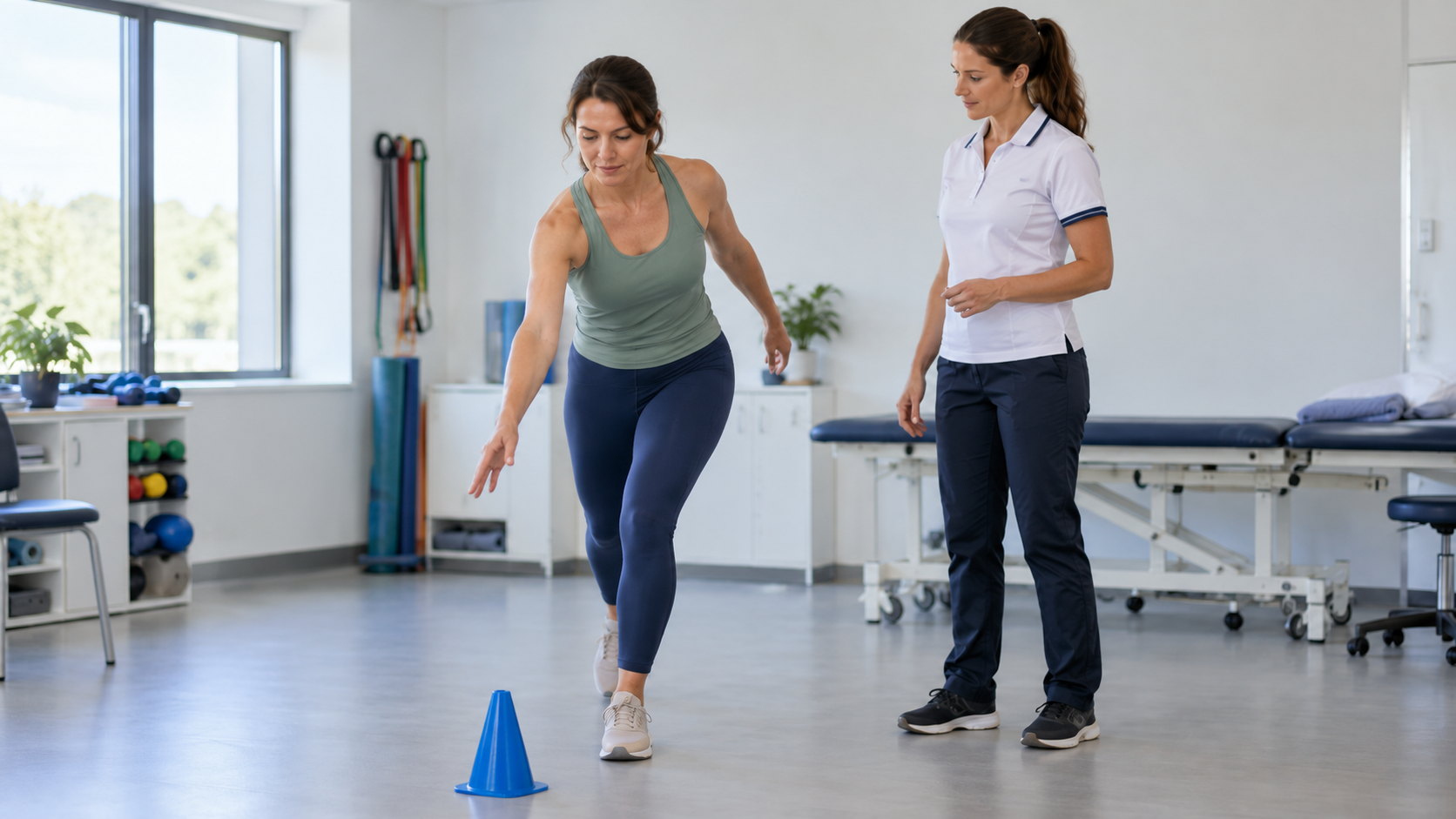
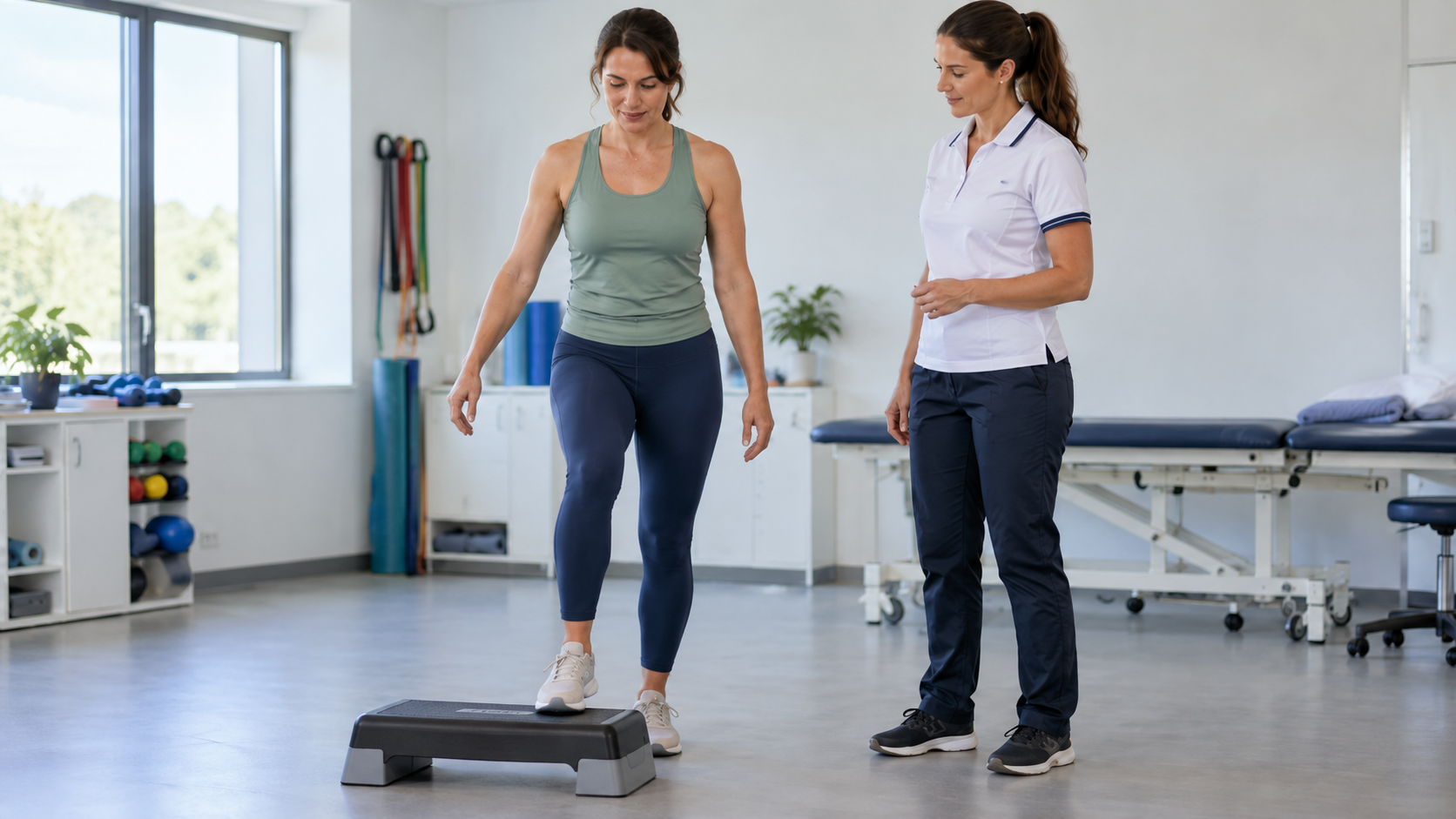
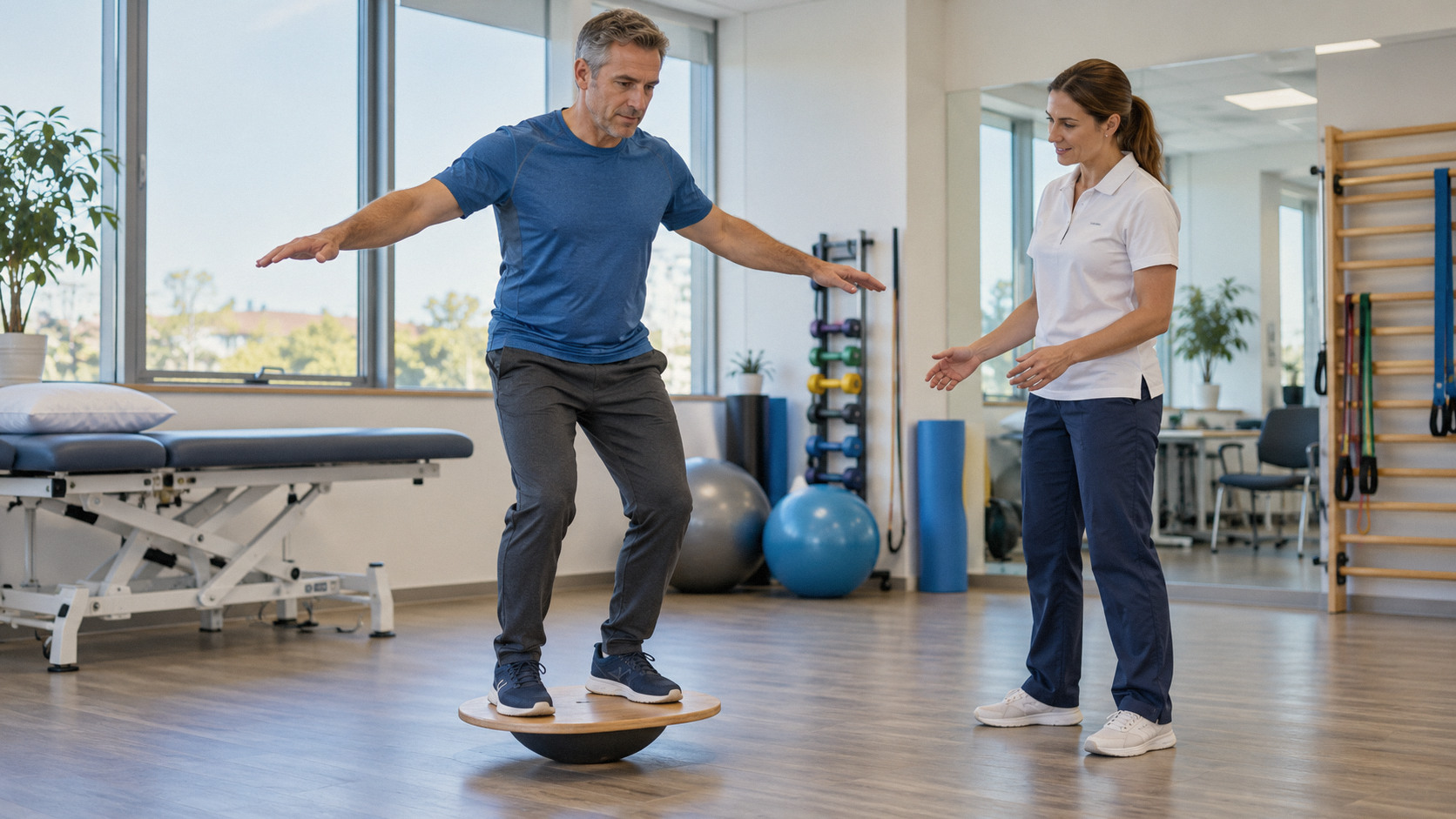
As a practical starting point, a clinician may prescribe 10-15 minutes on three days each week, adapting volume to symptoms and other rehabilitation work. Progress one variable at a time: duration, hand support, surface, movement range or speed. Reduce difficulty if technique deteriorates or pain and swelling increase afterwards.
Comparing common balance training tools
| Option | Typical use | Advantages | Precaution |
|---|---|---|---|
| Firm floor and chair | Early standing, gait confidence | Accessible and easy to standardise | Keep support within reach |
| Foam balance pad | Static balance and controlled reaches | Adds compliant-surface demand | Not suitable for unsupported high-fall-risk users |
| Wobble board | Multi-directional ankle and knee control | Variable tilt and task difficulty | Requires appropriate supervision and stability |
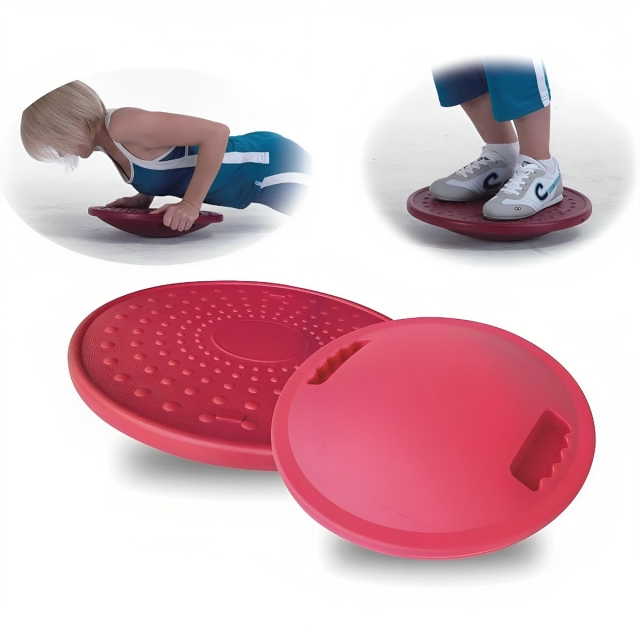
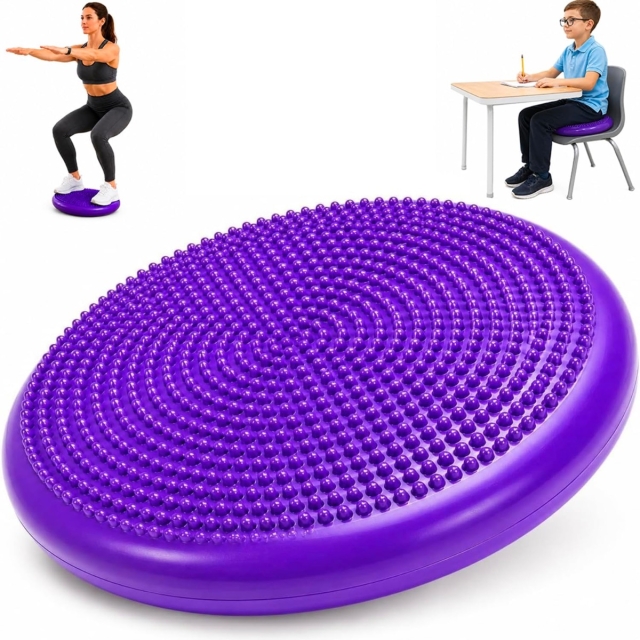
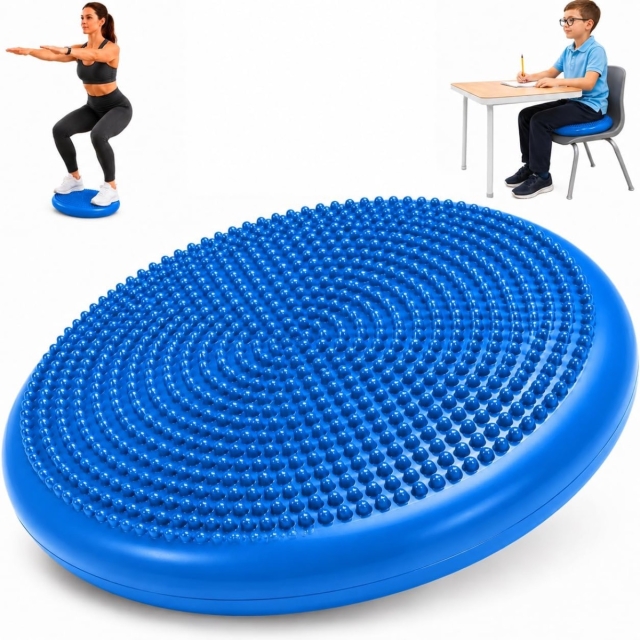
| Inflatable wobble cushion | Seated control or selected standing tasks | Compact with adjustable inflation | Check suitability for the intended load |
Explore the wider Algeos balance therapy range or its home rehabilitation equipment. Equipment is an optional way of changing exercise demand, not a substitute for assessment.
What users say: confidence matters
Patient experience can differ from what a clinic test suggests. Research involving people recovering from ankle sprains found that fear of reinjury persisted until participants attempted tasks they had regarded as difficult. A qualitative study of chronic ankle instability also identified a desire for clear explanations and rehabilitation that fits daily life.[7] [8]
On the Algeos website, one verified purchaser praised the dual-function design of its balance board. That review was marked as incentivised and should be understood as product feedback rather than proof of rehabilitation outcomes. The more meaningful question for patients is whether training helps them perform valued activities confidently.
Safety, limitations and when to seek advice
Do not progress through worsening pain, new swelling, repeated giving-way or poor control. New inability to bear weight, marked dizziness, altered sensation or other concerning symptoms warrant clinical assessment. After surgery, fracture or complex ligament injury, follow the treating team's restrictions rather than a generic timetable.
For older adults or people with significant fall risk, use close supervision and robust support before considering unstable equipment. Balance exercises complement strengthening, mobility work and condition-specific treatment. Progress is measured by safer, more capable movement, not by how difficult a board feels.
Frequently asked questions
What is the difference between proprioception and balance?
Proprioception concerns awareness of joint position and movement. Balance uses this information together with vision, vestibular input and muscular control to maintain stability.
When should balance exercises start after an ankle sprain?
Gentle, protected exercises may begin as symptoms and weight-bearing tolerance permit. The timing depends on sprain severity and clinical assessment. Start with supported movement rather than an unstable board.
How often should I practise?
Short, regular sessions can be useful. A sample rehabilitation plan might use 10-15 minutes three times weekly, adjusted for fatigue, symptoms and the wider exercise programme.
Is a wobble board necessary?
No. Many useful exercises can be performed on firm ground. A wobble board provides an optional progression when the person can control less challenging tasks safely.
Should I practise with my eyes closed?
Removing visual input makes balance harder and increases fall risk. It is not essential and should only be introduced when appropriate with suitable supervision and support.
Can balance exercises replace strength training after ACL surgery?
No. Clinical guidance recommends combining motor-control and strength training. Progression after ACL reconstruction must also respect tissue healing and objective functional criteria.
How can progress be measured?
Clinicians can repeat consistent stance or reach tests and monitor symptoms, movement quality and patient-reported function. No single balance score establishes readiness for every activity.
References and research sources
- Martin RL et al. (2021). Lateral ankle ligament sprains: clinical practice guideline. Journal of Orthopaedic & Sports Physical Therapy.
- Schiftan GS et al. (2015). Effectiveness of proprioceptive training in preventing ankle sprains: systematic review and meta-analysis. Journal of Science and Medicine in Sport.
- Kotsifaki R et al. (2023). Aspetar clinical practice guideline on rehabilitation after ACL reconstruction. British Journal of Sports Medicine.
- NICE (2025). NG249: Falls assessment and prevention - recommendations.
- BMJ Open Sport & Exercise Medicine (2020). Systematic review of motor control and somatosensation assessment tests for the ankle.
- Smith MD et al. (2021). PAASS return-to-sport framework after lateral ankle sprain. British Journal of Sports Medicine.
- Ankle sprains: patient perceptions of function and physical tasks (2011). PubMed record.
- Qualitative study of chronic ankle instability (2024). Full text on PubMed Central.
- NHS. Balance exercises for home use.
About the author
Marc Cameron, Algeos. Marc writes educational content for Algeos, covering rehabilitation equipment, lower limb health and practical approaches to movement and recovery. This guide draws on published clinical guidance and research to support informed discussions between patients and healthcare professionals.
Medical information notice: This article is for general education and is not an individual diagnosis or treatment plan. Seek advice from an appropriately qualified clinician for injury-specific recommendations.

Sold: Each
Incl. VAT Exl. VAT