




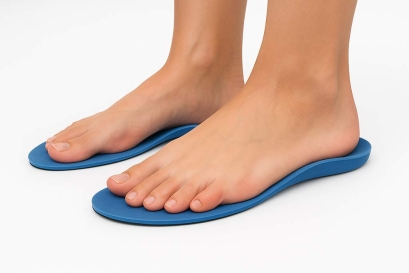
Algeos, a UK-based company founded in 1881 in Liverpool, has a long heritage in footwear and medical supplies. Over its history, Algeos evolved from a leather merchant to a leading provider of podiatry and orthotic solutions. In the early 2000s, Algeos launched Slimflex as one of its own in-house brands, introducing an “off-the-shelf” orthotic insole solution for clinicians.
This made Slimflex part of Algeos’ family of brands (alongside others like Aortha and Diaped) aimed at improving patient care with innovative foot orthoses.
Since its introduction, the Slimflex line has expanded to include multiple models addressing various clinical needs. Backed by Algeos’ century-plus experience in footcare, Slimflex insoles were designed in collaboration with clinicians to provide cost-effective, easily customisable orthotic options.
Over the years, new variants were created. These include Slimflex Amber, Green, Berry, Carbon, Comfort, and Simple. They are designed for different support levels and patient groups. Today, Slimflex insoles are widely used, including in the UK National Health Service (NHS), reflecting their trusted status. In fact, Slimflex devices are “prescribed every day in the NHS” and considered an NHS “everyday staple,” attesting to their broad adoption in clinical practice.
The brand has focused on constant improvement for flexibility and ease of use. For example, it uses heat-moldable EVA material and modular parts. These features let podiatrists quickly adjust the insoles to meet a patient’s needs.
In summary, Slimflex’s history is intertwined with Algeos’ evolution into a leader in orthotic therapy, and the brand remains a core offering that leverages Algeos’ long-standing expertise in foot health.
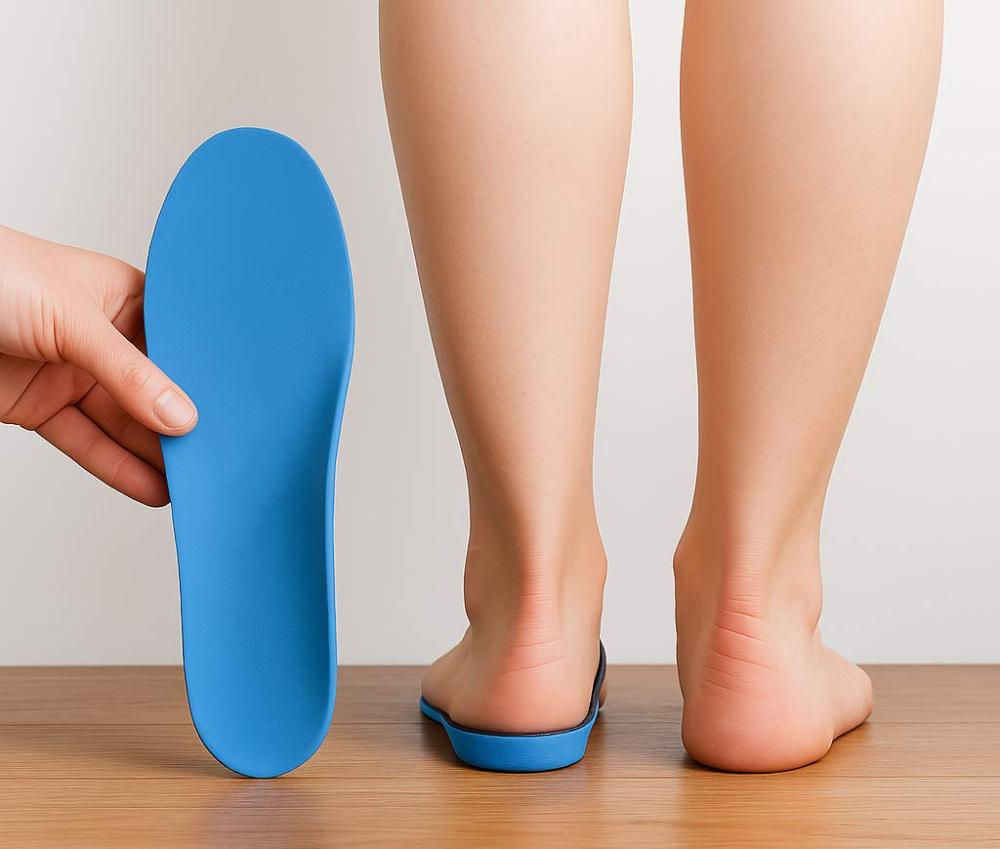
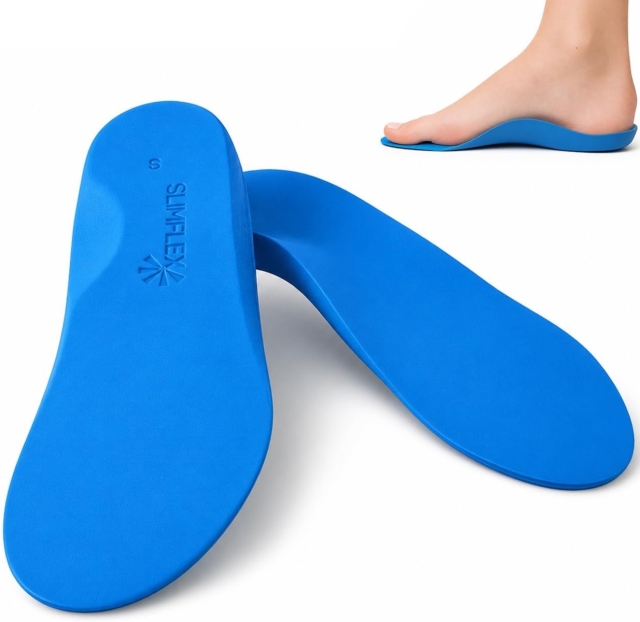
Slimflex Simple - Full length - A50 Medium Density
Clinical and Biomechanical Research Supporting Slimflex Insoles
Slimflex orthotic insoles are not only commercially popular but also supported by clinical and biomechanical research evidence. Algeos describes the Slimflex line as “clinically proven”, noting that several studies back their effectiveness. Key research findings include:
Diabetic Foot Ulcer Prevention
Studies have shown that using Slimflex insoles can significantly reduce plantar pressure and shear forces in patients with diabetic peripheral neuropathy. By redistributing pressure away from high-risk areas on the sole, Slimflex helps prevent foot ulceration in diabetes – a critical benefit for patient safety. In one trial (the INSTEP feasibility RCT, 2023), an optimised insole (of the type Slimflex represents) led to lower mean peak plantar pressures compared to standard insoles, suggesting potential to reduce ulcer incidence. This pressure-offloading property underscores the biomechanical soundness of Slimflex design for diabetic foot care.
Improved Gait and Pain Relief
Prefabricated orthoses like Slimflex have demonstrated improvements in gait parameters and pain reduction in musculoskeletal conditions. For example, in children with juvenile idiopathic arthritis (JIA), custom-fitted Slimflex insoles improved walking gait and reduced foot pain .
Another study in patients with patellofemoral pain found that Slimflex insoles improved lower-limb kinematics, helping realign the knee and reduce pain during activities like stair descent .
These outcomes highlight that Slimflex can provide biomechanical correction (arch support, heel stabilisation) that translates to functional improvement in gait and reduced pain.
Balance and Stability
Research also indicates Slimflex insoles can enhance balance. In patients with diabetic neuropathy (who often have balance deficits), use of Slimflex was associated with improved static and dynamic balance, thereby potentially reducing fall risk. By offering a more stable base and tactile feedback, the insoles help compensate for sensory loss in the feet.
Arthritis and Chronic Conditions
Early rheumatoid arthritis patients have reported better quality of life and mobility when using Slimflex orthoses. The insoles provide a cost-effective means of pain relief and support for arthritic feet. Similarly, Slimflex devices have been used to manage plantar fasciitis, flatfoot and knee osteoarthritis by redistributing forces and supporting the arch to improve alignment.
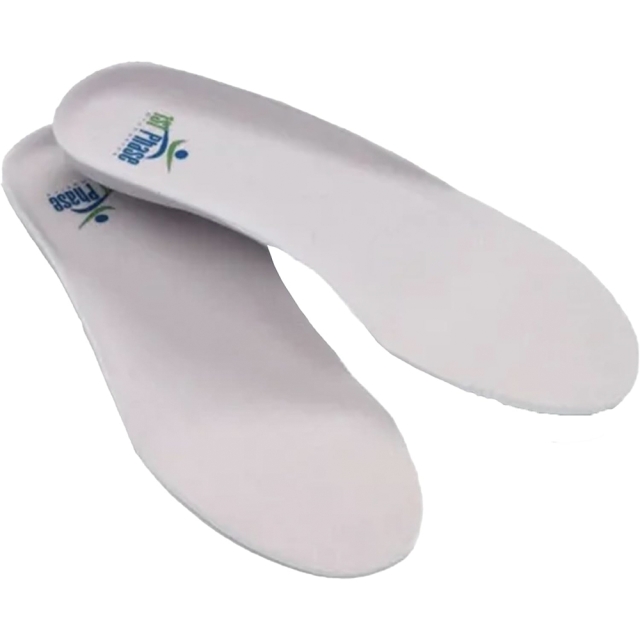
Clinical audits have found them effective as a first-phase (“chairside”) orthotic intervention, often comparing favorably in cost and convenience to fully custom orthotics.
Notably, a review in the Journal of Orthopaedic & Sports Physical Therapy noted that rigid insoles can alleviate strain on ligaments and joints, reducing injury risk – supporting the principle behind firmer Slimflex models . Overall, the body of evidence suggests that Slimflex insoles confer measurable benefits across a spectrum of conditions, validating their clinical use.
These studies and audits reinforce that a well-designed prefabricated insole can deliver meaningful orthopaedic support, often bridging the gap between simple cushioning insoles and fully bespoke orthoses.
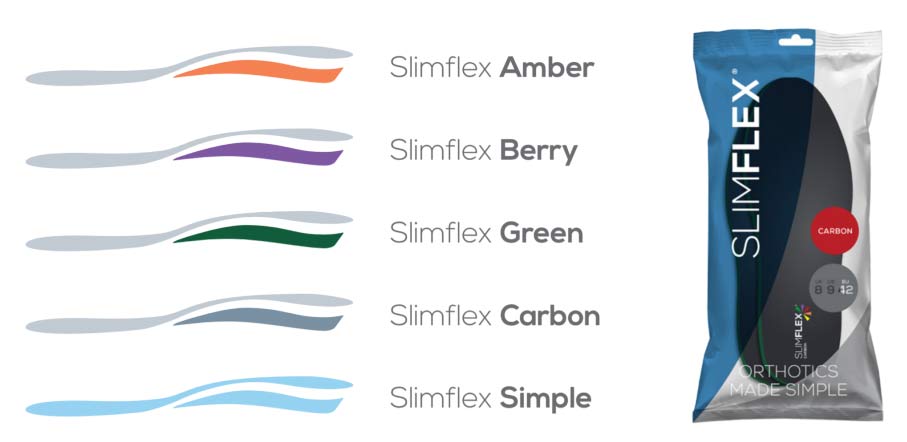
Slimflex Product Range and Key Differences
The Slimflex range encompasses several models – each engineered with specific materials, features, and patient applications in mind. All Slimflex insoles share a foundation of being made from EVA (ethylene-vinyl acetate) foam of varying densities, with a contoured anatomical shape. However, they differ in rigidity, added covers, and built-in modifications.
Below is an overview of the full product range, followed by a comparison table highlighting their differences in material, features, and suitability:
Slimflex Simple
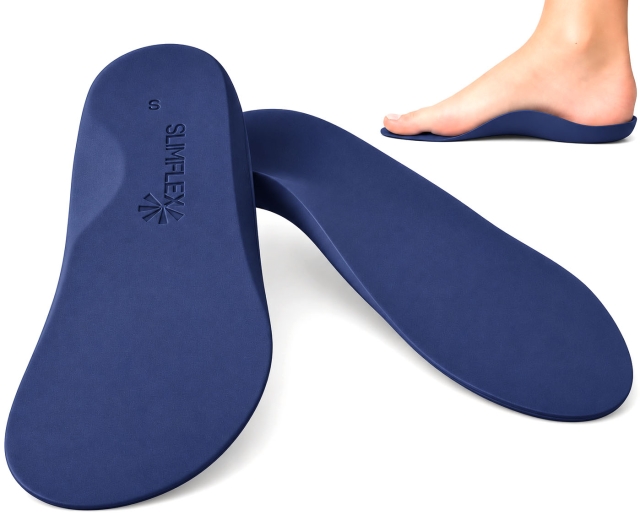
Slimflex Simple is a base model orthotic designed for maximum versatility and customisation. It is an unlined (coverless) EVA insole available in multiple densities (low, medium, high Shore A hardness) and in full-length or 3/4 length options . The absence of a top cover means the foot sits directly on the EVA material, which “cradles” the foot and reduces friction while allowing direct contact for better proprioceptive feedback .
The Simple has a unique anatomical design created by Algeos to address common foot problems like overpronation, flat feet and forefoot pain (metatarsalgia) .
Its shape includes a high medial arch profile with a medial flange, a deep heel cup, an integrated first metatarsal cut-out (to accommodate the Windlass mechanism of the big toe), and a mild metatarsal raise. The underside is flat, which facilitates adding wedging or posting as needed.
As the name implies, Slimflex Simple is meant to be a “simple” first-line orthotic – podiatrists often use it for quick, chairside fittings when a patient needs immediate support .
It is fully heat-mouldable and grindable, meaning clinicians can heat the EVA to reshape the arch or grind the material to adjust thickness and fit. This high modifiability allows endless customisation, from adding wedges (for rearfoot or forefoot posting) to attaching heel lifts or metatarsal domes. Because of this, the Simple is recommended when the speed of orthotic turnaround is crucial and a custom solution is not immediately available .
It is an excellent, cost-effective option for the initial treatment of biomechanical issues. The low-density (LD) version (approx. Shore A 30) provides soft cushioning and is “ideally suited to diabetic, arthritic, and elderly patients with fat pad atrophy” who need gentle support. The higher density versions offer more functional control for active or heavier patients.
In summary, Slimflex Simple serves as a flexible platform that clinicians can adapt on the spot to treat conditions ranging from overpronation to metatarsalgia.
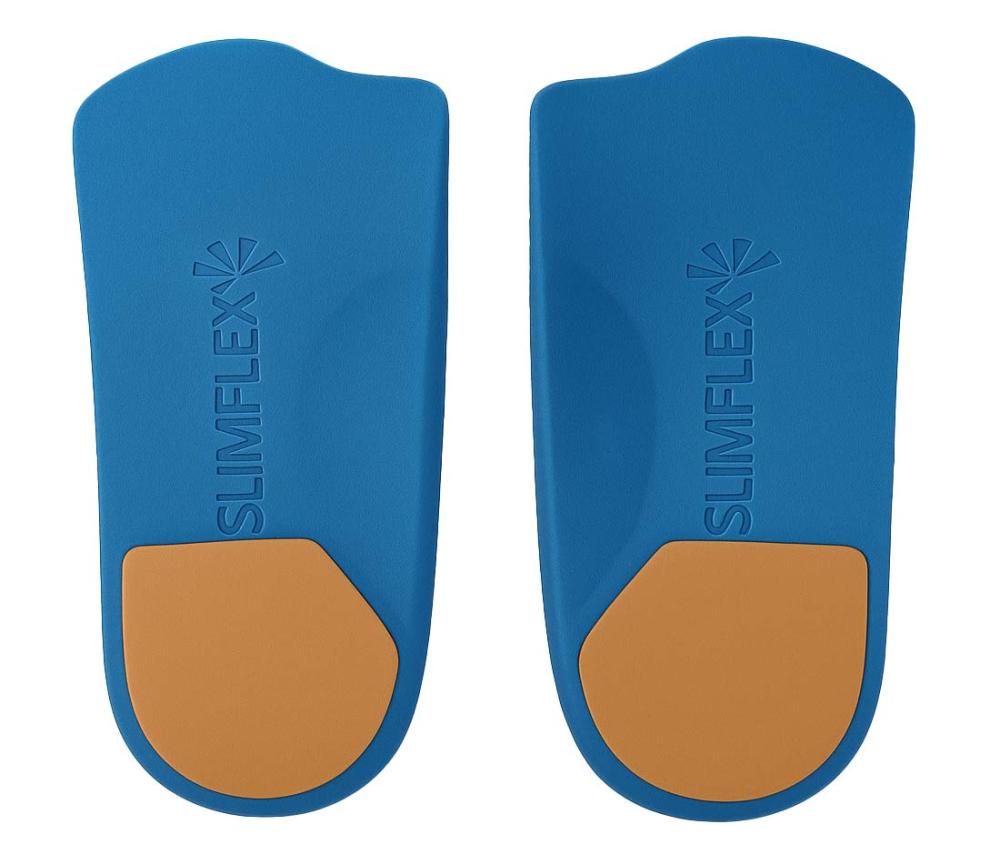
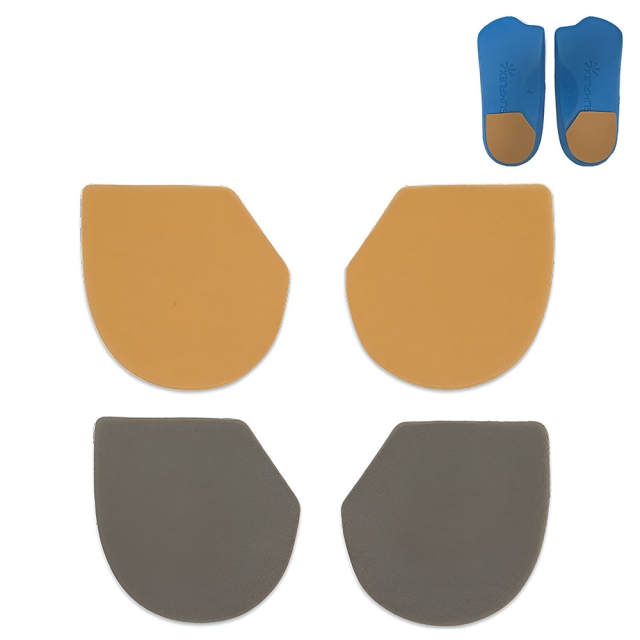
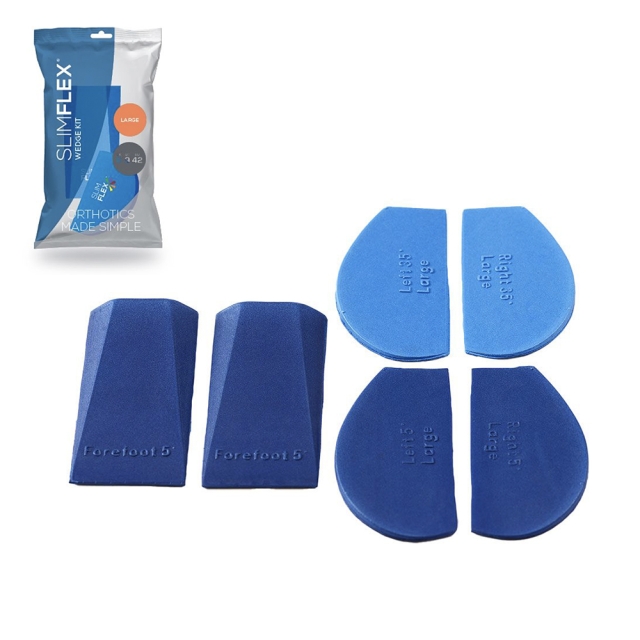
Slimflex with Rearfoot Wedges
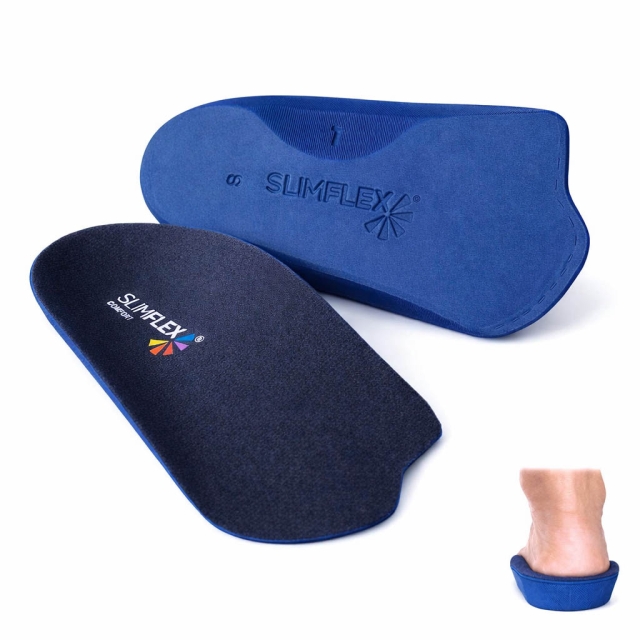
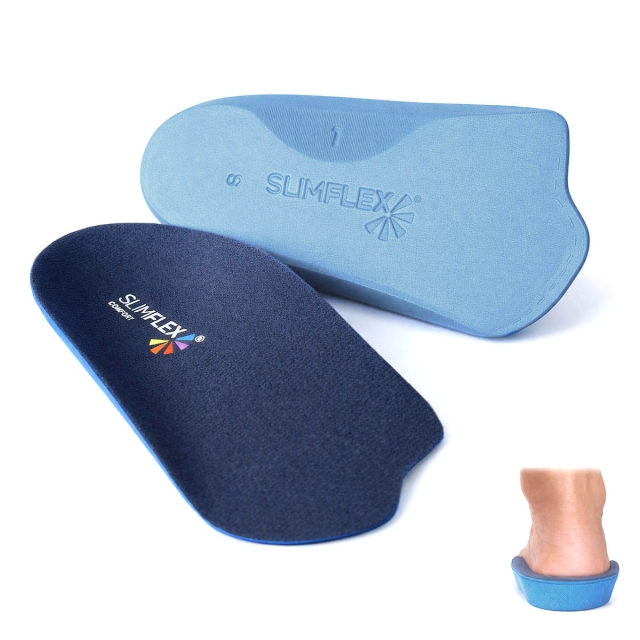
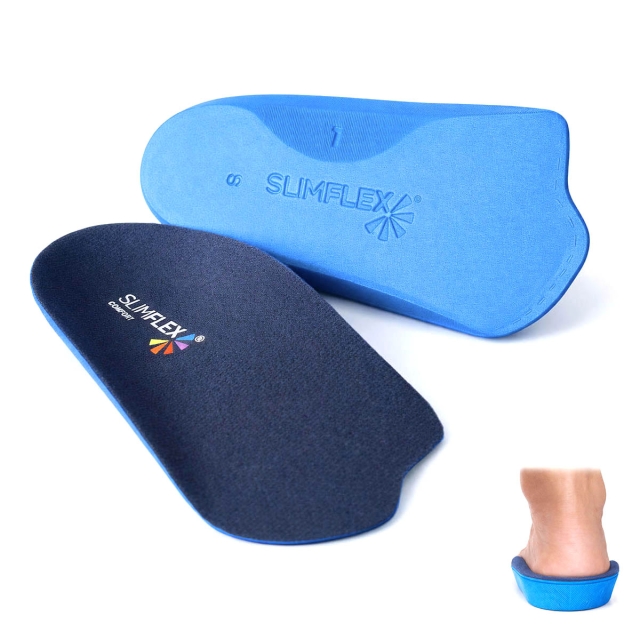
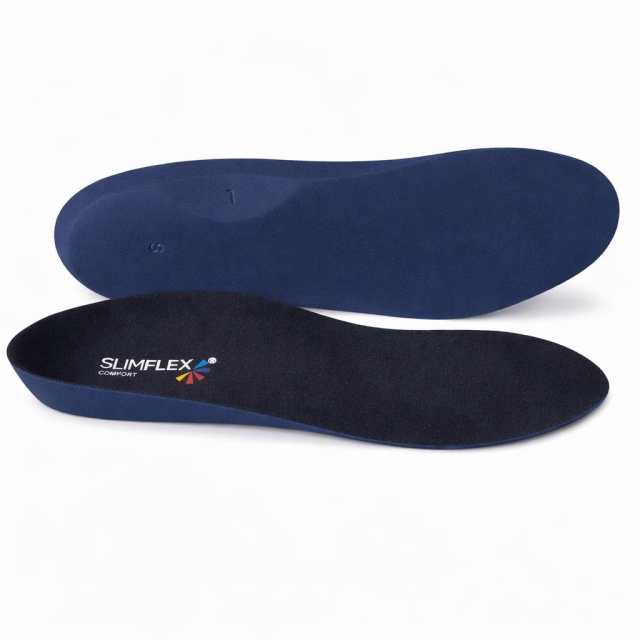
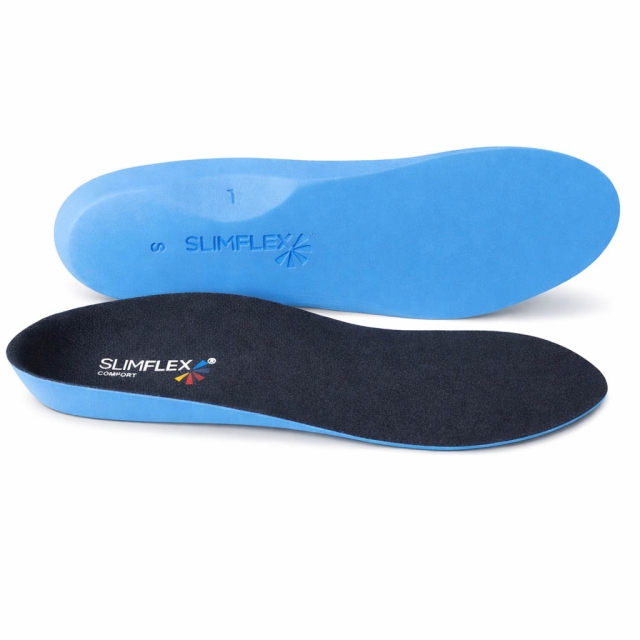
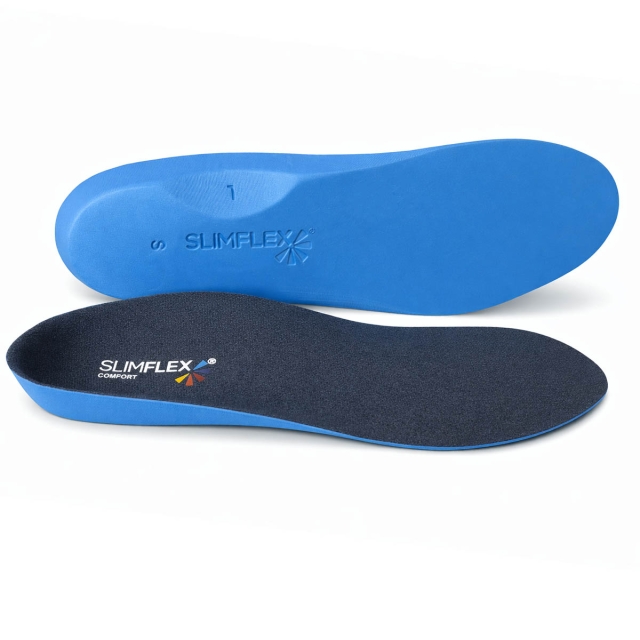
Slimflex Comfort
The Slimflex Comfort line builds upon the Simple model by adding a soft fabric top cover for enhanced comfort. In essence, a Slimflex Comfort insole has the same EVA shell and contouring as the Slimflex Simple (including the deep heel cup, arch support with medial flange, met cut-out, etc.), but laminated with a brushed nylon over that improves moisture absorption and cushioning.
This cover makes the device more pleasant for patients with sensitive or “tender” feet. The Comfort range also comes in different densities (often labelled LD, MD, HD for low/medium/high density EVA) and lengths (full or 3/4), similar to the Simple. For example, the Comfort LD 3/4 is described as the lightest and softest Slimflex device, “perfect for tender, delicate feet”.
By combining “the superior contouring of Slimflex Simple with a soft fabric top cover”, the Comfort insoles aim to deliver both support and enhanced comfort. Patients who cannot tolerate the direct feel of an EVA shell (for instance, those with arthritis, diabetes, or elderly individuals) often benefit from the added cushioning layer. The clinical usability remains high. Comfort insoles are still heat-moldable and easily modified for quick adjustments.
They are “retail-packed” and ready to dispense in the clinic, reflecting their role as a rapid solution.
Indications for Slimflex Comfort mirror those of the Simple, covering a wide range from flat feet and overpronation to pes cavus (high arches), plantar fasciitis, mild supination, and even providing gentle support for rheumatoid arthritis heels. The Comfort is positioned as a very versatile device for various foot conditions, with the advantage of extra comfort to encourage patient compliance.
Practitioners often choose Comfort insoles when they want to deliver the therapeutic benefits of a Slimflex orthotic but with a more cushioned, finished feel right out of the box. This makes it ideal for use as an immediate relief measure for foot pain in clinical settings, such as for plantar fasciitis or age-related foot fatigue, without the break-in discomfort that stiffer insoles might cause.
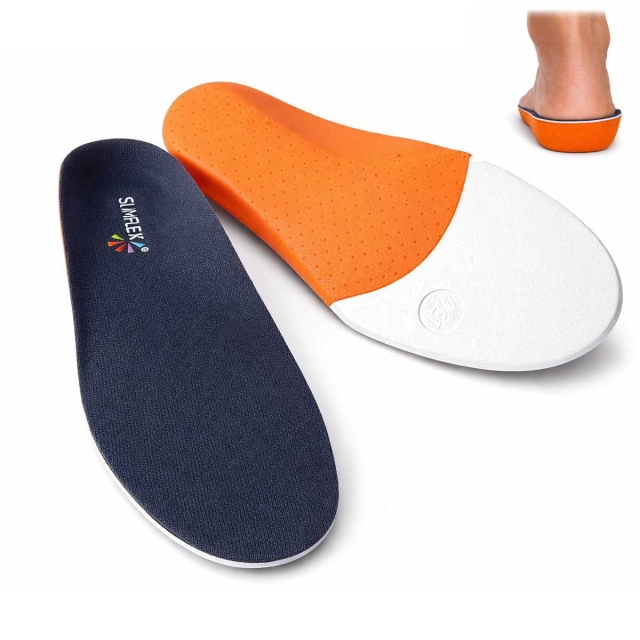
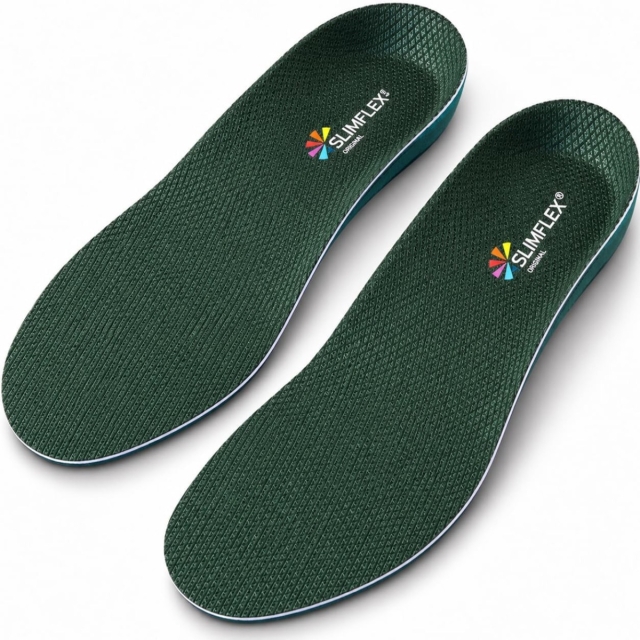
Slimflex Green
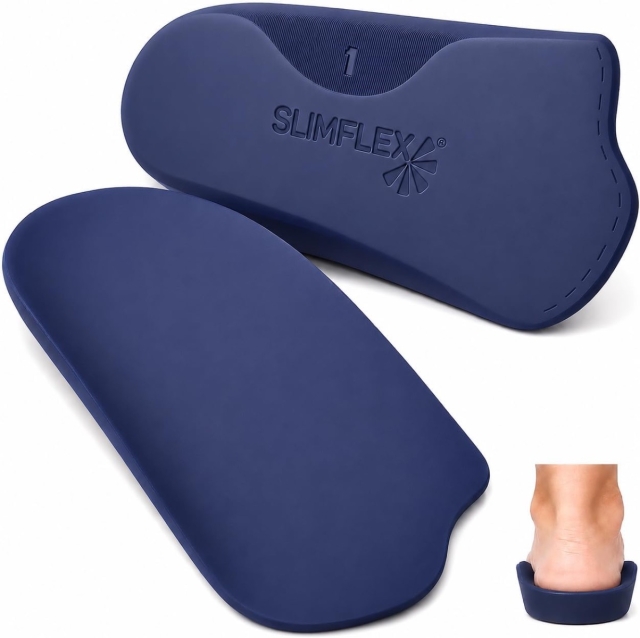
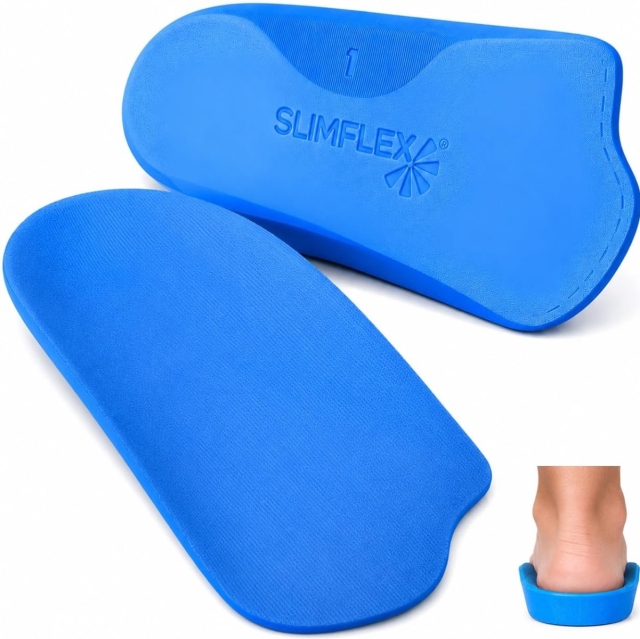
Slimflex Green Orthotic Insoles (sometimes called Slimflex Green “Original”) are a popular model known for being thin, flexible, and breathable. They are made of a strengthened medium-density green EVA and come with an anti-microbial Orthabrelle top cover that is perforated for airflow. The Green insoles have a contoured shape providing support through the arch and a deep heel cup, similar to other Slimflex designs, but are engineered to be slightly lower profile.
Algeos highlights that Slimflex Green offers “moderate arch support” – enough to alleviate pain from flat feet or plantar fasciitis, but not so rigid as to cause discomfort. This moderate support can be particularly beneficial for patients who find very hard orthotics uncomfortable; the Green strikes a balance by controlling foot posture while remaining relatively compliant.
A key design element is maximal rearfoot control with minimal bulk: the rearfoot posting and heel cup provide positioning, while the arch section is slim to fit into tighter footwear . Indeed, Slimflex Green’s “thin and flexible design… makes them ideal for active patients and tight footwear” according to Algeos Australia.
They are often used in athletic shoes, casual shoes, or any situation where space in the shoe is limited. Despite the slim build, the insoles still help balance pronation and supination by preventing the foot from rolling too far inward or outward. The Orthabrelle top cover wicks moisture and fights odour (an important feature for athletes or all-day wear) .
Clinically, Slimflex Green is regarded as an all-rounder and an “NHS staple” for common foot complaints. They are frequently prescribed for plantar fasciitis, arch pain, flat feet, and mild pronation issues. The product is also suitable for children and adults alike, given the range of sizes and the moderate support level. Because they are cost-effective (noted to be one of the lowest-cost Slimflex options) and easy to trim or add postings to, many clinicians use Green insoles as a first-line intervention.
For example, a practitioner might issue a Slimflex Green to a patient with heel pain to provide immediate relief and see how they respond before considering custom orthotics. In summary, Slimflex Green is characterised by its breathable comfort and balanced support, making it a go-to choice for day-to-day support in a wide variety of footwear and for patients needing moderate correction without excess bulk.
Slimflex Amber
The Slimflex Amber Orthotic Insoles are a firm, rearfoot-control device designed explicitly for pronation correction. Made from a contoured EVA (colored amber/orange), they feature a built-in heel stabiliser and rigid longitudinal arch support to combat overpronation (excessive inward foot roll) .
Slimflex Amber insoles are called “comfortable, but firm.” This means they have some cushioning. However, the design is stiffer to help keep your feet aligned. They guide the foot from heel strike through arch support and even into the forefoot, promoting proper alignment through the entire stance phase of gait.
These insoles excel in providing superior rearfoot control: the deep heel cup and medial rearfoot posting work to prevent the heel from eversion (tilting inward). The arch contour is higher and more rigid than in the Green model, which helps support “fallen arches” and flat feet by essentially holding the arch in a corrected position .
By maintaining proper arch height and heel alignment, the Amber insoles reduce undue stress on the ankles, knees, and lower limbs. They are thus effective in alleviating symptoms of excess pronation, such as shin splints, plantar fasciitis, tibialis posterior tendonitis, and knee pain.
Indeed, recommended indications include flat feet, overpronation, plantar fasciitis, shin splints, posterior tibial tendon dysfunction, and even high arches needing support (pes cavus) . This may seem counterintuitive, but a rigid supportive insole can also help a high-arched foot by providing stability and cushioning the heel strike.
The Slimflex Amber is often the “ideal initial introduction to orthotic therapy – perfect for first line treatment”, especially for pronation problems. Clinicians might choose Amber for a patient who visibly overpronates, as a no-cast, off-the-shelf solution to start correcting gait immediately. It’s considered a “no-risk device” in that it’s a straightforward, reliable support that can be tried before more complex interventions .
They are very lightweight for their rigidity, and feature a perforated underside for breathability to reduce sweat (important since they are often worn during sports) . Additionally, Amber insoles are heat-moldable to fine-tune the fit and can accommodate adjunct posting. Professional tips from Algeos suggest combining Slimflex Amber with wedges or heel lifts for specific cases – e.g. adding a 5° medial rearfoot post to increase control, or a kinetic wedge under the first metatarsal head for functional hallux limitus (stiff big toe) .
They can also be paired with heel raises for equinus (tight calves) issues . This modularity makes them popular in podiatry clinics. Moreover, Slimflex Amber has been labelled “another NHS everyday staple”, indicating wide usage in public health contexts. In practice, these insoles are commonly dispensed to patients with conditions like adult flatfoot or plantar fasciitis, allowing them to immediately experience improved foot alignment and relief from strain while awaiting or avoiding custom orthotics.
Slimflex Berry
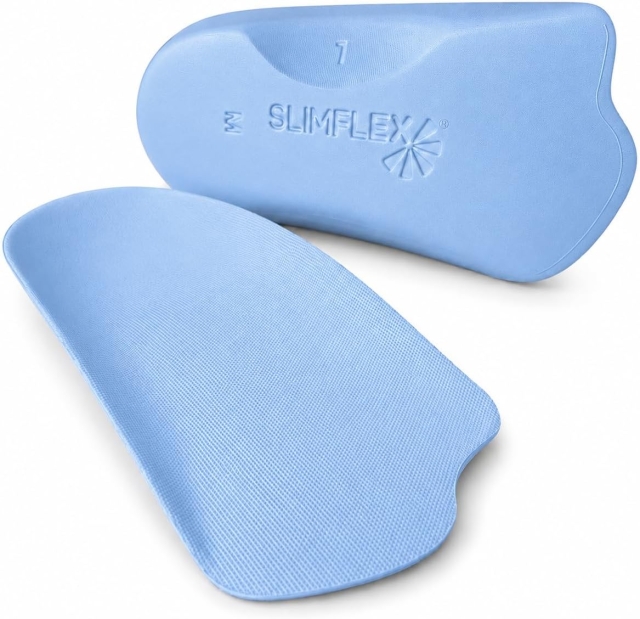
Slimflex Berry Insoles are a newer addition to the range, designed as the successor to the older “Slimflex Kinetic” model (which has been discontinued). They distinguish themselves by offering superior cushioning and a wider fit for patients who require a broader orthotic or extra shock absorption.
The Berry is named for its colour (typically a berry/magenta hue) and is constructed from a relatively low-density, soft EVA that moulds to the foot’s shape. This model is described as a “slim-line product” that conforms closely to the foot, providing maximum comfort and support while reducing fatigue.
The high level of cushioning makes it ideal for absorbing impact, beneficial for heavier patients or those on their feet all day, as well as people with sensitive feet. In fact, one distributor notes that Slimflex Berry is suited for wide fitting feet and heavier patients who need an orthotic that can distribute pressure without being too rigid or narrow.
A hallmark of the Berry insole is its wide profile: the device is slightly broader in shape to accommodate wider feet (which might not sit fully on narrower insoles). This design ensures the medial and lateral borders of the foot are properly supported, which can improve comfort and effectiveness for patients with broad feet or bunions. The Berry likely includes a gentle arch support and heel cup (similar in base shape to the Simple/Comfort) but emphasizes comfort over aggressive correction. It often comes with a top cover for a plush feel.
Clinically, Slimflex Berry is used to “prevent general foot fatigue, reduce discomfort and target at-risk areas with support”, according to product descriptions. It is especially useful for conditions like metatarsalgia, fat pad atrophy, or arthritis, where cushioning under the ball of the foot and heel can significantly relieve pain.
Patients with diabetes might also use Berry insoles if they have wide feet, as the cushioning helps protect against pressure points (though for severe diabetic neuropathy, the Simple LD or a custom diabetic insole might be preferred).
In practice, podiatrists might select Slimflex Berry for someone who needs soft orthotic support across a wider surface area – for example, an older patient with broad, flat feet and diffuse foot pain. The Berry provides a gentle lift to the arch and pads the foot, “reducing fatigue and preventing injuries” that can result from a lack of support .
Its flat bottom allows adding postings if needed, but often it’s used as-is for cushioning. In summary, Slimflex Berry fills the niche for a soft, accommodating orthotic: it offers the most cushioning in the Slimflex family and is tailored for those who prioritise comfort or have anatomical needs (wide forefoot) that standard insoles don’t meet.
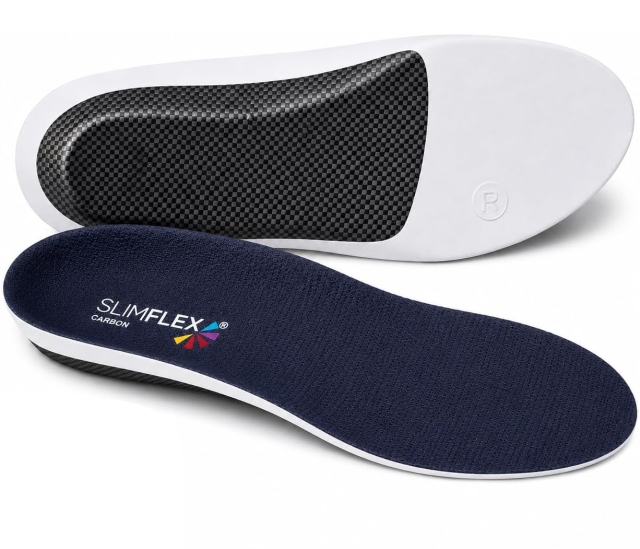
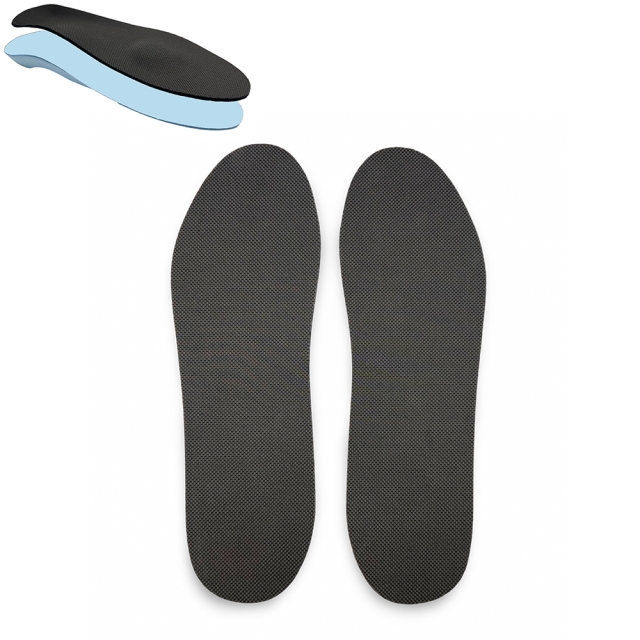
Slimflex Carbon
At the high-control end of the spectrum is the Slimflex Carbon Supination Control Insole. Unlike other Slimflex variants aimed mostly at pronation or general support, the Carbon is specifically built to address supination (under-pronation) and provide robust support for those who need extra rigidity.
It features a composite construction: a base of EVA foam integrated with a rigid thermoplastic (nylon/carbon fibre) reinforcement, especially in the rearfoot area. This gives the insole a much stiffer profile. The design includes a pronounced lateral posted side and arch support intended to stop the foot from rolling outward. In essence, Slimflex Carbon provides combined arch support and lateral control, with a firm heel cup and a plastic stabiliser that prevents excessive supination.
These insoles are often prescribed to patients with a cavus foot type (high arches), cavovarus deformity, or chronic lateral ankle instability – conditions where the foot tends to supinate and standard insoles or even Amber insoles might not give enough lateral support. By bolstering the lateral column of the foot, the Carbon insoles help distribute weight more medially, which can reduce pressure on the outer foot and improve shock absorption. This is crucial for heavy or highly active individuals: the added plastic layer increases durability and support under load, making Slimflex Carbon “ideal for heavier patients and highly active patients” who might otherwise flatten softer insoles .
Additionally, the top cover is designed for athletic use – it’s often a quick-dry, moisture-wicking fabric to handle sweat.
Indications for Slimflex Carbon go beyond just supination; they include related issues like stress fracture prevention (e.g., in fifth metatarsal or tibia, which can occur with high arches), plantar fasciitis in high-arched feet, and hallux limitus (stiff big toe) where a kinetic wedge under the first toe may be added .
Algeos provides professional tips such as using the Carbon insole alone for mild cases, or combining it with a 3.5° rearfoot wedge for more pronounced control of the subtalar joint, or adding a forefoot kinetic wedge for hallux limitus cases. This shows that, like other Slimflex products, the Carbon can be augmented with postings for customised needs.
From a biomechanical perspective, Slimflex Carbon insoles are meant to lock the rearfoot and midfoot in a neutral position, offering a stable foundation for supinators. They thereby help alleviate strain on the lateral ligaments and joints. In fact, an FAQ on supination from Algeos notes that orthotic insoles (like Slimflex Carbon) can correct biomechanical imbalances, and cites research that such insoles significantly improve alignment and reduce the outward rolling associated with supination.
Patients who benefit from Slimflex Carbon often report improved stability during walking/running and less ankle rolling. These insoles are typically slightly more expensive due to the carbon/nylon component, but at “under £15 per pair” they remain cost-effective for first-line treatment of supination issues. In summary, Slimflex Carbon is the go-to solution within the Slimflex range for maximum support needs, providing the highest level of rigidity and control, particularly for lateral stability.
Comparison Table of Slimflex Insoles
The following table summarises the key differences between the main Slimflex products in terms of material/design, features, and recommended use:
Product |
|
Construction & Features |
Support Level & Function |
Ideal Patients / Uses |
|
Slimflex Simple |
|
EVA shell (multiple densities), no top cover; deep heel cup, high medial arch flange, flat bottom for posts. Fully heat-moldable and grindable for customisation. |
Mild–Moderate support (depends on density). Provides basic arch support and cushioning; acts as a “blank” to be tailored to the patient. Great for quickly addressing pronation, flat feet, or adding met pads etc. |
“First phase” orthotic for quick chairside fitting. Ideal for diabetics, arthritic or elderly patients needing soft support (LD version), and general use for common foot pain (MD/HD for more support). Serves as a cost-effective trial orthotic in clinics. |
|
Slimflex Comfort |
|
EVA shell (same shape as Simple) in LD, MD, or HD, with soft fabric cover (brush nylon) for comfort. Deep heel cup, arch flange, first-ray cut-out, met raise (as per Simple) built in. |
Mild–Moderate support (like Simple) with added comfort. Top cover adds cushioning and moisture absorption. Highly customizable (heat-mould/post) but more patient-friendly feel. |
Patients who need orthotic support plus cushioning: e.g. older patients, sensitive feet, diabetic or rheumatic patients. Good for plantar fasciitis, flat feet, shin splints, mild high arches, etc., especially when you want to ensure comfort and compliance. Used for rapid orthotic solutions with a ready-to-use finish. |
|
Slimflex Green |
|
Medium-density green EVA with anti-microbial perforated cover. Contoured arch and deep heel cup, but slimmer profile. Very lightweight, trimmable edges. |
Moderate support, balanced for both pronation and slight supination control. Emphasis on heel support and alignment without bulk – controls rearfoot while allowing some flex at arch. Comfortable and less rigid (no excessive arch pressure) . |
All-purpose insole for common foot conditions: excellent for plantar fasciitis, flat feet, low arches, and general arch pain. Often given to active individuals and athletes due to its thin design (fits in running shoes). Suitable for children and adults as an everyday support. An NHS favourite for wide use in moderate cases. |
|
Slimflex Amber |
|
High-density amber EVA, firm shell with built-in heel stabiliser and rigid arch contour. Some models have a perforated underside for breathability. Full length, anatomical fit. |
High support, focused on rearfoot correction (medial posting) and substantial arch lift. Controls overpronation effectively – keeps foot aligned from heel through arch. Still somewhat cushioned but notably stiffer than Green. |
Ideal for overpronators and flat feet requiring strong correction. Used for fallen arches, excessive pronation, plantar fasciitis, shin splints, PTTD, etc.. Also helps support high arches (for stability). This orthotic is a great first treatment for pronation problems. It is popular in the NHS and in sports like running and court games. It helps prevent injuries caused by misalignment. |
|
Slimflex Berry |
|
Low-to-medium density berry-colored EVA, wider and more cushioned profile. Likely with a top cover for added plushness. Designed to conform to foot shape (flat base for modifications). |
Low–Moderate support with emphasis on cushioning and pressure distribution. Provides arch support but is softer, absorbing shock to reduce fatigue. Wide fit ensures support across the whole foot, avoiding edge pressure on wide feet. |
Best for wide feet and those needing maximal comfort: e.g. people with broad flat feet, obese or heavy-built patients, or anyone with general foot fatigue and forefoot pain. Often used for long hours standing, to prevent soreness. Also suitable for diabetic foot protection or arthritis, where softness is key (though in severe cases, a diabetic-specific insole might be used). Great for patients who find harder insoles uncomfortable. |
|
Slimflex Carbon |
|
Dual-material: EVA foam plus a rigid thermoplastic/carbon fibre reinforcement in the rearfoot. Has a deep heel cup and a pronounced lateral posting/flange. Quick-dry top cover for sports. |
Very high support (maximal rigidity). Provides combined arch support and strong lateral control to prevent supination. Essentially creates a firm platform under the heel/arch to stop the foot from rolling outward, while supporting the medial arch to redistribute pressure. |
Tailored for supinators and high-arched feet (pes cavus, cavovarus) with lateral ankle instability or history of ankle sprains. Used for under-pronation, lateral foot pain, recurrent ankle sprains, and stress fracture prevention. Also for heavy or athletic patients needing extra-rigid support (e.g. runners with high arches). Often a step-up option if standard insoles aren’t supportive enough for a patient’s biomechanics. |
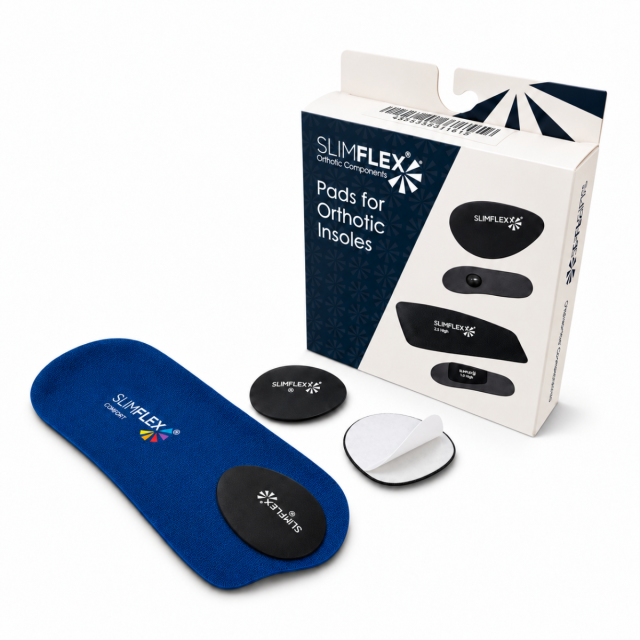
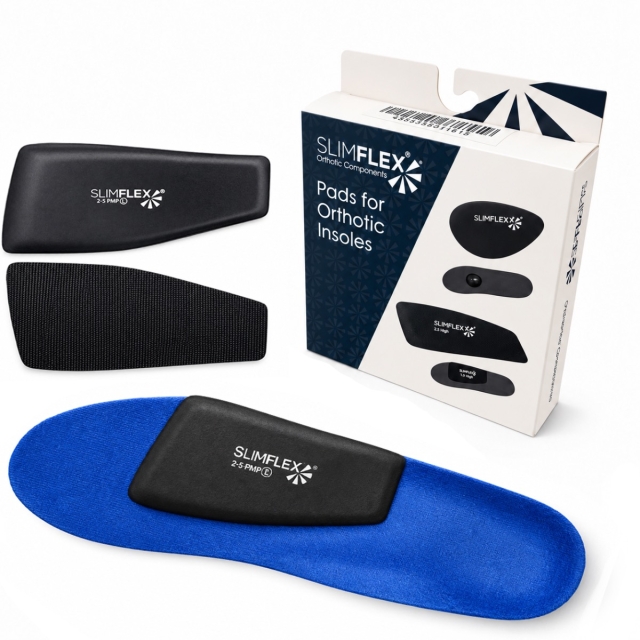
(All Slimflex insoles are modular and can be further customised with add-on wedges, heel lifts, and pads as needed, allowing clinicians to fine-tune support for each patient.)
Typical Users and Applications of Slimflex Insoles
Slimflex insoles are utilised by a wide range of healthcare professionals and patient groups, thanks to their versatility and proven efficacy. Podiatrists are the primary professional users – the Slimflex range is often a go-to in podiatry clinics for quick prescription when a patient presents with foot or lower-limb pain. The insoles are designed to be easily “off-the-shelf” prescribed, which is why they have become “many clinicians’ insole of choice” for various ailments.
In addition to podiatrists, physiotherapists, chiropractors, orthotists, and other allied health professionals make use of Slimflex devices in their practice. For example, a physiotherapist treating knee pain might issue a Slimflex to correct foot alignment as part of the rehab plan. Orthotists in hospitals may stock Slimflex as a cost-effective alternative to custom orthotics for less severe cases.
Slimflex insoles are even dispensed by some general practitioners or sports medicine doctors for interim relief before specialist follow-up. The ubiquity in the NHS means public sector clinics and community foot health services frequently use Slimflex, given they are economical and broadly effective.
From the patient perspective, typical users span all ages and activity levels. Some of the common patient profiles include:
Individuals with Plantar Fasciitis and Heel Pain
One of the most frequent uses of Slimflex (especially Green, Comfort, or Amber models) is to support the medial arch and cushion the heel for those suffering from plantar fasciitis. These insoles help offload the plantar fascia and correct pronation, addressing a root cause of heel pain. Patients often experience relief as the insoles maintain the arch and reduce strain on the fascia during walking.
People with Flat Feet or Overpronation
Patients who have flat feet, collapsed arches, or excessive pronation benefit greatly from Slimflex support. Flat-footed adults (or even children with flexible flat feet) commonly use Slimflex Amber or Simple/Comfort devices to provide arch lift and prevent inward foot collapse.
This can alleviate associated issues like arch pain, shin splints, anterior knee pain (from prolonged pronation), and bunions progression. The deep heel cup in models like Amber and Comfort also improves stability for these users.
Active Individuals and Athletes
Runners, hikers, and athletes are typical Slimflex users, as the insoles help improve biomechanics and prevent injuries. For instance, a runner with mild pronation might use Slimflex Green or Amber in their running shoes to correct form and avoid injuries like Achilles tendinitis or IT-band syndrome that can be exacerbated by poor foot alignment.
The lightweight nature of Slimflex and the availability of 3/4 lengths make them easy to fit into sports footwear. Sports teams and physiotherapists might keep Slimflex insoles on hand for players who need extra support during training or recovery.
Patients with Diabetic Foot Concerns
People with diabetes, particularly those with peripheral neuropathy or a history of foot ulcers, are another key user group. Slimflex insoles (like the Simple LD or Berry) are used to redistribute plantar pressure and reduce shear, protecting the feet from ulceration. Diabetic patients with fat pad atrophy or Charcot foot changes may find the cushioning and support helpful to prevent pressure sores. Clinicians often prefer the softer Slimflex versions for this group, and research supports their role in ulcer prevention strategies.
Elderly Individuals with Foot Pain
Older adults frequently present with general foot pain, arthritic changes, or decreased fat padding. Slimflex Comfort or Simple (LD) insoles are commonly recommended to this demographic to provide shock absorption, improve balance, and support arthritic joints. For example, an elderly patient with knee osteoarthritis and pronated feet might use a Slimflex to improve alignment and thus reduce knee strain. Similarly, those with rheumatoid arthritis or forefoot pain get relief from the metatarsal support and cushioning in Slimflex devices.
These insoles also contribute to fall prevention in the elderly by stabilising the foot (the improved balance in neuropathic patients noted earlier is relevant here).
Children and Adolescents with Foot Issues
Pediatric use of Slimflex is also common – for instance, a child with juvenile idiopathic arthritis might be given Slimflex insoles to assist their gait and reduce pain. Children with flat feet (pes planus) or adolescents with knee pain due to misalignment can benefit from Slimflex (the range includes small sizes, and products like Amber advertise even “kids sizes” available ).
Using a prefabricated orthotic is a cost-effective way to manage pediatric cases as they grow, instead of frequently making new custom orthotics.
Patients with High Arches/Supination
Though fewer in number, people with high arches or who supinate are typical users of the Slimflex Carbon model. A patient who chronically sprains their ankles or has lateral foot pain (like a fifth metatarsal stress fracture) would be a candidate for the Carbon insoles to control supination. They provide the lateral support such patients need, and can be combined with therapy exercises for comprehensive management.
Trusted by Medical Professionals
In summary, Slimflex orthotic insoles help many types of patients. They support athletes who need better stability. They also assist diabetic patients who require pressure relief. Additionally, they benefit everyday people with heel pain or flat feet. They are popular among professionals due to their ease of use and adaptability, and popular among patients because they deliver tangible relief for conditions like plantar fasciitis, flat foot, and other common foot and leg complaints.
The combination of clinical efficacy and practical convenience has cemented Slimflex as a trusted solution in daily podiatric care. As Algeos notes, Slimflex insoles offer “simple solutions and endless possibilities,” aligning with their goal of improving patients’ lives through accessible orthotic therapy.
Sold: 5 Pairs
Incl. VAT Exl. VAT