




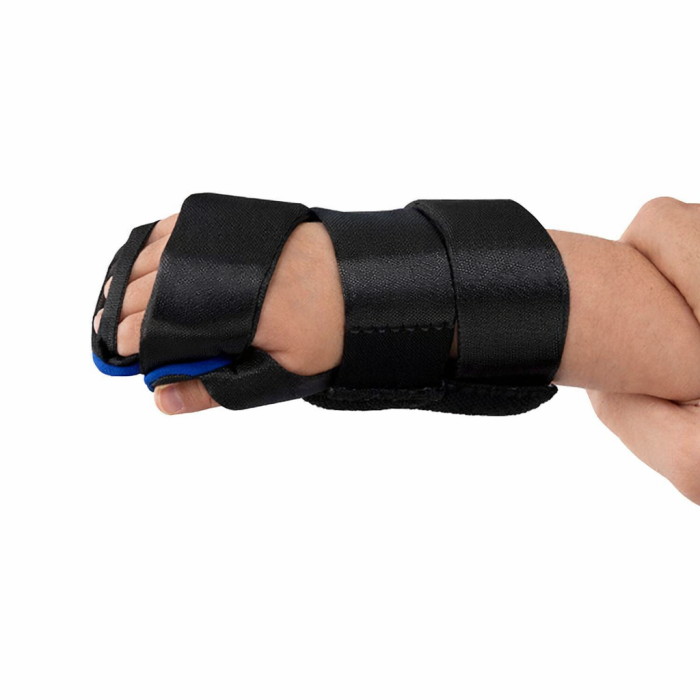
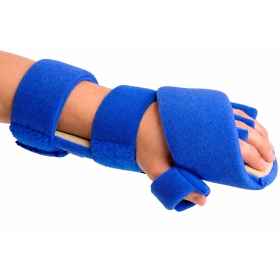
Restorative Medical Paediatric Hyper Hand Wrist Brace
Provides moderate, comfortable support of the hand and wrist, post injury or surgery.
Designed specifically for paediatric anatomy.
Flexible support that responds to abnormal tone patterns.
Remouldable structure to adapt during restorative care.
Sold: Each
Incl. VAT Exl. VAT
Product Description
Paediatric Hand & Wrist Support
A specialist paediatric hand and wrist brace designed to support abnormal muscle tone and spasticity while maintaining comfort and adaptability as a child develops.
Best for: Children with increased muscle tone, spasticity, or flexion patterns affecting the wrist, hand, and thumb.
Not ideal for: Acute fractures, unmanaged swelling, or situations requiring rigid immobilisation without clinical supervision.
- Flexible splint technology that moves with changing muscle tone
- Remouldable high-temperature plastic base for progressive adjustment
- Soft padding and colour-coded straps for comfort and easier application
What is it?
The Restorative Medical Paediatric Hyper Hand Wrist Brace is a structured yet adaptable orthotic designed to support children experiencing abnormal muscle tone in the wrist and hand. It combines a mouldable plastic base with a flexible splint design to help position the wrist, hand, and thumb in a more functional alignment.
Unlike rigid splints that hold the limb in one fixed posture, this brace incorporates Flex Technology. This allows the splint to move with the child’s fluctuating muscle tone and spasticity patterns, offering controlled support rather than forced positioning.
The plastic base extends to the tip of the thumb to provide additional stability and alignment. Slits between the fingers create individualised flex zones, helping the brace respond more naturally to each child’s hand shape and tone pattern.
Who is it for?
This brace is designed for infants, toddlers, children, and youth who require structured hand and wrist support due to neurological or developmental conditions that affect muscle tone and posture.
It may be appropriate for:
- Children with increased muscle tone affecting wrist and finger position
- Those experiencing flexion contracture risk in the hand
- Children undergoing restorative or tone-management programmes
- Paediatric patients requiring adjustable orthotic support as they grow
It is available in left and right configurations across multiple paediatric size ranges to ensure a more accurate anatomical fit.
What does it help with?
The brace is designed to provide supportive positioning while accommodating tone changes. It does not cure underlying neurological conditions but may help improve comfort and support functional positioning.
- Wrist flexion due to spasticity → Helps maintain a more neutral wrist position.
- Thumb-in-palm posture → Supports thumb extension and alignment.
- Finger tightness → Individual finger flex zones allow adaptive positioning.
- Risk of soft tissue shortening → Provides sustained positioning support as part of a wider care plan.
- Discomfort from rigid splints → Flexible design moves with tone rather than resisting it.
How does it work?
The brace works through a combination of structural guidance and controlled flexibility.
The high-temperature plastic base forms the core support structure. This base can be remoulded by a qualified health professional to adapt to changes in range of motion or therapeutic goals. This adjustability allows the brace to remain relevant as the child progresses.
Flex Technology enables the splint to respond to abnormal tone patterns. Rather than forcing the wrist and fingers into a fixed posture, the brace allows subtle movement while still encouraging a more functional alignment.
The padded lining helps distribute pressure more evenly across the hand and forearm, reducing the likelihood of localised discomfort or skin irritation when fitted correctly.
Colour-coded straps simplify correct fastening, supporting consistent application by caregivers and reducing fitting errors.
Expected comfort and use timeline
First use
Children may initially notice the structured feel of the brace. A gradual introduction period is often recommended to allow adaptation. Mild awareness of support is normal, but the brace should not cause pain.
Short-term (first few days)
As the child becomes accustomed to the brace, positioning support may feel more natural. Caregivers should monitor the skin closely during early use and follow professional guidance on wear duration.
Ongoing use (weeks and beyond)
With consistent and appropriate use as directed by a healthcare professional, the brace may support improved positioning tolerance. Periodic reassessment is important, particularly in growing children or where tone patterns change.
Common problems and how this brace helps
| Common problem | How the brace helps |
|---|---|
| Wrist collapsing into flexion | Provides structured support to encourage a more neutral wrist alignment. |
| Thumb tucked into palm | Extended base supports thumb positioning and alignment. |
| Rigid splints causing discomfort | Flexible splint design moves with fluctuating muscle tone. |
| Difficulty applying straps correctly | Colour-coded straps help guide consistent fastening. |
| Changes in hand posture over time | Remouldable plastic base allows professional adjustment. |
Key benefits
- Designed specifically for paediatric anatomy
- Flexible support that responds to abnormal tone patterns
- Remouldable structure to adapt during restorative care
- Soft padding to help reduce pressure points
- Available in multiple sizes with left and right options
- Supports structured positioning without rigid immobilisation
Fit & comfort check
The brace should feel snug, not painful. It should hold the wrist and hand in a supported position without excessive compression.
- Check skin after initial wear and at regular intervals.
- Straps should be secure but not tight enough to leave deep marks.
- Redness that does not fade within a short period should be reviewed.
- If swelling, pain, or skin breakdown occurs, discontinue use and seek professional advice.
Common mistakes to avoid
- Over-tightening straps in an attempt to force correction.
- Using the brace without professional guidance where remoulding is required.
- Expecting immediate long-term changes in muscle tone.
- Failing to reassess fit as the child grows.
How to use
- Ensure the hand and wrist are clean and dry before application.
- Gently position the wrist and hand into the brace, aligning the thumb with the extended base.
- Secure the colour-coded straps in sequence, ensuring even tension.
- Check circulation and skin comfort after fitting.
- Follow the wearing schedule advised by your healthcare professional.
- Remove the brace periodically to inspect skin and perform any recommended exercises.
Technical specifications
| Specification | Details |
|---|---|
| Product type | Paediatric hand and wrist brace |
| Side options | Left and Right specific models |
| Size range | Infant, Toddler Jr., Toddler, Child, Youth |
| Base material | High-temperature mouldable plastic |
| Padding | Integrated soft padding for comfort |
| Adjustment | Remouldable by qualified health professional |
| Straps | Colour-coded fastening system |
| Care | Wipe clean with mild solution; ensure fully dry before reuse |
Size guide
| Size | Width of MCP | Wrist to Finger | Wrist to Forearm |
|---|---|---|---|
| Infant (Left/Right) | 1 ¾" to 2" | Up to 2 ½" | 2 ¼" |
| Toddler Jr. (Left/Right) | 1 ¾" to 2" | Up to 3" | 2 ¾" |
| Toddler (Left/Right) | 2" to 2 ¼" | Up to 3 ½" | 3 ½" |
| Child (Left/Right) | 2 ¼" to 2 ½" | Up to 4" | 3 ¾" |
| Youth (Left/Right) | 2 ¾" to 3" | Up to 5" | 4" |
Frequently asked questions
Can this brace be adjusted as my child grows?
Yes. The high-temperature plastic base can be remoulded by a qualified health professional to adapt to changes in positioning needs.
Is it suitable for overnight use?
Overnight use should only be undertaken if advised by a healthcare professional, as positioning tolerance varies between children.
Will it completely correct spasticity?
No brace can cure spasticity. This product is designed to support positioning and may help as part of a broader management plan.
How tight should the straps be?
They should be firm enough to hold the brace in place but not tight enough to cause pain, numbness, or prolonged redness.
Does it fit both hands?
No. The brace is side-specific. Ensure you select the correct left or right version.
How do I know if the size is correct?
Measure carefully using the MCP width and length guidelines provided. If unsure, consult a healthcare professional for fitting advice.
Complementary products
This brace may be used alongside:
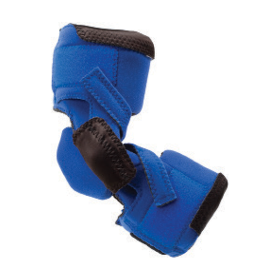
- Paediatric elbow supports for extended upper limb positioning
- Soft resting hand splints for alternative wear schedules
- Therapy putty or grip aids as part of supervised exercise programmes
- Protective skin interface sleeves where additional cushioning is required
Content credibility
Written by: Algeos Product & Clinical Content Team
Last reviewed: March 2026
This content is provided for buyer guidance and general product understanding. It is not a diagnosis or medical advice. Always seek appropriate professional assessment for individual clinical needs.
Frequently bought together
Sold: Each
Incl. VAT Exl. VAT
Sold: Each
Incl. VAT Exl. VAT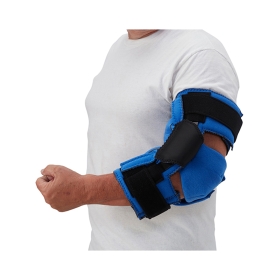
Sold: Each
Incl. VAT Exl. VAT
Sold: Each
Incl. VAT Exl. VAT
Sold: Each
Incl. VAT Exl. VAT
Sold: Each
Incl. VAT Exl. VAT
Sold: Each
Incl. VAT Exl. VAT
Sold: Each
Incl. VAT Exl. VAT
Sold: Each
Incl. VAT Exl. VAT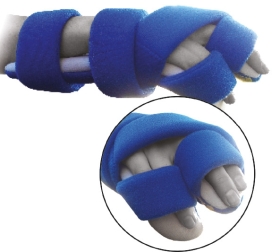
Sold: Each
Incl. VAT Exl. VAT
Sold: Each
Incl. VAT Exl. VAT
Sold: Each
Incl. VAT Exl. VAT
Sold: Each
Incl. VAT Exl. VAT
Sold: Each
Incl. VAT Exl. VAT
Sold: Each
Incl. VAT Exl. VAT
Sold: Each
Incl. VAT Exl. VAT