




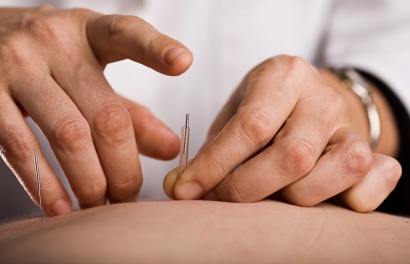
Selecting the right acupuncture needles is crucial for effective treatment and patient comfort. With a wide range of options available, it's important to understand the various factors that influence needle choice.
Here are some key considerations to help you select the best needles for your practice:
Needle Gauge and Length
Gauge: The gauge of a needle refers to its thickness. Thinner needles (higher gauge) cause less discomfort and are suitable for sensitive areas or first-time patients.
Common gauges range from 36 to 40. Thicker needles (lower gauge) are more robust and used for deeper penetration or more muscular areas.
Length: Needle length varies from short (15-30 mm) to long (50-75 mm). Short needles are ideal for facial or auricular acupuncture, while longer needles are used for deeper points, such as those on the back or thighs.
The treatment area and the patient’s body type will influence the appropriate length.
Material and Coating
Material: Most acupuncture needles are made of stainless steel, which provides strength and flexibility. Some needles are made with gold or silver for specific therapeutic effects, though these are less common.
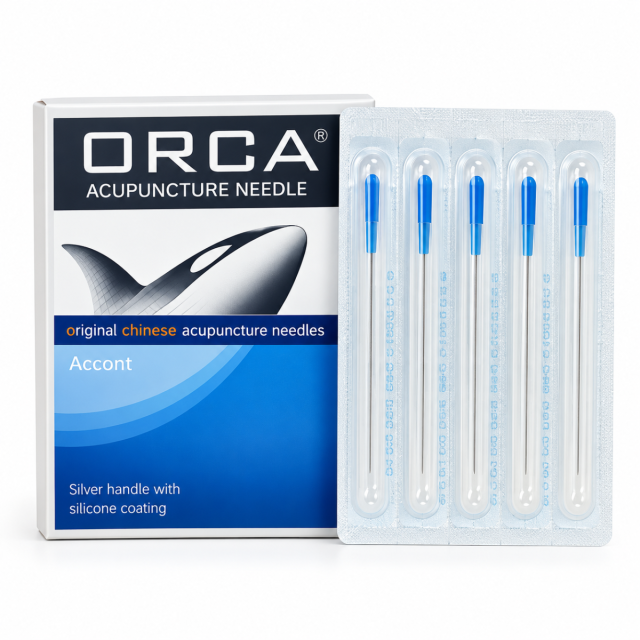
Coating: Needles can be coated or uncoated. Silicone-coated needles reduce friction, making insertion smoother and more comfortable for the patient. Uncoated needles provide more tactile feedback for the practitioner but may cause more discomfort.
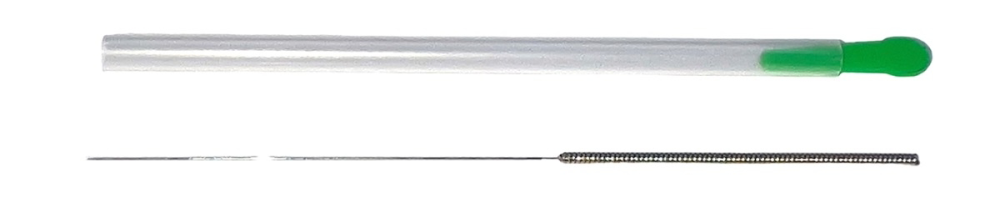
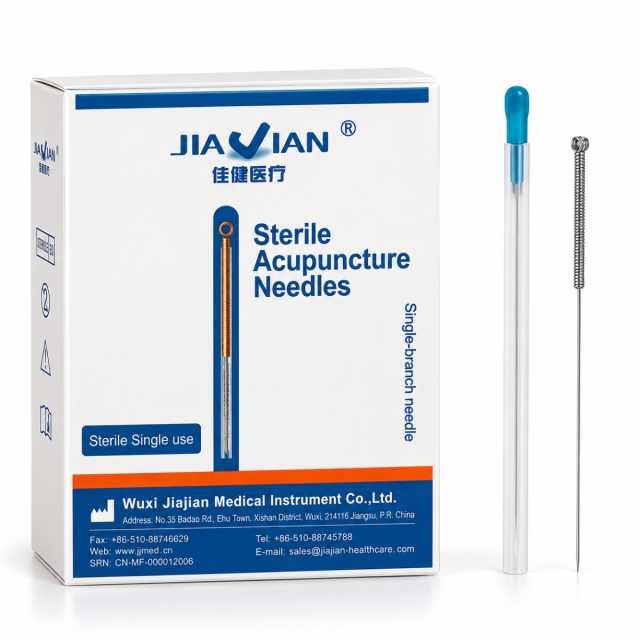
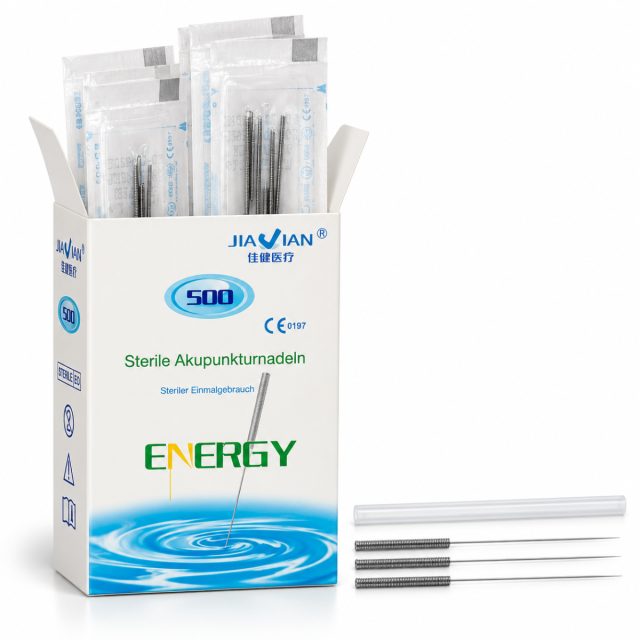
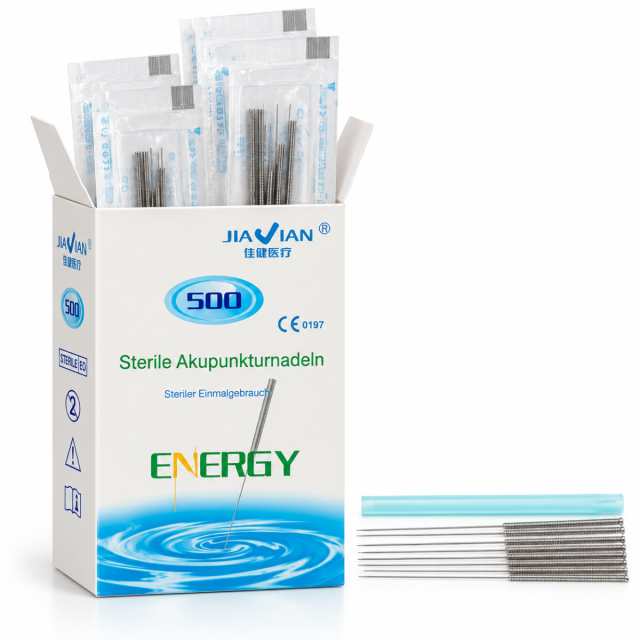
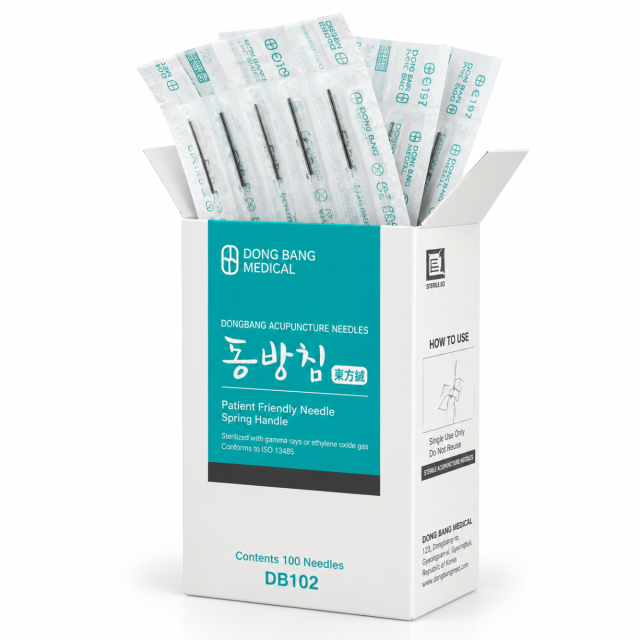
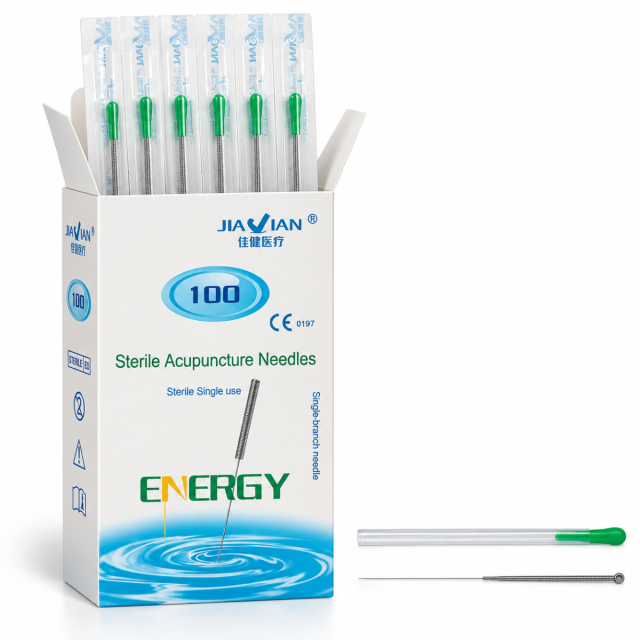
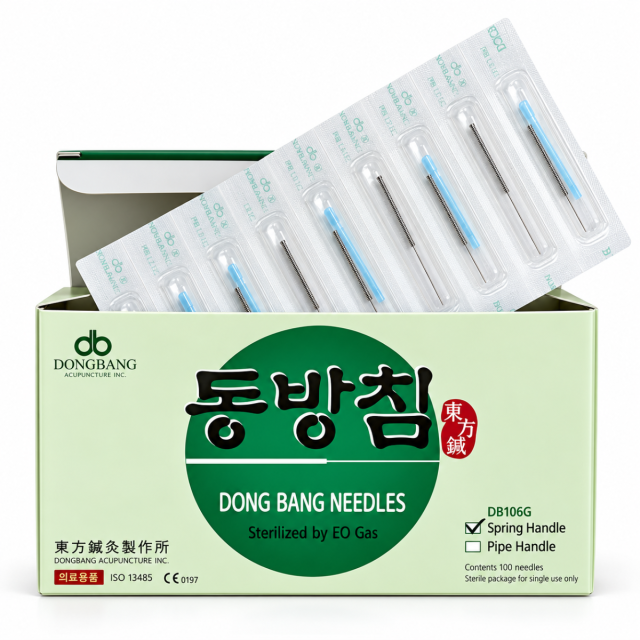
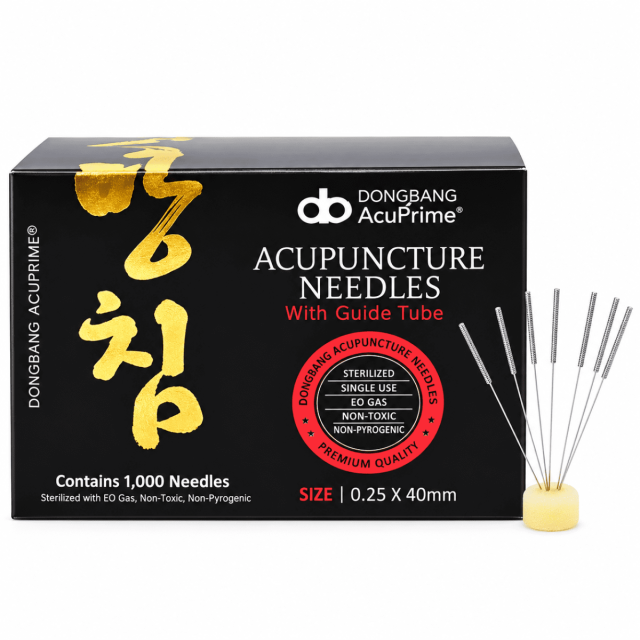
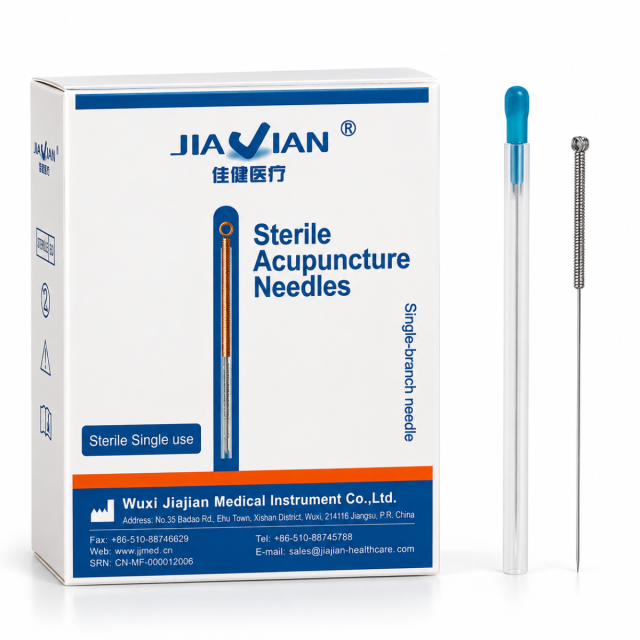
Steel, spring handle in individual guide tube
Handle Type
Handles come in various materials, including plastic, metal, and copper. The handle design can affect the needle's balance and how it feels during manipulation. Common handle types include:
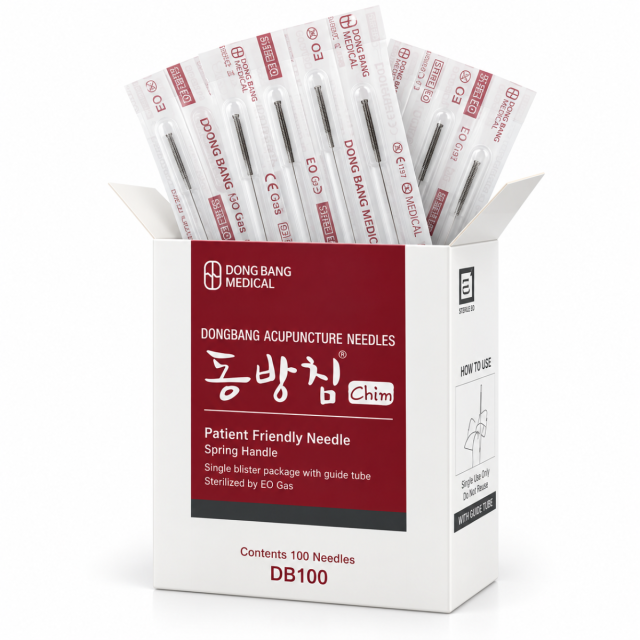
Spring handles: Provide good control and are commonly used in traditional Chinese Acupuncture.
Plastic handles: Often used for single-use needles, offering convenience and cost-effectiveness.
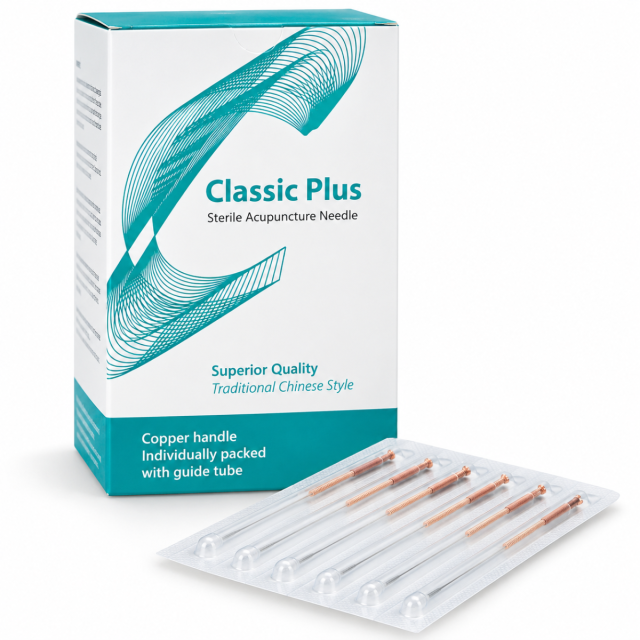
Copper handles: Can provide additional weight and balance, favoured by some practitioners for precise control.
Sterility and Packaging
Sterility: Ensuring needles are sterile is paramount for patient safety. Single-use, pre-sterilised needles are the standard in modern practice to prevent cross-contamination and infections.
Packaging: Needles come in various packaging forms, including individual blister packs and multi-needle packs. Individual packs are convenient for maintaining sterility, while multi-packs can be more economical for high-volume practices.
Brand and Quality
Choosing a reputable brand ensures the needles meet high standards of quality and safety. Renowned brands offer needles that are consistent in sharpness, flexibility, and durability, reducing the risk of breakage or bending during use.
Specific Applications
Different types of acupuncture, such as electro-acupuncture, auriculotherapy, or scalp acupuncture, may require specialised needles. For example, electro-acupuncture uses needles that can connect to an electrical stimulator, while scalp needles are often thinner and shorter for delicate areas.
Patient Comfort and Experience
Patient comfort is a significant factor in needle selection. For first-time patients or those with a fear of needles, choosing thinner, coated needles can enhance their experience and reduce anxiety. Communicating with patients about their comfort levels and preferences can also guide your choice.
Cost Considerations
While cost shouldn't compromise quality, it's essential to balance your budget with the need for high-quality needles. Bulk purchasing from trusted suppliers can reduce costs without sacrificing quality.
Selecting the right needles involves understanding the various attributes that influence their performance and patient experience. By considering factors such as gauge, length, material, coating, handle type, sterility and specific application, practitioners can ensure they choose needles that enhance the effectiveness of treatments and patient comfort.
Investing in high-quality needles from reputable brands will ultimately benefit both the practitioner and the patient - leading to more successful acupuncture sessions and better overall outcomes.
Sold: 100
Incl. VAT Exl. VAT