



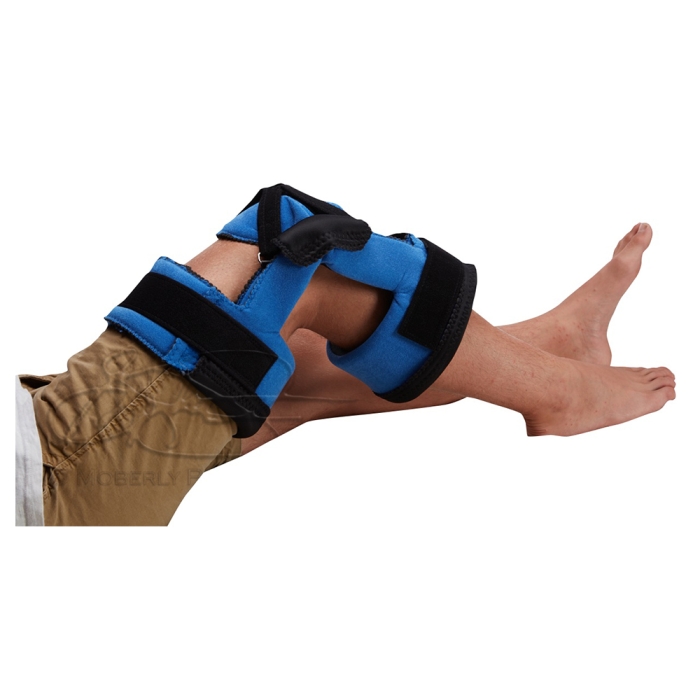
NeuroFlex Restorative Knee Orthosis for Children
Knee Orthosis treats flexion lost range of motion with prolonged low load passive stretch with flex properties to relax the joint.
Sold: Each
Incl. VAT Exl. VAT
Product Description
Progressive Knee Contracture Stretch Brace
The NeuroFlex Restorative Knee Orthosis is designed to support gradual improvement in knee flexion range of motion through controlled, prolonged low load passive stretch.
- Best for: Individuals experiencing knee contracture, reduced flexion range of motion, or neurological muscle tone changes.
- Not ideal for: Acute knee injuries requiring immobilisation or situations where medical assessment is required before bracing.
- Adjustable dial system enables gradual joint positioning changes
- Remouldable cuffs allow customised fitting by a healthcare professional
- Comfort padding designed to reduce pressure on sensitive areas
What is it?
The NeuroFlex Restorative Knee Orthosis is a therapeutic knee brace designed to apply gentle, sustained stretch to the knee joint. It is commonly used in rehabilitation settings to support recovery of knee flexion where range of motion has been lost due to neurological or musculoskeletal conditions.
The brace works by applying a prolonged low load passive stretch to the knee joint. This method aims to gradually encourage soft tissues such as muscles, ligaments, and joint structures to lengthen over time. Rather than forcing movement, the orthosis allows gradual adjustments that support safer, more controlled joint positioning.
Its design incorporates a three-point leverage system that mimics the effect of manual stretching typically performed during therapy sessions. By maintaining this stretch for extended periods, the brace may help support progressive improvements in mobility.
The orthosis also incorporates specialised Flex Technology. This allows the brace to respond to abnormal muscle tone or spasticity by moving slightly with the patient’s involuntary muscle activity rather than resisting it rigidly. This feature can make the brace more comfortable for individuals with neurological conditions.
Who is it for?
This orthosis is intended for individuals experiencing limited knee flexion due to contracture, neurological conditions, or prolonged immobility. It is commonly used as part of rehabilitation programmes supervised by healthcare professionals.
It may be suitable for individuals living with conditions that affect muscle tone, joint mobility, or neurological control.
Common clinical contexts include:
- Stroke recovery (CVA)
- Traumatic brain injury (TBI)
- Acquired brain injury (ABI)
- Rheumatoid arthritis
- Osteoarthritis affecting knee mobility
- Parkinson’s disease
- Cerebral palsy
- Multiple sclerosis
- Dementia or advanced neurodegenerative conditions
It may also be used for patients who have developed knee stiffness or flexion contracture following extended bed rest, immobility, or prolonged positioning.
What does it help with?
The NeuroFlex Restorative Knee Orthosis is designed to support rehabilitation programmes that aim to gradually restore functional movement of the knee joint.
- Knee contracture: Provides sustained stretch that may help encourage gradual soft tissue lengthening.
- Reduced knee flexion: Adjustable settings support progressive joint positioning toward improved flexion.
- Muscle spasticity: Flex Technology allows the brace to respond more comfortably to abnormal muscle tone.
- Neurological stiffness: Maintains gentle joint stretch over longer periods than manual therapy alone.
- Post-immobility stiffness: Supports gradual reintroduction of controlled joint movement.
These effects occur gradually over time and should form part of a broader rehabilitation or physiotherapy plan.
How does it work?
The brace uses a three-point leverage system to apply gentle corrective forces around the knee joint. This approach helps guide the joint toward a more natural alignment while avoiding sudden or aggressive movement.
Integrated adjustment dials allow clinicians or trained caregivers to make gradual changes to the knee position. These small incremental adjustments help maintain a consistent stretch across the joint.
Unlike rigid splints, the orthosis includes Flex Technology that allows the brace to accommodate changes in muscle tone. This helps reduce resistance and can improve comfort when used by individuals experiencing spasticity.
The cuffs of the brace are made from high-temperature plastic that can be remoulded by a healthcare professional. This allows the orthosis to be customised to the patient’s leg shape, improving fit, comfort, and stability.
Expected comfort and use timeline
Use of restorative orthoses typically involves gradual progression rather than immediate changes in joint mobility.
First use
During initial wear, the brace is usually set to a conservative stretch level. Users may feel a gentle stretching sensation around the knee, but the brace should not cause pain or excessive pressure.
Short-term use (first several days)
As the user becomes accustomed to the orthosis, adjustment dials may be gradually modified according to clinical guidance. The aim is to slowly increase stretch without causing discomfort or skin irritation.
Ongoing use (over several weeks)
With consistent use as directed, some individuals may experience gradual improvement in knee range of motion. Progress varies widely depending on the underlying condition and rehabilitation plan.
Common problems and how the orthosis helps
| Common problem | How the product helps |
|---|---|
| Knee joint becomes stiff after prolonged immobility | Applies sustained passive stretch to encourage gradual soft tissue adaptation. |
| Difficulty maintaining therapy stretch positions | Brace maintains gentle positioning for longer periods than manual therapy alone. |
| Spastic muscle activity interrupts traditional splints | Flex Technology allows the brace to move slightly with muscle tone changes. |
| Contracture limits knee bending ability | Adjustable dials allow progressive positioning toward improved flexion. |
| Standard braces create pressure points | Comfort padding and remouldable cuffs help distribute pressure more evenly. |
Key benefits
- Designed to support gradual restoration of knee flexion range of motion
- Three-point leverage system provides controlled therapeutic stretch
- Flex Technology helps accommodate abnormal muscle tone and spasticity
- Remouldable plastic cuffs allow custom fitting by healthcare professionals
- Comfort padding helps reduce pressure and improve tolerance during wear
- Dial-based adjustment allows controlled and progressive positioning
Fit and comfort check
The brace should feel controlled but not painful. A gentle stretching sensation is expected, but sharp discomfort, numbness, or excessive pressure are signs that the brace may require adjustment.
Padding should sit evenly against the leg, and the brace should remain stable without slipping. If redness persists on the skin after removal, consult a healthcare professional for fitting guidance.
Custom remoulding of the plastic cuffs may be required to achieve optimal comfort and support.
Common mistakes to avoid
- Applying excessive stretch too quickly rather than progressing gradually
- Wearing the brace longer than recommended without professional guidance
- Using the orthosis without proper fitting or adjustment
- Expecting rapid changes in joint mobility rather than gradual improvement
How to use
- Position the orthosis around the leg so the knee joint aligns with the brace hinge.
- Secure the cuffs around the upper and lower leg using the fastening straps.
- Ensure padding sits comfortably against the skin without folds or pressure points.
- Set the adjustment dial to the recommended starting position.
- Gradually adjust the dial according to clinical advice to increase stretch over time.
- Check the skin regularly for signs of irritation during early use.
Technical specifications
| Specification | Details |
|---|---|
| Product type | Restorative knee orthosis |
| Primary function | Prolonged low load passive stretch for knee flexion |
| Adjustment mechanism | Dial-based progressive positioning system |
| Support structure | Three-point leverage stretching design |
| Cuff material | High-temperature mouldable plastic |
| Padding | Integrated comfort padding to reduce skin pressure |
| Fit adjustment | Custom remoulding by healthcare professional |
| Compatibility | Designed for use within rehabilitation or clinical mobility programmes |
| Care | Padding may be cleaned according to clinical hygiene guidelines |
| Pack contents | Knee orthosis and adjustment mechanism (details vary by configuration) |
SIze Guide
| Size | TTK | KTC | Thigh Circ | Calf Circ |
|---|---|---|---|---|
| Child/Slim | 5" | 6" | 7½-9½" | 6½-8½" |
| Child | 5" | 6" | 8-12" | 7-10" |
| Child/Full | 5" | 6" | 8-13" | 7½-11" |
| Ex-Small/Slim | 6" | 6" | 8-12" | 7-10" |
| Ex-Small | 6" | 6" | 8-13" | 7½-11" |
| Ex-Small/Full | 6" | 6" | 10-15" | 8-12" |
| Small/Slim | 6½" | 6½" | 8-13" | 7½-11" |
| Small | 6½" | 6½" | 10-15" | 8-12" |
| Small/Full | 6½" | 6½" | 13-17" | 10-15" |
| Medium/Slim | 7½" | 7½" | 10-15" | 8-12" |
| Medium | 7½" | 7½" | 13-17" | 10-15" |
| Medium/Full | 7½" | 7½" | 16-22" | 14-18" |
| Large/Slim | 8½" | 8½" | 13-17" | 10-15" |
| Large | 8½" | 8½" | 16-22" | 14-18" |
Frequently asked questions
Can the brace be worn all day?
Wear duration should follow guidance from a healthcare professional. Restorative orthoses are often used for specific therapy periods rather than continuous daily wear.
Is the brace suitable for people with spasticity?
The orthosis includes Flex Technology designed to accommodate abnormal muscle tone, which may improve comfort for individuals experiencing spasticity.
Does the brace force the knee to bend?
No. The design uses gentle prolonged stretch rather than forced movement. Adjustments are made gradually to support controlled joint positioning.
Can it be adjusted at home?
Basic adjustments may be possible depending on the treatment plan, but initial fitting and guidance are typically provided by a healthcare professional.
Will it correct knee contracture permanently?
The brace is designed to support rehabilitation and may help improve range of motion over time. Outcomes vary depending on the individual and underlying condition.
Can the cuffs be reshaped?
Yes. The high-temperature plastic cuffs can be remoulded by trained professionals to improve fit and comfort.
Is it suitable for neurological conditions?
The orthosis is commonly used in neurological rehabilitation programmes where joint stiffness and muscle tone changes affect mobility.
Complementary product types
The NeuroFlex Restorative Knee Orthosis may be used alongside other rehabilitation and mobility aids depending on the patient’s needs.
- Foot and ankle orthoses that support lower limb alignment
- Pressure relief cushions for seated positioning
- Rehabilitation exercise supports and therapy aids
- Protective padding and skin protection products
Content credibility
Written by: Algeos Product & Clinical Content Team
Last reviewed: March 2026
This information is provided to support product understanding and buyer guidance. It is not intended to replace professional medical advice, diagnosis, or treatment.
Frequently bought together
Sold: Each
Incl. VAT Exl. VAT
Sold: Each
Incl. VAT Exl. VAT
Sold: Each
Incl. VAT Exl. VAT
Sold: Each
Incl. VAT Exl. VAT
Sold: Each
Incl. VAT Exl. VAT
Sold: Each
Incl. VAT Exl. VAT
Sold: Each
Incl. VAT Exl. VAT
Sold: Each
Incl. VAT Exl. VAT
Sold: Each
Incl. VAT Exl. VAT
Sold: Each
Incl. VAT Exl. VAT
Sold: Each
Incl. VAT Exl. VAT
Sold: Each
Incl. VAT Exl. VAT
Sold: Each
Incl. VAT Exl. VAT
Sold: Each
Incl. VAT Exl. VAT
Sold: Each
Incl. VAT Exl. VAT
Sold: Each
Incl. VAT Exl. VAT
Sold: Each
Incl. VAT Exl. VAT