





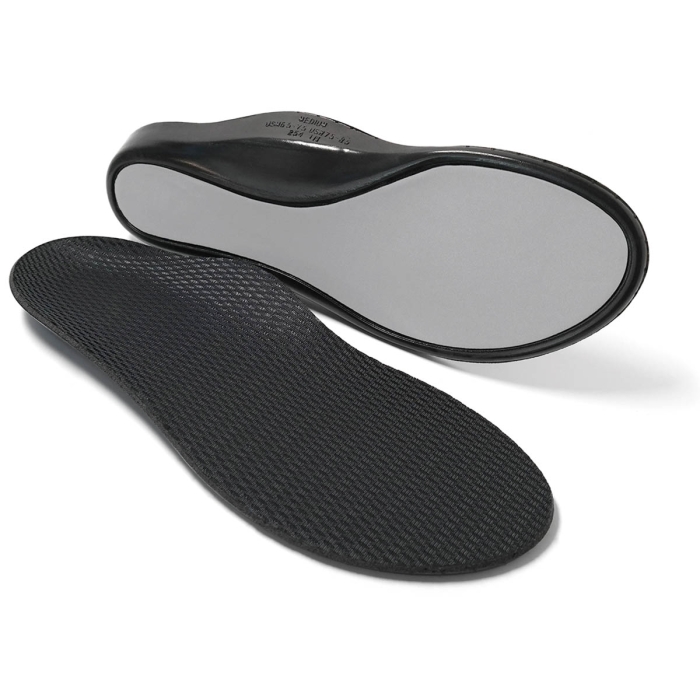
Interpod Arch Support Insoles for Plantar Fasciitis
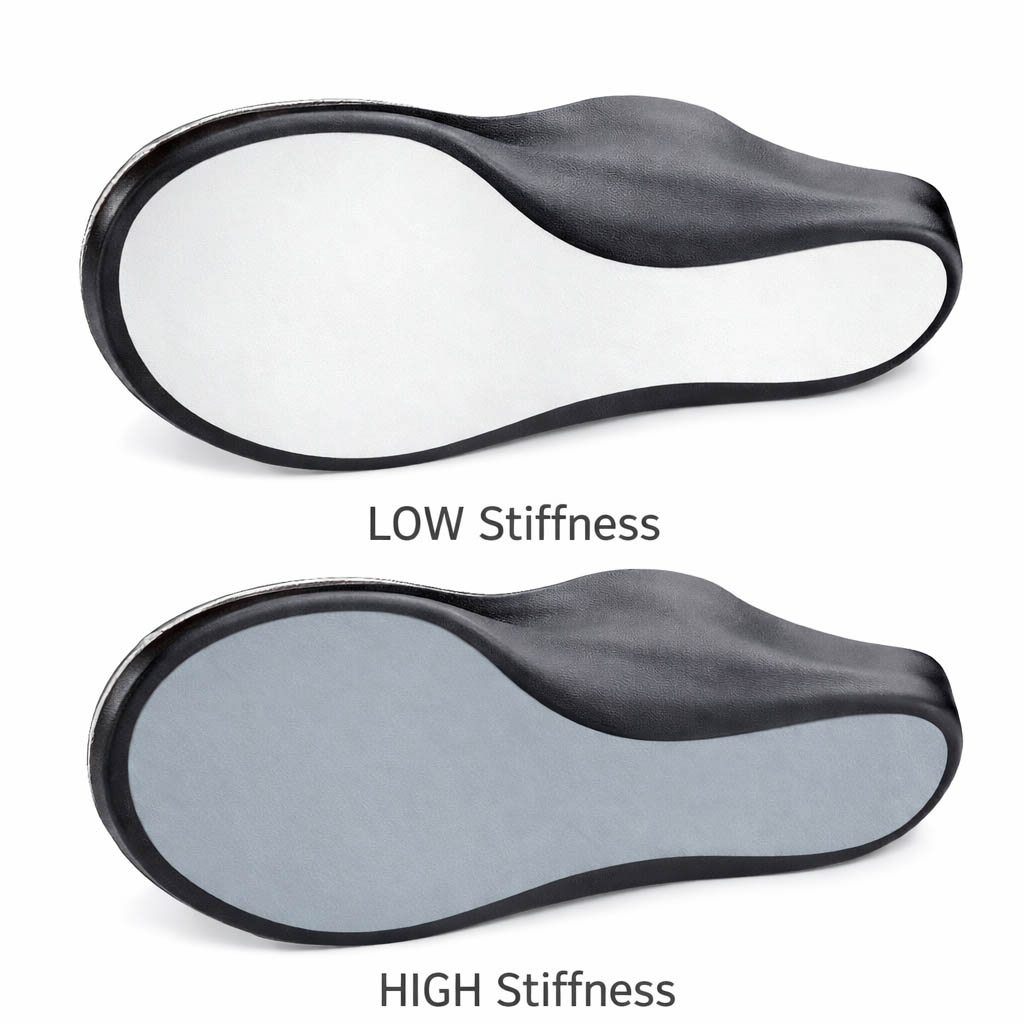
Our Arch Support Insoles for Plantar Fasciitis are available in two distinct stiffness options: Low Stiffness and High Stiffness.
The lower stiffness version offers a softer, more cushioned feel with gentler support, e.g. ladies or older lightweight users.
The higher stiffness version gives firmer control for wearers who need more resistance, more stability or more support during higher-impact activity, e.g. sports.
Sold: Sold per Pair
Incl. VAT Exl. VAT
Product Description
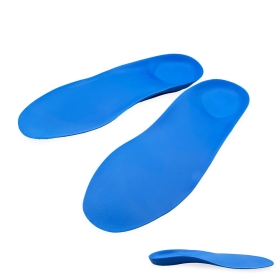
Force Specific Arch Supporting Insoles for Plantar Fasciitis
2 Stiffnesses selections based on arch force requirement
These full-length arch support insoles are designed for people who need more structured underfoot support for plantar fasciitis, fallen arches, overpronation, foot fatigue or day-to-day biomechanical control.
The insoles are a NEW variation of Interpod's soft devices, which have been listed by Algeos for 25 years.
They are available in two stiffness options so support can be matched more closely to wearer weight, arch type and typical activity level.
For clinicians, they offer a more considered off-the-shelf orthotic choice. For referral users, they provide a practical way to add support, cushioning and stability inside a wide range of footwear without moving straight to a fully bespoke device.
NHS customers can buy direct or via the NHS Supply Chain Portal.
Key selling points
- Two stiffness options for more wearer-specific support
- Full-length design for heel-to-toe coverage
- Structured arch support for plantar fasciitis and flat feet
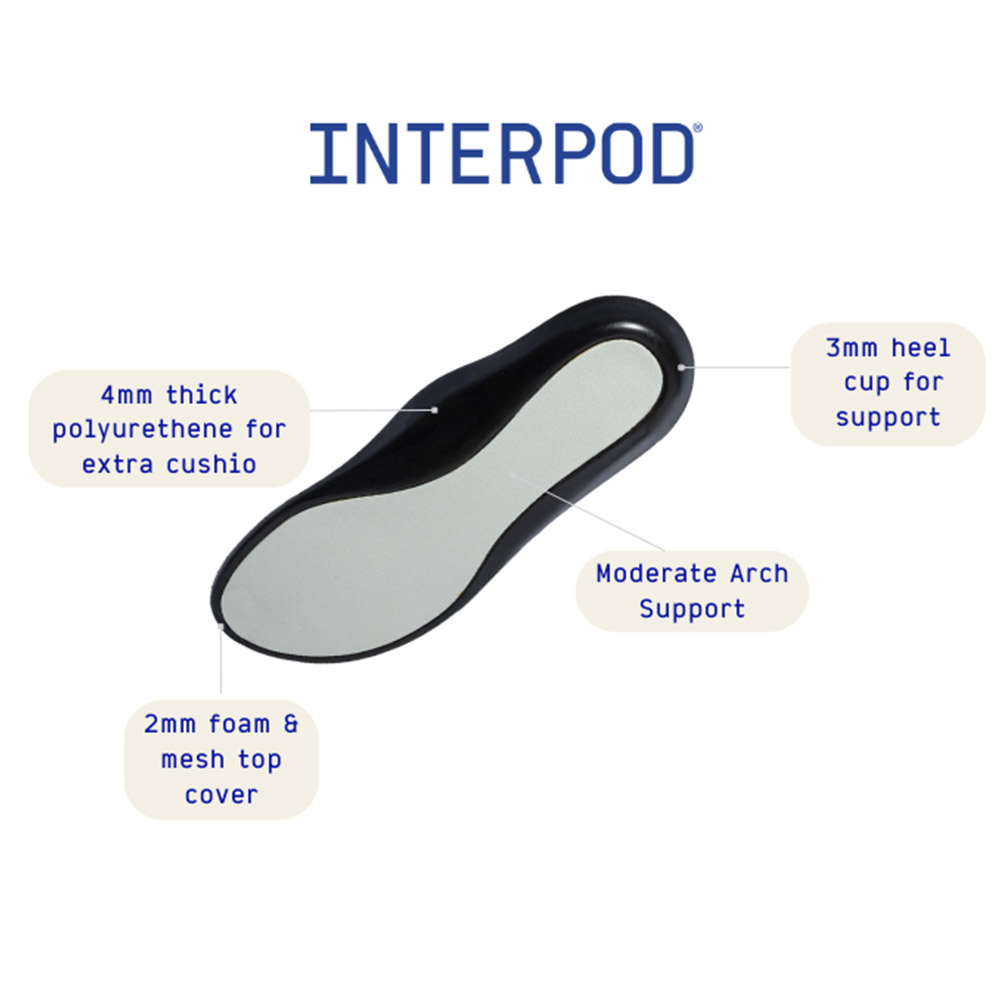
- Shock-absorbing EVA and polyurethane construction
- 0° base to encourage neutral foot positioning
- Trim-to-fit design for easier shoe fitting
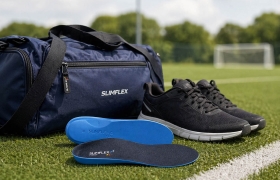
- Suitable for everyday wear, work footwear, and sport-focused use
- Sold as a pair
What it does and how it works
These insoles support the arch, help distribute pressure more evenly, and improve how the foot sits inside the shoe.
By helping reduce excessive inward rolling or improving control through the heel and midfoot, they can reduce strain linked with plantar fascia overload and everyday foot discomfort.
The lower stiffness version offers a softer, more cushioned feel with gentler support.
The higher stiffness version gives firmer control for wearers who need more resistance, more stability, or more support during higher-impact activity.
Common problems it may help with
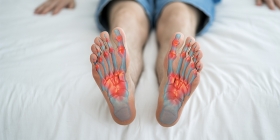
- Plantar Fasciitis and plantar heel pain
- Symptomatic flexible flat foot / pes planus
- Excessive pronation
- Mild biomechanical foot instability
- Arch strain and arch-related discomfort
- Foot fatigue associated with prolonged standing, walking or sport
- Patients requiring cushioning, shock absorption and neutral foot alignment support
- Patients who may benefit from full-length orthotic support matched to arch type, body weight and activity level
Applications and suitability
Suitable for adults needing a full-length orthotic-style insole for daily wear, clinic-led treatment plans, work shoes, casual footwear or training shoes with enough internal depth.
They are a useful option for podiatrists, physiotherapists, and other clinicians who want a ready-to-use insole with a choice of support levels.
They may also suit informed consumers who want a more supportive alternative to soft comfort insoles when dealing with recurrent heel pain, arch pain, or poor foot control.
Who it may not suit
These insoles may be less suitable for people who only want soft cushioning with minimal structure, people wearing very shallow or tight-fitting shoes, or anyone unsure which stiffness level is appropriate for their foot type, activity level, or body weight.
Users with persistent or worsening pain, unusual foot shape changes, or complex foot problems should seek professional advice before continued use.
Understanding Supination Resistance
Supination resistance is a critical factor in determining the appropriate orthotic support. This refers to the foot's resistance to rolling outward, which can influence the type and stiffness of orthotic needed.
Patients with high supination resistance often require firmer, more supportive orthotics to maintain proper alignment and function, while those with lower supination resistance may benefit from softer, more flexible options. Understanding this concept is key to selecting the appropriate orthotic solution for your patients.
Two Stiffness Options Explained
Low Stiffness for Gentle Support and Flexibility
The Low Stiffness variant of Interpod Arch Support Insoles is designed for patients with a low supination resistance score. This softer option is crafted from a more flexible material, offering a gentle yet effective level of support. It is particularly suitable for individuals with lower arches or those who require a more forgiving orthotic that provides cushioning without excessive rigidity.
Patients who benefit from Low Stiffness orthotics often have feet that are more prone to overpronation, where the foot rolls inward excessively. This can lead to discomfort, fatigue, and a range of foot-related issues if not properly managed.
The Low Stiffness orthotic helps to moderate this movement, providing the necessary support to maintain a more neutral foot position while allowing for the natural flexibility and movement of the foot.
The softer material of the Low Stiffness orthotic also enhances comfort, making it an ideal choice for patients who may be new to orthotic use or who require a more cushioned feel. This option can be particularly beneficial for individuals who spend long hours on their feet, as it helps to reduce strain and improve overall foot comfort throughout the day.
High Stiffness for Robust Support and Stability
For patients with a high supination resistance score, the High Stiffness variant of the nsoles offers the robust support needed to effectively stabilise the foot. This stiffer option is designed to manage higher arches and provide maximum control, helping to prevent the foot from rolling outward excessively, a condition often associated with underpronation or supination.
High Stiffness orthotics are essential for patients who require more substantial support to maintain proper biomechanical alignment. This variant is particularly effective for individuals who engage in high-impact activities, such as running or other sports, where the foot is subjected to significant forces that could otherwise lead to injury or discomfort.
By providing the necessary support to the arches and ensuring proper foot alignment, the High Stiffness orthotic helps to reduce the risk of conditions such as plantar fasciitis, stress fractures, and other common foot injuries.
Despite its firmness, the High Stiffness orthotic is designed to fit comfortably in a wide range of footwear, ensuring that your patients can enjoy the benefits of enhanced foot stability without sacrificing comfort. This makes it a versatile choice for both everyday wear and athletic use.
Interpod Arch Supports
Product specifications
| Product type | Full-length arch support insole |
|---|---|
| Primary use | Support for plantar fasciitis, flat feet, arch discomfort, and biomechanical control |
| Support options | Low Stiffness and High Stiffness |
| Selection basis | Wearer weight, arch type, and activity level |
| Materials | EVA and polyurethane |
| Base profile | 0° base |
| Coverage | Full length |
| Fit | Trim-to-fit for shoe compatibility |
| Supply format | Sold per pair |
Usage instructions
- Remove any existing shoe liner if needed.
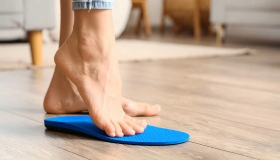
- Place the insole into the shoe with the back of the orthosis sitting firmly against the rear of the shoe.
- Wear for one hour on day one.
- Increase wear time by one hour each day as tolerated.
- Allow around two weeks for the orthoses to mould more fully to your feet and for normal adjustment to take place.
- If required, trim carefully for a better fit.
Benefits
- Supports the arch to reduce strain through the plantar fascia
- Helps improve pressure distribution across the foot
- Promotes a more stable and neutral foot position
- Offers cushioning as well as structure underfoot
- Can improve comfort during prolonged standing and walking
- Useful for both everyday footwear and more active use
- Gives clinicians a simple choice between gentler and firmer control
Contraindications & warnings
- Minor pressure under the arch or heel can be normal during the early wearing-in period.
- If discomfort continues, stop wearing the insoles and seek professional advice.
- Do not leave the orthoses in direct sun.
- Clean only with a damp cloth and lukewarm soapy water.
- Replace when signs of wear become obvious, such as cracking, shell damage, top-cover degeneration, bottoming out or marked discolouration.
FAQs
What are these insoles used for?
They are used to provide structured arch support and improved foot control for people dealing with plantar fasciitis, flat feet, arch pain, heel pain, and related biomechanical issues. They are intended to help support the foot more effectively inside everyday or activity footwear.
What is the difference between Low Stiffness and High Stiffness?
Low Stiffness offers a softer feel with more cushioning and gentler support. High Stiffness provides firmer control and is better suited to wearers who need stronger support, greater stability, or more resistance during higher-impact activity.
Can these insoles help with plantar fasciitis?
They are designed for plantar fasciitis support by helping the foot sit in a more controlled position and by reducing strain linked with poor arch support. They can also improve underfoot comfort during walking, standing, and daily activity.
Are they suitable for flat feet?
Yes, they are designed to support the arch and help manage the alignment issues often linked with fallen arches and overpronation. This can make them a practical choice for users who need more structure than a simple comfort insole provides.
Can they be worn every day?
Yes, they are designed for regular use, but they should be introduced gradually. A short wearing-in period helps the foot adapt and improves comfort during longer daily wear.
Do they fit all shoes?
They fit a wide range of footwear, but not every shoe shape will have enough depth or space for a full-length orthotic insole. They tend to work best in shoes with removable liners and a little more internal room.
Can they be trimmed?
Yes, they can be trimmed to improve fit. Careful trimming can help match the insole more closely to the shoe shape without losing the main support features.
How should they feel when first worn?
It is normal to notice pressure under the arch and heel at first, especially if you are new to supportive insoles. That feeling should ease as your feet adapt and as the orthoses settle in with use.
How do I clean and care for them?
Clean them using a damp cloth and lukewarm soapy water only. Avoid leaving them in direct heat or sunlight, and check them regularly for signs of wear.
How often should they be replaced?
Service life depends on how often they are worn, but visible wear is a clear sign that replacement is due. As a general guide, replacing insoles at least every 12 months helps maintain performance for frequent users.
Related Links
- Browse plantar fasciitis insoles
- Explore arch support insoles
- See plantar fasciitis products
- Shop heel pain insoles
- Find insoles for flat feet
- Learn more about overpronation support
- View the Interpod foot orthotics range
- Read about how arch support insoles improve foot comfort
- Read the plantar fasciitis insoles guide
- Read the podiatrist recommended insoles guide
Product Summary
Interpod Arch Support Insoles for Plantar Fasciitis are full-length orthotic insoles designed to provide more targeted arch support, cushioning, and foot control than standard comfort liners. With a choice of Low Stiffness or High Stiffness, they can be matched more closely to foot type, wearer weight, and activity demands, making them a practical option for plantar fasciitis, flat feet, overpronation, heel pain, and everyday foot fatigue.
Frequently bought together
Sold: Pack of 5 Pairs
Incl. VAT Exl. VAT
Sold: Sold per Pair
Incl. VAT Exl. VAT
Sold: Sold per Pair
Incl. VAT Exl. VAT
Sold: Sold per Pair
Incl. VAT Exl. VATSold: Sold per Pair
Incl. VAT Exl. VAT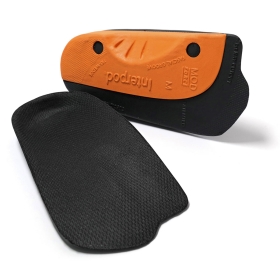
Sold: Sold per Pair
Incl. VAT Exl. VAT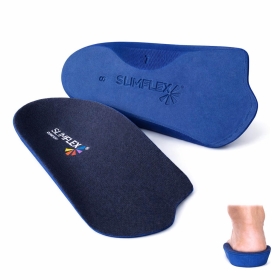
Sold: Sold per Pair
Incl. VAT Exl. VAT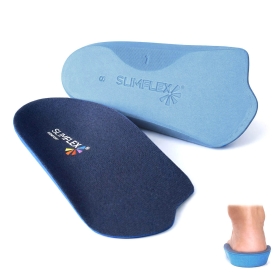
Sold: Sold per Pair
Incl. VAT Exl. VAT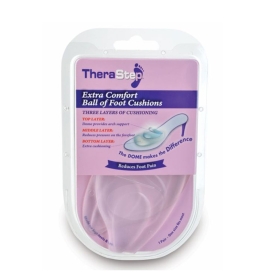
Sold: Sold per Pair
Incl. VAT Exl. VAT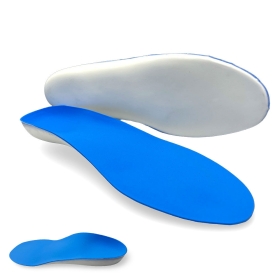
Sold: Sold per Pair
Incl. VAT Exl. VAT


Sold: Sold per Pair
Incl. VAT Exl. VAT