



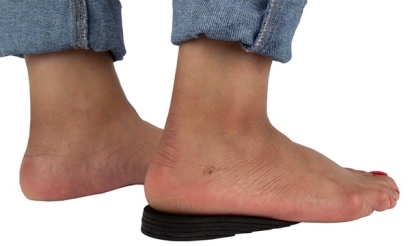
Orthotic heel lifts or shoe lifts are simple devices with a surprisingly wide clinical role. They can help reduce Achilles tendon strain, improve comfort in some cases of leg length discrepancy, support gait retraining and make day-to-day movement easier during rehabilitation.
Choosing the right lift is not just about adding height. Material, shape, firmness, adjustability and shoe fit all affect comfort, stability and clinical outcome.
Definition
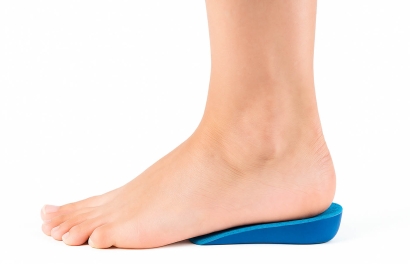
Heel lifts, also called heel raises or shoe lifts, are inserts placed inside footwear or beneath the insole to elevate the rearfoot by a measured amount. They are typically used to reduce strain through the Achilles tendon, assist with selected cases of leg length discrepancy, improve comfort during rehabilitation and support certain postural or gait-related problems.
Background
In the past, many shoes were made from stitched and nailed leather and rubber components, which made external shoe alterations relatively straightforward for a shoemaker. Modern footwear is different. Many shoes now use moulded synthetic soles and integrated uppers, which can make external modification harder without changing the look or function of the shoe.
At the same time, removable insoles and footbeds have become more common. That has made in-shoe modification more practical, whether through off-the-shelf inserts, clinician-led adaption or more structured orthotic insoles. As understanding of biomechanics has improved, heel lifts have evolved too. There are now firmer, more adjustable and more shoe-friendly options than the older one-size-fits-all designs.
Why heel lifts matter
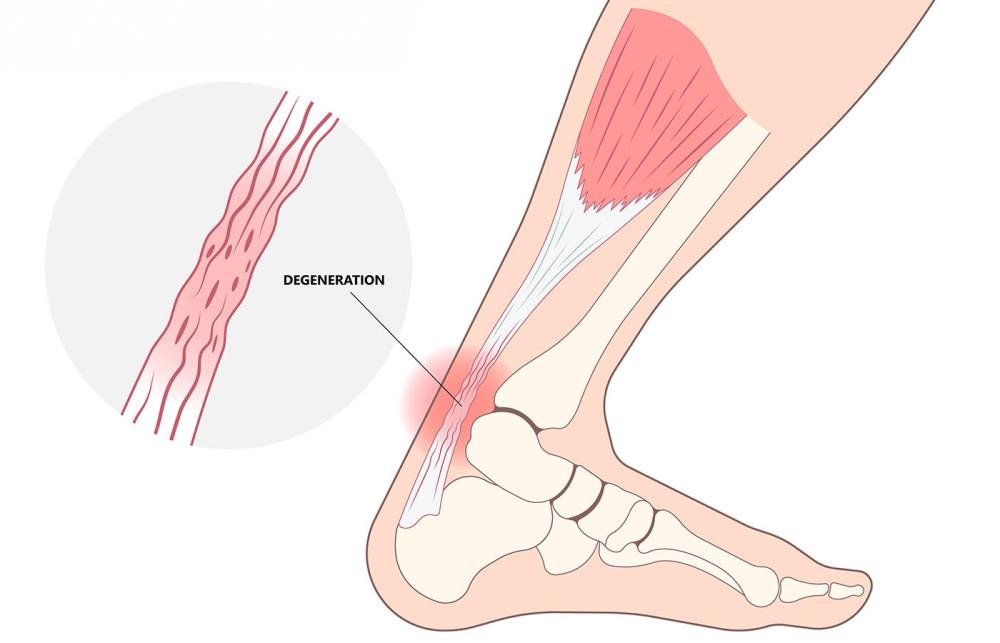
Firm heel lifts are used for a different reason from soft heel cushions. A heel cushion mainly aims to absorb shock or relieve focal pressure. A heel lift changes rearfoot height and can alter ankle position, tendon loading and lower-limb mechanics.
That distinction matters in clinic and in self-care. Someone with Achilles pain may need elevation rather than cushioning. Someone with a measured leg length discrepancy may need a stable lift rather than a soft pad. Someone with mixed heel pain may benefit from combining a lift with a more supportive orthotic insole or a condition-led solution from the Achilles tendonitis section.
- Leg length discrepancy
- Postural imbalance
- Lower back pain or spinal asymmetry
- Achilles tendon problems
- Rehabilitation needs after injury or surgery
- Prosthetic adjustment
- Selected sports uses such as gait correction
Heel lift selection issues
No single heel lift suits every shoe or every patient. Many people end up using different types across trainers, work shoes and dress shoes. Still, consistency matters. If a lift is clinically indicated, it tends to work best when worn in the shoes used most often.
Start by deciding whether the need is temporary or long term. A temporary need may call for an adjustable lift that can be reduced gradually. Long-term use places more emphasis on comfort, durability and minimal disturbance of shoe fit. Sports use usually calls for a firmer material to help reduce instability.
The required height is also important. In many cases, more than 12mm of heel-only lift inside a shoe becomes uncomfortable or unstable. Beyond that point, full-foot solutions or external shoe modification may be more appropriate. For larger corrections, clinician input is sensible.
Shoe design also matters. Closed-heel lace-up footwear usually accepts lifts more easily than loafers or shallow slip-ons. Sandals can be more difficult and may need a low-profile or transparent option or a different modification route altogether.
Design considerations
A good heel lift should be long enough to extend under the arch rather than ending abruptly under the heel. If the lift is too short, the transition can feel harsh underfoot and may create a bridging effect between heel and forefoot.
The taper should also be smooth and continuous. A sudden hump or flat section is more likely to feel uncomfortable and can encourage the insert to creep forwards in the shoe. Firmness matters too. A lift that adds height without too much softness helps reduce vertical heel movement, friction and rubbing at the back of the shoe.
In active patients, excessive softness can reduce control and increase the risk of instability. In clinical use, it can also make measured correction less predictable. Where multiple functions are needed, such as heel elevation plus wedging or insole modification, practitioner-led heel raises for insole adaptions may be the better option.
Types of heel lifts
Cork heel lifts
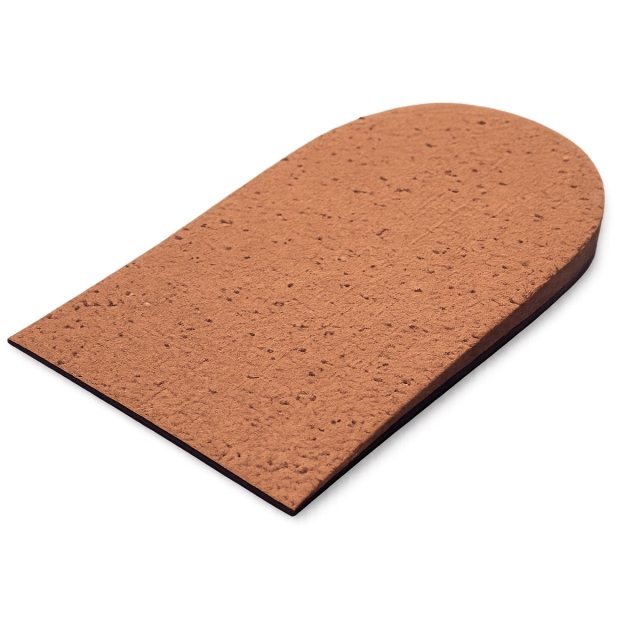
Cork is lightweight, easy to trim and inexpensive. It works well when a straightforward low-profile lift is needed, especially in lighter everyday footwear and some dress shoes. Cork can be used under the insole or footbed, which allows the original cushioning of the shoe to remain in contact with the foot.
The main limitation is durability. Cork is practical and economical, but it generally does not last as well as firmer moulded plastics in heavy-use footwear.
Solid plastic heel lifts
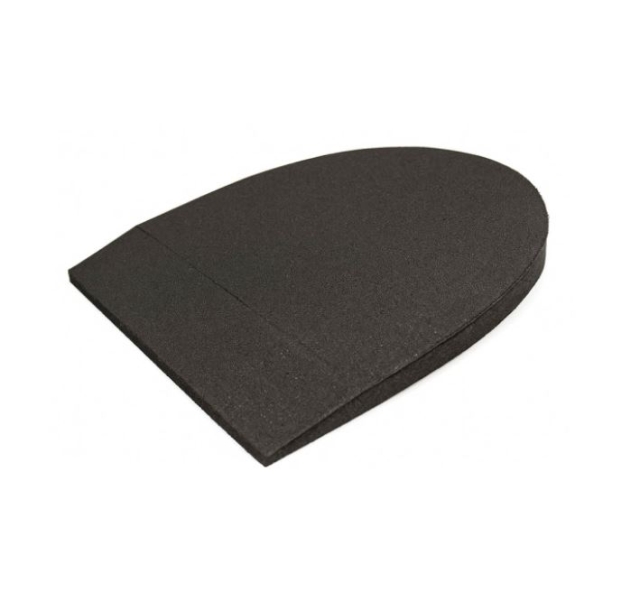
Plastic lifts are often chosen where durability and firmer support matter most. They are commonly used in leg length discrepancy management and in heavier shoes where compression resistance is important. A firmer lift helps preserve effective height over time and reduces heel movement within the shoe.
The downside is adaptability. A rigid plastic shape does not always sit neatly in every shoe, especially where the footbed is curved or narrow. For that reason, they can be less forgiving than cork or layered designs.
EVA and foam heel lifts
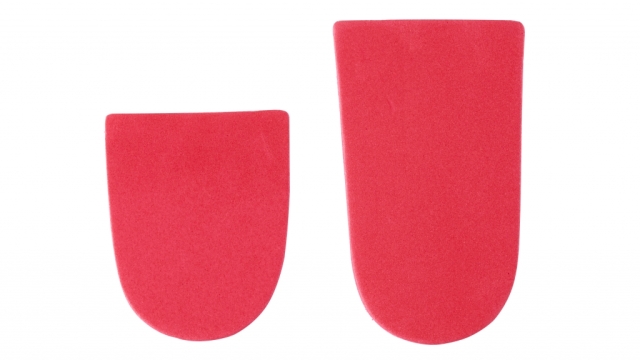
EVA and other foam-based lifts are widely available and often feel comfortable at first wear. They can be useful where a little softness is acceptable or when a low-cost temporary solution is needed. Some people also prefer them in casual footwear.
However, softer materials compress with use. That can reduce the true lift height over time and allow more up-and-down heel movement. For longer-term leg length compensation or sport, this can be a drawback.
Adjustable heel lifts
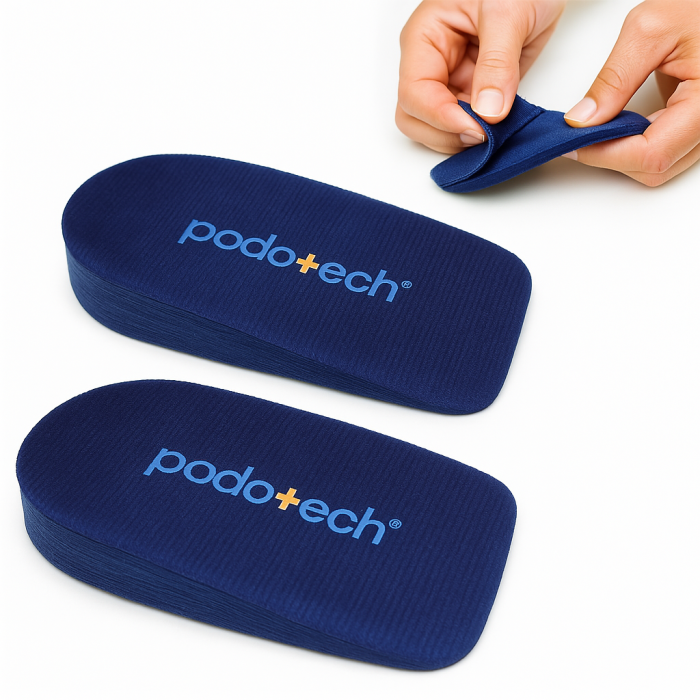
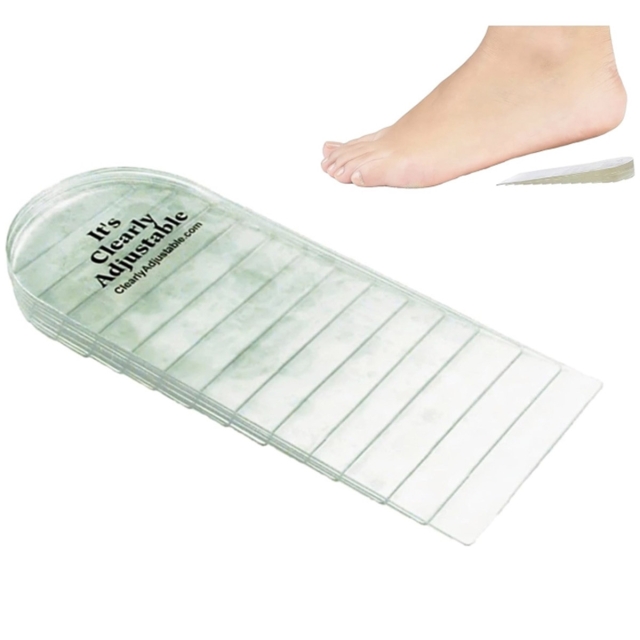
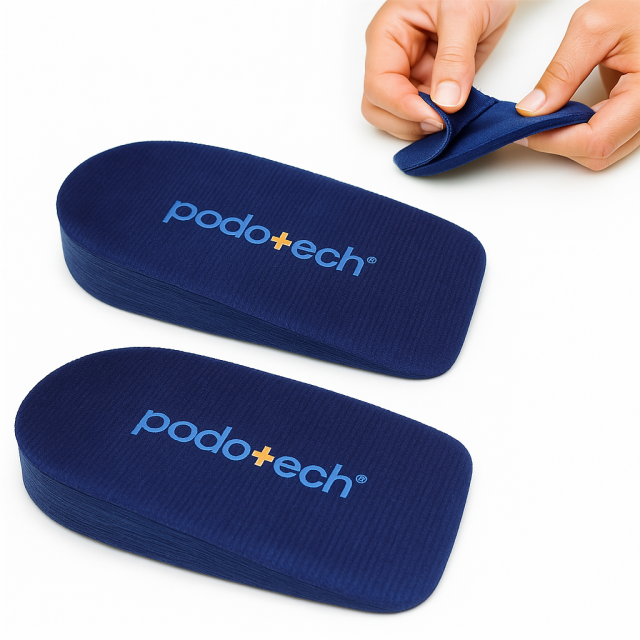
Adjustable lifts are especially useful when the ideal height is not yet known or where the wearer needs to adapt gradually. They allow small changes in elevation and can make fitting easier across different shoes.
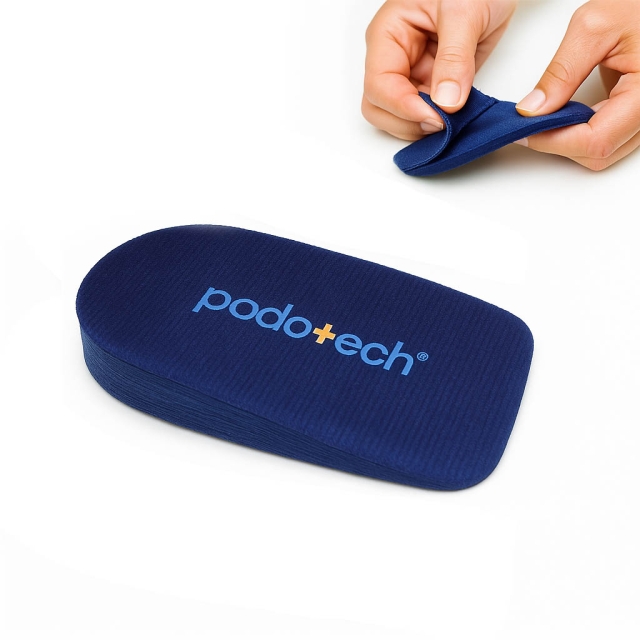
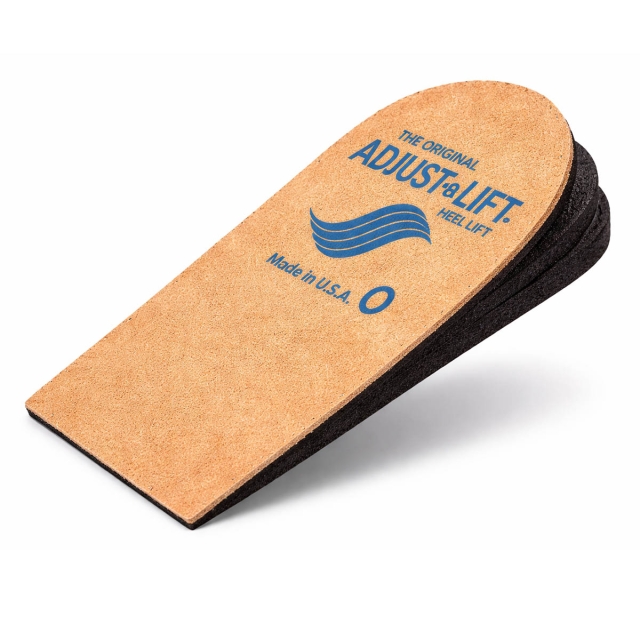
The Heel Assist Adjustable Heel Lift and Adjust-a-Lift are examples of layered designs. The Clearly Adjustable Heel Lift offers a more structured under-insole option for those who want fine-tuning without as much compression.
When heel lifts are not enough
Heel lifts can be helpful but they are not a complete answer for every problem. Persistent one-sided pain, marked limping, progressive symptoms or uncertainty around diagnosis all point towards a fuller assessment.
For example, Achilles tendon pain may respond best when a lift is combined with a structured loading programme, footwear review and sometimes a more supportive insole. The Achilles heel lift guide is a good starting point, and the wider Achilles tendonitis range offers related options.
Likewise, larger discrepancies may call for a fuller-foot approach such as the Clearly Adjustable Full Foot Lift or a practitioner-made solution rather than a simple rearfoot insert.
How to fit heel lifts and monitor progress
Fit matters as much as product choice. The lift should sit securely, feel stable and avoid creating rubbing or slippage. Where possible, introduce one change at a time so you can judge the effect properly.
- Start with the reason for the lift - Achilles support, leg length discrepancy, posture or rehabilitation.
- Choose a height that is modest and tolerable rather than aggressive.
- Check whether the lift should sit under the insole, on top of it or as part of an orthotic adaption.
- Walk in the shoe indoors first and assess heel security, forefoot pressure and general balance.
- Monitor changes over days rather than minutes - smoother walking, less stiffness and better comfort are encouraging signs.
- Review the setup if you notice rubbing, new forefoot pain, instability or discomfort in the opposite limb.
For fine adjustment, an incremental option is often easier to manage than a fixed lift. This is where products such as Heel Assist, Adjust-a-Lift and Clearly Adjustable come into their own.
Comparison table
| Type | Best for | Strengths | Limitations | Example link |
|---|---|---|---|---|
| Cork | Low-profile everyday use | Lightweight, trim-friendly and simple | Less durable under heavy wear | Cork Heel Lifts |
| Solid plastic | Longer-term firm correction | Durable and stable | Less adaptable to shoe shape | Heel raises for adaptions |
| EVA or foam | Short-term comfort and simple trial use | Comfortable and widely available | Can compress and lose effective height | EVA Heel Raises |
| Adjustable layered | Gradual introduction and fine-tuning | Flexible height adjustment | Some softer models can feel bulky | Clearly Adjustable Heel Lift |
What users and clinicians often notice
When heel lifts are well matched to the problem and the shoe, people often report that walking feels smoother and that Achilles stiffness eases a little, especially first thing in the morning. Clinicians also value adjustable designs because they reduce the need to stock many fixed heights and make it easier to test comfort and tolerance over time.
Problems usually arise when the lift is too soft, too high or poorly matched to footwear. Common complaints include heel slippage, crowding in the shoe, forefoot pressure and the feeling that the insert is creeping forward.
Frequently asked questions
1. Are heel lifts the same as heel cushions?
No. A heel cushion mainly absorbs shock or relieves pressure. A heel lift changes heel height and can alter mechanics.
2. Can heel lifts help with Achilles tendonitis?
They often can, particularly when the goal is to reduce tension through the tendon. They are usually most effective as part of a broader plan rather than as a stand-alone treatment.
3. How high should a heel lift be?
That depends on the reason for use, the shoe and individual comfort. Adjustable options are useful when you need to find the right height gradually.
4. Should I wear the lift in all my shoes?
If the lift is being used for a consistent biomechanical reason, regular use across your main footwear is often more helpful than using it only occasionally.
5. Are soft lifts better because they feel more comfortable?
Not always. Soft lifts may feel pleasant at first but can compress over time and allow more heel movement. Firmer lifts are often better where control matters.
6. Can I use a heel lift for sport?
Sometimes, but stability matters. For sport, firmer and more secure options are generally preferred over soft cushioning designs.
7. When should I get professional advice?
Seek assessment if symptoms are persistent, one-sided, worsening or if you are unsure whether the problem is really coming from leg length difference, tendon overload or another cause.
Article revised: April 2026
Related pages
- Heel lifts
- Achilles tendonitis insoles and heel lifts
- Orthotic insoles
- Heel raises for insole adaptions
- How heel lifts help with Achilles tendinopathy
References and source pages
- Heel lifts for Achilles support and leg length difference
- Achilles tendonitis insoles and heel lifts
- Cork Heel Lifts
- Clearly Adjustable Heel Lift
- Heel Assist Adjustable Heel Lift - Pair
- Adjust-a-Lift
- EVA Heel Raises
- Heel lifts for Achilles tendinopathy guide
Author
Marc Cameron writes for Algeos on orthotic therapy, rehabilitation and lower-limb care. His articles focus on turning clinical product knowledge into practical guidance that is clear, useful and easy to apply in real-world settings.
Sold: Sold Individually
Incl. VAT Exl. VAT