


How does a balance board work?
Standing on a moving platform requires your ankles, knees, hips and trunk to work together. Visual information - the balance organs of the inner ear and proprioception - your sense of joint position and movement - help your nervous system detect changes. Your body then adjusts muscle activity to keep your centre of mass over your feet.
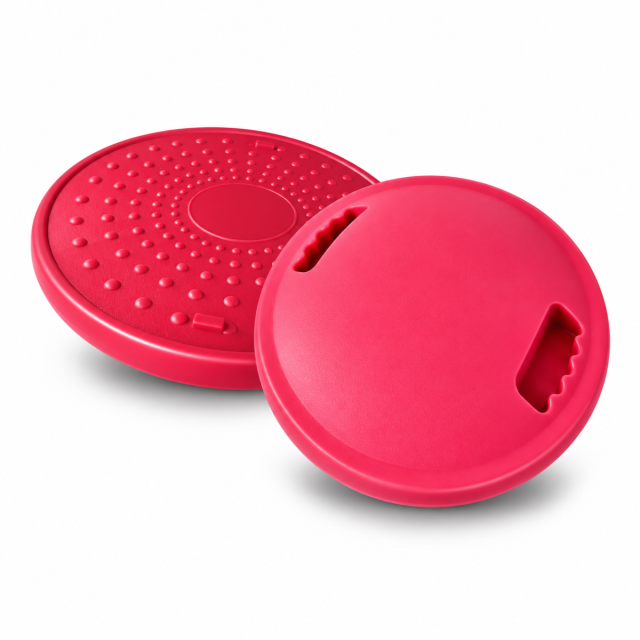
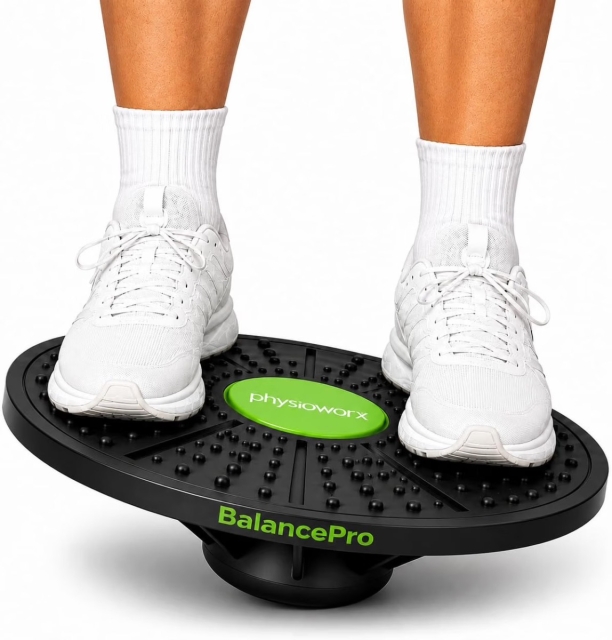
Useful training is not about keeping the board perfectly still. Gentle corrections, performed without rushing or gripping with your toes, encourage coordination. A two-in-one balance and wobble board offers options for changing the direction and difficulty of this challenge.
Why does balance board training matter?
Balance exercises can support ankle control, confidence with weight transfer and functional movements such as stepping or changing direction. They may be especially relevant after an ankle sprain once healing and weight-bearing allow. An umbrella review published in 2026 found moderate-certainty evidence that balance training improves dynamic postural control in adults with chronic ankle instability. This does not establish that every balance board or exercise produces the same result.
Balance also matters with ageing. A major Cochrane review of falls prevention supports balance and functional exercise programmes for older adults. Importantly, the benefit relates to structured exercise programmes, not proof that using a wobble board alone prevents falls.
For wider equipment options, see the Algeos balance therapy range. People with significant balance impairment may need stable-floor exercises before considering a moving platform.
Choose the right balance tool
| Tool | Movement | Best starting use | Main consideration |
|---|---|---|---|
| Rocker board | Primarily front-to-back or side-to-side | Simple directional weight shifts | Orientation changes the movement |
| Wobble board | Multi-directional tilt | Controlled ankle and whole-body adjustments | More demanding than many rocker tasks |
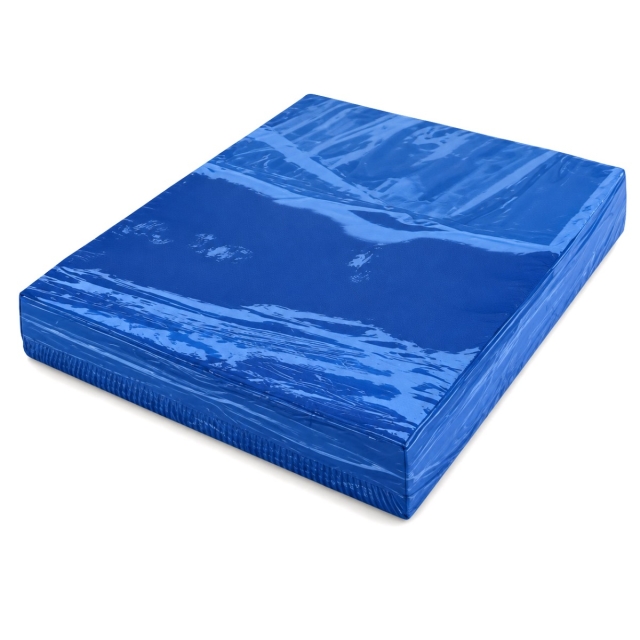
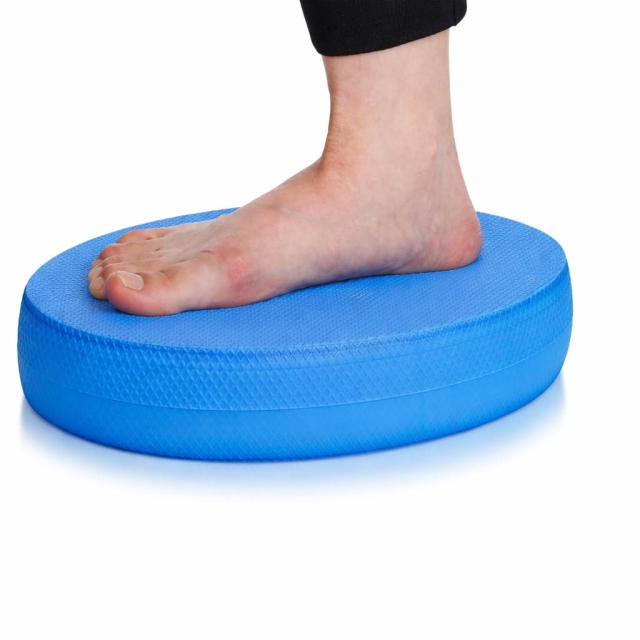
| Foam balance pad | Soft compression and sway | Supported standing and steady weight transfers | Firmness affects difficulty |
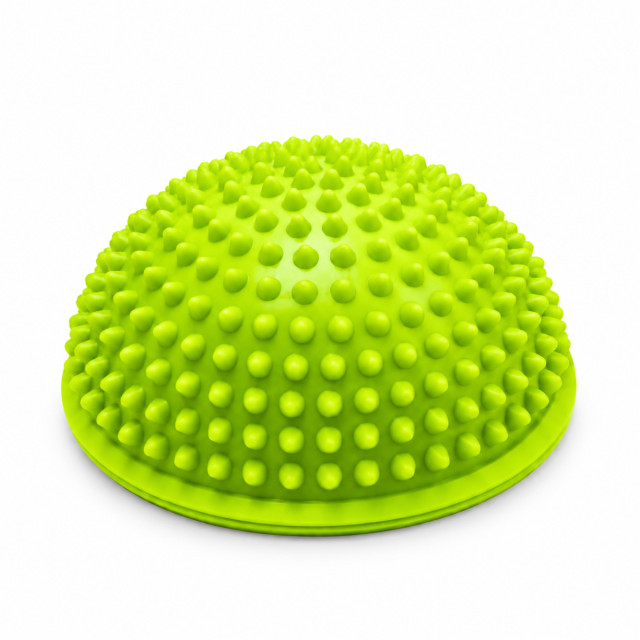
| Adjustable balance board | Variable tilt or instability | Graduated challenges as control improves | Use the least challenging setting first |
Step-by-step: how to use a balance board safely
- Prepare the space. Put the board on a level non-slip floor away from furniture edges. Check its condition, weight limit and instructions. Keep a stable worktop or fixed rail within easy reach.
- Warm up on the floor. March gently or practise heel raises for two to three minutes. If standing on firm ground feels unsafe, do not progress to the board without professional advice.
- Step on with support. Hold the worktop, position your feet around hip-width apart and soften your knees. Keep your eyes looking forwards rather than constantly down at your feet.
- Find a comfortable hold. Maintain your position for 15-30 seconds, repeating two or three times. Small board movements are normal. Use enough hand support to prevent a fall.
- Practise controlled rocking. Shift your weight forwards and backwards about eight to ten times. Then try gentle side-to-side movement. Stay within a pain-free range and avoid sudden tilting.
- Add circles when ready. Make five slow clockwise circles followed by five anticlockwise circles. Keep your breathing relaxed and your knees tracking broadly towards your toes.
- Progress one variable. Gradually reduce hand pressure, increase hold time or try a more challenging board setting. Single-leg balance and squats belong later in the progression and may require supervision.
Balance board exercise progression
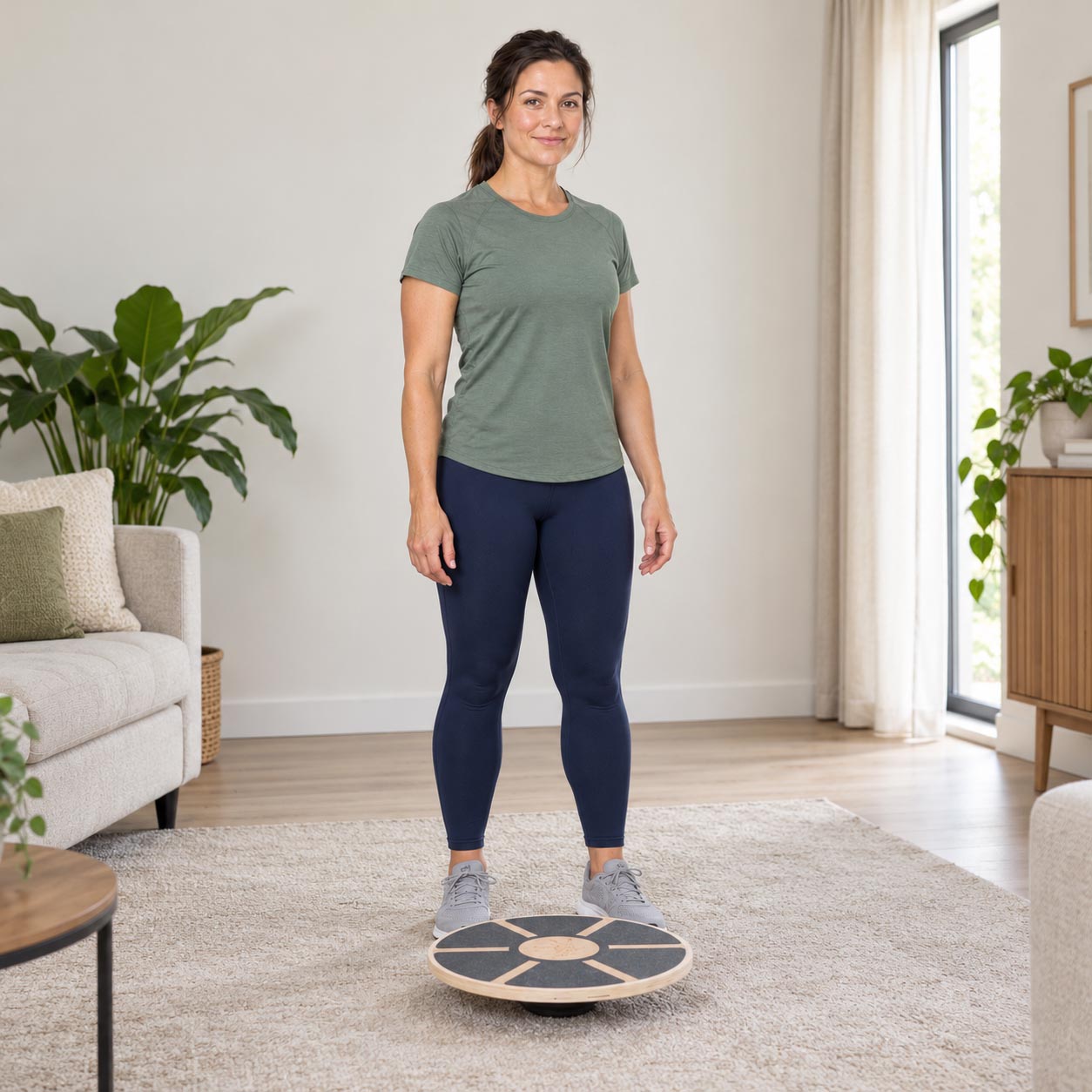
1. Use support if needed
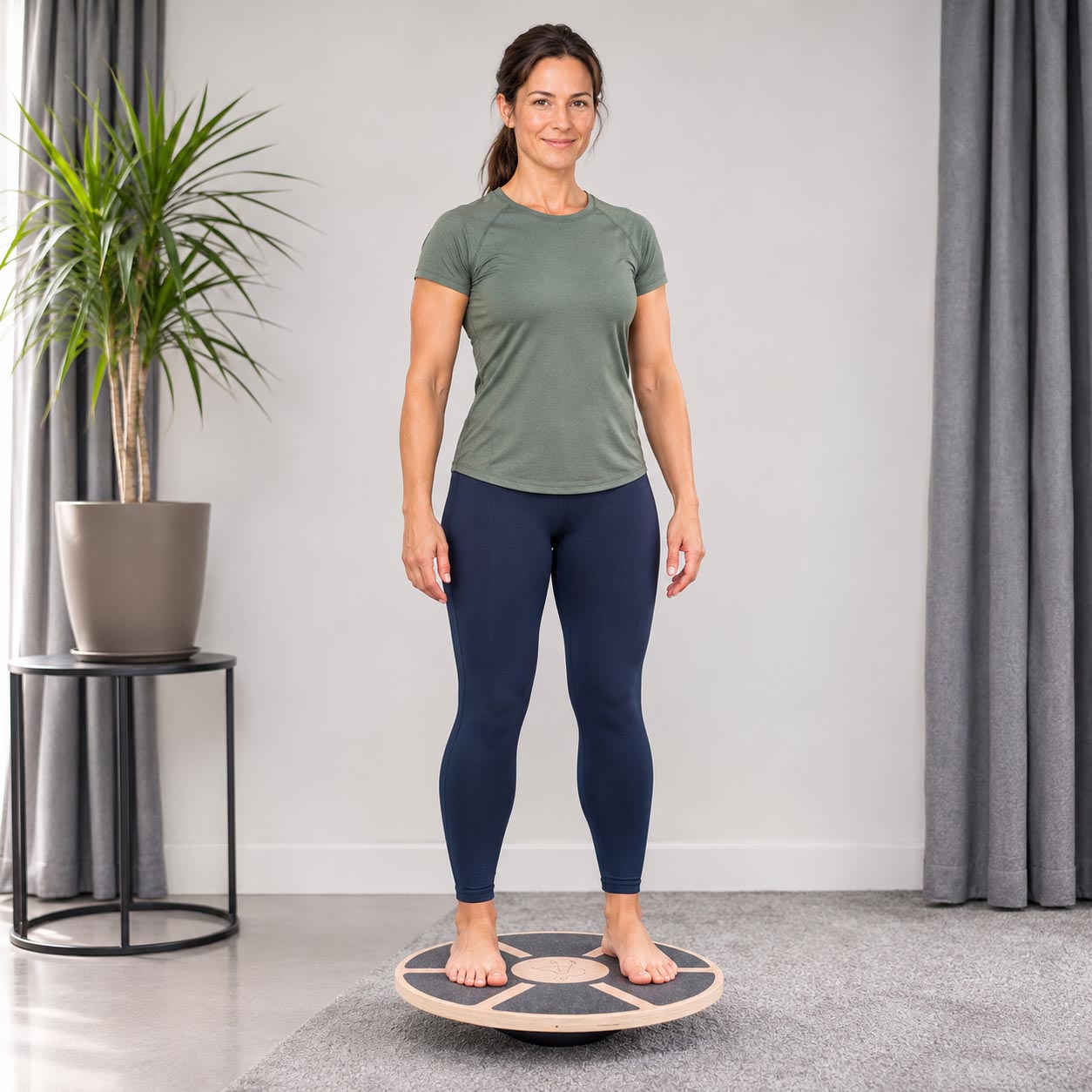 2. Hold steady
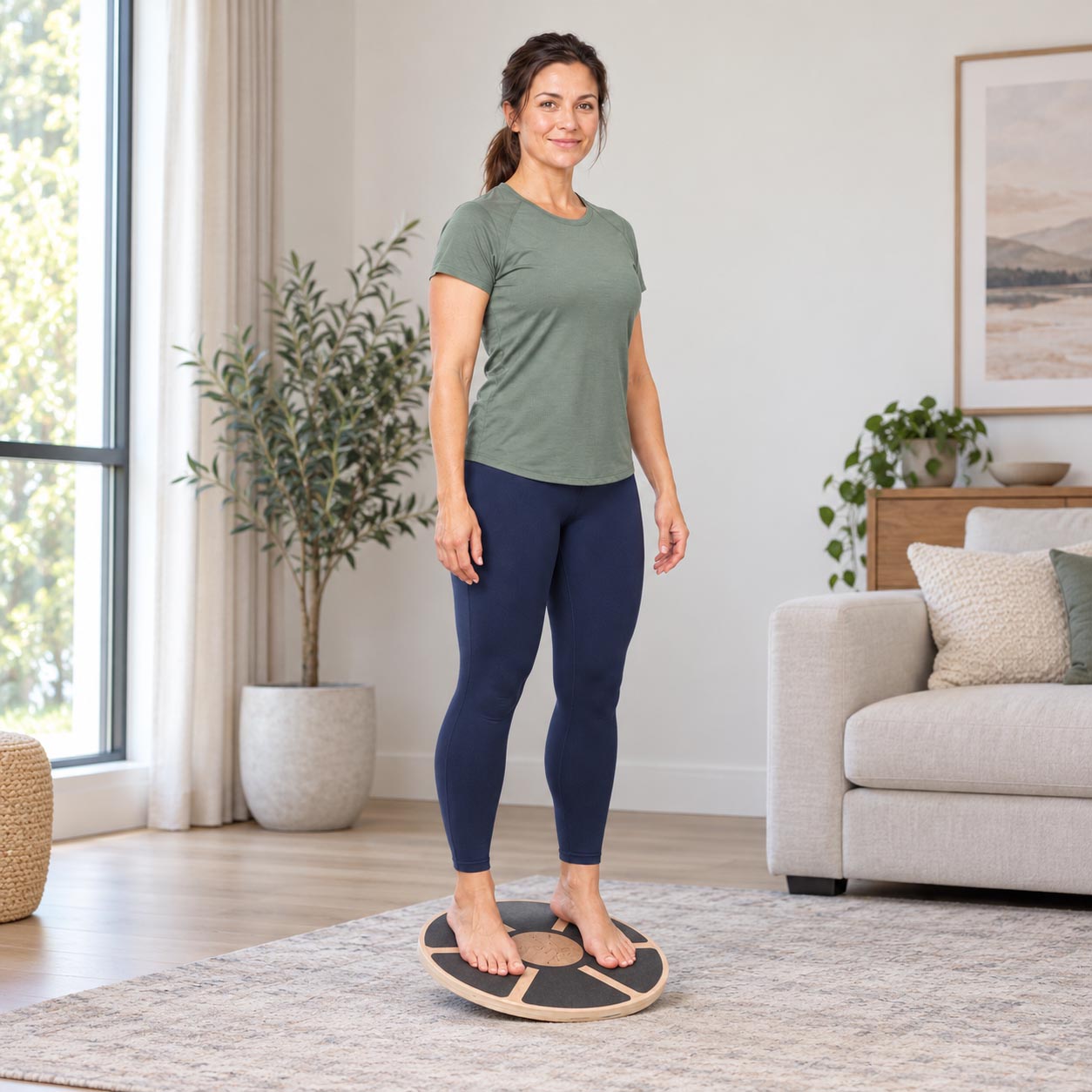 3. Gently rock
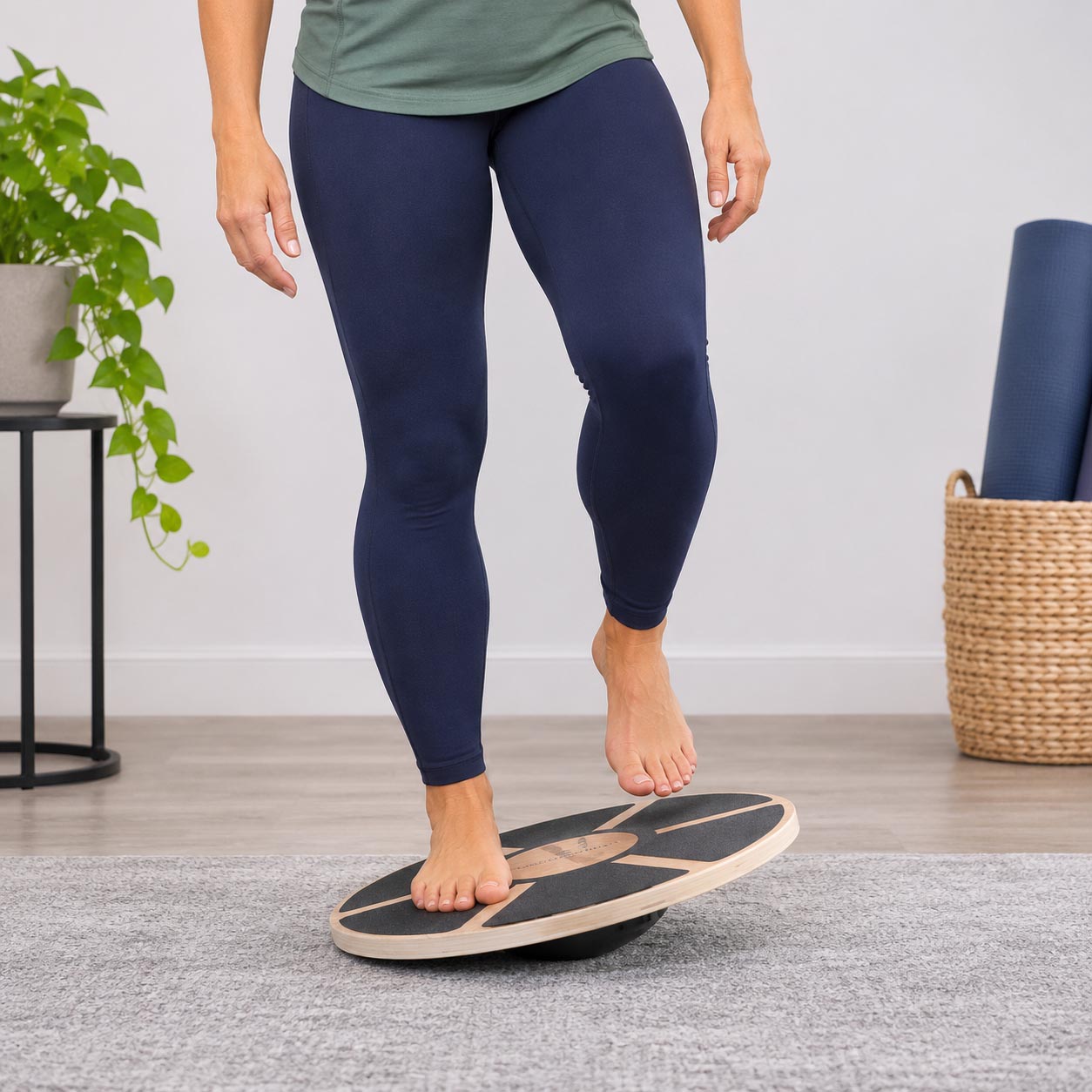 4. Add challenge
Progression: stay at each stage until you can complete the task safely with good control. The final stage is not suitable for everyone.
Common balance board mistakes to avoid
Using a board that is too unstable too soon often leads to stiff knees, exaggerated arm movements or repeated loss of control. Begin with a simpler task and keep enough contact with a support to make each repetition deliberate. Staring continuously at your feet may also encourage a rounded posture, so use a point ahead of you for orientation.
Another mistake is treating fatigue as progress. If your technique changes, pause or finish the session. Note which direction feels harder and practise it gently rather than forcing a larger range. For ankle rehabilitation, increasing pain or swelling after exercise is a reason to adjust the programme and seek advice.
How often should you practise?
For general coordination practice, begin with brief sessions two or three days each week and build gradually. A simple starting session might include supported holds, rocking and a short recovery break, taking around five to ten minutes. Quality matters more than accumulating minutes while fatigued.
Rehabilitation schedules are condition-specific. A 2026 systematic review of chronic ankle instability trials found effective programmes often ran for at least four weeks and included three sessions weekly with varied exercises. Those findings concern broader rehabilitation programmes rather than a five-minute board routine. Follow your clinician's plan where one has been provided.
What users say
On the Algeos two-in-one board product page, one displayed verified customer review particularly praises its dual-function design, describing the feature as “fantastic”. The review is marked as incentivised. It offers a useful perspective on convenience but it is a single customer opinion, not evidence of medical benefit or a representative satisfaction score.
Clinicians can evaluate usefulness more reliably by recording supported hold time, movement quality, confidence and symptom response across sessions. Improvement should transfer to relevant everyday activities rather than remaining limited to board performance.
Frequently asked questions
Are balance boards suitable for beginners?
They can be, provided you can stand safely on firm ground first. Begin with both feet on the board and a fixed support beside you. A softer balance pad may suit someone who needs a less abrupt challenge.
How long should I stand on a balance board?
Try supported holds of 15-30 seconds initially. Repeat two or three times and stop before your technique deteriorates. A therapist may recommend different timings for rehabilitation.
Should I use a balance board barefoot or in shoes?
Follow the manufacturer's guidance and your clinician's recommendation. Secure trainers with good grip are a sensible default. Avoid slippery socks and check that the surface is clean and dry.
Can a balance board help after an ankle sprain?
It may support later-stage ankle control exercises when weight-bearing and movement are appropriate. NHS ankle rehabilitation guidance includes wobble-board exercises but advises progression and professional input.
Do balance boards prevent falls?
There is evidence that structured balance and functional exercise programmes reduce falls in older adults. This should not be interpreted as proof that a balance board alone prevents falling, especially for people already at high risk.
What if the edge of the board touches the floor?
Occasional gentle contact can be part of learning a controlled tilt. Do not force the edge down or use jerky movements. Return to smaller motions if contact becomes frequent or difficult to manage.
References and further reading
- NHS. Balance exercises. General home exercise and safety guidance.
- United Lincolnshire Hospitals NHS Trust. Ankle sprain exercises. Rehabilitation progressions including wobble-board use.
- MSK Dorset. Early management of ankle sprains and strains. When board work may be appropriate.
- Sherrington C et al. Cochrane review (2019). Exercise for preventing falls in older community-dwelling adults.
- Martínez-Lozano P et al. (2026). Umbrella review of balance training for chronic ankle instability.
- Milton LTY et al. (2026 issue; published online 2025). Systematic review of rehabilitation exercise parameters for chronic ankle instability.
This guide is for education and does not replace an individual assessment, medical diagnosis or a tailored rehabilitation programme.
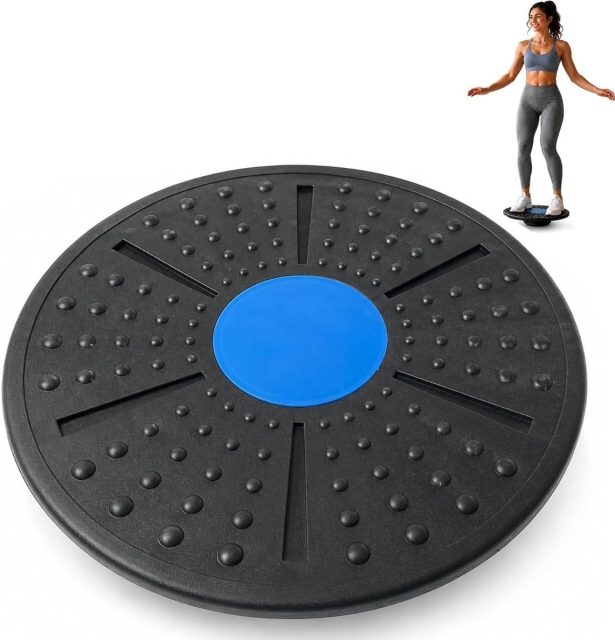

Sold: Each
Incl. VAT Exl. VAT