




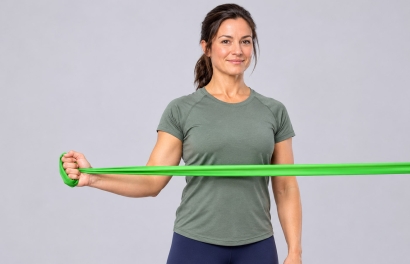
Shoulder recovery is not simply about making a weak muscle stronger. It is about rebuilding comfortable movement and confidence for everyday tasks, from pulling on a coat to reaching for a cupboard, using the right amount of resistance at the right time.
Resistance bands can make that process practical at home or in clinic, provided the exercises match the diagnosis and stage of recovery.
How resistance bands work - and why they matter
The four rotator cuff muscles help keep the upper arm centred in the shoulder socket as the arm moves. Muscles around the shoulder blade provide a stable yet mobile base. A band challenges these systems as it stretches, allowing resistance to be adjusted through band thickness, starting length and movement range.
For rotator cuff tendinopathy, a 2025 clinical practice guideline recommends an active rehabilitation programme that may include resistance training and movement-control exercises.[1] The important distinction is that exercise is supported, but no particular band colour or high-load formula is proven best for everyone. In the UK GRASP trial, a longer progressive-exercise programme was not superior over 12 months to a single best-practice physiotherapy advice session for the patients studied.[2] Good education and a manageable routine matter as much as exercise complexity.
Bands are portable, inexpensive relative to larger gym equipment and adaptable to different rehabilitation settings. They are not a replacement for assessment after trauma, surgery or significant loss of function.
Before you begin: select the right level
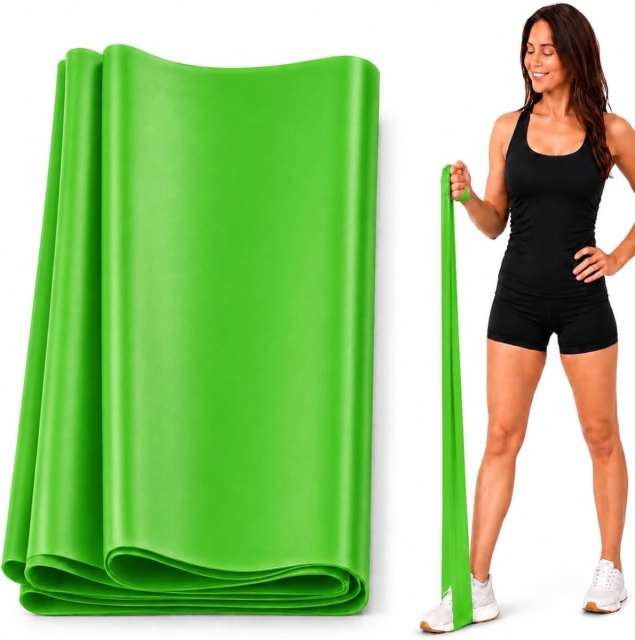
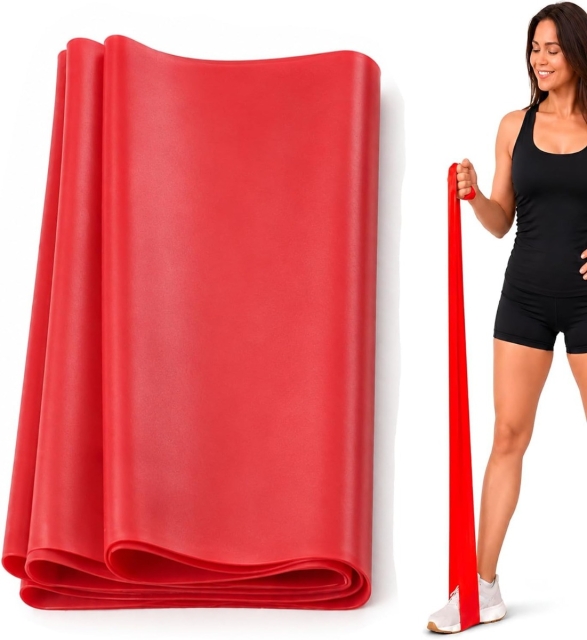
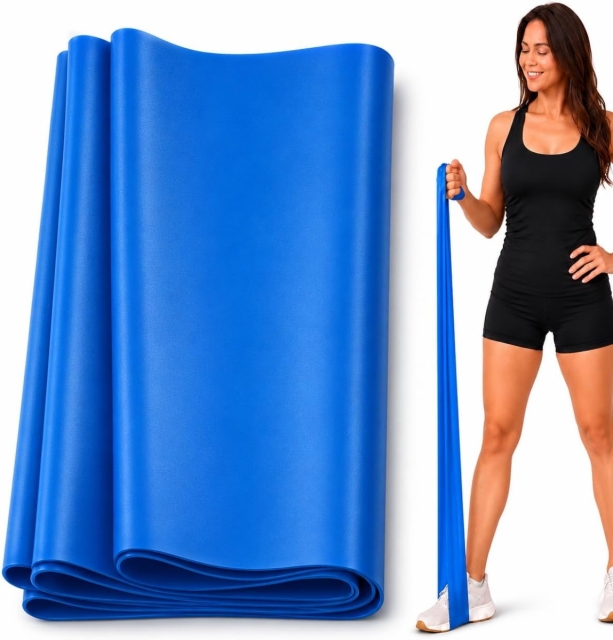
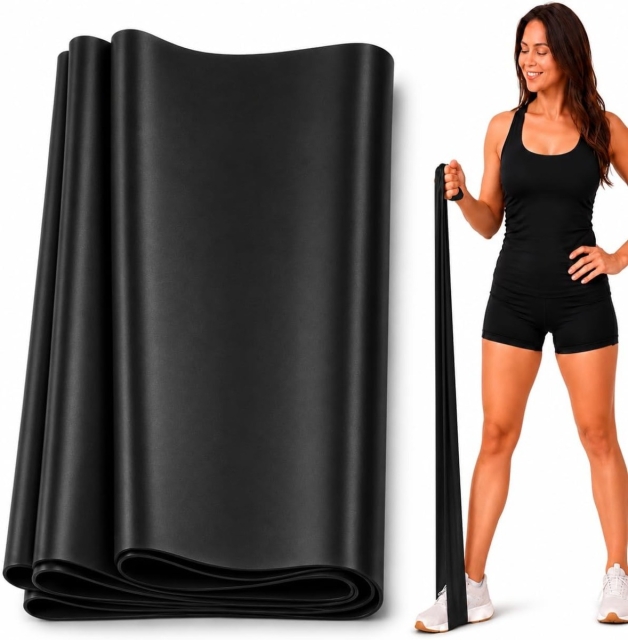
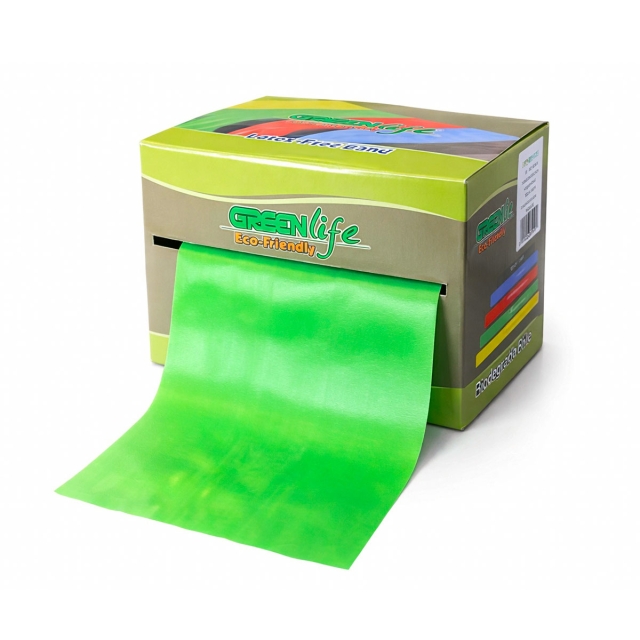
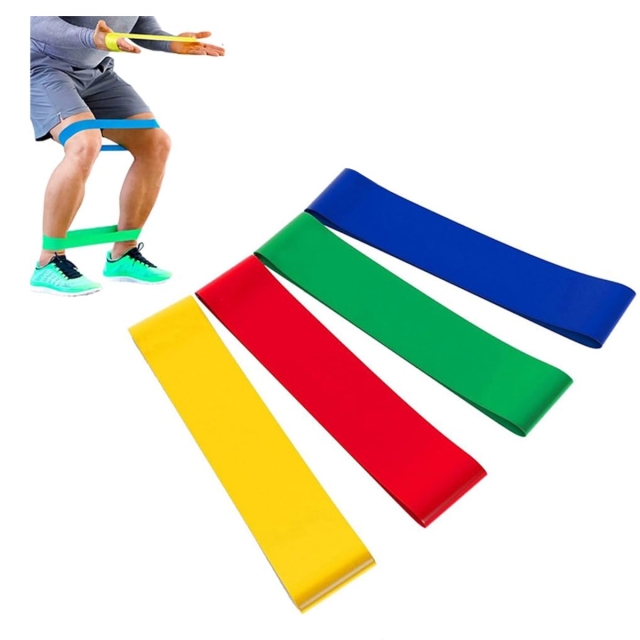
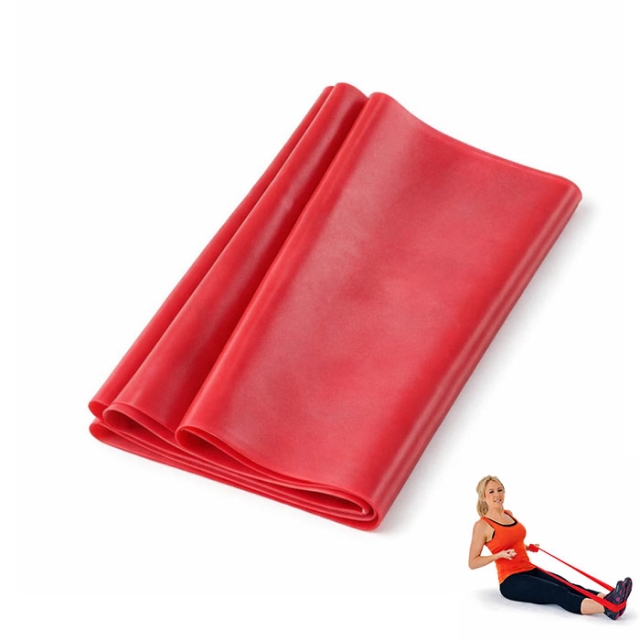
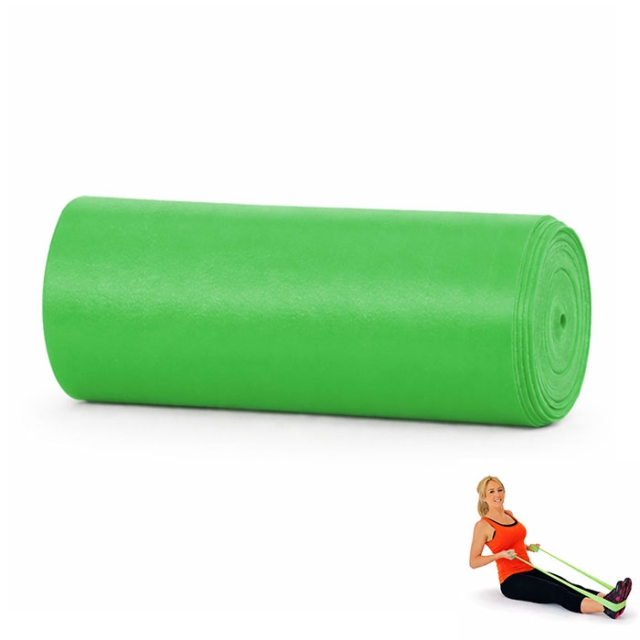
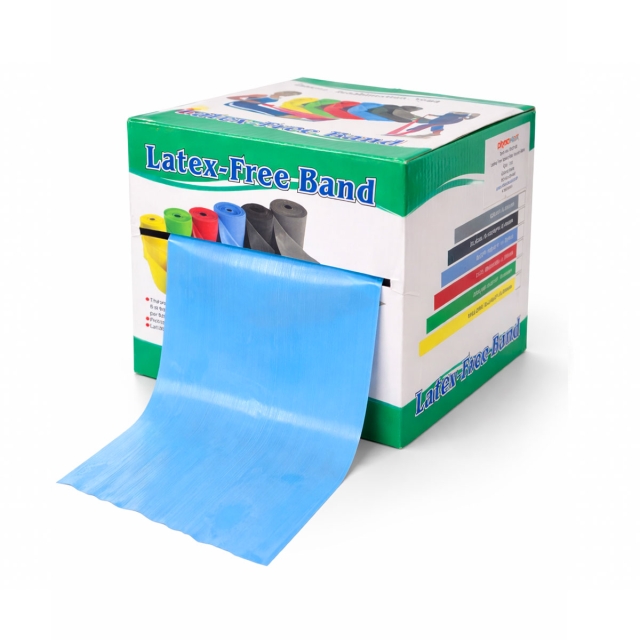
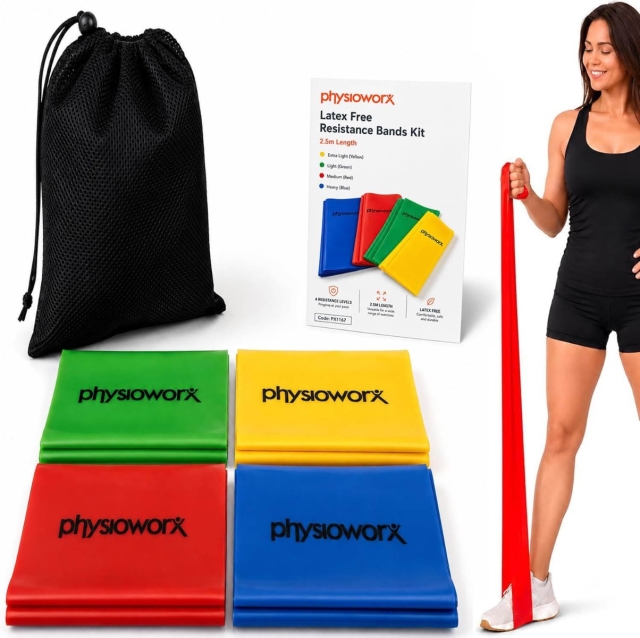
Choose a light band that allows smooth, repeatable movement without holding your breath or shrugging. Resistance colours are not standardised across manufacturers. See Algeos' guide to choosing a resistance band and its clinical resistance band range for equipment options.
Inspect the band for splits, check for latex sensitivity and secure any anchor so it cannot release towards your face. South Tees NHS advises considering protective eyewear for band exercises.[3] After shoulder surgery, dislocation or fracture, follow your clinician's specific restrictions before attempting resisted exercise.
Step-by-step: six resistance band exercises
For uncomplicated non-operative shoulder rehabilitation, a clinician might start with one or two sets of 8-12 controlled repetitions on two or three non-consecutive days each week, then adjust according to response. These figures are a practical starting example, not a universal prescription. Move slowly and stop short of a painful or poorly controlled range.
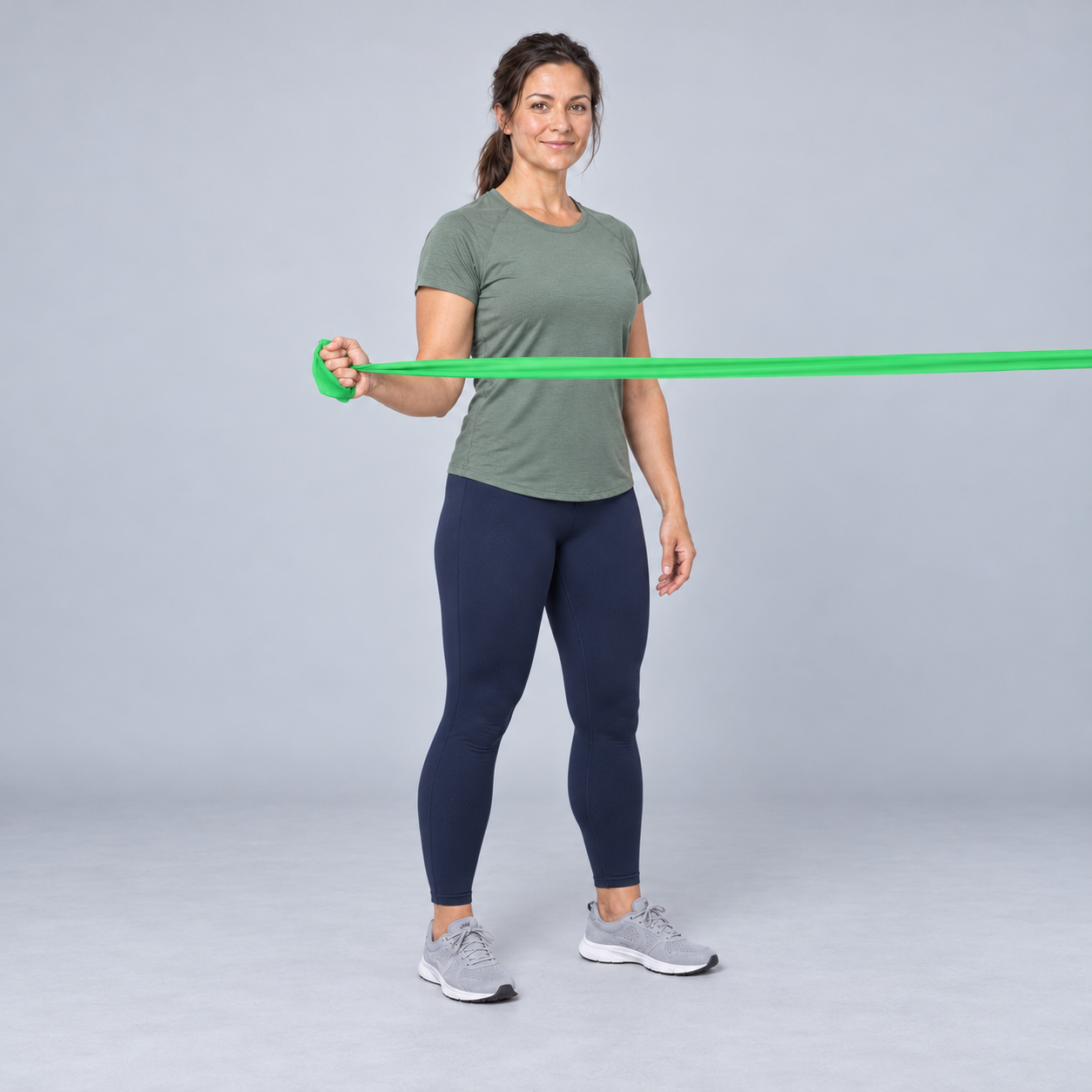
1. External rotation - rotate out
Stand side-on to an anchor at elbow height. Keep the working elbow bent to 90 degrees beside your waist, optionally with a small towel between elbow and ribs. Rotate your forearm away from your tummy without twisting your trunk. Return slowly.
Purpose: Posterior rotator cuff control.
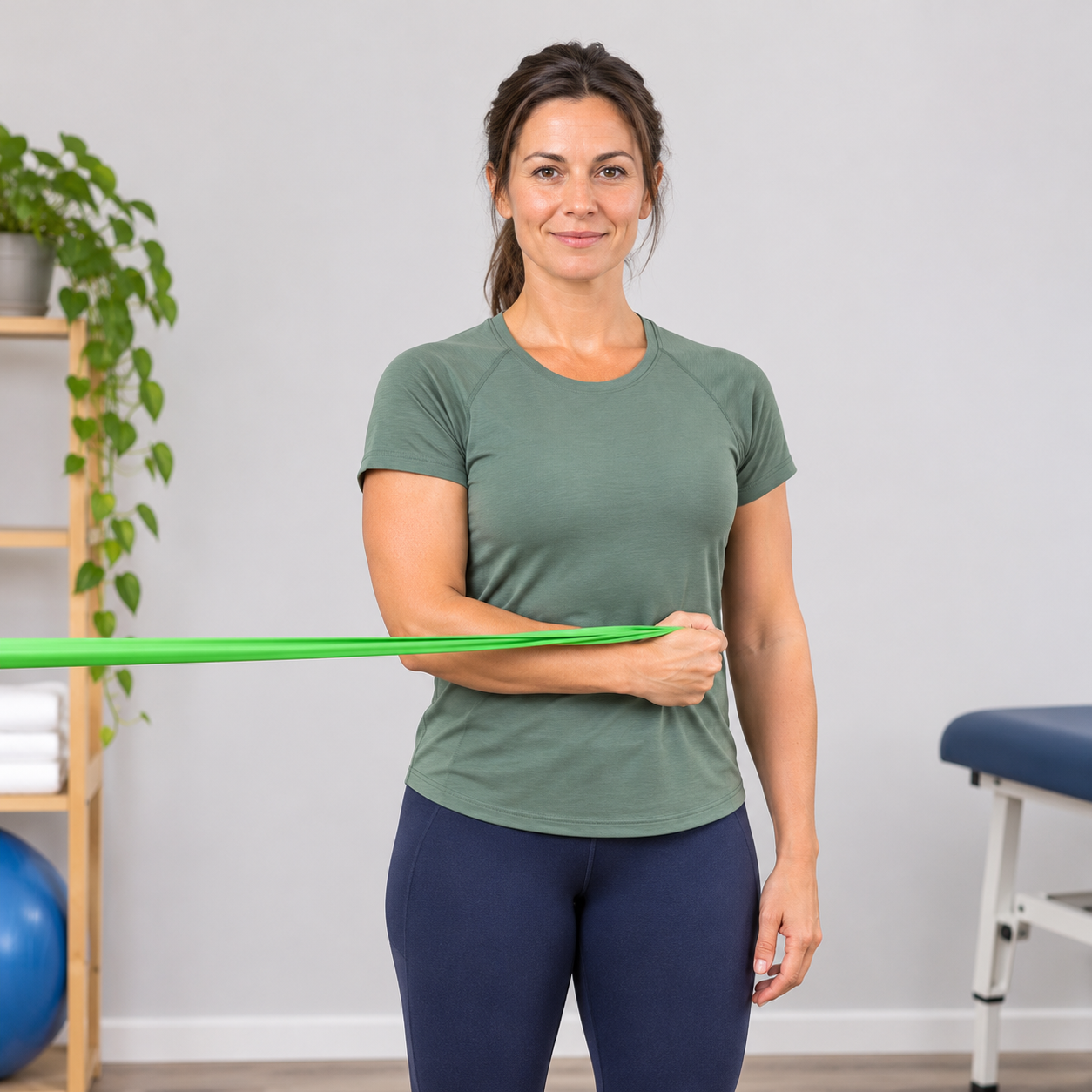
2. Internal rotation - rotate in
Turn to face the opposite direction so the band pulls your hand away from your body. With the elbow still tucked to your side, draw your hand gently across your abdomen. Resist the band's pull as you return.
Purpose: Subscapularis and inward-rotation strength.
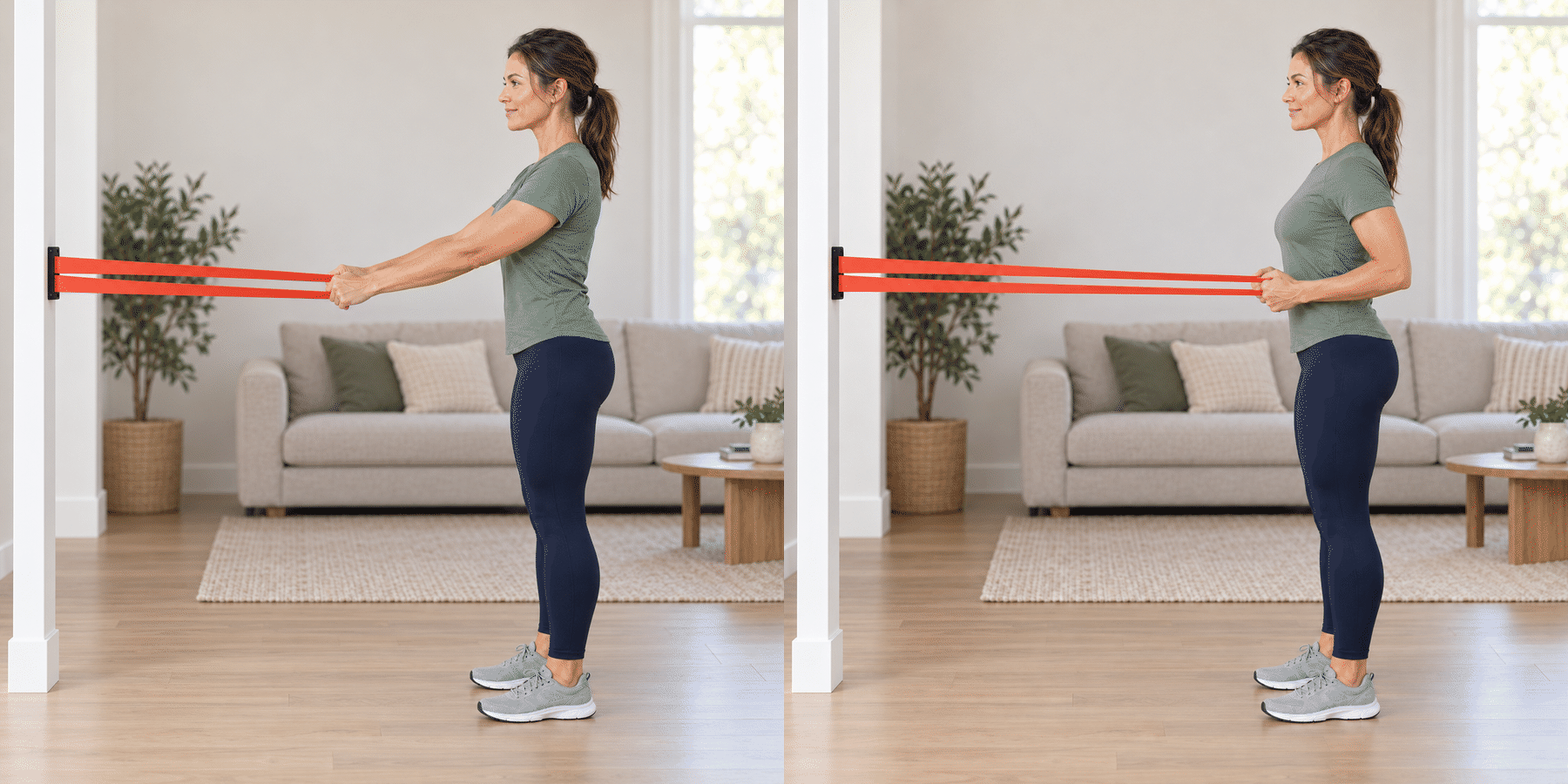
3. Low row - pull back
Anchor the band at waist height and hold an end in each hand. Start with relaxed shoulders and arms forward. Draw elbows backwards near your sides without arching your lower back or forcing your shoulder blades together. Release with control.
Purpose: Scapular and upper-back endurance.
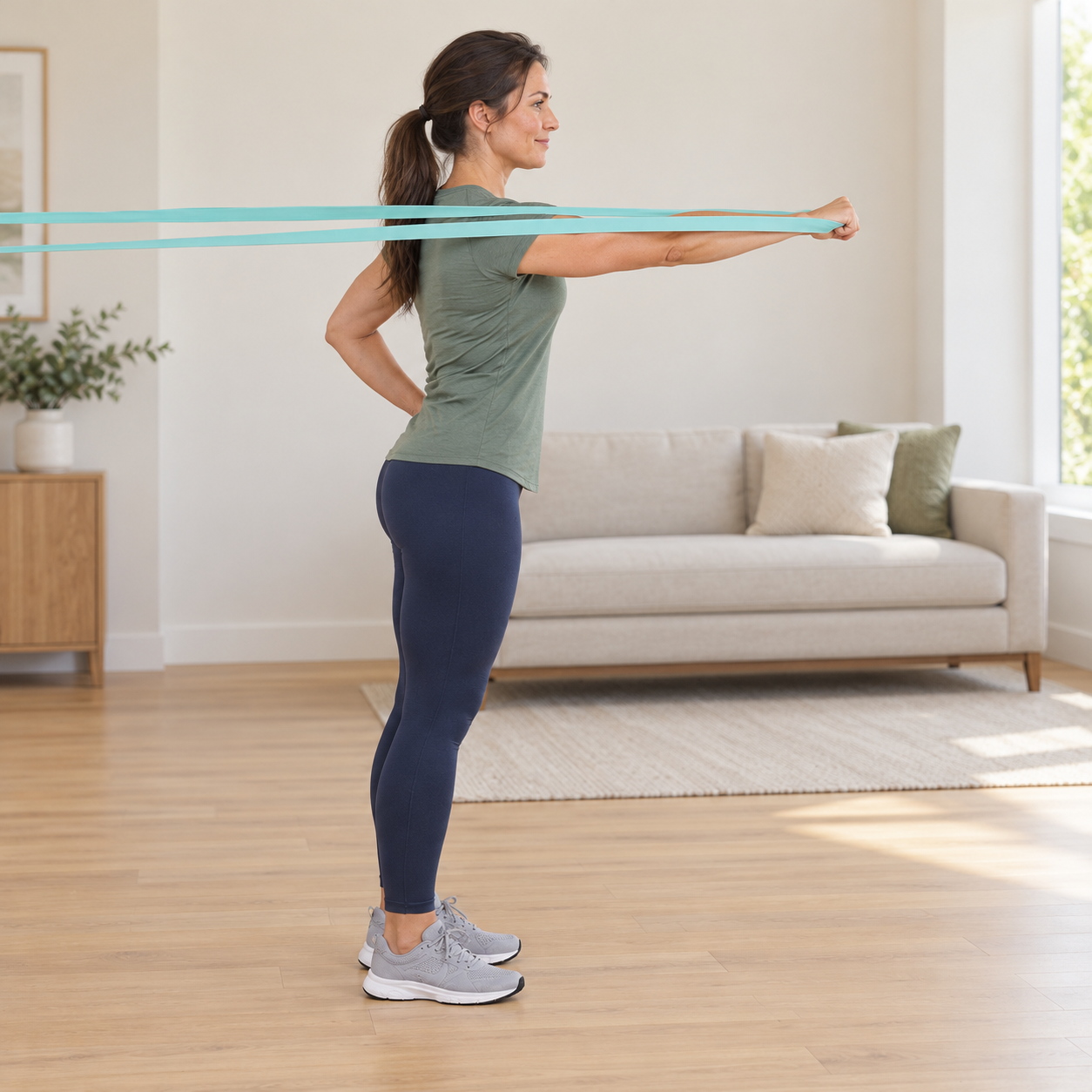
4. Forward punch - reach forward
Place the band around your upper back and hold its ends at chest height. Gently press your hands forwards, letting your shoulder blades move naturally around the ribs. Return without hunching your neck.
Purpose: Serratus anterior and controlled reaching.
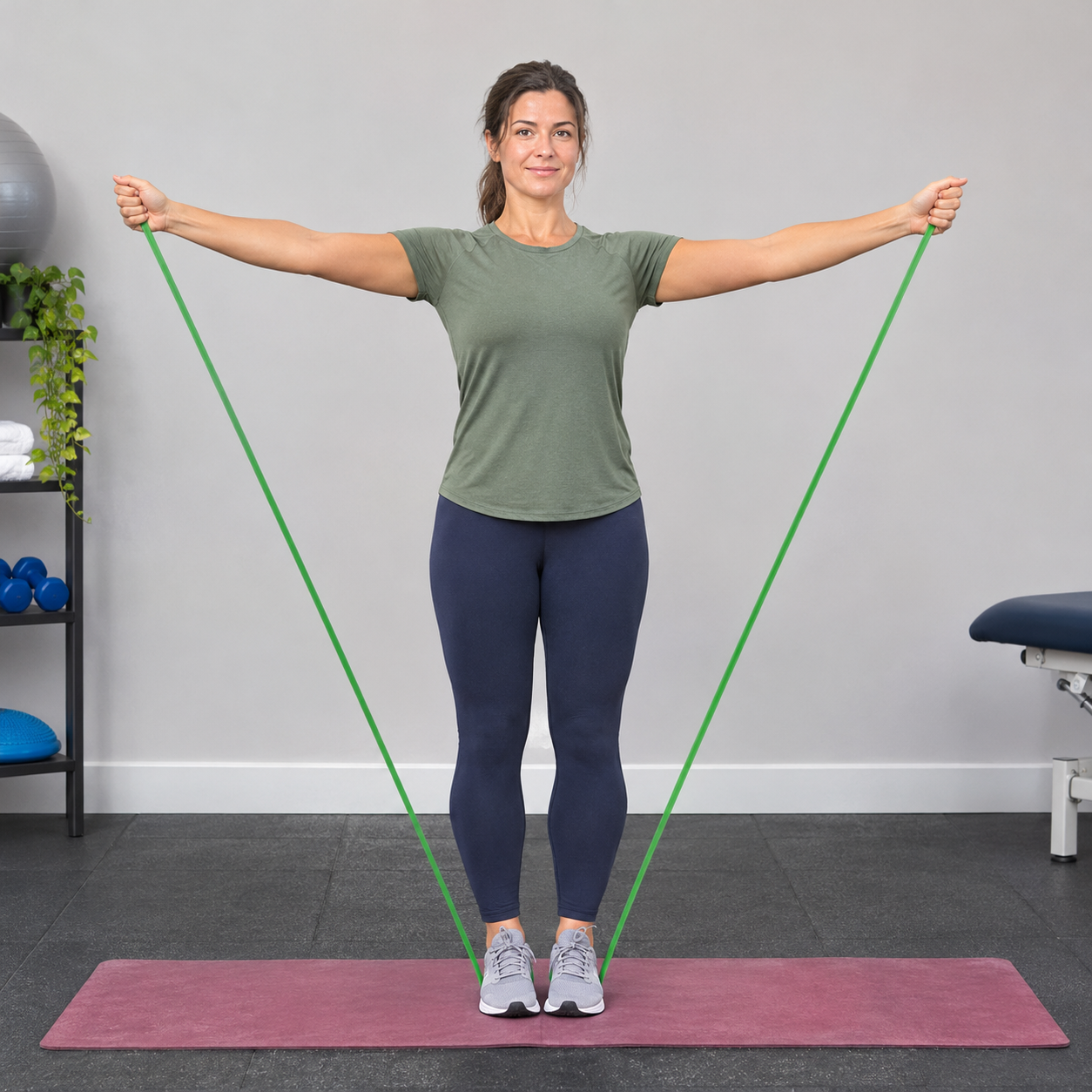
5. Scaption raise - lift diagonally
Stand on one end of a light band and hold the other with thumb pointing upwards. Lift the arm forwards and slightly outwards, roughly 30 degrees from directly in front, only to a comfortable height. Lower slowly.
Purpose: Graduated lifting capacity.
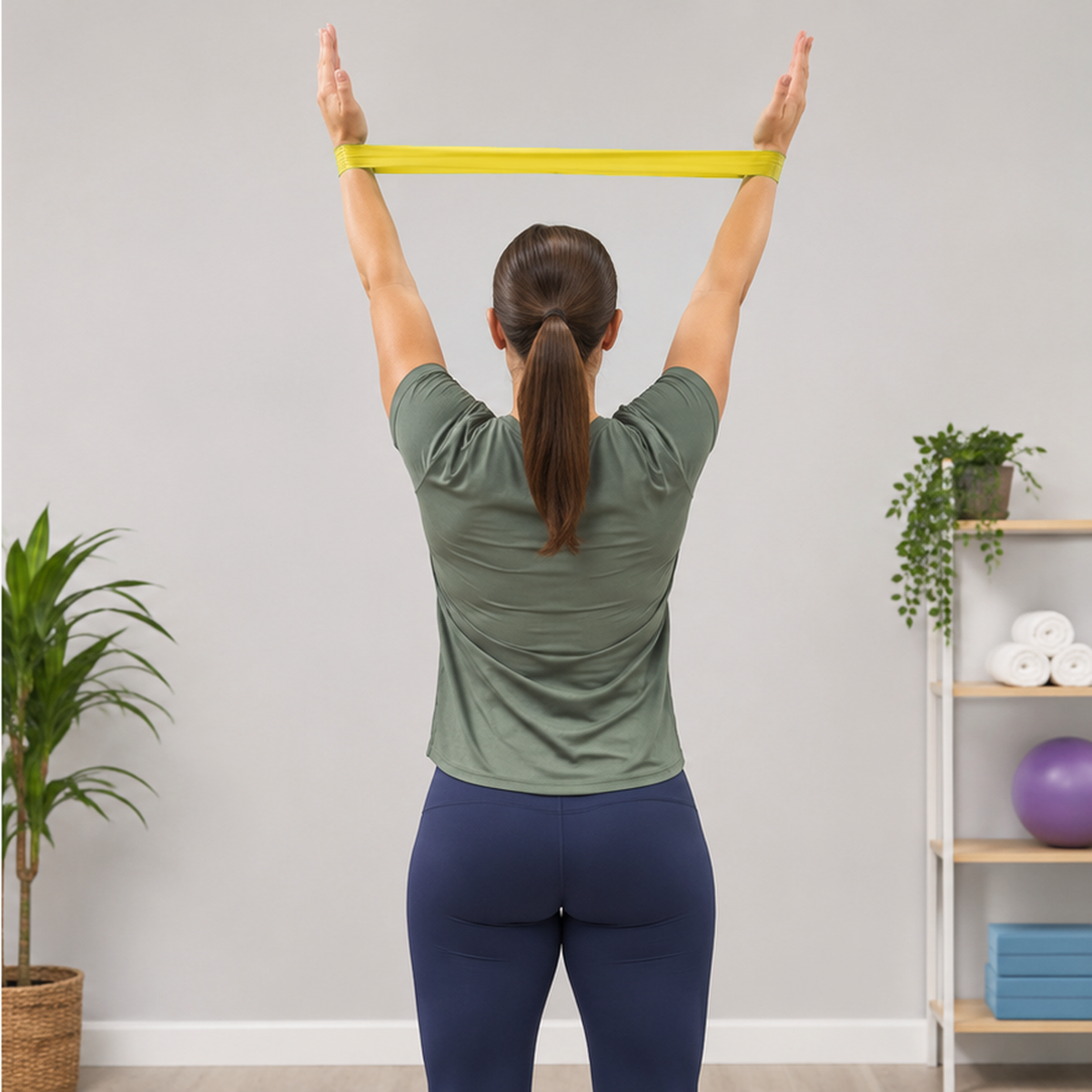
6. Band wall slide - reach overhead
Place a light loop around both wrists with forearms against a wall. Apply gentle outward tension and slide upwards within your permitted range, allowing the shoulder blades to rotate. Slide back down without pushing into sharp pain.
Purpose: Coordinated overhead movement.
External and internal rotation variations are also demonstrated in Royal National Orthopaedic Hospital patient guidance.[5] Not every person needs all six exercises. The best selection addresses their actual movement limitations.
Which movement should you prioritise?
| Exercise | Main focus | Everyday goal | Common adjustment |
|---|---|---|---|
| External / internal rotation | Rotator cuff | Dressing and controlling arm position | Use less tension or support the elbow |
| Low row | Shoulder blade control | Pulling a door or carrying lightly | Shorten the pull |
| Forward punch | Scapular movement | Reaching to a shelf | Reduce band stretch |
| Scaption / wall slide | Raising the arm | Washing hair or overhead reach | Limit height or remove the band |
How to progress without chasing band colours
- Establish a baseline. Record which movement is difficult and how it feels during normal daily tasks.
- Prioritise quality. Complete a comfortable range with a steady tempo before adding repetitions.
- Review the next day. Mild, settling discomfort may be acceptable. If pain is clearly worse or function deteriorates, reduce the range, resistance or volume.
- Change one variable. Add a few repetitions, increase range or move to a firmer band, rather than changing everything together.
- Test real-life progress. Note whether dressing, sleep, lifting or reaching is becoming easier. Share persistent limitations with your physiotherapist.
Recovery often progresses unevenly. NHS guidance encourages staying gently active rather than stopping shoulder movement completely.[4] More resistance is not automatically better: the right dose is the one you can repeat consistently while recovering well.
What people with shoulder pain say
Research on patient experience reveals a practical challenge: understanding why an exercise matters can influence whether it gets done. In a 2024 UK interview study of 11 people with rotator cuff-related shoulder pain, important themes included clear explanations, trust in clinicians, expectations about diagnosis and noticing positive outcomes.[6]
That suggests a useful clinical habit: connect each band movement with a goal that matters to the individual. “Reaching the kettle safely” is often more meaningful than “three sets of external rotation”. These findings are from a small qualitative study, not a satisfaction survey or proof that one exercise works better.
Frequently asked questions
Are resistance bands good for rotator cuff injuries?
They can be useful for selected non-operative rotator cuff problems because resistance is adjustable. A suspected major tear or acute injury needs assessment before loading.
Should shoulder band exercises hurt?
A small amount of tolerable discomfort may occur. Sharp pain, worsening weakness or a substantial flare afterwards means the exercise should be modified and clinical advice sought.
How often should I exercise my shoulder?
Frequency depends on symptoms, load and recovery phase. Two or three weekly strengthening sessions may be an initial option, while gentle mobility work may be prescribed more often.
Which resistance band colour is best?
There is no universal best colour because brands use different strength systems. Start with a band that permits smooth movement and progress based on control.
Can I use resistance bands after shoulder surgery?
Only when your surgeon or physiotherapist authorises resisted exercise. Healing tissues may require a period of protection and a staged rehabilitation protocol.
How long does shoulder rehabilitation take?
Improvement may be gradual over weeks or months. The cause, severity, sleep, activity demands and adherence all influence the timeline. Seek reassessment if recovery stalls.
References and research sources
- Desmeules F et al. (2025). Rotator cuff tendinopathy: clinical practice guideline. Journal of Orthopaedic & Sports Physical Therapy.
- Hopewell S et al. (2021). GRASP randomised controlled trial. The Lancet.
- South Tees Hospitals NHS Foundation Trust. Rotator cuff in standing with resistance band.
- NHS. Shoulder pain: self-care and when to seek help.
- Royal National Orthopaedic Hospital. Looking after your shoulders: patient exercises.
- Singh V et al. (2024). Patient interviews on rehabilitation barriers and enablers. BMJ Open Sport & Exercise Medicine.
Sold: Each
Incl. VAT Exl. VAT