




Closed-cell EVA foam is widely used in orthotic insoles, footwear modifications and protective padding because it combines low weight with adjustable cushioning and support. Understanding its internal structure helps clinicians and informed buyers choose the right grade rather than assuming every EVA sheet performs alike.
How does closed-cell EVA foam work?
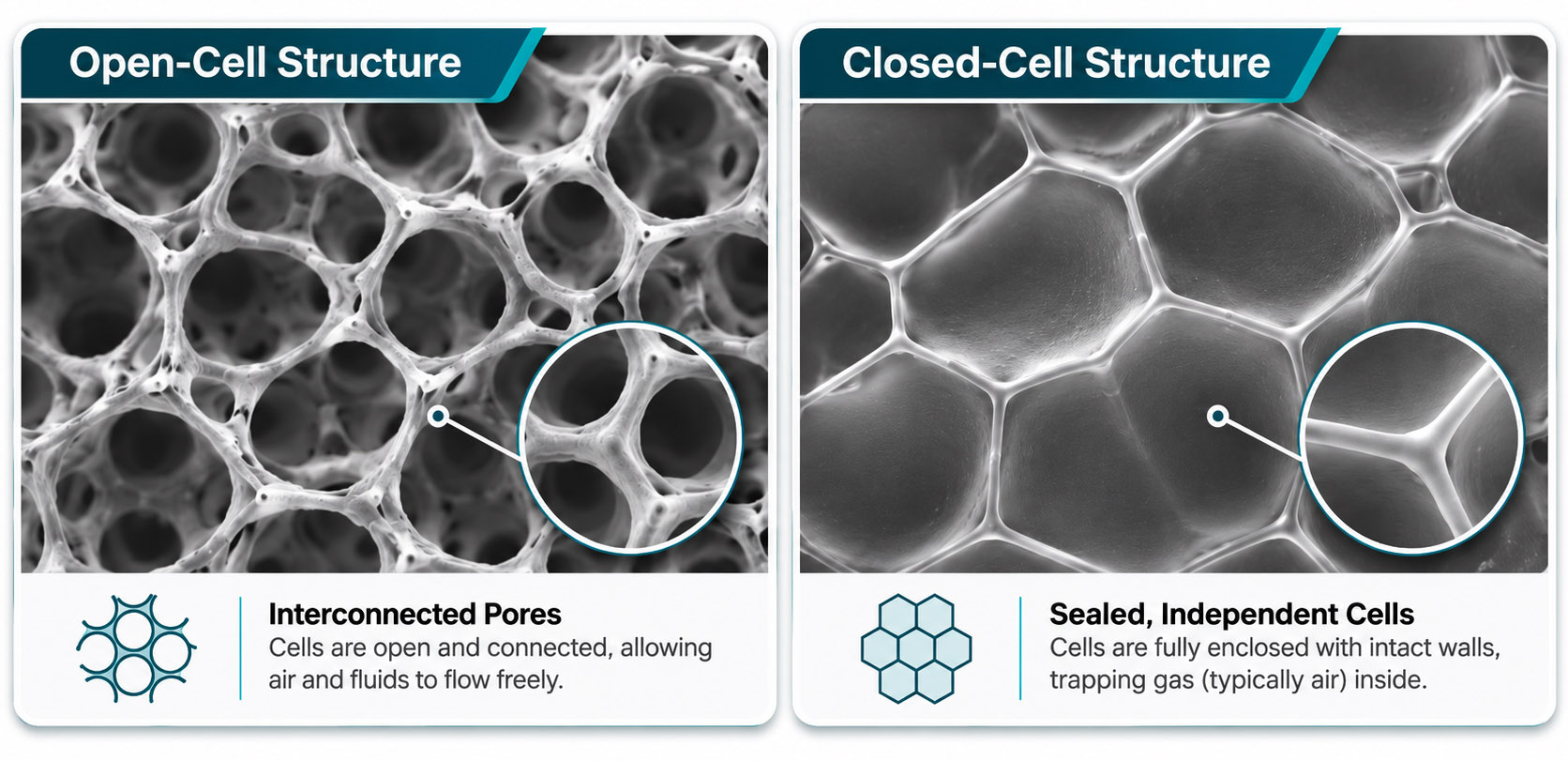
During manufacture, a blowing process creates numerous small pockets inside the polymer. Underfoot loading compresses the foam and deforms the cell walls. As pressure is removed, the material recovers to a degree determined by its formulation, density and previous loading.
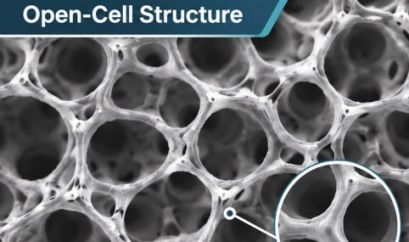
The key difference from open-cell foam is connectivity. Open-cell materials contain passages between pores, allowing more air and liquid movement. Closed-cell EVA has mostly enclosed pockets, so it generally absorbs less water through its bulk and is easier to wipe clean. Its surface can still retain sweat and dirt while cut edges, adhesives and fabric coverings change how an entire insole behaves.
Why does the structure matter in orthotics?
Moisture management: Low bulk water absorption can make EVA practical for washable inserts and padding. However, low absorption is not the same as breathability. Some constructions can retain heat or moisture against the skin, especially when paired with non-breathable coverings.
Cushioning and control: Softer EVA can accommodate contours while firmer grades provide resistance under heel lifts, wedges and supportive bases. Neither softness nor firmness guarantees reduced plantar pressure. The final geometry, contact area and footwear fit are equally important.
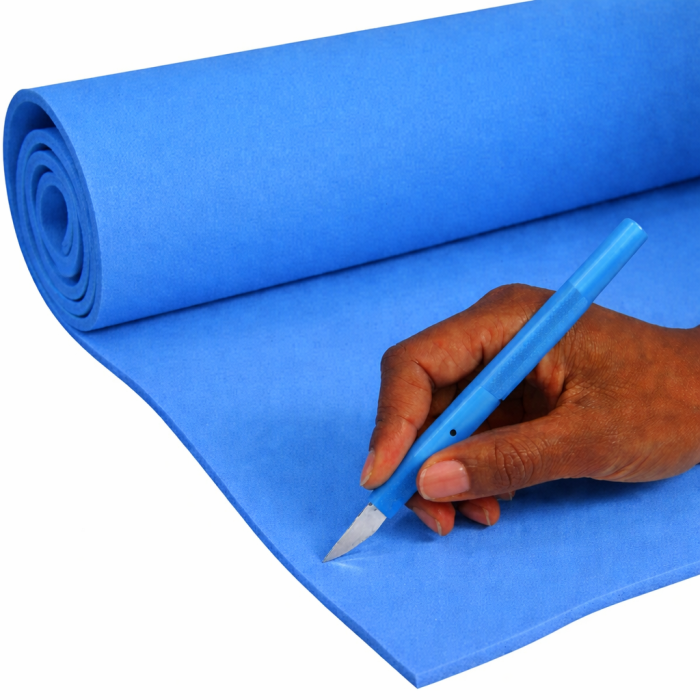
Workshop flexibility: Many EVA grades can be cut, ground, bonded and heat-moulded. This allows technicians to adjust local relief areas and build multilayer devices without adding excessive weight. For a practical overview, see the Algeos guide to EVA in orthotic insoles.
Density, hardness and thickness are not interchangeable
Density describes mass per unit volume, commonly in kg/m³. Shore hardness measures resistance to indentation on a specified scale. Thickness determines how much material can deform before it bottoms out. Two sheets with similar density may behave differently if their formulation or hardness differs.
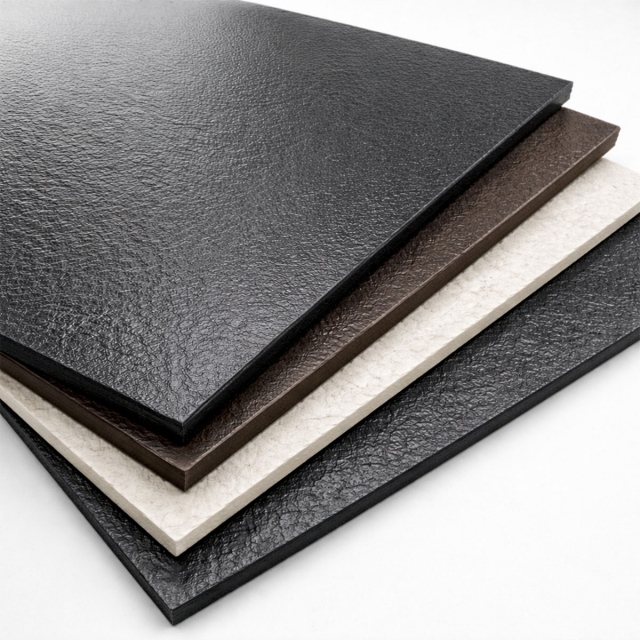
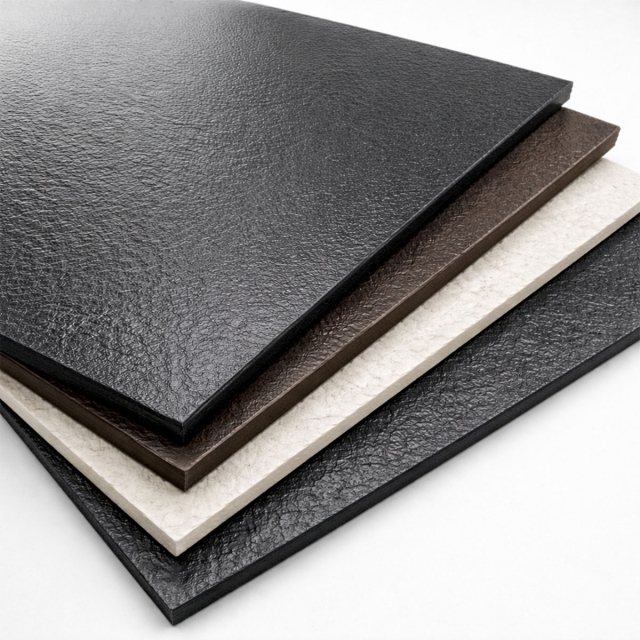
Algeos offers soft A25 EVA for cushioning applications, A50 EVA for versatile insole bases and firm A65 EVA for structural build-ups. These are product-grade labels, not universal material standards. Compare the stated Shore scale and datasheet before substituting one supplier's foam for another.
Closed-cell EVA versus other orthotic foams
| Material | Cell structure | Typical strength | Practical limitation | Common use |
|---|---|---|---|---|
| EVA foam | Usually closed-cell | Range of cushioning and structural grades | Can retain heat and compress permanently over time | Insole bases, wedges and padding |
| Plastazote (PE) | Closed-cell polyethylene | Lightweight, conformable and moisture-resistant | Some grades deform with repeated wear | Accommodative linings and top layers |
| PORON (PU) | Open cell microcellular polyurethane | Impact attenuation and cushioning recovery | Can need a supportive backing layer | Local cushioning and top covers |
| Open-cell comfort foam | Interconnected pores | Airflow and compressible feel | Usually absorbs more moisture | Selected comfort layers |
The best choice is often a combination rather than one foam throughout. Explore Algeos foam materials and Plastazote options for related grades.
What does clinical research show?
A systematic review of five studies found that EVA, polyurethane and polyethylene materials can reduce plantar pressure during walking. Laboratory testing also shows that grades differ in their ability to dampen forces or provide motion control. These findings support deliberate material selection, not a claim that closed cells alone prevent injury.
A 2024 study involving 36 participants also compared orthotic lining temperatures after three hours of use. The EVA material tested showed a greater temperature rise than the polyethylene alternative. This result cannot be applied to every EVA formulation but it reinforces the need to ask about warmth, socks and footwear ventilation.
Clinical safety: People with diabetes, neuropathy, previous ulceration or reduced circulation need assessment by an appropriate clinician. The IWGDF recommends pressure-verified therapeutic footwear for people with a healed plantar ulcer. An active neuropathic plantar forefoot or midfoot ulcer generally requires a specialist offloading device, not a self-selected EVA insert.
What users say about orthotic insoles
Published studies of orthosis wearers, rather than EVA-specific product reviews, provide useful context. In a 2024 UK focus-group study, users reported mixed experiences with comfort, footwear compatibility, cost and the need for adjustments. Another qualitative study involving people with diabetes highlighted comfort, stability and professional support as influences on wearing prescribed orthoses.
The practical lesson is that a technically suitable material must also work in the person's actual shoes. These studies do not establish that every closed-cell EVA insole will be comfortable or preferred.
Step-by-step: How to choose and use closed-cell EVA foam
- Define the task. Decide whether the component needs soft accommodation, general cushioning or structural control.
- Assess the person and footwear. Check pressure-sensitive areas, activity, skin condition and available shoe depth. Refer high-risk feet for clinical assessment.
- Compare specifications. Check density, Shore scale, thickness, compression-set data and supplier guidance instead of judging by touch alone.
- Plan the layers. Pair firmer EVA with softer contact materials where appropriate. Avoid bulky builds that crowd the toes.
- Fabricate safely. Cut and finish smooth edges. Follow the product-specific heating instructions, use ventilation and control dust when grinding.
- Fit, review and adjust. Check walking comfort and skin response. For high-risk users, review pressure redistribution with clinical measurement where available.
For ongoing care, wipe compatible surfaces using the maker's instructions and dry fully before use. Replace an insert when it becomes compressed, cracked, distorted or difficult to clean. A closed-cell structure does not eliminate wear or the need for inspection.
What about durability and sustainability?
Long service life can reduce replacement frequency but closed-cell EVA is still a synthetic polymer, not a biodegradable material. Choose the appropriate grade rather than overspecifying firmness and ask suppliers about recycled content and responsible use of workshop offcuts. Material waste and comfort should both inform selection.
Frequently asked questions
Is all EVA foam closed-cell?
No. Orthotic EVA is commonly supplied as closed-cell foam but cell structure can vary with the manufacturing process and formulation. Check the manufacturer's specification.
Is closed-cell EVA waterproof?
It generally resists water penetration through its bulk. Cut edges, seams, coverings and bonding layers may alter the behaviour of a finished product, so water-resistant is the safer description.
Is harder EVA always more supportive?
Not necessarily. Harder material resists indentation but orthotic support also depends on shape, thickness, fit and loading. Excessive firmness can be uncomfortable in the wrong location.
Can EVA foam reduce foot pressure?
EVA-based orthoses can redistribute plantar pressure when appropriately designed. The outcome depends on the whole device and must not be assumed for every foam sheet.
Does EVA foam make feet sweat?
Closed cells limit airflow through the material. Some EVA linings may feel warmer than alternatives. Footwear ventilation, socks and surface coverings also affect comfort.
Can I heat-mould EVA at home?
Many grades are heat-mouldable but safe settings vary. Overheating can damage the foam and release fumes. Clinical orthotic fabrication is best carried out with suitable equipment and training.
How long do EVA insoles last?
There is no universal replacement interval. Lifespan depends on grade, loading, footwear and use. Inspect regularly for flattening, damage or altered comfort.
References and research sources
- Effect of different orthotic materials on plantar pressures: a systematic review. Journal of Foot and Ankle Research, 2020.
- The physical characteristics of materials used in the manufacture of orthoses for patients with diabetes. Foot & Ankle International, 2007.
- IWGDF guideline on prevention of foot ulcers in people with diabetes. 2023 update.
- IWGDF guideline on offloading diabetes-related foot ulcers. 2023 update.
- The experiences of podiatrists and patients using custom foot orthoses. UK focus-group study, 2024.
- Exploring experiences of prescribed foot orthoses in people with diabetes. Qualitative study.
- Analysing the thermal characteristics of three lining materials for plantar orthotics. Sensors, 2024.
- Foams: material selection and fabrication in prosthetics and orthotics. University of Washington.


Sold: Sheet
Incl. VAT Exl. VAT