


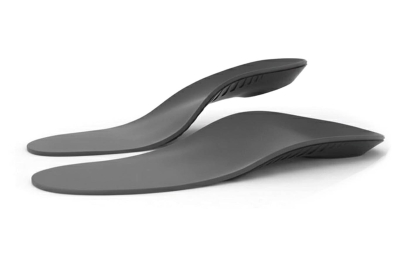
3D-printed foot orthotics have become one of the most exciting shifts in modern podiatry, yet the technology still carries an annoying cloud of myths, half-truths and outdated assumptions.
Some come from older-generation 3D devices that weren’t particularly flexible. Others come from people who’ve never held a modern nylon-printed orthotic. And some just seem to stick around because they sound believable - even when they aren’t.
If you’re working in podiatry, MSK care or biomechanics, you’ve probably heard variations of these myths:
- “Aren’t they too rigid?”
- “They break easily.”
- “They’re only for runners.”
- “Surely they can’t handle heavy patients?”
- “The scanner isn’t as accurate as plaster.”
This article tackles the most common misconceptions head-on and explains what modern 3D-printed devices are really capable of.
Myth 1: “3D-Printed Orthotics Are Too Rigid.”
This myth refuses to die, but it’s based on early 3D-printed devices from years ago that were rigid due to limited materials and basic printers.
Modern orthotics are a completely different story.
With industrial printing methods like HP Multi Jet Fusion (MJF), clinicians can choose from:
- flexible shells
- semi-flex shells
- rigid shells
- variable stiffness zones
- lattice structures for controlled deflection
Flexibility today is designed, not accidental. The printer builds what the prescription demands - nothing more, nothing less.
Myth 2: “3D-Printed Orthotics Break Easily.”
Plastic toys break.
Medical-grade PA12 nylon does not.
Most clinical 3D-printed orthotics in the UK use PA12, which offers:
- excellent tensile strength
- resistance to cracking and chipping
- predictable long-term mechanical behaviour
- stability under repeated loading
- minimal deformation
Traditional orthotics typically fail through delamination, crushing or midfoot cracking. Modern 3D-printed orthotics don’t delaminate, barely compress and rarely break unless severely misused.
“Fragile” is the last word clinicians use after handling them.
Myth 3: “They’re Not Suitable for Heavy Patients.”
This one’s surprisingly common - and completely false.
3D printing actually offers more control for high-BMI or high-load patients because:
- nylon shells maintain their shape over time
- deflection can be tuned with lattice structures
- specific areas can be reinforced in the CAD stage
- compression does not accumulate the way it does in EVA
Where a traditional EVA orthotic may gradually flatten, a 3D-printed nylon orthotic stays stable for years. For heavy patients, stability and repeatability are some of the biggest advantages.
Myth 4: “3D-Printed Orthotics Are Only for Athletes.”
Athletes were early adopters because they love lightweight, high-performance gear. That’s true.
But today?
3D-printed orthotics are used for:
- plantar fasciitis
- hypermobility
- everyday overpronation
- arthritis
- paediatric conditions
- occupational injuries
- general comfort
- forefoot pain
- diabetic foot management (with proper accommodation)
If anything, athletes now make up a minority of users - everyday clinical patients are the norm.
Myth 5: “They’re Basically Plastic Gadgets.”
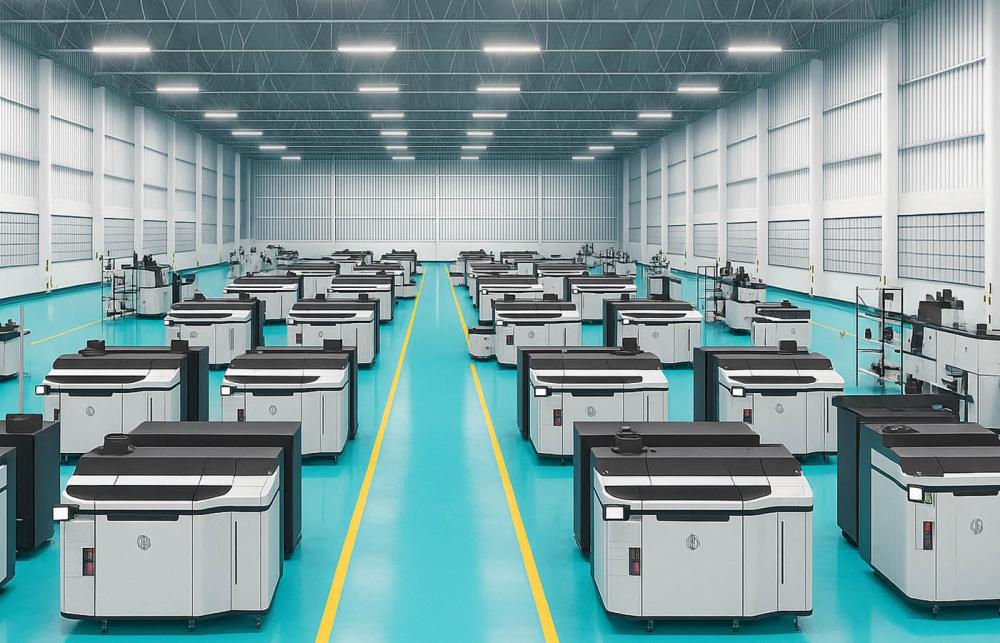
Modern 3D-printed orthotics aren’t printed on hobby machines or made from cheap toy plastics.
They’re produced using:
- industrial printers costing hundreds of thousands of pounds
- medical-grade materials (usually PA12 or TPU)
- validated CAD workflows
- quality-controlled sintering processes
- micron-level precision
This is the same manufacturing technology used in:
- prosthetic components
- surgical guides
- aerospace structures
- Formula One brackets
Comparing modern 3D orthotics to “plastic gadgets” is like comparing an F1 car to a soapbox cart.
Myth 6: “They Don’t Last Very Long.”
Actually, they often outlast traditional devices.
Traditional EVA-based orthotics break down due to:
- compression
- moisture
- shear
- heat
- long-term use
3D-printed nylon does not compress or deform in the same way.
Most users can expect:
- 2-5 years of shell life
- extremely low risk of breakage
- minimal shape change
- simple topcover renewal
Clinically, many practitioners report that 3D-printed devices maintain their performance longer than equivalent EVA shells.
Myth 7: “You Can’t Adjust 3D-Printed Orthotics.”
This is a leftover from early generation devices.
In reality:
- topcovers can be changed
- wedges can be added externally
- EVA additions can be bonded
- posts can be attached
- heat adjustments are possible with some nylons
- CAD files can be modified and reprinted perfectly
That last one is the big advantage. A reprint produces an identical device with updated settings - something impossible with foam-box or plaster workflows.
Adjustability isn’t lost. In fact, it becomes more accurate.
Myth 8: “Scanning Isn’t as Accurate as Plaster Casting.”
Let’s put this one to bed.
Modern 3D scanners (structured light or laser) capture:
- more detail
- more consistent geometry
- zero compression distortion
- less human variability
- higher repeatability
Plaster and foam introduce multiple potential errors:
- patient movement
- negative → positive distortion
- shrinkage
- inconsistent loading
- inaccurate foot positioning
Scanning has become the gold standard not because it’s convenient — but because it’s more accurate.
Myth 9: “3D-Printed Orthotics Are Too Expensive.”
This myth used to be true (circa 2015). Today it’s outdated.
The cost of 3D printing has fallen sharply due to:
- more efficient printers
- lower material costs
- optimised digital workflows
- reduced remake rates
- less technician time
- faster production cycles
In the UK market, 3D-printed devices are now priced similarly to - and in some cases cheaper than - traditional custom orthotics.
When clinics consider:
- reduced remakes
- fewer adjustments
- faster appointments
- patient satisfaction
- longevity
…the actual ROI is often superior.
Myth 10: “Patients Don’t Want 3D-Printed Orthotics.”
Patients care about:
- pain relief
- comfort
- fit
- weight
- appearance
- device lifespan
- appointment time
3D-printed orthotics excel in all of these areas.
Patients often comment on:
- how thin and lightweight they are
- how modern they look
- how high-tech the experience feels
- how quickly they receive the devices
When given the choice, many prefer 3D-printed devices once they’ve tried them.
Myth 11: “3D Printing Is Just a Passing Trend.”
Nothing could be further from the truth.
Industries that have already transitioned to digital manufacturing include:
- hearing aids
- dental crowns
- prosthetics
- aerospace
- automotive
- medical devices
Orthotics is simply following the same trajectory - historically slower, but now accelerating rapidly.
Once clinicians experience:
- fewer remakes
- consistent quality
- reliable scanning
- repeatable CAD files
- faster turnaround
…it’s very hard to go back.
This isn’t a fad. It’s the new standard.
Myth 12: “Traditional Orthotics Are Becoming Obsolete.”
Not true - and it’s important to say this clearly.
3D printing is expanding clinical options, not replacing them.
Traditional materials still have strong clinical roles:
- accommodation orthotics
- diabetic offloading
- soft cushioning requirements
- specific paediatric cases
- devices requiring deep intrinsic posting
What’s really happening is diversification, not replacement.
Clinicians now have more tools than ever:
- EVA
- PU
- carbon
- laminated devices
- 3D-printed nylon
- hybrid combinations
This is good for practitioners — not a threat.
Conclusion: The Myths Don’t Stack Up - Modern 3D Orthotics Are a Proven, Reliable Technology
3D-printed foot orthotics are no longer the experimental newcomers in the clinic. They deliver:
- stronger shells
- lighter devices
- more consistent results
- repeatable manufacturing
- faster turnaround
- digital patient records
- easier remakes
- excellent long-term durability
Most myths still circulating today are based on outdated information, early prototypes, or misconceptions about how additive manufacturing actually works.
The modern reality?
3D printing offers clinicians accuracy, repeatability, and reliability that were simply impossible a decade ago — and patient outcomes continue to support the shift.
The myths are falling away. The technology is only getting better. And the future of orthotic manufacturing is unmistakably digital.