




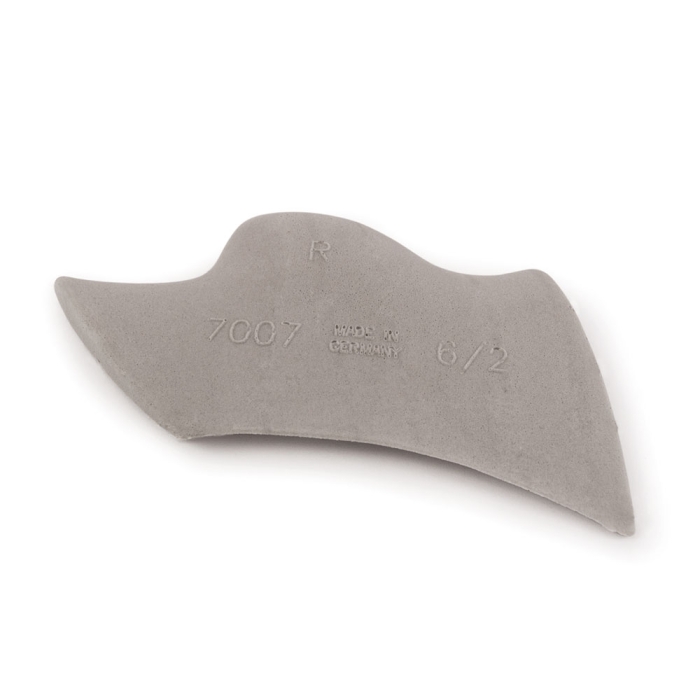
Klaxon Metatarsal Cushioning Bars - Soft | For Insole Adaptions
Soft-density metatarsal bars designed for orthotic insole adaptation and manufacture.
Supports forefoot pressure redistribution when integrated into custom orthoses.
Suitable for podiatry clinics, orthotic labs and footwear technicians.
Supplied in bulk packs of 10 pairs for consistent clinical use.
Sold: 10 Pairs
Incl. VAT Exl. VAT
Product Description
Klaxon Met Pads - Soft Metatarsal Support
Soft-density metatarsal bars designed for professional orthotic insole adaptation and manufacture, supporting targeted forefoot offloading and pressure redistribution.
Best for: Orthotic labs, podiatrists, footwear technicians and experienced insole modifiers creating or adapting custom foot orthoses.
Not ideal for: Direct-to-skin use, unsupervised self-application, or wear without integration into an insole or orthotic device.
- Designed specifically for orthotic fabrication workflows
- Supplied in economical bulk packs of 10 pairs
- Soft formulation intended for controlled forefoot comfort
What is it?
The Klaxon Metatarsal Bar – Soft is a pre-formed orthotic component used in the manufacture or modification of foot orthoses and insoles. Positioned just proximal to the metatarsal heads, a metatarsal bar is intended to redistribute plantar pressure across the forefoot by altering load patterns during gait.
This soft variant is selected where a more forgiving interface is required, particularly in situations where patient sensitivity, reduced tissue tolerance, or gradual accommodation is a priority. The product is not a finished insole, but a building block within a broader orthotic system.
Supplied in packs of 10 pairs, these metatarsal bars are suited to clinical, laboratory, and workshop environments where consistency, repeatability, and material control are important.
Who is it for?
This product is intended for use by professionals involved in foot health and orthotic provision, including:
- Podiatrists and foot health practitioners adapting custom orthoses
- Orthotic technicians working in fabrication or modification labs
- Footwear specialists producing bespoke or semi-bespoke insoles
- Clinical teams managing forefoot pressure as part of a broader care plan
End users typically never see the component itself; instead, they experience its effect once it has been integrated into a completed orthotic or insole.
What does it help with?
When correctly selected and positioned, a soft metatarsal bar may help address a range of forefoot-related comfort and loading concerns. Common applications include:
- Forefoot pressure discomfort → encourages redistribution of load away from sensitive metatarsal heads
- Callus-prone areas → supports pressure reduction in high-load zones
- Metatarsal head sensitivity → provides a more forgiving interface beneath the forefoot
- Fat pad irritation → may help reduce focal stress during stance and propulsion
- Postural or gait-related forefoot overload → assists overall orthotic load management
All outcomes depend on correct assessment, positioning, and integration into a suitable orthotic design.
How does it work?
A metatarsal bar works by subtly changing how weight is transferred across the forefoot during walking or standing.
By placing material just behind the metatarsal heads, the bar can encourage earlier load transfer to the midfoot and reduce peak pressure beneath individual metatarsals.
The soft material formulation allows for a degree of compression and contouring under load. This can be useful where a rigid or firm element may be poorly tolerated, or where gradual adaptation is preferred.
In orthotic manufacture, the component is typically ground, skived or blended into surrounding layers to achieve the desired profile.
Expected comfort and use timeline
First use: Once incorporated into an orthotic or insole, the soft metatarsal bar is generally intended to feel subtle rather than prominent. Initial awareness of forefoot support is normal.
Short-term use (days): As the user adapts to the modified pressure distribution, the forefoot may feel less focal loading. Minor adjustment periods are expected, particularly if forefoot offloading is new.
Ongoing use (weeks): Over time, the integrated component becomes part of the overall orthotic function. Comfort and perceived support depend on footwear, activity level, and the broader orthotic design.
No guarantees of symptom resolution are implied, and professional review is recommended if discomfort persists.
Problem and solution overview
| Common forefoot problem | How the soft metatarsal bar helps |
|---|---|
| High pressure under metatarsal heads | Encourages pressure redistribution across a wider forefoot area |
| Sensitivity to firm orthotic elements | Soft density offers a more forgiving contact surface |
| Localised callus formation | May reduce repeated focal loading contributing to callus build-up |
| Forefoot discomfort during propulsion | Supports smoother transition of load during gait |
Key benefits
- Soft formulation suited to sensitive forefoot presentations
- Designed specifically for orthotic adaptation and manufacture
- Pre-formed shape supports efficient laboratory workflows
- Can be blended, skived, or modified to suit individual designs
- Bulk pack format supports consistent clinical supply
- Compatible with a wide range of orthotic materials and top covers
Fit and comfort check
When integrated into an orthotic or insole, the metatarsal bar should feel supportive but not painful. Correct placement is critical; positioning too far forward or too prominent can increase discomfort rather than reduce it.
Aim for a supportive contour that influences load without creating a noticeable ridge under the toes. Adjust thickness and blending gradually, particularly when working with sensitive users.
Common mistakes to avoid
- Placing the bar directly under the metatarsal heads rather than proximal to them
- Using excessive thickness without gradual accommodation
- Failing to blend edges smoothly into surrounding materials
- Assuming one position or profile suits all foot types
How to use
- Assess the forefoot loading pattern and identify target offloading areas.
- Select the appropriate soft metatarsal bar size and orientation.
- Position the bar proximal to the metatarsal heads within the orthotic build.
- Secure the component using appropriate adhesive or lamination methods.
- Blend and finish edges to ensure a smooth transition.
- Review fit and comfort once the orthotic or insole is complete.
Technical specifications
| Product type | Metatarsal bar component for orthotic manufacture |
|---|---|
| Material | Soft-density orthotic-grade material |
| Density | Soft |
| Pack size | 10 pairs |
| Laterality | Left and right components supplied as pairs |
| Dimensions | Varies by option |
| Thickness | Varies by option |
| Colours | Varies by batch |
| Care and cleaning | Not applicable once integrated; follow orthotic material guidance |
| Intended use | Orthotic insole adaptation and manufacture only |
Frequently asked questions
Is this product worn directly under the foot?
No. This is a component designed to be built into an orthotic or insole and should not be used directly against the skin.
Is the soft version suitable for all users?
Soft density is often chosen for sensitive presentations, but suitability depends on assessment, footwear, and overall orthotic design.
Can it be combined with other forefoot modifications?
Yes. It is commonly used alongside pads, top covers, and other orthotic elements as part of a comprehensive design.
Does it correct foot structure?
No. It is designed to support load management and comfort, not to permanently correct foot structure.
How long does it last once integrated?
Durability depends on material selection, activity level, and footwear. Regular orthotic review is recommended.
Is this suitable for self-fitting?
No. It is intended for professional use within an orthotic manufacturing or adaptation process.
Complementary and pairing suggestions
- Orthotic top cover materials for cushioning and durability
- Forefoot padding or cushioning layers
- Heel posting or rearfoot control components
- Adhesives and lamination materials for orthotic manufacture
Content credibility
Written by: Algeos Product & Clinical Content Team
Last reviewed: February 2026
This content is provided for buyer guidance and product understanding only. It does not replace professional assessment, diagnosis, or medical advice.
Frequently bought together
Sold: Pack of 10 Pairs
Incl. VAT Exl. VAT
Sold: Pack of 10 Pairs
Incl. VAT Exl. VAT
Sold: Sold Individually
Incl. VAT Exl. VAT
Sold: Pack of 10
Incl. VAT Exl. VAT
Sold: Pack of 5 Pairs
Incl. VAT Exl. VAT
Sold: Pack of 10 Pairs
Incl. VAT Exl. VAT
Sold: Pack of 10 Pairs
Incl. VAT Exl. VAT
Sold: Pack of 10
Incl. VAT Exl. VAT
Sold: Pack of 10 Pairs
Incl. VAT Exl. VAT
Sold: Pack of 10 Pairs
Incl. VAT Exl. VAT
Sold: Pack of 10 Pairs
Incl. VAT Exl. VAT
Sold: 10 Pairs
Incl. VAT Exl. VAT
Sold: Pack of 10 Pairs
Incl. VAT Exl. VAT
Sold: Pack of 10 Pairs
Incl. VAT Exl. VAT
Sold: Pack of 10 Pairs
Incl. VAT Exl. VAT
Sold: Pack of 3
Incl. VAT Exl. VAT
Sold: Pair
Incl. VAT Exl. VAT
Sold: Pair
Incl. VAT Exl. VAT
Sold: Pair
Incl. VAT Exl. VAT
Sold: Pack of 10 Pairs
Incl. VAT Exl. VAT
Sold: 10 Pairs
Incl. VAT Exl. VAT