




Uses, Recovery Time & When to Wear One (UK Guide)
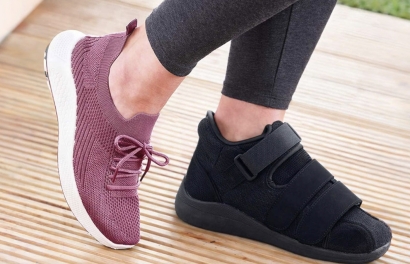
A post-op shoe (post-operative shoe) is a medical footwear device used after foot surgery, fractures, ulcer care or soft-tissue procedures to protect the foot and reduce stress during walking.
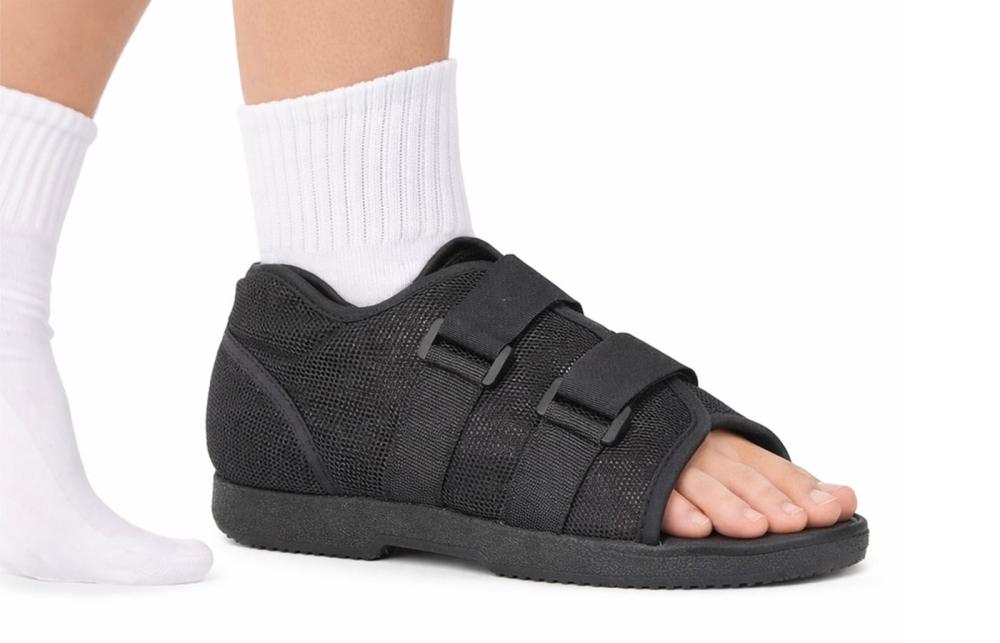
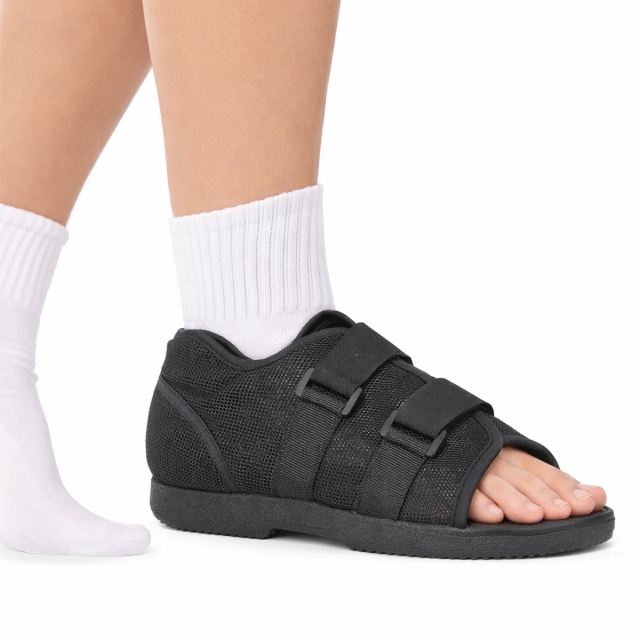
Most designs use a rigid or semi-rigid sole to limit forefoot bending, plus adjustable straps and a roomy fit to accommodate swelling and bulky dressings.
In UK practice, it’s commonly used for a short, defined recovery window (often around 2–6 weeks), but the exact timeline and weight-bearing level should follow your clinician’s plan.
What is a post-op shoe?
A post-op shoe is designed to protect the foot during recovery and to limit forefoot motion while you’re weight-bearing. That 'limits motion' bit matters: compared with a cast or a tall walking boot, a post-op shoe typically focuses on controlling how the forefoot bends during walking rather than fully immobilising the ankle.
The practical goal is to reduce strain on healing tissues, keep dressings secure, and lower the risk of knocking or re-injuring the area.
In the UK, you’ll see post-op shoes used in both private clinics and NHS pathways, particularly where clinicians want controlled walking with protection, without the bulk of a full walking boot. Some models are also used for wound/offloading scenarios (for example, forefoot ulcers) where pressure needs to be shifted away from a vulnerable area.
What are post-op shoes used for?
Post-op shoes are commonly used for:
- Post-surgical recovery (e.g. bunion procedures, forefoot surgery, toe corrections) where protecting the forefoot and dressings is key
- Toe and metatarsal injuries, including some fractures or stress injuries, where rigid support reduces painful bending
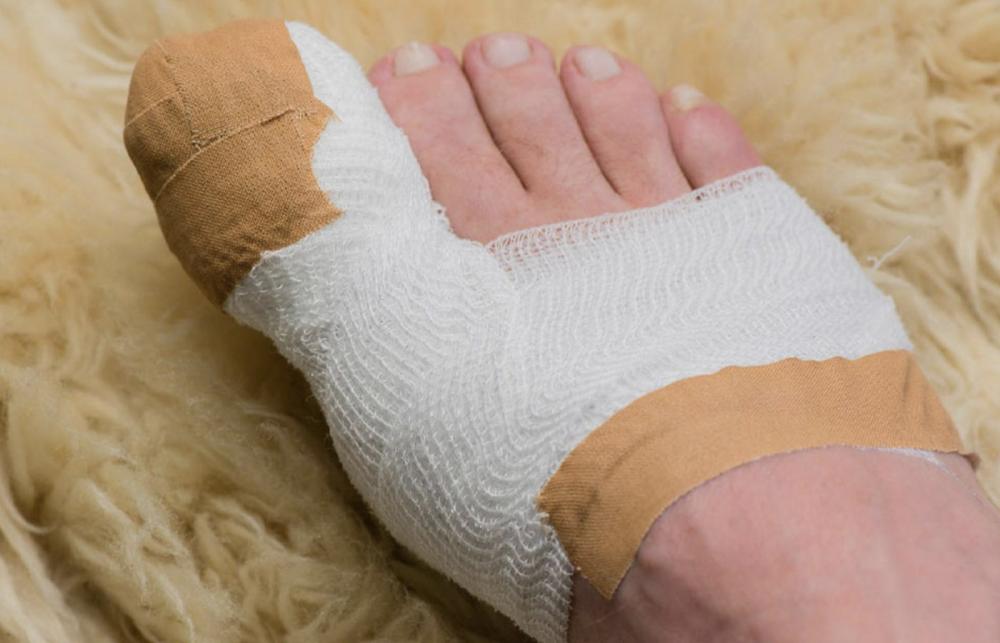
- Soft-tissue procedures, when swelling and bandaging need space and stability
- Diabetic foot ulcers and wound management, where offloading reduces pressure on the ulcer site
- Significant swelling (oedema), when standard footwear won’t fit safely
Different designs suit different goals. For example, some shoes emphasise post-surgical protection, while others are specifically shaped to offload pressure from the forefoot.
How they work (and why the sole matters)
If you only remember one thing, make it this: the sole design is doing the heavy lifting. Here’s what’s typically going on:
- Rigid or semi-rigid sole: reduces flexion through the forefoot (especially at the metatarsophalangeal joints), helping protect surgical sites and sore structures.
- Rocker sole (common on many 'boot' styles): helps your step “roll” forward so you don’t need as much forefoot bend when you walk.
- Roomy, adjustable upper: accommodates bulky dressings and swelling, and helps keep the foot stable without squeezing.
- Toe shape / bumper protection: “square toe” or closed-toe designs can help protect toes and dressings from knocks.
- Grip / slip resistance: treaded soles aim to reduce slips when mobility is already compromised.
For ulcer care (particularly forefoot ulcers), the mechanical goal shifts: rather than only limiting flexion, the aim is to redistribute pressure away from the wound area. That’s where 'forefoot offloading' or wedge-style shoes come in.
How long do you wear a post-op shoe?
There isn’t one universal timeline, but a practical UK rule of thumb is: often around 2–6 weeks, with the exact duration depending on what’s healing (bone vs soft tissue), how swelling settles, whether stitches are involved, and your clinician’s weight-bearing plan.
Why the range? Because 'foot surgery' covers a lot. A small soft-tissue procedure might only need short-term protection, while bone procedures (or wounds that must stay offloaded) may require longer protection and a more structured transition plan.
A sensible progression many clinicians use looks like this:
- Early stage: protect the surgical/wound site; minimise bending; keep dressings secure.
- Middle stage: increase walking tolerance as swelling and pain reduce, still using protection outdoors/for longer walks.
- Transition: shift into a stable trainer or other appropriate footwear (often with an insole/orthotic if prescribed), once cleared.
Bottom line: treat the post-op shoe as a temporary medical tool used to achieve a specific recovery milestone, not as a generic 'walking shoe.'
When should you wear it (and when you usually don’t need it)
Most protocols expect you to wear the post-op shoe whenever you’re up and walking (especially outdoors or on hard floors), because that’s when the foot is exposed to bending forces and knocks.
Many people don’t need it for sleeping, but exceptions exist (for example, if you’re likely to kick bedding, or your clinician wants continuous protection). If in doubt: follow your specific advice, because wound care and post-surgical protocols can be strict for good reasons.
Driving in a post-op shoe in the UK
This is one of the most searched questions - and also one of the easiest to get wrong with over-confident internet advice.
In the UK, the practical standard is whether you can safely control the vehicle and perform an emergency stop reliably, every time. If your right foot is involved, driving is more likely to be restricted because you need precise pedal control. If you’re taking medication that impairs reaction time (including some prescription painkillers), you should not drive.
Also: your insurer may have requirements, and your clinician’s guidance matters. Treat “can I drive?” as a personal safety and liability question, not a footwear colour or loophole question.
Post-op shoe vs walking boot (CAM boot): what’s the difference?
These devices can look similar in photos, but functionally they’re different tools:
| Feature | Post-Op Shoe | Walking Boot (CAM Boot) |
|---|---|---|
| Main purpose | Protect the foot and reduce forefoot bending; accommodate dressings | Stabilise and often immobilise the foot and ankle |
| Height/support | Low-cut; limited ankle control | Tall design; more ankle and overall limb control |
| Typical use cases | Forefoot surgery, toe procedures, dressing protection, some offloading | Fractures, tendon injuries, more serious sprains/instability, post-op immobilisation |
| Walking mechanics | Rigid/rocker sole helps reduce forefoot bend | Immobilisation plus rocker sole; often more protective but bulkier |
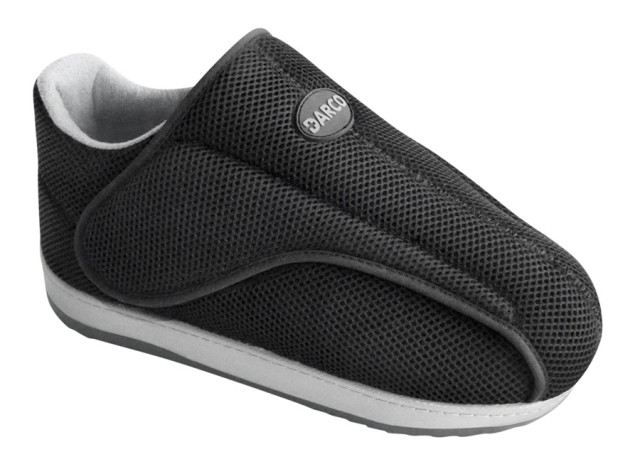
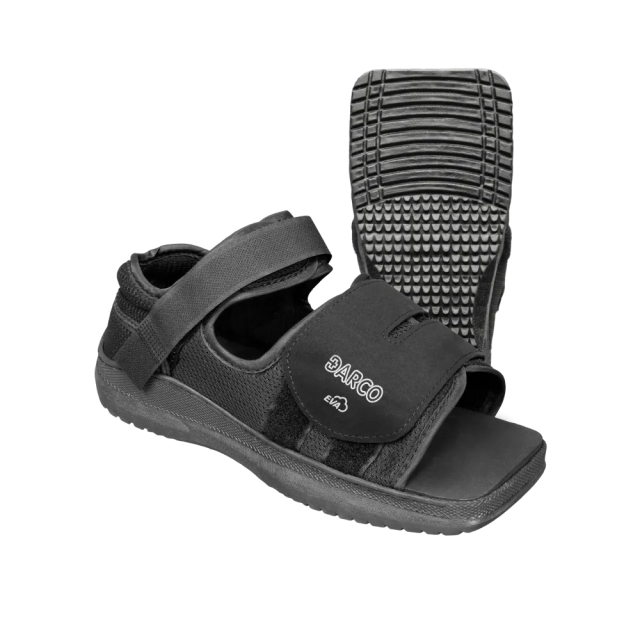
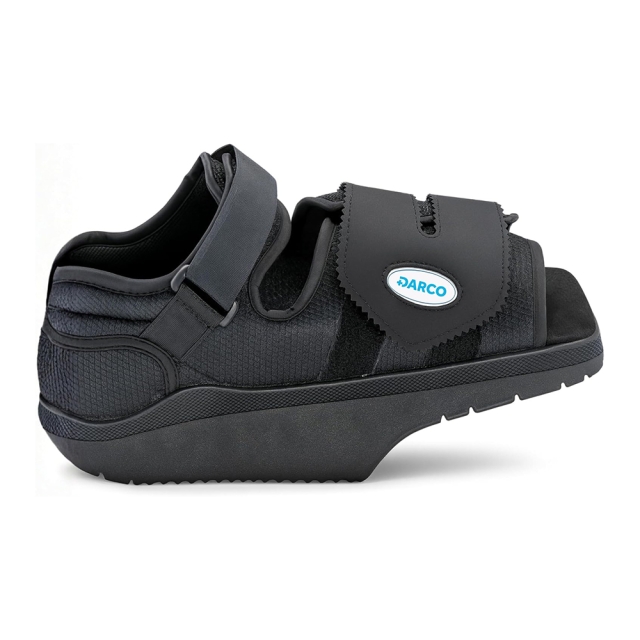
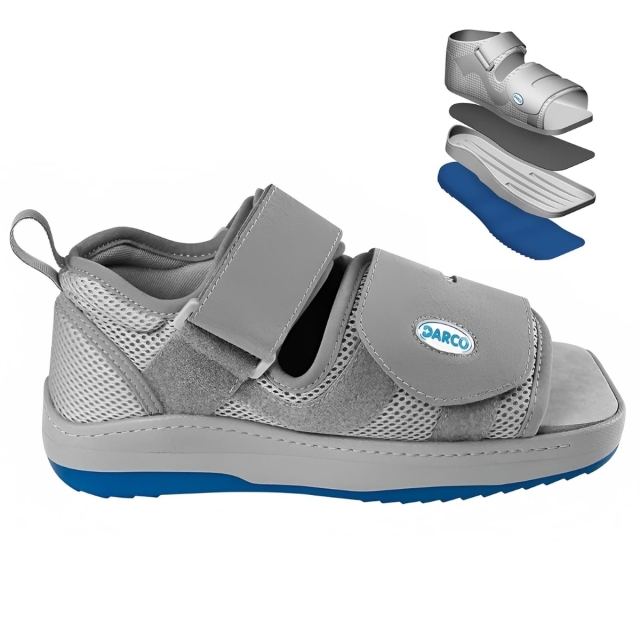
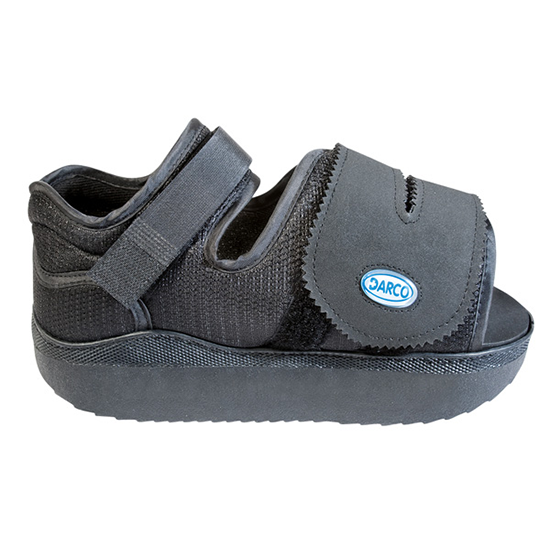
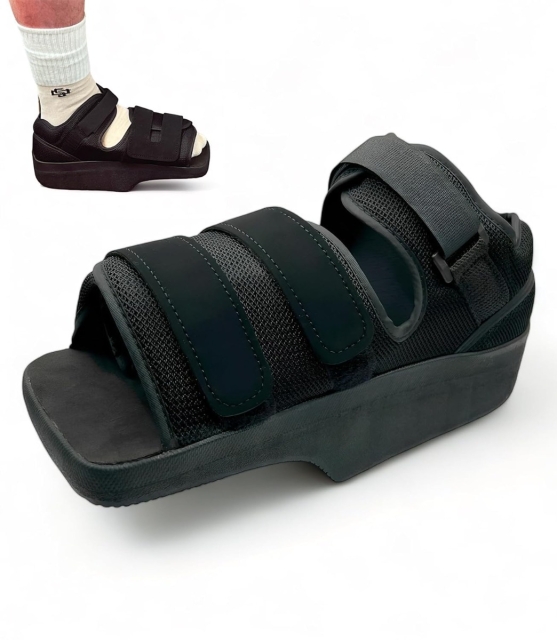
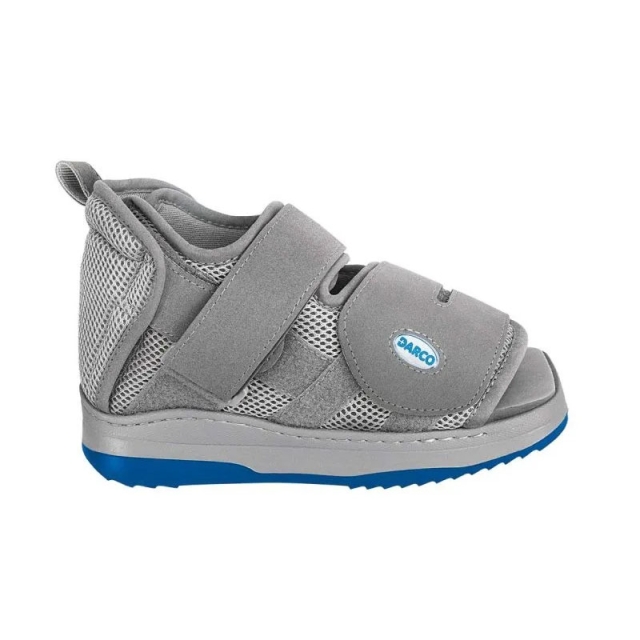
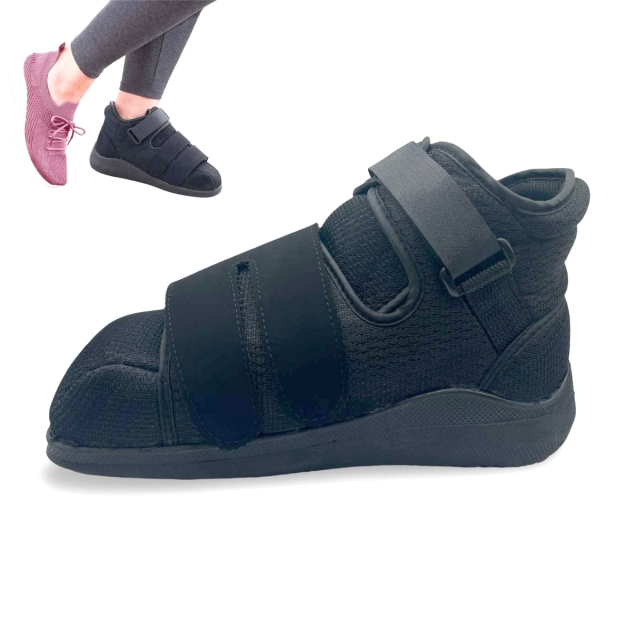
If you need examples of the 'boot-style' end of the spectrum, Algeos lists post-operative boots such as the DARCO All Purpose Boot (APB) (product page) and a similar square-toe rocker option in the Bodytonix range (product page).
Types of shoes
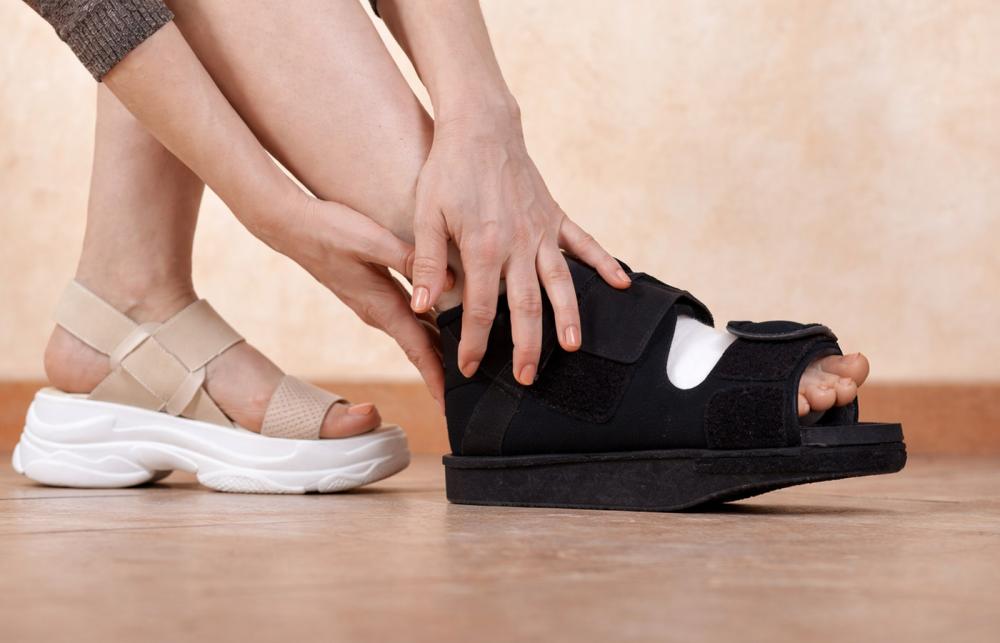
1) Standard post-op shoes (protection + reduced forefoot bending)
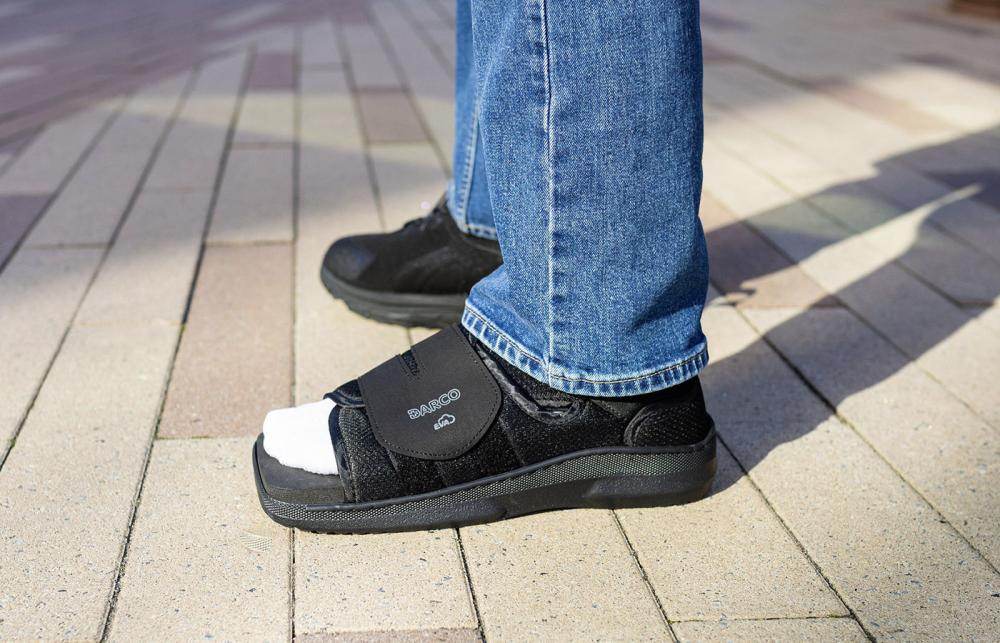
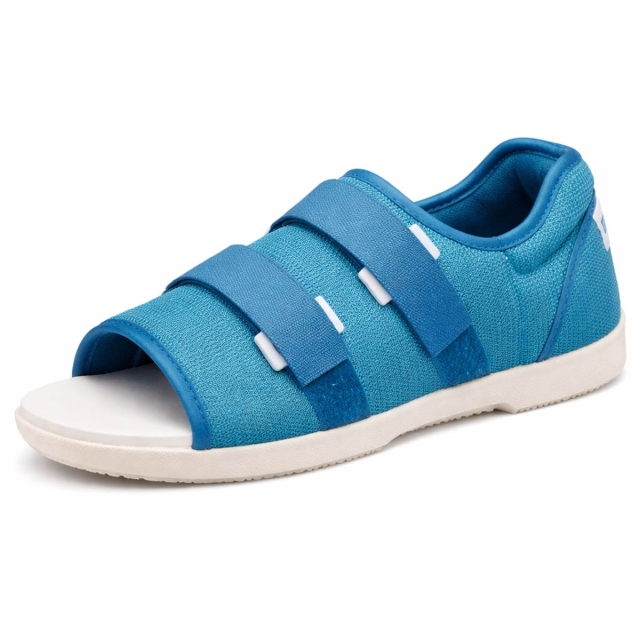
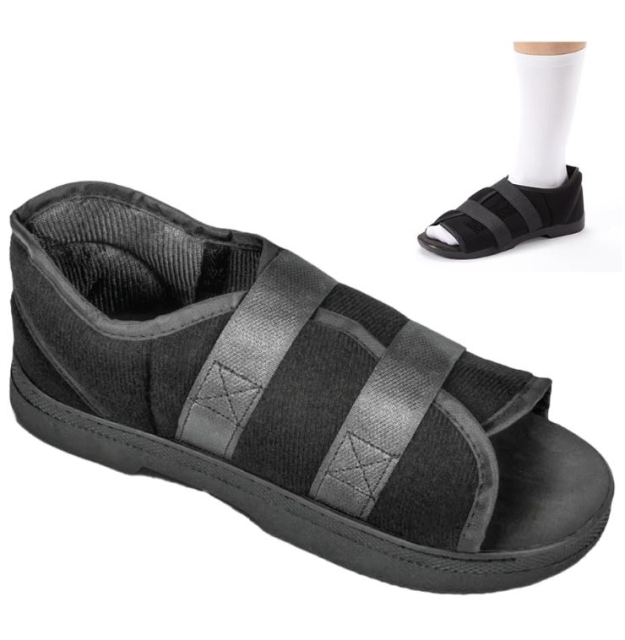
These are the classic post-op option: roomy, adjustable, supportive, and designed for controlled walking after surgery or trauma. Examples of this design type include the MedSurg-style shoe (product page) and a supportive post-op shoe option in the Bodytonix range (product page).
2) Rocker-sole post-op boots (more rollover help, more protection)
Rocker soles can make walking feel smoother when the forefoot needs to stay protected. Closed-toe and square-toe styles can also help shield dressings and toes from bumps. See the DARCO APB style (product page) for a clear example of this category.
3) Forefoot offloading shoes (pressure shift for wounds/forefoot recovery)
Forefoot offloading designs aim to reduce load through the metatarsal heads and toe region. That can be relevant after certain forefoot procedures, and it’s especially common in diabetic foot care when the goal is to reduce pressure on ulcer sites.
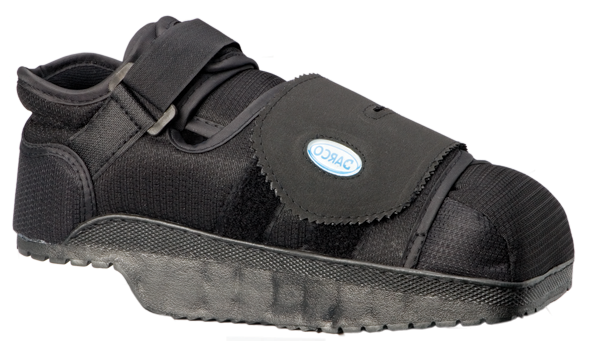
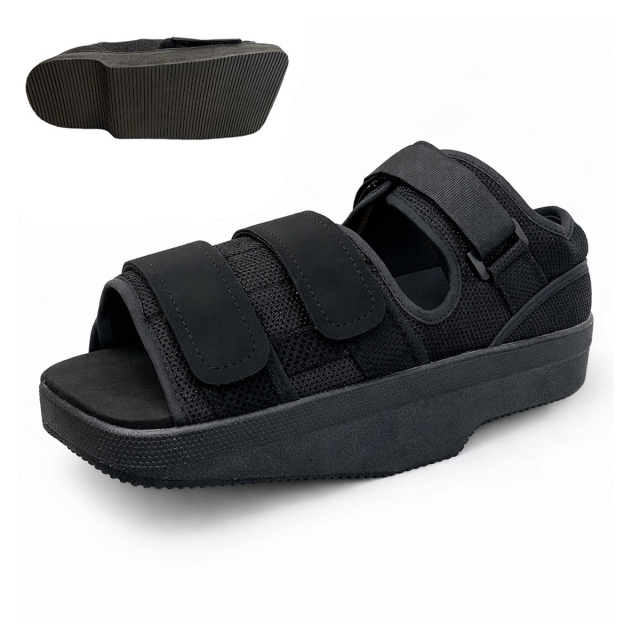
Examples of forefoot offloading designs include a wedge-style option like the DARCO OrthoWedge (product page) and a forefoot offloading post-operative shoe option (product page).
4) Dual offloading / ulcer-focused shoes
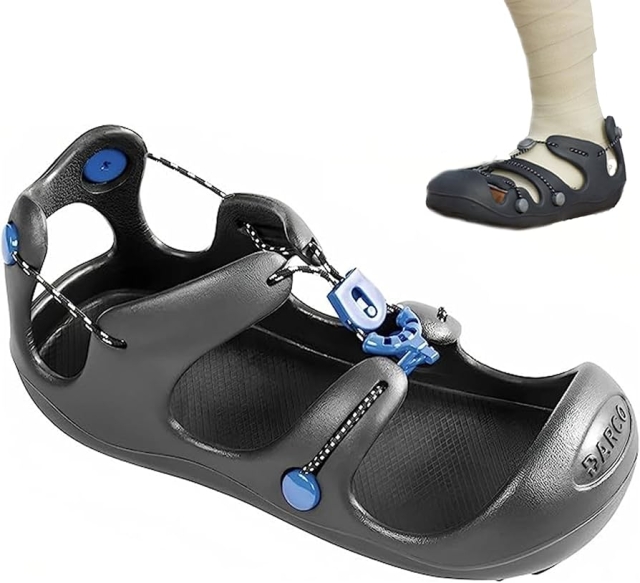
Some models are designed to address ulcer pressure distribution more directly (sometimes described as “dual offloading”). An example design type is listed here: DARCO Relief Dual Off-loading Shoe.
Choosing the right shoe (UK-focused checklist)
Whether you’re a clinician selecting for a patient or you’re a patient trying to understand your prescription, the best 'fit' is really a best fit-for-purpose. A practical checklist:
- Clinical goal: protection only, motion reduction, or true offloading?
- Weight-bearing level: full, partial, or heel-only? (This drives the design choice.)
- Dressing volume: will bulky dressings or swelling fluctuate day-to-day?
- Toe coverage: open-toe for ventilation and dressing access vs closed-toe for protection.
- Sizing approach: many lines use S–XL or similar systems; always match to the manufacturer’s guidance (and allow for dressing thickness).
- Safety & stability: tread/grip, strap security, and a stable base matter more than “comfort” alone.
If you want to browse the broader category (to understand which designs exist), Algeos groups these devices under Offloading & Post-Op Shoes & Fracture Boots.
Practical tips
- Plan your surfaces: hard floors and outdoor pavements increase impact and slip risk—move slowly, use handrails, and keep pathways clear.
- Match height where possible: a post-op shoe can create a leg-length difference; clinicians sometimes suggest a “shoe balancer/even-up” on the other side (if appropriate) to reduce hip/back strain.
- Monitor pressure points: if you have diabetes, neuropathy, or reduced sensation, check skin for rubbing or hot spots daily.
- Don’t 'upgrade yourself' early: swapping into normal footwear too soon is a common setback trigger—get cleared first.
- Escalate red flags: increasing pain, new numbness, wound leakage, spreading redness, fever, or a suddenly tight fit should be reported promptly.
FAQ
Do you wear a post-op shoe at night?
Usually it’s worn when you’re up and walking. Many people don’t need it for sleeping unless their clinician advises continuous protection (for example, to protect a surgical site or dressing).
How long do you wear a post-op shoe after surgery?
Commonly 2–6 weeks, but it depends on the procedure, how healing progresses, swelling, and the protocol used by your clinician. Always follow your specific instructions.
Can you drive in a post-op shoe in the UK?
Only if you can safely control the car and perform an emergency stop, you’re not impaired by medication, and you’ve considered insurer and clinician guidance. If it’s your right foot, driving is more commonly restricted.
What’s the difference between a post-op shoe and a walking boot?
A post-op shoe mainly protects the foot and reduces forefoot bending, while a walking boot (CAM boot) is taller and typically immobilises the ankle as well, offering more overall stability for injuries that need it.
Do post-op shoes fit either foot?
Many are designed to be used on either foot with adjustable straps and a symmetric shape, but always check the specific product details and sizing guidance before use.
Do you need crutches with a post-op shoe?
Not always. Some recovery plans allow full weight-bearing in the post-op shoe, while others require crutches or a walker for partial weight-bearing, especially early on.
References and further reading
For clinicians who want to go deeper than what it is, Algeos also collates research links related to postoperative shoes and offloading concepts on its Darco research page: Darco Shoes and Offloading Research.
Related Products from Algeos: Bodytonix Post Op Shoes | Fracture Boots | Darco Shoe Range
Author and review
Written for: UK patients and healthcare professionals looking for a clear explanation of post-op shoes and related offloading footwear.
Clinical review: Algeos Clinical & Product Team (device category review for accuracy and clarity).
Sold: Each
Incl. VAT Exl. VAT