



The Physioworx Peanut Ball is designed for predictable movement, durable daily use and practical applications across maternity care, rehabilitation, fitness and paediatric support.
Definition
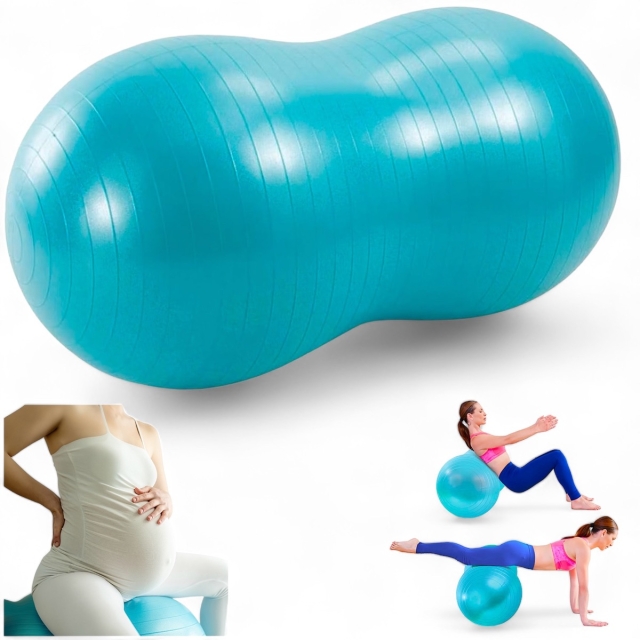
Physioworx Peanut Ball - a peanut-shaped anti-burst exercise and therapy ball designed to provide greater stability and control than a round exercise ball by limiting unpredictable rolling. It is used for maternity positioning, rehabilitation exercises, balance training, core strengthening and paediatric sensory-motor activities.
How it works and why it matters
The key clinical feature is shape. A round gym ball can roll in any direction which is useful for dynamic training but not always ideal when a patient is anxious, deconditioned or early in rehab.
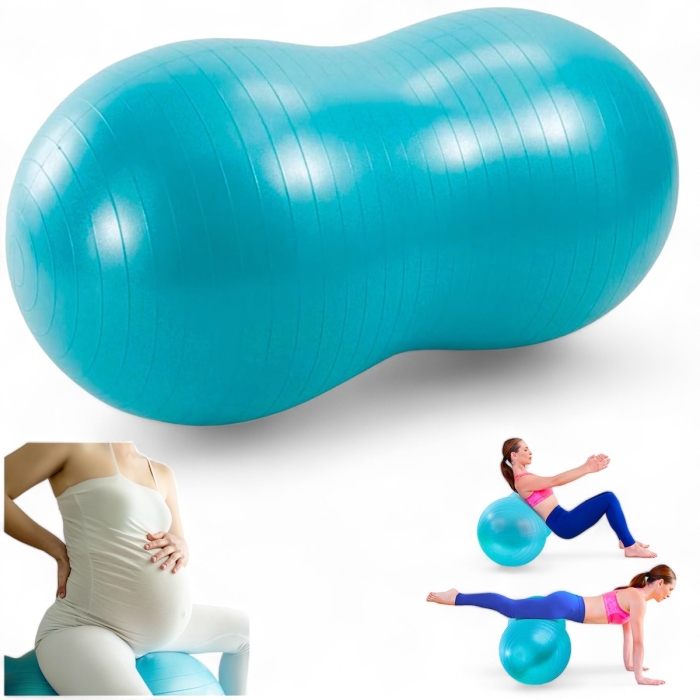
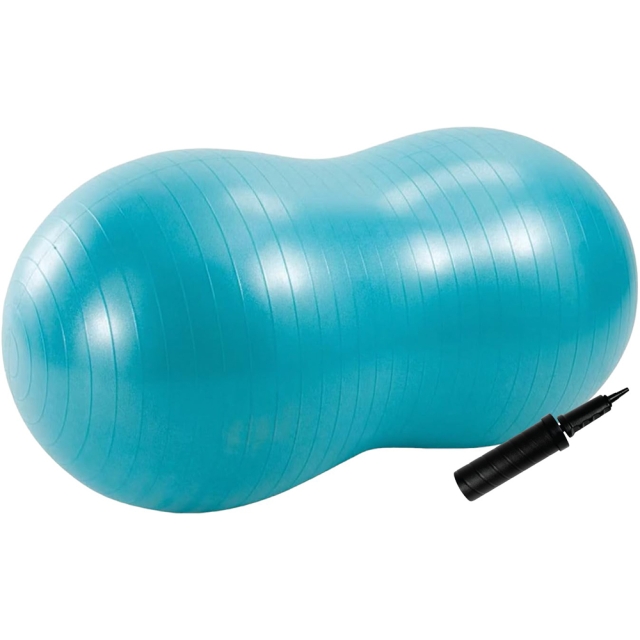
A peanut ball has two lobes with a narrower centre. In practice this creates a more stable base and a more predictable roll pattern, so users can focus on alignment, breathing and controlled movement rather than fighting instability.
In the Physioworx range the ball is designed for regular use with a textured surface intended to improve grip. Algeos also describes anti-burst PVC construction and positioning benefits for pregnancy, labour and rehabilitation scenarios, particularly where comfort and safety matter most.
For clinics this can translate into better adherence because the equipment feels less intimidating and easier to set up for home programmes.
Why clinicians reach for a peanut ball
- Positioning support - helpful for side-lying set-ups in maternity care and for supported hip and lumbar postures.
- Balance confidence - a steadier base can reduce guarding and fear of falling during early balance retraining.
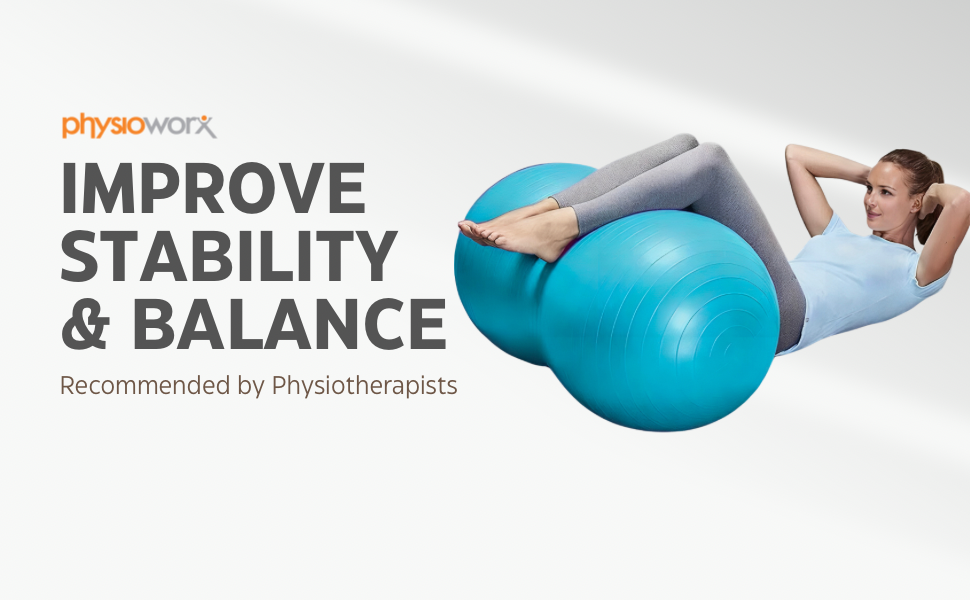
- Core engagement - the unstable surface still challenges trunk control but often in a more manageable way than a round ball.
- Paediatric versatility - used for prone extension, sitting balance, bilateral coordination and active seating under supervision.
What users say
In the Algeos guide, feedback themes are consistent - users value durability, comfort and versatility, with pregnant users highlighting relief in supported positions and therapists noting its usefulness in exercise progression and rehabilitation programmes.
The product listing also emphasises stability for therapy and active seating scenarios, including children who need movement breaks while still feeling secure.
Step-by-step guide: setup, safety and first exercises
1) Choose an appropriate size and format
Start with intended use. A 50 cm ball is a common all-round choice for general exercise, rehab and many home users while larger sizes can suit taller users and specific positioning goals. Algeos stocks multiple lengths including 50 cm, 70 cm and 90 cm.
2) Inflate to firm support without overinflation
- Inflate slowly using an appropriate pump until the ball is firm and holds shape.
- Check that the surface is not overly taut and the seams are not under visible strain.
- Re-check after 10-15 minutes as material can settle, then top up if needed.
Clinical tip: a slightly softer ball can improve comfort for maternity positioning while a firmer ball may feel more stable for seated work and balance drills.
3) Create a safe environment
- Use on a non-slip floor and keep it away from sharp edges and heat sources.
- For early rehab, paediatrics and pregnancy support, consider close supervision and stable furniture nearby.
- Stop if there is dizziness, unusual pain or instability and reassess position and inflation.
4) Start with three evidence-informed starter uses
- Side-lying support (pregnancy or comfort positioning): place the ball between knees and ankles to reduce pelvic torsion and offload hips. Adjust height using inflation level.
- Supported bridge (gluteal and posterior chain): supine with calves on the ball, lift pelvis to a comfortable height, hold 5-10 seconds, repeat. Progress with single-leg variants only when stable.
- Prone trunk extension for paediatrics (supervised): child lies tummy-down over the ball with hands on floor, gently rock forward and back to encourage shoulder stability and postural control.
Comparison tables
Peanut ball vs round exercise ball
| Feature | Peanut ball | Round exercise ball |
|---|---|---|
| Stability | Higher perceived stability due to more predictable rolling | More multidirectional rolling which can feel less stable |
| Best early rehab use | Supported positioning, balance confidence, graded core work | Dynamic balance challenges and advanced trunk control |
| Maternity positioning | Often used for side-lying pelvic opening and comfort strategies | Often used for sitting, rocking and pelvic mobility |
| Paediatric use | Active seating, bilateral coordination, prone work with supervision | Similar uses but may require closer guarding for stability |
Choosing a Physioworx peanut ball size
| Size option | Common fit | Typical clinical and home uses | Algeos link |
|---|---|---|---|
| 50cm | General-purpose size for many users | Rehab, balance, core training, active seating, maternity support | View 50 cm |
| 70cm | Taller users or larger positioning needs | Expanded support for stretching, mobility and seated programmes | View 70 cm |
| 90cm | Large support surface | Group exercise settings, larger users, extended prone or supported work | View 90 cm |
Clinical evidence snapshot (pregnancy and labour)
Peanut balls are widely used in maternity settings as a positioning aid, particularly for people with epidural analgesia or limited mobility who benefit from side-lying postures and pelvic opening strategies.
Research findings are mixed across reviews but several trials and newer syntheses suggest potential improvements in labour progress, comfort and satisfaction, while some meta-analyses report uncertain effects on caesarean rates and labour stage durations.
In practice this means a peanut ball can be a reasonable low-risk adjunct when it supports movement, comfort and positioning goals and when it aligns with local protocol.
- Randomised evidence has explored labour duration and mode of birth outcomes with peanut ball use during epidural labour.
- Updated systematic reviews continue to assess labour duration, caesarean section and satisfaction outcomes across settings.
- Implementation studies and qualitative research highlight clinician experience, training needs and patient acceptability.
FAQ
What is a peanut ball and how is it different from a round gym ball?
A peanut ball has two connected lobes which can make it feel more stable than a round ball. For many users this reduces unwanted sideways rolling, supporting confidence in rehab exercises and positioning work.
Is the Physioworx Peanut Ball suitable for pregnancy and labour?
It is commonly used for comfort and positioning, such as side-lying with the ball between knees to support pelvic opening strategies. Evidence is mixed but multiple studies and reviews explore potential benefits in labour progress and satisfaction. Use should follow local maternity guidance and professional support.
How do I choose the right size?
Choose based on user height, activity and clinical goal. Many people start with 50 cm, then move to 70 cm or 90 cm for larger support surfaces or taller users. See Algeos size options: 50 cm, 70 cm and 90 cm.
Is anti-burst the same as puncture-proof?
No. Anti-burst typically means the ball is designed to deflate slowly rather than pop suddenly if damaged. You still need to keep it away from sharp objects, check it regularly and use sensible supervision when appropriate.
Can children use a peanut ball for sensory support or active seating?
Yes, peanut balls are used to support postural control, active sitting and gross motor development. Supervision matters, particularly for children with reduced balance, coordination or safety awareness.
How do I clean and store it?
Wipe with mild detergent, dry thoroughly and store in a cool dry place away from direct sunlight, heat sources and sharp edges. Check inflation routinely so the ball stays supportive and stable.
References and research sources
- Algeos. Versatility of the Peanut Ball - A Guide.
- Algeos. Exercise Gym Balls
- Algeos. Peanut Yoga Ball 50cm - Pump Sold Separately (Physioworx).
- Algeos. Peanut Yoga Ball 70cm - Pump Sold Separately.
- Algeos. Peanut Yoga Ball 90cm - Pump Sold Separately.
- Algeos. Peanut Ball with Box and Pump.
- Tussey CM, Botsios E, Gerkin RD, Kelly LA, Gamez J, Mensik J. Reducing length of labor and cesarean surgery rate using a peanut ball for women laboring with an epidural (PDF). Journal of Perinatal Education (2015).
- European Journal of Midwifery. Investigation of the effects of peanut ball during labor: an updated systematic review.
- Nursing Open. Use of the peanut ball during labour: a systematic review and meta-analysis (PDF).
- AJOG. Birthing balls to decrease labor pain and peanut balls to decrease labour duration: evidence review (abstract).
Author bio
Marc Cameron is part of the team at Algeos, contributing practical product guides that help clinicians and informed consumers select, use and maintain rehabilitation and wellness equipment with confidence. Marc’s focus is clear advice, safety-first setup and real-world application across home and clinical settings.
Sold: Each
Incl. VAT Exl. VAT