





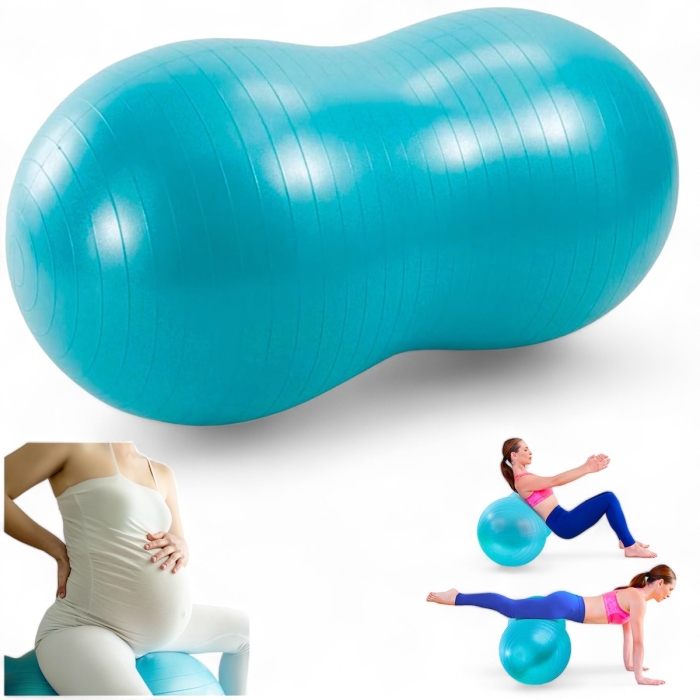
Peanut Exercise Ball | 50cm - Blue | Pump Sold Separately
Peanut-shaped exercise ball designed for greater stability than standard round gym balls.
Supports therapy, active seating, balance training, and core stability.
Ideal for children and adults, including paediatric and maternity use.
Durable anti-burst PVC construction with textured, non-slip surface.
Sold: Each
Incl. VAT Exl. VAT
Product Description
Stable Peanut-shaped Exercise Ball
A versatile, anti-burst peanut-shaped exercise ball designed to provide greater stability and control than a standard round gym ball, making it suitable for therapy, active seating, maternity use, yoga and children’s movement activities.
Best for: paediatric therapy, balance training, active seating, maternity positioning, yoga support, and rehabilitation exercises.
Not ideal for: high-impact exercise, unsupervised use by very young children, or use on slippery surfaces without a mat.
- Peanut shape for increased stability and reduced rolling
- Durable anti-burst PVC construction
- Suitable for adults and children across multiple settings
What is it?
The Physioworx Peanut Exercise Ball is a 50cm, peanut-shaped inflatable stability ball made from robust, anti-burst PVC. Unlike traditional round exercise balls, the peanut design features two connected lobes, which limit unwanted rolling while still allowing gentle movement.
This makes it particularly useful in therapy, classroom, and home environments where stability and control are important.
This ball is widely used by physiotherapists, occupational therapists, teachers, fitness professionals, and families. Its design supports balance, posture, and controlled movement while remaining engaging and approachable, especially for children.
The 50cm size offers a practical balance between support and manoeuvrability, making it suitable for a broad range of users.
Who is it for?
This peanut exercise ball is intended for a wide audience, from children who benefit from movement-based seating to adults using it for therapy or fitness. Its shape and size make it especially suitable for users who may feel less confident on a traditional round gym ball.
It is commonly used by:
- Children developing balance, coordination, and body awareness
- Individuals who struggle to sit still and benefit from active seating
- Physiotherapy and occupational therapy patients
- Pregnant users seeking additional stability during positioning exercises
- Yoga and fitness participants looking for supported balance work
- Schools, clinics, and therapy settings
What does it help with?
The peanut exercise ball is designed to support movement, posture, and controlled instability in a safe and accessible way. While it does not treat medical conditions, it can be a useful tool within structured exercise, therapy, or seating routines.
- Core stability and balance → encourages engagement of stabilising muscles during sitting and movement
- Postural awareness → promotes upright sitting and gentle adjustment
- Body awareness in children → supports sensory input through movement and positioning
- Therapeutic exercise → provides controlled support for rehabilitation movements
- Maternity positioning → offers stable support during gentle pregnancy and labour exercises
How does it work?
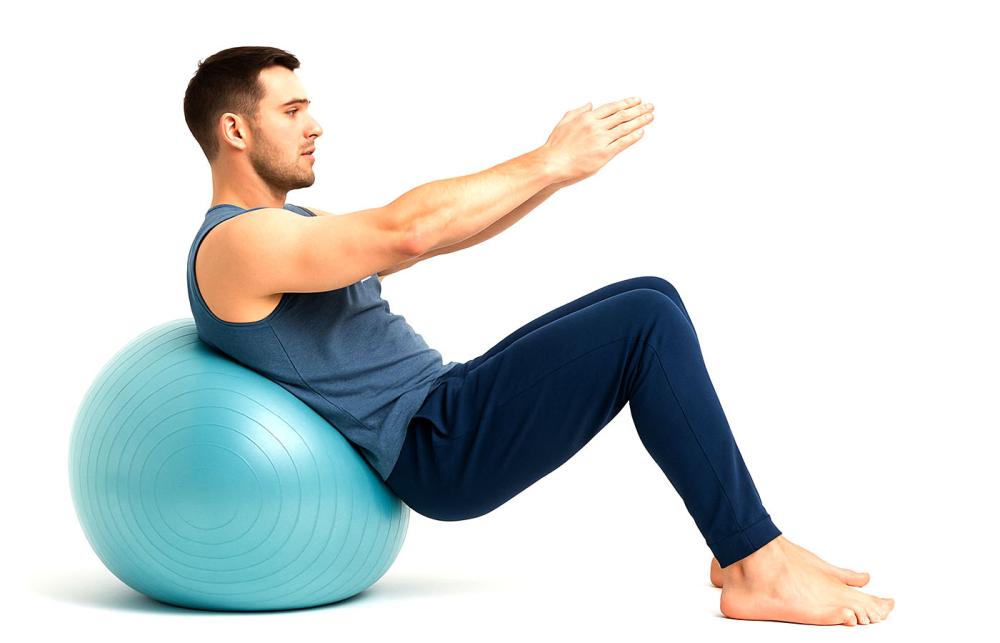
The peanut shape creates a broader base of contact with the floor than a round exercise ball. This limits side-to-side rolling and allows users to focus on controlled forward and backward movement, balance, or static sitting. The design helps users feel more secure, particularly those who may be new to balance-based activities.
When seated or positioned on the ball, the body naturally engages stabilising muscles to maintain posture. This engagement is subtle and can be scaled easily, making the ball suitable for both gentle activities and more structured exercise routines.
The textured, non-slip surface enhances grip, supporting confidence during use. The anti-burst construction means that if the ball is punctured, it is designed to deflate gradually rather than suddenly.
Expected comfort and use timeline
First use: The ball should feel firm but not hard. Users may notice immediate feedback through posture and balance, particularly when sitting astride the ball or using it for active seating.
Short-term (days): Regular users often become more confident and relaxed on the ball. Children may begin to use it instinctively for movement breaks, while adults may incorporate it into exercise or therapy routines.
Ongoing use (weeks): With continued use, the ball can become a familiar tool for posture support, balance work, and movement-based activities across different environments.
Problem and solution overview
| Common problem | How the peanut ball helps |
|---|---|
| Round exercise balls feel unstable | Peanut shape limits rolling and improves control |
| Difficulty sitting still | Allows safe movement and active seating |
| Poor posture awareness | Encourages upright sitting with gentle feedback |
| Need for child-friendly therapy tools | Engaging shape supports play-based movement |
| Balance exercises feel intimidating | Provides stability without eliminating movement |
Key benefits
- Peanut-shaped design for increased stability and confidence
- Anti-burst PVC construction for durability and safety
- Suitable for children and adults
- Supports therapy, fitness, yoga, and active seating
- Textured surface helps reduce slipping
- Compact 50cm size for easy handling and storage
Fit and use check
The ball should feel firm enough to support your weight without excessive sinking.
Positioning: Children often sit astride the ball like a saddle, while adults may sit, kneel, or lean depending on the activity.
Stability: If the ball feels unstable, check inflation level and use on a non-slip surface.
Common mistakes to avoid
- Under-inflating, which can reduce support and control
- Using on smooth floors without a mat
- Leaving children unsupervised during active use
- Using near sharp objects or rough surfaces
How to use
- Inflate the ball using a suitable pump until firm but not overinflated.
- Place on a stable, non-slip surface.
- Choose a position appropriate to the activity (sitting, leaning, kneeling).
- Begin with gentle movements and controlled balance work.
- Monitor comfort and posture throughout use.
- Store away from sharp objects after use.
Technical specifications
| Product type | Peanut-shaped exercise / physio ball |
|---|---|
| Size | 50cm |
| Dimensions | Approx. 48 x 50cm |
| Colour | Blue |
| Material | PVC |
| Latex content | Latex free |
| Weight resistance | Approx. 250kg |
| Ball weight | Approx. 900g |
| Inflation | Inflatable with compatible pump (sold separately) |
| Surface | Textured, non-slip finish |
| Care and cleaning | Wipe clean with damp cloth and mild soap; air dry fully |
| Pack contents | 1 x 50cm peanut exercise ball |
Frequently asked questions
What makes a peanut ball different from a round exercise ball?
The peanut shape limits rolling and provides a wider base of support, making it feel more stable while still allowing movement.
Is this suitable for children?
Yes. It is commonly used in paediatric therapy and classrooms, but children should be supervised during active use.
Can adults use this ball?
Yes. Adults use it for therapy, fitness, yoga, maternity positioning, and balance work.
Does it include a pump?
No. A compatible pump is required and sold separately.
How firm should it be?
Inflate until firm with slight give when pressed. Overinflation can reduce comfort and stability.
Can it be used during pregnancy?
It is often used for maternity positioning and gentle movement, but suitability depends on individual comfort and professional guidance.
Complementary and pairing suggestions
- Hand pump for easy inflation and adjustments
- Non-slip exercise mat for safer use on hard floors
- Balance cushions or wedges for varied sensory input
- Resistance bands for progressive therapy or fitness routines
Content credibility
Written by: Algeos Product & Clinical Content Team
Last reviewed: January 2026
This content is intended for buyer guidance and general education. It does not provide diagnosis or medical advice. Always use under appropriate supervision and follow professional guidance where required.
Frequently bought together
Sold: Each
Incl. VAT Exl. VAT
Sold: Each
Incl. VAT Exl. VAT
Sold: 55cm diameter + pump
Incl. VAT Exl. VATSold: 55cm diameter + pump
Incl. VAT Exl. VAT
Sold: with pump
Incl. VAT Exl. VATSold: with pump
Incl. VAT Exl. VAT
Sold: Each
Incl. VAT Exl. VAT
Sold: Each
Incl. VAT Exl. VAT
Sold: Each
Incl. VAT Exl. VAT
Sold: Each
Incl. VAT Exl. VAT
Sold: Each
Incl. VAT Exl. VATSold: Each
Incl. VAT Exl. VAT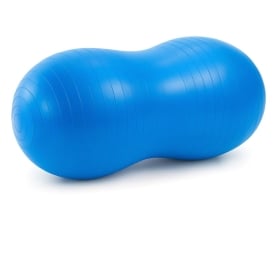
Sold: Each
Incl. VAT Exl. VAT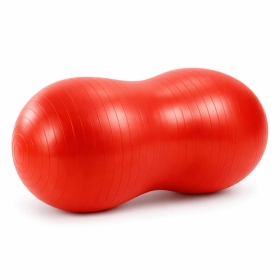
Sold: Each
Incl. VAT Exl. VAT
Sold: 75cm ball and pump
Incl. VAT Exl. VATSold: 75cm ball and pump
Incl. VAT Exl. VAT
Sold: Each
Incl. VAT Exl. VAT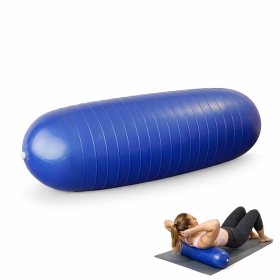
Sold: Each
Incl. VAT Exl. VAT
Sold: Each
Incl. VAT Exl. VATSold: Each
Incl. VAT Exl. VAT
Sold: 55cm sold with pump
Incl. VAT Exl. VAT
Sold: Each
Incl. VAT Exl. VATSold: Each
Incl. VAT Exl. VAT
Sold: Each
Incl. VAT Exl. VATSold: Each
Incl. VAT Exl. VAT

Sold: Each
Incl. VAT Exl. VAT