


Best Exercise Balls from Algeos for core strength, rehab and Pilates
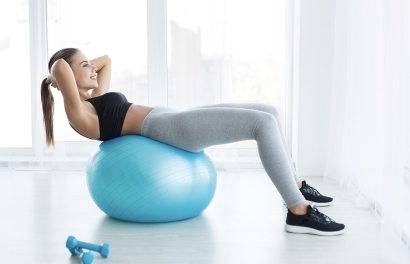
The best exercise balls can help improve core strength, balance and posture while supporting physiotherapy, Pilates and low-impact home exercise. At Algeos, the range includes anti-burst gym balls, stabilising exercise balls, peanut balls and small Pilates balls for more targeted movement work.
Browse the full exercise gym ball range or read the latest Algeos buyers guide.
Who is this guide for?
This guide is designed for home fitness users, physiotherapists, rehabilitation clinics, Pilates and yoga practitioners, and office workers interested in active sitting.
How to Choose an Exercise Ball
Exercise balls (also called stability balls or Swiss balls) are widely used for fitness training, physiotherapy, rehabilitation, and posture improvement. Choosing the correct size is essential for comfort, safety, and effective exercise. A ball that is too small or too large can make exercises awkward and reduce the benefits.
1. Choose the Correct Ball Size
Exercise balls are measured by their diameter in centimetres. The right size usually depends on your height.
| Your Height | Recommended Ball Size |
|---|---|
| Under 152cm (5'0") | 45cm |
| 152–163cm (5'0" – 5'4") | 55cm |
| 163–180cm (5'4" – 5'11") | 65cm |
| 180–193cm (5'11" – 6'4") | 75cm |
| Over 193cm (6'4") | 85cm |
For many adults, a 65cm ball is the most common option, but the correct size should always match your height and body proportions.
2. Check the 90-Degree Sitting Position
A simple way to confirm you have the correct size is the 90-degree test.
- Sit on the ball with your feet flat on the floor.
- Your knees should be bent at roughly 90 degrees.
- Your hips should be level with or slightly higher than your knees.
If your knees are higher than your hips, the ball is likely too small. If your feet cannot rest comfortably on the floor, the ball may be too large.
3. Consider How You Will Use the Ball
Different activities may benefit from slightly different ball sizes.
- Core training and Pilates: use the recommended size for your height.
- Balance exercises: a slightly smaller ball can increase difficulty.
- Desk seating or posture support: the standard or slightly larger ball often feels more comfortable.
- Physiotherapy or rehabilitation: therapists sometimes use slightly larger balls for greater stability.
4. Look for Quality and Safety Features
When buying an exercise ball, choose one designed for durability and safety.
- Anti-burst material that deflates slowly if punctured
- High weight capacity
- Non-slip or textured surface
- Pump included for easy inflation
5. Inflate the Ball Properly
Inflation also affects comfort and performance. It is often best to inflate the ball to around 80% initially, leave it for several hours, and then inflate fully. When you sit on the ball, it should compress slightly under your weight while still feeling firm and supportive.
By choosing the correct size and ensuring proper inflation, an exercise ball can be an effective tool for strengthening core muscles, improving balance, supporting rehabilitation, and promoting better posture.
Best exercise balls comparison
| Exercise ball | Best for | Sizes | Main feature | Link |
|---|---|---|---|---|
| Physioworx Exercise Ball with Pump | General strength, balance and home exercise | 75cm | Anti-burst design with pump included | View product |
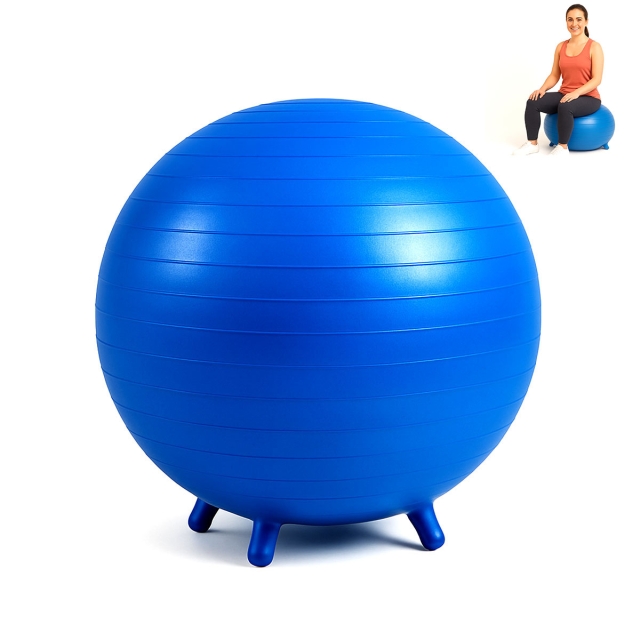
| Exercise Ball with Stabilising Feet | Beginners, active seating and office use | 55cm | Anti-roll feet for more control | View product |
| Physioworx Gym Ball Range | Physiotherapy, yoga and size-specific fitting | 45cm, 55cm, 65cm, 75cm | Multi-size anti-burst range | View product |
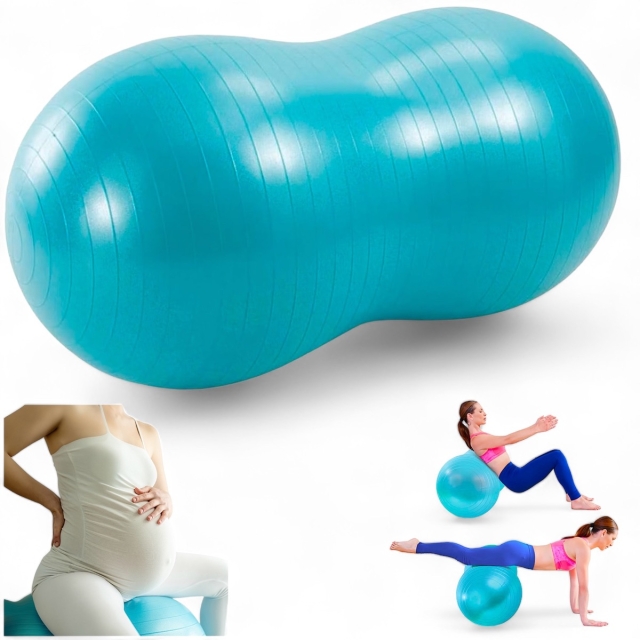
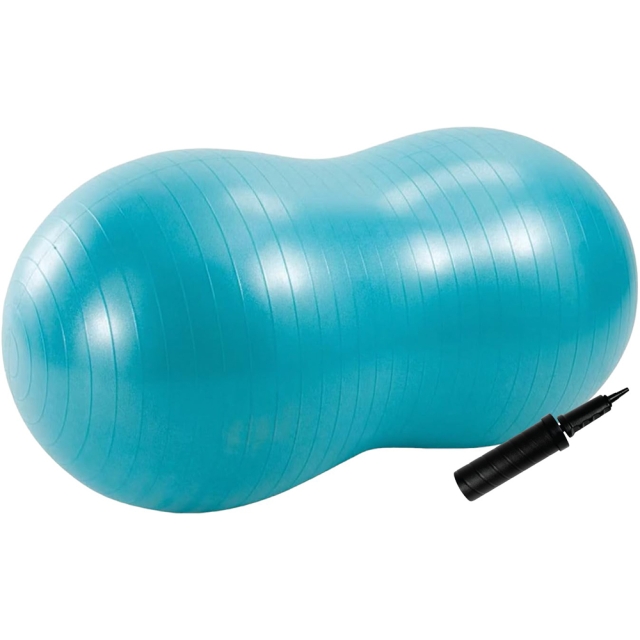
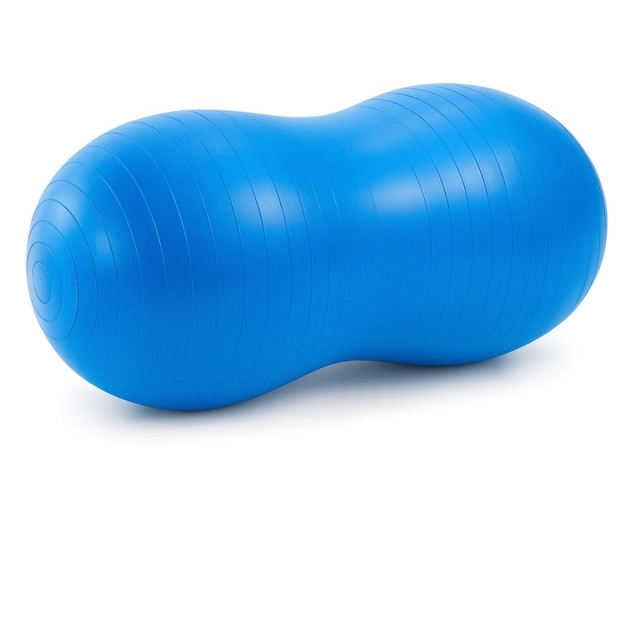
| Physioworx Peanut Exercise Ball | Therapy, children, maternity and stability work | 50cm | Peanut shape reduces rolling | View product |
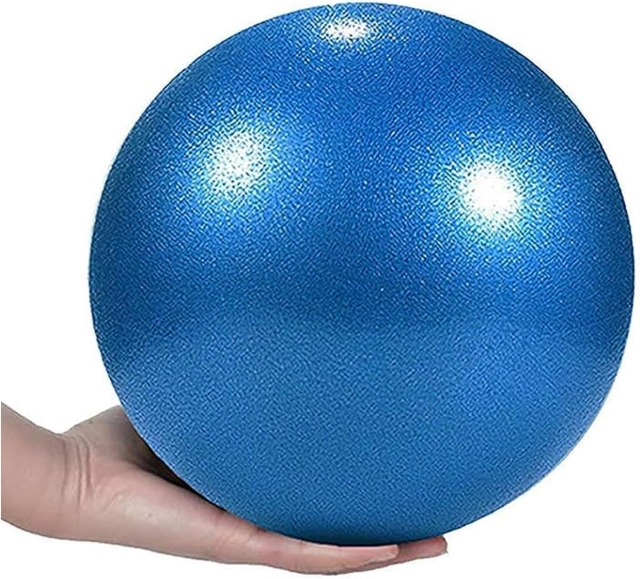
| Physioworx Pilates Ball | Pilates, yoga and targeted activation | Compact soft ball | Lightweight support for control and coordination | View product |
Best exercise balls from Algeos
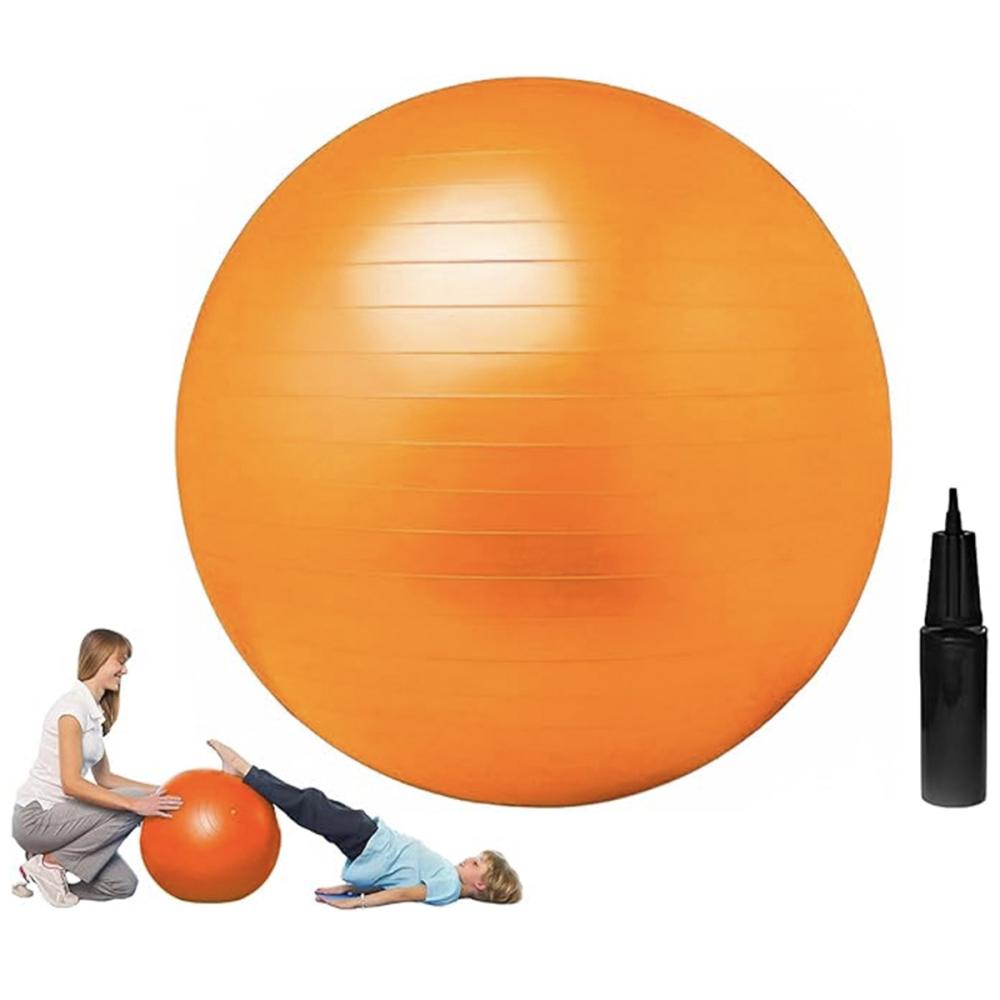
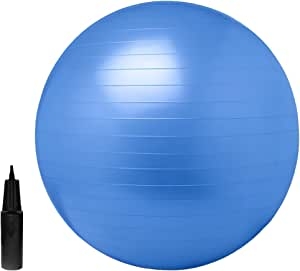
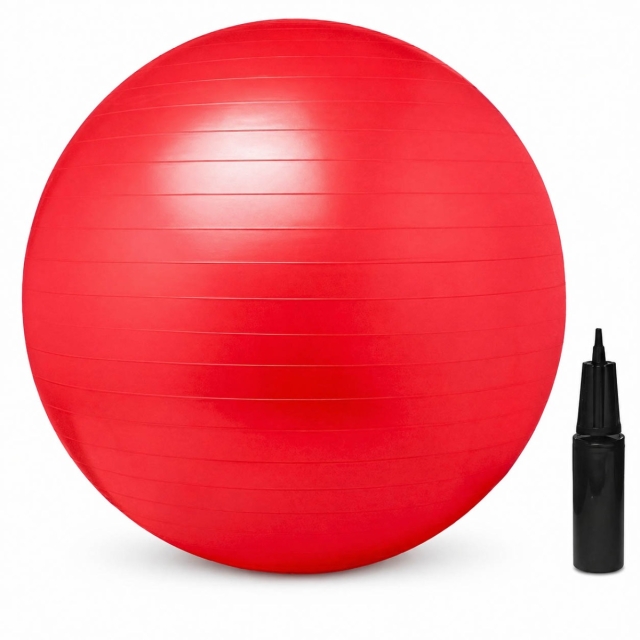
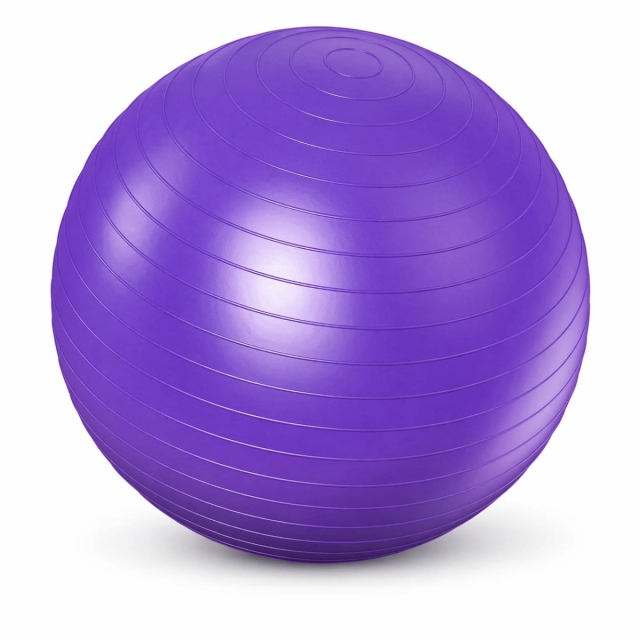
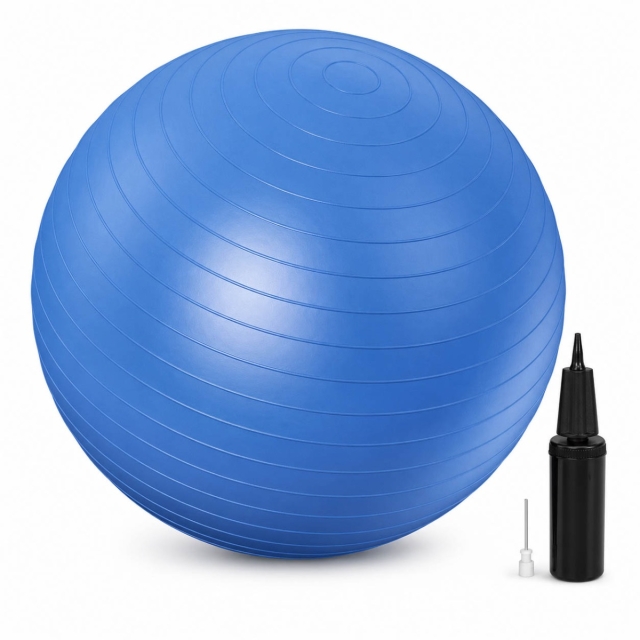
Physioworx Exercise Ball with Pump
A versatile anti-burst exercise ball for fitness, yoga, home exercise and physiotherapy.
- Anti-burst construction
- Supports up to 250kg
- Suitable for balance, posture and core training
- Pump included
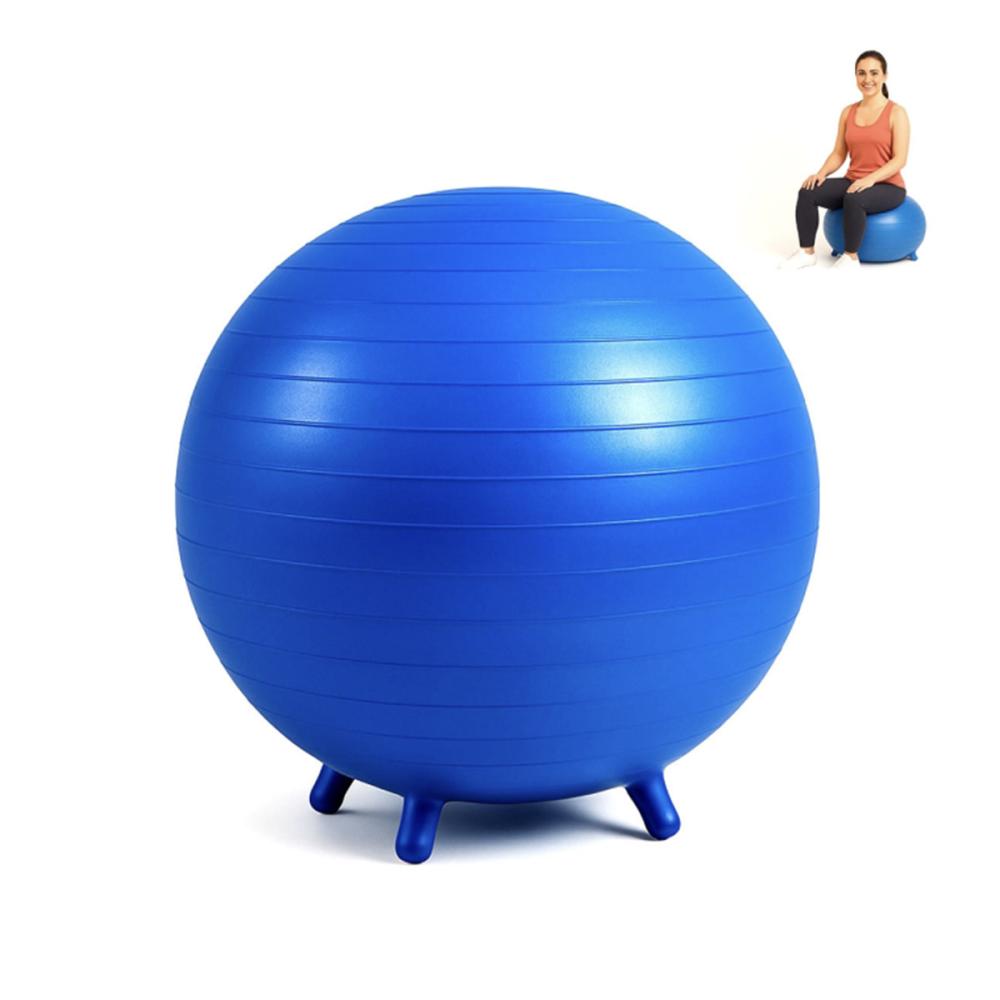
Exercise Ball with Stabilising Feet
A practical choice for anyone who wants more stability during exercise or while using the ball as an alternative seat.
- Six stabilising feet help reduce rolling
- 55cm size suits many shorter users
- Good for beginners and office settings
- Supports posture-focused active sitting
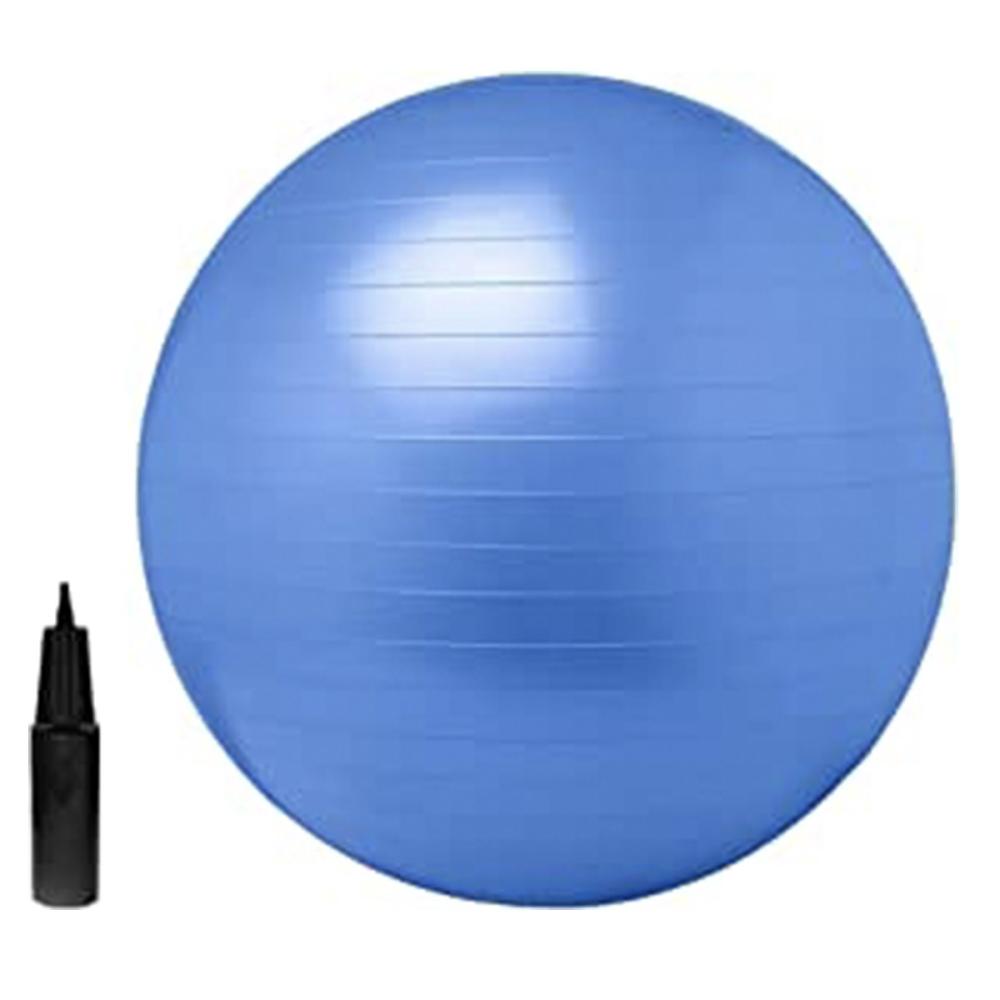
Physioworx Gym Ball Range
A flexible option for clinics, studios and home users who need the right size for safe alignment and comfort.
- Available in 45cm, 55cm, 65cm and 75cm
- Designed for physio, fitness, Pilates and yoga
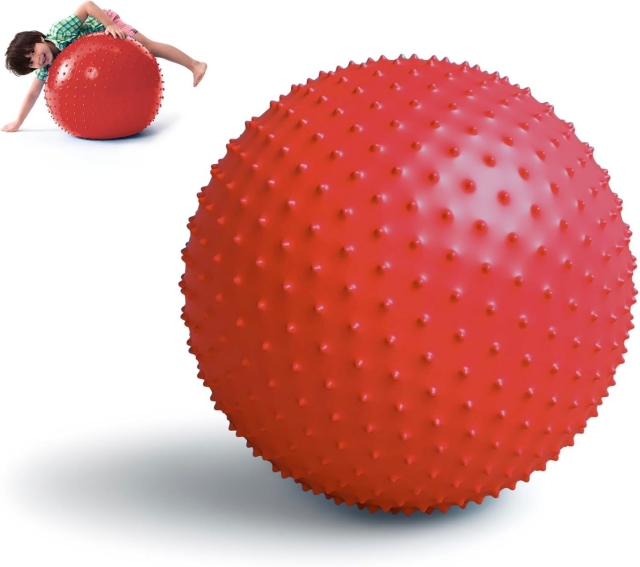
- Textured surface for better grip
- Suitable for rehab and sensory work
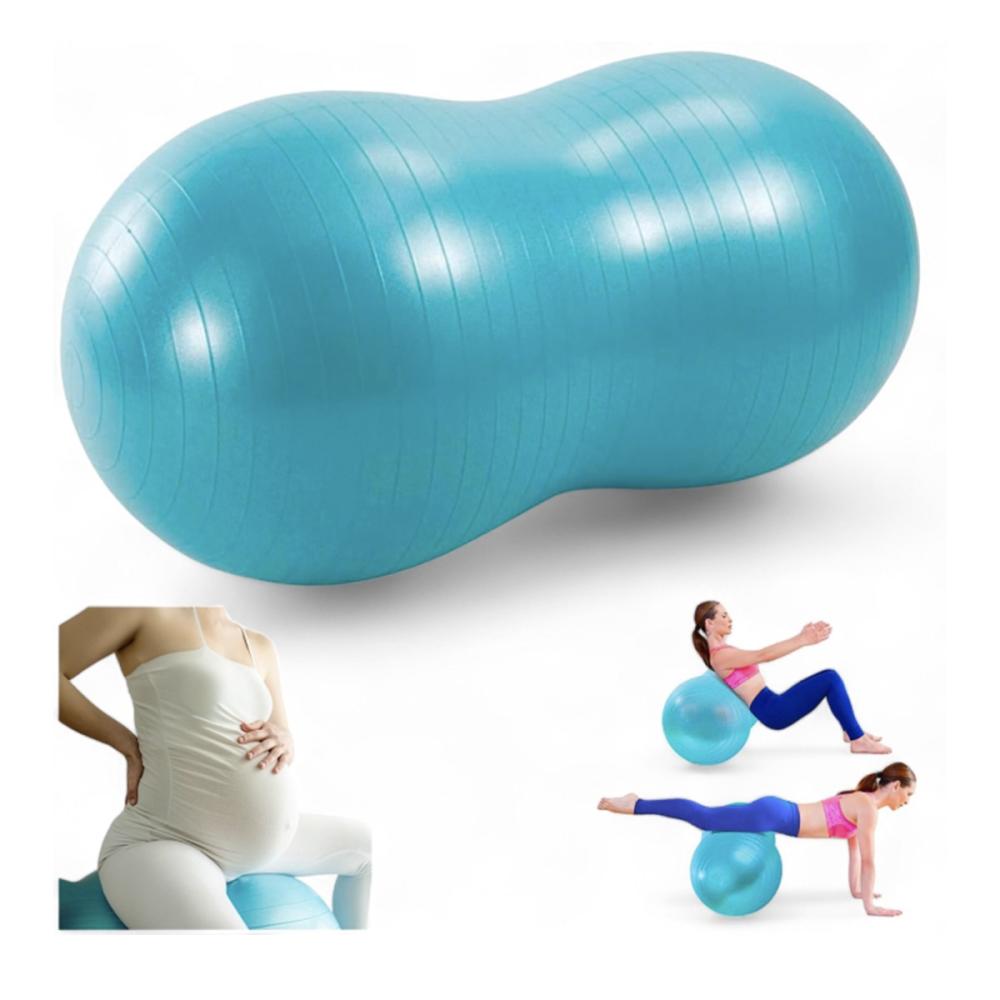
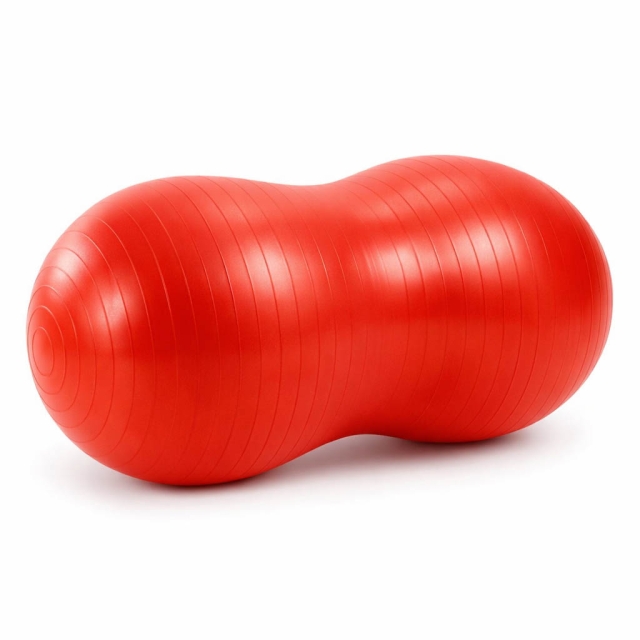
Physioworx Peanut Exercise Ball
A more stable alternative to a round gym ball that works well in rehabilitation, paediatric settings and maternity support.
- Peanut shape offers better control
- Textured non-slip surface
- Useful for therapy and movement confidence
- Suitable for children and adults
You can also explore related Algeos pages for balance therapy, wellness products, and the broader Physioworx range.
How to choose the right exercise ball size
Choosing the correct size helps you sit with your feet flat, knees around 90 degrees and hips level or slightly above the knees. That position supports safer, more effective use for both exercise and active sitting.
| User height | Recommended ball size | Best for |
|---|---|---|
| Up to 165cm | 55cm | General exercise, rehab and balance work |
| 166cm to 185cm | 65cm | Core work, posture training and physiotherapy |
| 186cm and above | 75cm | Advanced core training and full-body conditioning |
If you are between sizes, choose the ball that allows the best posture and most stable seated position. For more options, see the full Algeos exercise gym balls collection.
Common exercises you can do with an exercise ball
- Stability ball crunches
- Wall squats with the ball behind the back
- Hamstring bridges
- Forearm plank on the ball
- Pilates leg lifts with a soft ball
- Gentle seated balance drills for rehab
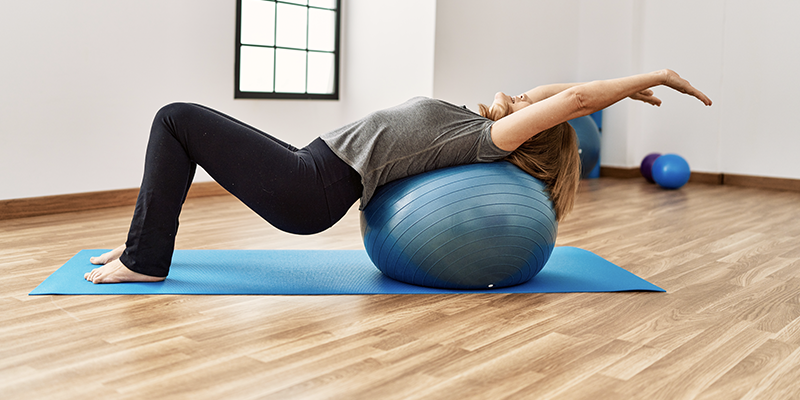
These exercises can help activate stabilising muscles, improve body awareness and add controlled instability to standard movement patterns.
Exercise ball FAQs
What size exercise ball should I buy?
Most adults use a 55cm, 65cm or 75cm ball depending on height. The best fit is the one that lets you sit with feet flat and knees around 90 degrees.
Are exercise balls good for core strength?
Yes. The unstable surface encourages the abdominal, back and pelvic muscles to work harder during many exercises.
Are anti-burst exercise balls safer?
Anti-burst balls are designed to deflate more slowly if punctured rather than bursting suddenly.
What is a peanut ball best for?
A peanut ball is often better for users who want more stability, including rehabilitation patients, children and those using the ball for maternity support or controlled movement work.
Can I use an exercise ball as a desk chair?
Some people use them for active sitting. A stabilising-foot design can be a better option for this than a standard round ball, especially for shorter periods.
Explore more from Algeos
Shop the full range of exercise balls and gym balls, discover the balance balls guide, or read the latest buyers guide for more help choosing the right ball.
I can also turn this into a more commercial category-page version or a more editorial blog version.
Sold: Each
Incl. VAT Exl. VAT