



Physio resistance bands are among the most versatile and effective tools you can add to your fitness routine. They provide many benefits. These include building strength, improving flexibility, helping with injury recovery, and enhancing muscle tone.
However, with various resistance levels available, choosing the right band for your specific needs can be a bit overwhelming.
This guide will walk you through everything you need to know to make an informed decision, ensuring you select the ideal resistance band to meet your fitness goals. Shop resistance bands
Understanding Resistance Bands
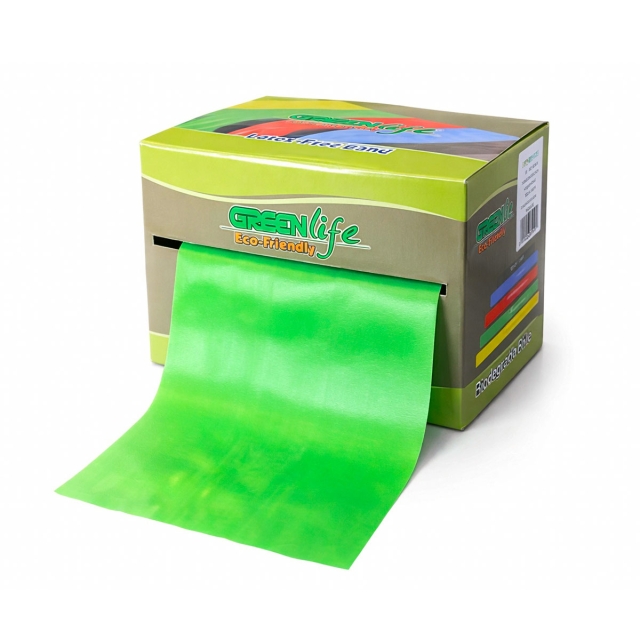
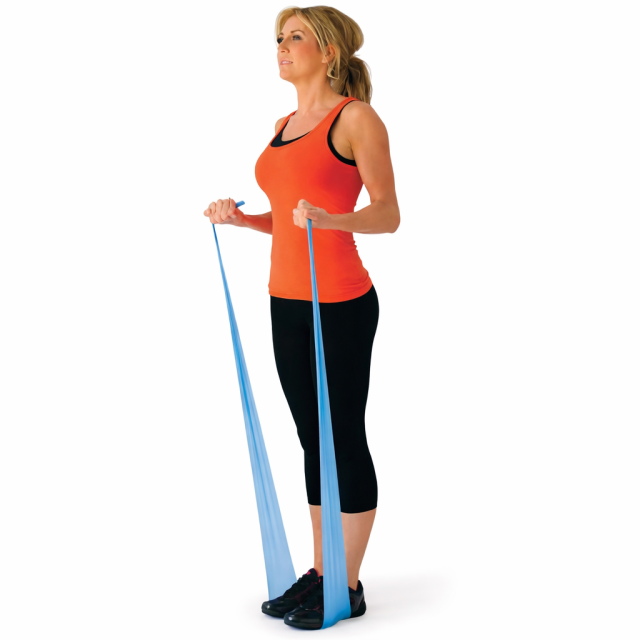
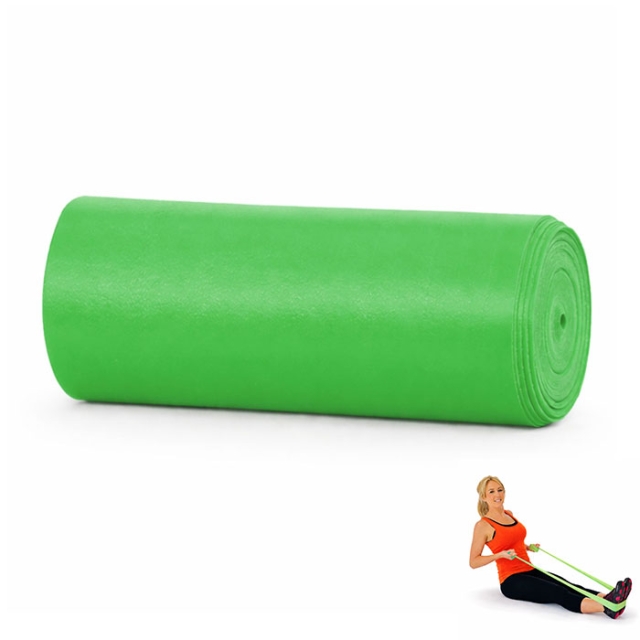
Our bands are elastic bands made of rubber or latex, designed to create tension when stretched. They come in various resistance levels, colours, and sizes, each providing different levels of tension.
The beauty of these bands lies in their simplicity and portability - they can be used anywhere, at any time, and by anyone, regardless of their fitness level.
The Importance of Choosing the Right Resistance Level
Selecting the correct resistance level is crucial for getting the most out of your workout and avoiding injury. If the resistance is too low, you might not effectively challenge your muscles, leading to minimal progress. On the other hand, if the resistance is too high, you risk overstraining your muscles, which can result in injury or hinder your performance.
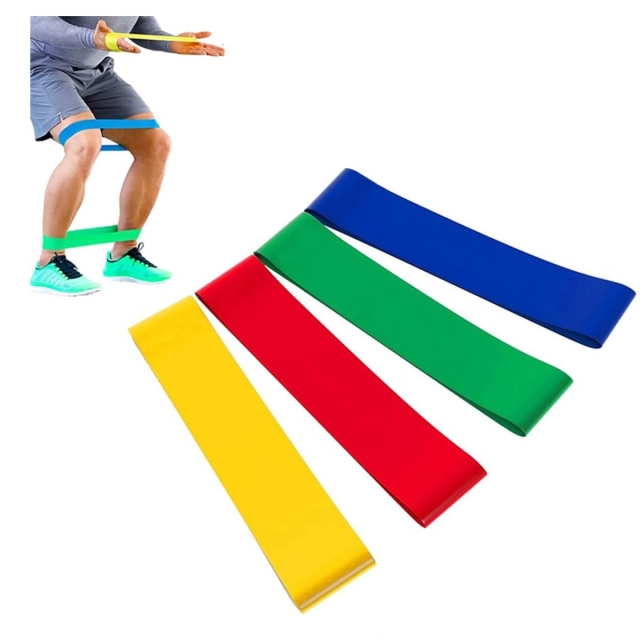
Resistance bands are typically categorised by their thickness and tension level, which is often indicated by colour. Each level corresponds to a certain amount of resistance, usually measured in pounds.
The chart below indicates the following resistance levels:
| Band Level | Resistance | Best For |
|---|---|---|
| X-Light | 5 lbs | Injury Recovery / Mobility |
| Light | 10 lbs | Stretching / Yoga |
| Medium | 15 lbs | Chest / Shoulders / Arms |
| Heavy | 20 lbs | Resistance Training |
| X-Heavy | 25 lbs | Muscle Building / Squats |
1. X-Light (Yellow) - 5 lbs
Best For: Injury Recovery / Mobility
The X-Light band is the least resistant of all, providing just 5 pounds of tension. This level is perfect for those who are new to exercising or those recovering from an injury. The low resistance helps in regaining mobility and strength in a controlled manner, making it ideal for rehabilitation exercises.
Exercises:
- Stretching: Use the X-Light band to assist in gentle stretches, helping improve flexibility and range of motion.
- Mobility Work: It’s perfect for joint mobilisations and gentle resistance work, especially for shoulders and hips.
- Injury Recovery: This band can be used to strengthen weakened muscles post-injury without risking further damage.
Who Should Use It:
- Beginners who are just starting their fitness journey.
- Individuals recovering from surgery or injury.
- Seniors or those with reduced muscle strength.
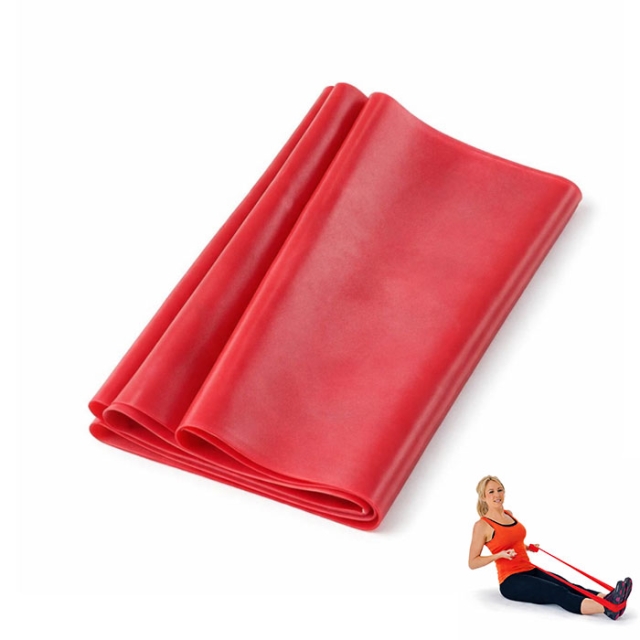
2. Light (Red) - 10 lbs
Best For: Stretching / Yoga
The Light band offers 10 pounds of tension, making it slightly more challenging than the X-Light band. This band is often used in activities that require more stability and strength than what the X-Light band can provide. It’s great for enhancing flexibility and supporting deeper stretches, particularly in yoga or Pilates routines.
Exercises:
- Yoga & Pilates: Integrate the Light band into your yoga or Pilates sessions to increase the intensity of stretches and poses.
- Warm-ups: Use it to add a bit of resistance during dynamic warm-ups to prepare your muscles for a workout.
- Strengthening Exercises: Ideal for exercises like side leg raises, shoulder rotations, and bicep curls for a moderate resistance workout.
Who Should Use It:
- Individuals looking to deepen their stretches.
- Yoga and Pilates practitioners who want to increase flexibility and muscle engagement.
- Those who have progressed from the X-Light band and are ready for more resistance.
3. Medium (Green) - 15 lbs
Best For: Chest / Shoulders / Arms
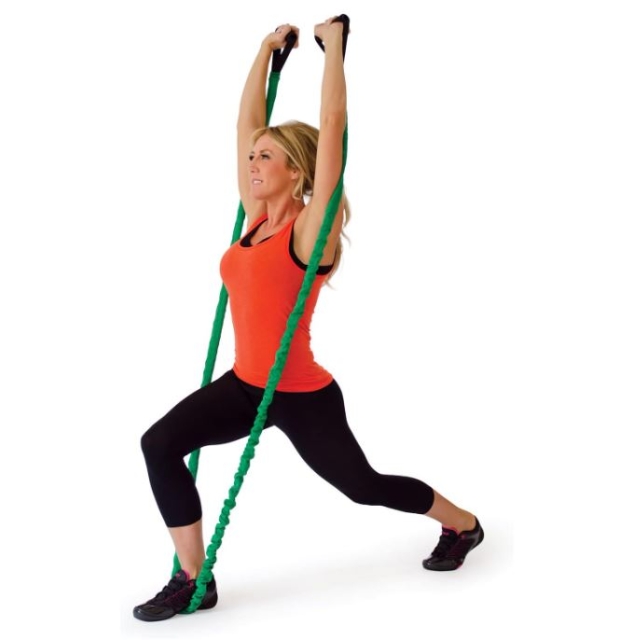
The Medium band provides 15 pounds of tension, which is suitable for more intense strength-building exercises. It offers enough resistance to effectively target larger muscle groups, making it ideal for workouts that focus on building strength in the chest, shoulders, and arms.
Exercises:
- Chest Press: Use the Medium band for chest presses to build upper body strength.
- Shoulder Press: This band is ideal for shoulder press exercises, helping to strengthen and tone the shoulders.
- Arm Curls: Incorporate the Medium band into your arm workouts to add resistance and challenge your biceps and triceps.
Who Should Use It:
- Intermediate users who have built up some muscle strength.
- Individuals looking to target upper body muscle groups.
- Those who want to add a moderate level of resistance to their strength training routine.
4. Heavy (Blue) - 20 lbs
Best For: Resistance Training
The Heavy band offers 20 pounds of tension and is perfect for those who are looking to build significant muscle strength and endurance. This band provides enough resistance to challenge even the strongest of muscles, making it ideal for more advanced strength training exercises.
Exercises:
- Squats: Use the Heavy band around your thighs to add resistance to your squats, targeting your glutes and quads.
- Deadlifts: Incorporate the band into deadlift exercises to enhance lower body strength.
- Rowing Exercises: The Heavy band is excellent for rowing exercises, which target the back and biceps.
Who Should Use It:
- Advanced users who have already developed a strong foundation in strength training.
- Athletes looking to improve their muscle strength and endurance.
- Individuals wanting to take their resistance training to the next level.
5. X-Heavy (Black) - 25 lbs
Best For: Muscle Building / Squats
The X-Heavy band is the most challenging, providing 25 pounds of tension. This band is designed for experienced users who need maximum resistance to build muscle mass and improve overall strength. It’s particularly effective for lower body exercises like squats, where increased resistance can lead to significant gains in muscle size and strength.
Exercises:
- Squats & Lunges: Add the X-Heavy band to your squats and lunges to intensify the workout and maximise muscle growth.
- Glute Bridges: Place the band around your thighs during glute bridges to increase the resistance and target the glutes more effectively.
- Pull-Ups: Use the band to assist in pull-ups, helping to build upper body strength and muscle mass.
Who Should Use It:
- Experienced users and bodybuilders focusing on muscle hypertrophy.
- Those who need maximum resistance for muscle growth.
- Individuals who have progressed through the lower resistance levels and need a greater challenge.
How to Choose the Right Physio Band for You
Choosing the right physio resistance band depends on several factors, including your fitness level, workout goals, and the specific exercises you plan to perform. Here are some tips to help you make the best choice:
1. Assess Your Fitness Level
If you’re new to resistance training or recovering from an injury, start with the X-Light or Light bands. As you build strength, you can gradually progress to Medium, Heavy, and X-Heavy bands.
2. Define Your Goals
Consider what you want to achieve with your workouts. For example, if your goal is to improve flexibility and mobility, the X-Light or Light bands are ideal. If you’re aiming to build muscle strength, the Medium, Heavy, or X-Heavy bands would be more appropriate.
3. Mix and Match
Don’t be afraid to use different bands for different exercises. For instance, you might use a Light band for warm-ups and a Heavy band for resistance training. Mixing and matching bands allows you to tailor your workouts to your specific needs.
4. Consider the Exercises
Some exercises require more resistance than others. For upper body exercises like arm curls or shoulder presses, a Medium or Heavy band might be sufficient. For lower body exercises like squats or deadlifts, an X-Heavy band might be necessary to provide enough resistance.
5. Progress Gradually
As you become stronger, you can increase the resistance by moving to a higher level band. This gradual progression helps prevent injury and ensures continuous improvement.
Resistance bands are a versatile and effective tool for achieving a wide range of fitness goals. Whether you’re recovering from an injury, improving your flexibility or building muscle strength, there’s a resistance band that’s perfect for you.
By understanding the different levels of resistance and how they align with your fitness goals, you can select the right band to enhance your workouts and achieve the best results.
Start with a band that matches your current fitness level and progress gradually as you become stronger. With the right resistance band, you’ll be well on your way to achieving your health and fitness goals.
Exercises Recommended by the NHS
The NHS recommends strength and resistance activity as part of a balanced weekly routine, alongside aerobic exercise. Resistance bands can be a practical way to add controlled resistance to common strength movements at home, in the gym, or as part of a rehabilitation programme.
For trusted guidance and routines, these NHS resources are a helpful starting point:
- Strength and resistance exercises (NHS) – guidance and examples of strength-based activities.
- How to improve strength and flexibility (NHS) – advice on building strength and maintaining flexibility safely.
Always choose an appropriate resistance level, move slowly with control, and stop if you feel pain (beyond normal muscular effort). If you’re managing an injury or health condition p follow advice from your clinician.
FAQ
Explore common questions about resistance bands used for strength, flexibility, mobility and rehabilitation.
1) What are physio resistance bands and how do they work?
Resistance bands are elastic exercise tools that create tension as they stretch. That tension challenges your muscles through the full range of motion, helping to build strength, improve flexibility and support joint stability.
2) Who can use resistance bands?
Anyone—physiotherapists and rehab clients, athletes in training, and people working out at home. Select an appropriate resistance level for your current ability and goals.
3) How do I choose the right resistance level?
Match the band to the exercise and your strength. As a guide: extra-light/light for mobility and recovery; light/medium for general fitness; medium/heavy for strength work; extra-heavy for advanced training. If reps feel too easy, step up a level.
4) Are resistance bands suitable for rehabilitation?
Yes. Bands provide controlled, low-impact resistance that can be progressed gradually. Always follow advice from a qualified clinician for injury-specific protocols.
5) What exercises can I do with resistance bands?
Mobility drills, stretching, activation and strength moves such as rows, presses, curls, squats, deadlifts, hip abductions, glute bridges and shoulder stabilisation work.
6) Can I combine different bands in one workout?
Absolutely. Use lighter bands for warm-ups and mobility, moderate bands for high-rep work, and heavier bands for strength sets. Mixing bands helps you target different muscle groups effectively.
7) How do I know when to increase resistance?
If you can complete your target reps with minimal effort and good form, increase resistance or slow the tempo. Progressive overload is key to continued improvement.
8) Are bands good for home workouts and travel?
Yes. Bands are lightweight, portable and space-saving, making them ideal for training at home, in clinic, at the gym or on the go.
9) How should I care for my resistance bands?
Keep bands away from sharp edges, extreme temperatures and direct sunlight. Wipe dry after use and store loosely coiled. Inspect for tears or cracks and replace if worn.
Sold: Roll
Incl. VAT Exl. VAT