





Looking for the best podiatry drill for clinical work? This practical UK guide explains the differences between dust-extraction (dry) and spray (wet) drills, the features that actually matter in day-to-day podiatry, UK health & safety points (COSHH, RPE, infection control), and a side-by-side comparison of popular models.
Dust extraction vs. spray: what’s the difference?
Dust-extraction (dry) drills
These use an integrated suction turbine to capture nail and skin dust through the handpiece into a filter bag. The workspace stays dry and tidy and bags/filters are replaced periodically. Great for high-volume nail debridement and fungal cases where you want debris removed immediately.
- + Efficient debris removal; cleaner, dry workflow
- + Popular for thick/mycotic nail reduction
- − Vacuum adds noise and unit weight
- − Filters/bags are consumables
Spray (wet) drills
These deliver a fine water mist at the burr. Moisture binds dust at source and helps cool the treatment area for patient comfort. You’ll wipe away the damp “slurry” afterwards; line and tank hygiene is essential.
- + Cooler, often quieter experience for patients
- + Excellent airborne dust suppression at source
- − Wet cleanup and routine water-line maintenance
- − Some clinicians prefer dry suction for heavy nail work
Reality check: both methods can markedly reduce airborne dust when used properly, but no system removes 100%. Keep using appropriate PPE (e.g., FFP2/FFP3 respirators for drilling), maintain devices, and ventilate rooms.
Key features that matter in clinic
Power & speed
Look for a broad, controllable range (e.g., 5,000–40,000 RPM) with good low-speed torque so burs don’t stall. High RPM helps with smooth reduction, but finesse at lower speeds is equally important.
Motor type
Brushless motors (both micromotor and vacuum) run quieter, vibrate less and need less maintenance than brushed motors (no carbon brushes to replace).
Noise & ergonomics
Quieter drills reduce fatigue for you and stress for patients. Handpieces around 100–150 g with slim diameters and flexible hoses feel better over long lists.
Controls & presets
Glove-friendly controls, clear RPM readouts and memory presets save time between common treatments. A pause/stop button on the handpiece is a small luxury that feels big in use.
Dust bags / water systems
For suction: multi-layer bags, easy access, and full-bag indicators. For spray: decent tank size (e.g., 300–500 ml), distilled water, and automatic rinse/dry cycles for hygiene.
Compliance & support
Choose devices with CE/UKCA marking and a UK supplier who holds spares and offers servicing. Typical warranties: 12–24 months (sometimes different for unit vs handpiece).
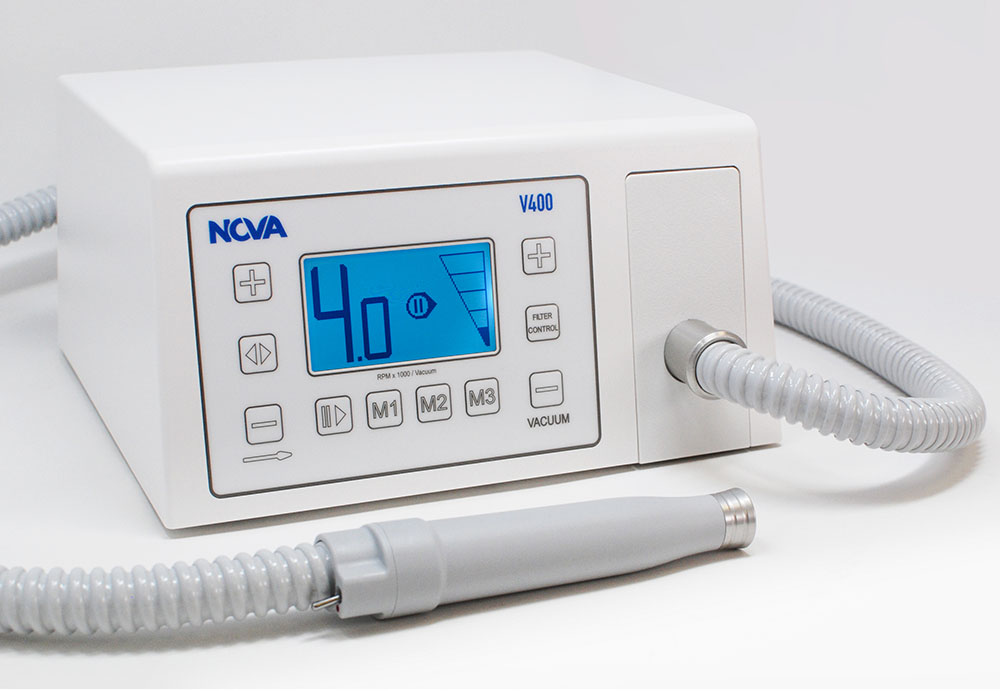
Nova Precision V400
Side-by-side comparison of drills
Specs below are typical for current UK-market models; always verify exact features, compliance and pricing with the supplier. Prices are approximate, ex-VAT.
| Model (Type) | Approx. Price | Motor | Speed Range | Noise* | Handpiece | Warranty | Compliance |
|---|---|---|---|---|---|---|---|
| Nova Precision V400 (Algeos) – Dust extraction | ~£1,400 | Brushless micromotor; electronic suction control | 6,000–40,000 RPM | ≈ low-mid 60dB | ~110g; quick-grip chuck | ~12 months | CE / UKCA |
| Berchtold Podo-Q – Dust extraction | ~£1,800 | Brushless suction motor | 5,000–25,000 RPM | ≈ 60dB (quiet for suction) | ~100g; handpiece on/off button | ~24m (unit); ~12m (HP) | CE; UKCA |
| Hadewe SB-X40 Plus – Dust extraction | ~£1,900 | Brushless micromotor; side-suction | 4,000–40,000 RPM | ≈ low-mid 60dB | ~130–140g; power-clamp chuck | ~12 months | CE |
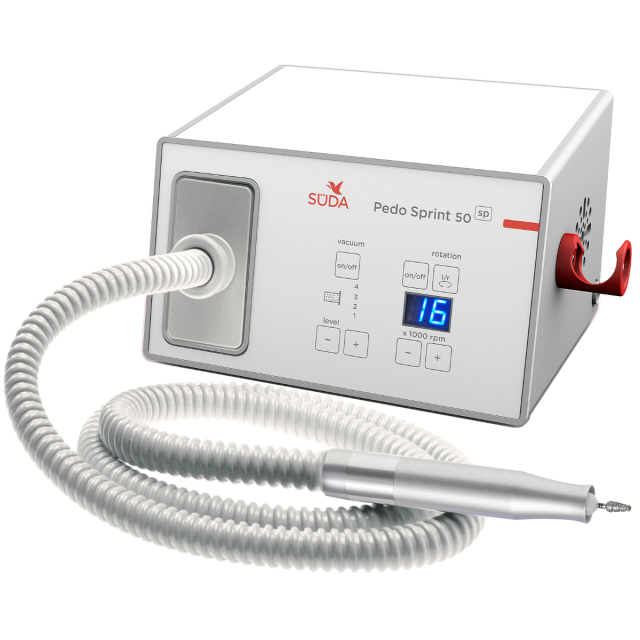
| Suda Vac S 40k (via Algeos) – Dust extraction | ~£2,300–£2,500 | Brushless “silent” micromotor & suction | 6,000–40,000 RPM | ≈ 50dB (very quiet) | ~110–115g; pause on handpiece | ~24 months | CE / UKCA |
| Model (Type) | Approx. Price | Motor / Spray | Speed Range | Noise* | Handpiece | Warranty | Compliance |
|---|---|---|---|---|---|---|---|
| Berchtold Podo S60 – Spray | ~£1,800–£2,100 | Brushless; 3-level spray; ~500 ml tank | 5,000–40,000 RPM | ≈ low-mid 50dB | ~180 g; optional LED HP | ~24 months | CE / UKCA |
| Hadewe Spray Premium – Spray | ~£1,150–£1,400 (ex-VAT eqv.) | Brushless; auto rinse/dry of lines | 5,000–40,000 RPM | ≈ 60dB (quiet) | ~100 g; LED; 3 memory presets | ~12 months (UK service support) | CE |
*Noise figures are indicative manufacturer/retailer data where published; perceived noise varies by room acoustics, burr, speed and suction level.
Pros & cons at a glance
Dust-extraction drills
- Pros: Dry, tidy workflow; strong debris capture; ideal for heavy nail work; straightforward bag/filter maintenance.
- Cons: Vacuum noise; more moving parts; ongoing filter costs; still need RPE as fine particulates can escape.
Spray drills
- Pros: Cooler cutting; very good dust suppression at source; typically quieter; excellent patient comfort.
- Cons: Wet cleanup; water-line hygiene tasks; some clinicians still prefer suction for very thick/mycotic nails.
Health & safety (UK): the non-negotiables
- COSHH & respiratory protection: Nail/skin dust can contain fungal spores and fine particulates. Treat drilling as a respiratory hazard under COSHH. Use engineering controls (suction or spray), and wear appropriate RPE (FFP2/FFP3) during drilling. Eye protection is sensible too.
- Infection control: Treat dust bags and captured debris as clinical waste. For spray systems, use distilled water, flush/dry lines daily, and follow the manufacturer’s disinfection schedule. Sterilise burs between patients; use disposable barriers where appropriate.
- Compliance & servicing: Buy CE/UKCA-marked medical devices. Keep documentation, PAT test regularly, and follow service intervals. A UK service partner with ready spares is worth its weight in gold.
- Ergonomics & noise: Favour lighter, low-vibration handpieces and, where possible, quieter turbines to protect staff over long clinics.
What peers say (reviews & usage notes)
- Berchtold drills are widely used across UK private clinics and NHS settings. Users often praise the Podo-Q (dust) for reliability and straightforward controls, and the Podo S60 (spray) for quiet, comfortable finishing work.
- Hadewe has a long reputation for robust German engineering. The SB-X40 Plus brings modern 40k RPM performance to a well-known platform; the Spray Premium’s auto rinse/dry is a daily-workflow win.
- Algeos Nova & Suda models are often singled out for value and low noise, respectively. Clinics like the Nova V400’s brushless 40k RPM at an approachable price; Suda Vac S is frequently noted as exceptionally quiet for a suction unit.
Tip: if possible, demo units at trade shows or arrange an in-clinic trial. The “feel” of the handpiece, hose flexibility, and real-world noise can decide it.
Buyer checklist
- ✅ Clinical need: Heavy nail debridement (lean dust-extraction) vs finishing/comfort (consider spray) — many clinics benefit from one of each.
- ✅ Speed & torque: Genuine 40k RPM is handy; ensure confident low-speed torque for larger burs.
- ✅ Noise & ergonomics: Ask for decibel info; try the handpiece for weight and balance.
- ✅ Maintenance: Filters/bags cost and change interval? Spray line cleaning routine?
- ✅ Compliance: CE/UKCA docs, IFU (instructions for use), and UK servicing/parts availability.
- ✅ Warranty & downtime: What’s covered (unit vs handpiece), turnaround times, loan units?
- ✅ Total cost of ownership: Filters, burs, cleaning solutions, and expected service intervals over 3–5 years.
- ✅ Team buy-in: Let clinicians test controls and presets; small usability wins add up across a busy list.
Bottom line
If you want a single all-rounder for high-volume work, a modern dust-extraction drill with a brushless motor, clear digital controls and strong suction is hard to beat. If patient comfort and ultra-quiet operation are priorities - and you’re happy to manage water-line hygiene - a spray drill feels fantastic in use and keeps things cool and calm.
The good news: within £1,000–£4,000 you can buy a compliant, well-supported UK model from established suppliers. Shortlist two dust units and one spray, demo them if you can, and pick the system your clinicians will actually enjoy using all day. Your patients - and your lungs - will thank you.
Disclaimer: Specifications, prices and compliance labels change. Always confirm details (speed, noise, warranty, CE/UKCA, servicing) with the supplier before purchase.
Sold: Each
Incl. VAT Exl. VAT