



Walking and gait analysis
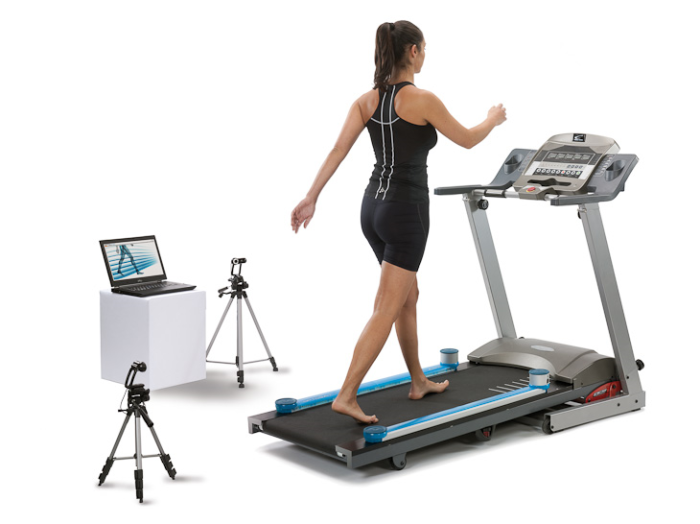
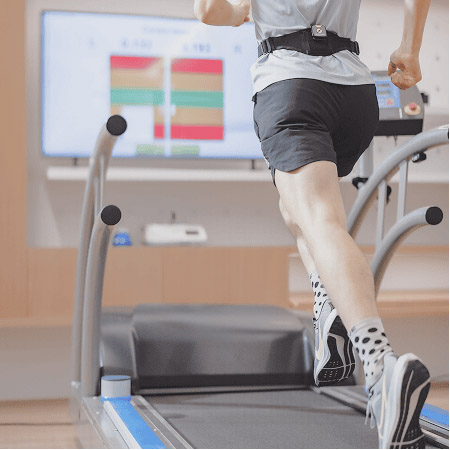
Examine step and stride characteristics, cadence, stance and swing timing, support phases and left–right differences during walking assessments.
Gait analysis system to assess the dynamic posture and coordination during movement.
Assess objectively the patient’s general physical conditions.
Identify deficiencies, postural problems and asymmetries on the basis of data and videos and determine how the patients’ performance is being effected.
Develop and apply therapeutic-rehabilitation applications, rehab approaches and Orthopedic solutions on the basis of precise data.
Sold: Kit
Incl. VAT Exl. VAT
Microgate OptoGait | Professional movement assessment
Turn everyday walking, running and functional movements into meaningful clinical data with OptoGait: a portable, modular optical system designed to support objective assessment, rehabilitation planning and progress monitoring.
Combine precise spatiotemporal measurements with video, graphs and biofeedback to make movement patterns easier to assess, explain and revisit over time.
The technology
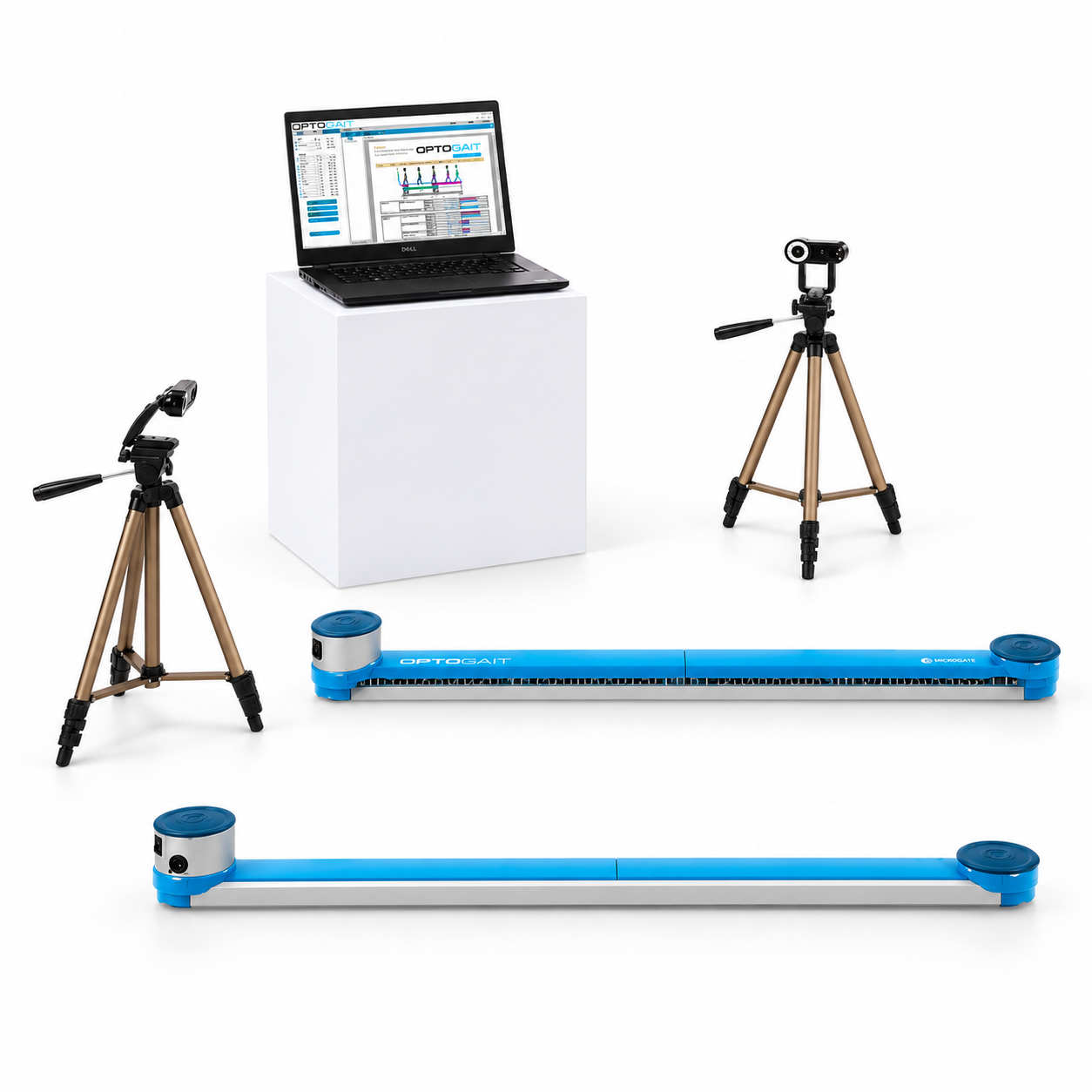
OptoGait uses a pair of bars, one transmitting and one receiving, containing optical sensors that communicate across the measurement area. As a patient moves through the system, interruptions in the infrared beams are captured and interpreted by the software.
These measurements help practitioners quantify the timing and spatial characteristics of movement, rather than relying on visual observation alone. This can be especially useful when comparing left and right sides, repeating tests or reviewing the effect of an intervention.
How optical detection works
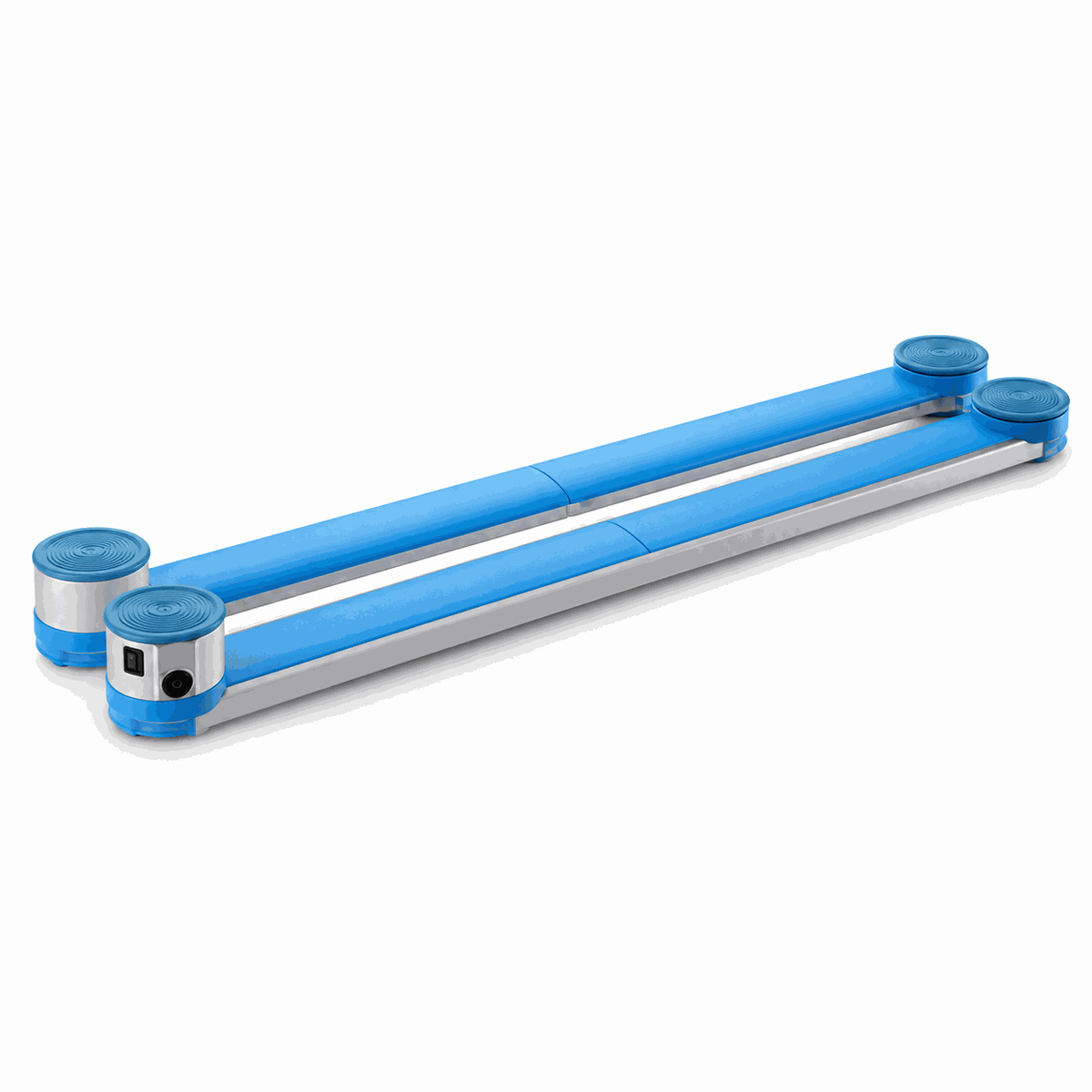
The two bars form an infrared measurement field. The system records beam interruptions during walking, running or jump tests. It measures movement timing and spatial parameters; it is not a plantar-pressure mapping plate or a full 3D motion-capture system.
Clinical and performance applications
From lower-limb biomechanics to return-to-activity testing, OptoGait provides measurable information to support professional assessment and decision-making.
Examine step and stride characteristics, cadence, stance and swing timing, support phases and left–right differences during walking assessments.
Measure ground-contact and flight times, rhythm and running-related spatial parameters for sports rehabilitation and performance assessment.
Capture baseline data and repeat suitable tests during a rehabilitation programme to document changes in selected movement parameters.
Record measurable jump and contact-time characteristics during vertical, repeated and selected single-leg or reactive test protocols.
Compare relevant gait measures under controlled conditions, including before and after an orthotic or footwear change as part of a wider assessment.
Support functional mobility and gait-variability assessment, including appropriate older-adult rehabilitation or fall-risk management pathways.

Software and reporting
OptoGait software brings test configuration, real-time readings, video and results comparison into the same workflow. Practitioners can create subject records, run predefined or personalised protocols and revisit results during follow-up appointments.
Software functions and accessories depend on the hardware, software version and selected test protocol.
Biofeedback in practice
Feedback can help make movement retraining more understandable. During a suitable supervised test, the practitioner can use on-screen information and pacing cues to focus on parameters such as cadence, rhythm or side-to-side differences.
Repeated measurements can be used to discuss changes across appointments and provide a more consistent basis for reviewing a rehabilitation programme.
Relevant settings include podiatry and biomechanics clinics, physiotherapy and rehabilitation departments, orthotic services, sports medicine facilities and university movement laboratories.
A practical assessment workflow
Bring structured movement measurements into routine appointments without changing the fundamentals of good clinical assessment.
Select an appropriate walking, running, jump or functional test for the assessment goal.
Collect relevant parameters with consistent positioning, instructions and conditions.
Review measures alongside video, symptoms, examination findings and clinical history.
Monitor selected measures over time and adapt the programme using professional judgement.
Manufacturer technical data
Selected published specifications for evaluating suitability, system configuration and clinic setup.
| Detection technology | Paired infrared optical transmitting (TX) and receiving (RX) bars |
|---|---|
| Optical sensors | 96 per metre |
| Spatial resolution | 1.041 cm |
| Timing accuracy | 1 millisecond |
| Current stated measurement lengths | Modular 1–10 m configurations |
| Maximum separation between TX and RX bars | 6 m |
| Integrated interface bar dimensions | 1100 × 100 × 100 mm (W × D × H) |
| Additional bar dimensions | 1000 × 100 × 45 mm (W × D × H) |
| Power — 1–5 m configuration | Rechargeable 7.4 V, 1800 mAh Li-ion battery |
| Power — up to 10 m configuration | External 24 V DC supply (manufacturer specification) |
| Operating temperature | 0°C to +35°C |
| Assessment environments | Overground and suitable treadmill setups |
Specifications summarised from published Microgate product data. The Algeos 1 metre kit is a specific configuration. Additional bars, treadmill equipment and optional accessories are not necessarily included.
Available from Algeos
The 1 metre kit offers an entry point for practices looking to introduce optical gait and functional movement measurements. It can be used for suitable assessments on a treadmill or as part of an overground setup, subject to the chosen test and available space.
Algeos can help you explore the product, review your intended applications and discuss a demonstration before purchase.
Algeos product listing | SKU LM7180
Not included: laptop and treadmill. Check the live Algeos listing for current package contents.
Frequently asked questions
Key considerations for bringing OptoGait into a clinic or rehabilitation service.
OptoGait provides spatiotemporal measurements related to walking, running and selected functional tests. Depending on the protocol, outputs can include contact and flight timing, cadence, step and stride parameters, gait phases and left–right comparisons. It supports assessment but does not diagnose a condition on its own.
Yes. The manufacturer supports treadmill configurations in addition to overground setups. Treadmill compatibility, positioning and safe testing procedures should be checked for the particular equipment and assessment protocol.
Yes. Clinicians can use selected gait parameters and synchronised video to complement a biomechanical examination or compare measurements before and after a footwear or orthotic intervention.
No. OptoGait uses infrared optical detection to assess movement timing and spatial characteristics. It does not directly measure plantar pressure distribution or provide the joint-angle detail of a full multi-camera 3D motion capture laboratory.
Yes. Repeatable assessments, stored patient records, graphs and video can help practitioners document changes in selected parameters over time. Results should be considered alongside wider clinical outcomes and professional assessment.
No. The Algeos product listing states that the laptop and treadmill are not included. Refer to the product listing for the current package contents.
Yes. Visit the Algeos OptoGait enquiry page to request a demonstration or discuss your requirements.
Discover OptoGait at Algeos
Explore the 1 metre system, review the manufacturer's specifications or contact Algeos to discuss a demonstration.



Sold: Each
Incl. VAT Exl. VAT
Sold: Sold per Pair
Incl. VAT Exl. VAT


Sold: Kit
Incl. VAT Exl. VAT