




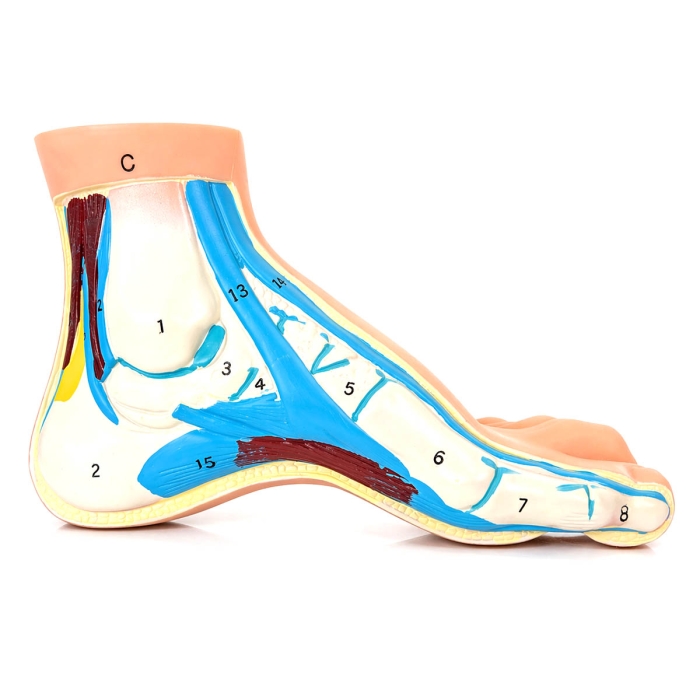
Anatomical Foot Model - High Arch Foot
Anatomical Foot Model – High Arch Foot is a highly detailed and realistic educational tool designed for healthcare professionals, educators, and students to study the unique structure of a high arch foot (pes cavus).
This model provides an accurate representation of the bones, muscles, tendons and ligaments within a high arch foot, making it a valuable resource for explaining the biomechanics and common conditions associated with this foot type.
Algeos foot models can be used to teach the anatomy of the foot and the various foot types.

Product Description
High Arch Foot
A life-sized anatomical foot model designed to show the structure of a high arch foot, also known as pes cavus.
It helps explain how a raised arch can change weight distribution through the foot, increase pressure at the heel and forefoot, and influence gait, posture, and lower-limb mechanics.
Suitable for podiatrists, orthotists, physiotherapists, educators, and students, this model gives a clear visual reference for patient education, clinical discussion, anatomy teaching, and training.
It is especially useful when explaining why high arches may be linked with instability, pressure loading, foot pain, or recurrent overuse problems.
Key selling points
- Life-sized model showing the anatomy of a high arch foot
- Useful for explaining pes cavus and altered foot loading clearly
- Supports patient education, clinical teaching, and training use
- Shows bones, muscles, tendons, and ligaments in a practical 3D format
- Lightweight and portable for clinics, classrooms, and seminars
At a glance
- SKU: NV3308
- Sold as: Each
- Size: 24.5 x 10.5 x 13.5 cm
- Weight: 0.6 kg
- Designed for education, demonstration, and training use
What it does and how it works
This model provides a three-dimensional representation of a high arch foot. Instead of relying only on flat diagrams or screen images, it allows clinicians and educators to point directly to anatomical structures and explain how the elevated arch shape may affect pressure distribution, shock absorption, stability, and overall foot function.
That makes it easier to discuss how pes cavus may contribute to forefoot pressure, heel loading, plantar fascia strain, metatarsalgia, stress-related symptoms, and gait-related discomfort.
It can also support conversations around footwear choices, orthotic intervention, rehabilitation planning, and ongoing management.
Common problems it may help with
This is an educational model rather than a treatment product, but it can help explain common symptoms and conditions associated with high arches in a clearer, more practical way.
- High arches and pes cavus posture
- Forefoot pressure and heel loading concerns
- Metatarsalgia and ball-of-foot pain discussions
- Plantar fasciitis and heel pain explanation
- Stress fracture risk and repetitive loading issues
- Instability, gait changes, and foot fatigue
Applications and suitability
- Podiatry clinics explaining high arch structure and treatment pathways
- Physiotherapy settings discussing gait, posture, and rehabilitation
- Orthotic consultations where loading and arch shape need visual explanation
- Hospitals, classrooms, and anatomy teaching environments
- Student revision, practical demonstrations, and exam preparation
- Patient consultations where clearer visual explanation supports understanding
Who it may not suit
- Anyone looking for a wearable support, insole, brace, or treatment device
- Users who need a normal foot or flat foot model instead of a high-arch-specific example
- Settings requiring removable parts or a digital interactive anatomy tool
- Buyers who want to compare several foot types side by side rather than focus on one structure
Product specifications
| Product type | Anatomical educational foot model |
|---|---|
| Foot type shown | High arch foot / pes cavus |
| SKU | NV3308 |
| Sold as | Each |
| Size | 24.5 x 10.5 x 13.5 cm |
| Weight | 0.6 kg |
| Main use | Patient education, anatomy teaching, training, and clinical demonstration |
| Typical settings | Clinics, hospitals, physiotherapy practices, classrooms, and training seminars |
Usage instructions
- Place the model on a stable surface where the arch profile and key structures can be seen clearly.
- Use it to identify the main anatomical landmarks and show how a high arch differs from flatter or neutral foot shapes.
- Relate the structure shown to symptoms, pressure patterns, gait findings, or orthotic discussions where relevant.
- Use during consultations, teaching sessions, or staff training to support clearer explanations.
- Handle and store carefully between sessions to maintain presentation quality.
Benefits
- Makes pes cavus easier to explain in plain English
- Supports clearer patient understanding of loading and pressure patterns
- Helps connect high arch posture with heel pain, forefoot pain, and instability
- Useful for discussing orthoses, footwear, and rehabilitation approaches
- Supports student learning with a hands-on visual reference
- Portable enough for regular clinic and classroom use
Contraindications & warnings
This product is an educational model and is not intended to diagnose, treat, or monitor a medical condition. It should be used as a visual aid alongside appropriate professional assessment and patient-specific advice.
It is not a toy and should not be used unsupervised by children. Handle carefully during transport, storage, and repeated demonstration use.
FAQs
What is this high arch foot model used for?
It is used to demonstrate the structure of a high arch foot in a clear, physical format. This helps clinicians, educators, and students explain pes cavus, altered pressure patterns, and related biomechanical issues more effectively than flat diagrams alone.
What does pes cavus mean?
Pes cavus is the clinical term commonly used for a high arch foot. It describes a foot shape with a raised arch, which can increase pressure through the heel and forefoot and affect stability during walking and standing.
Can this model help explain foot pain linked with high arches?
Yes. It can be very useful when discussing how a raised arch may be linked with heel pain, forefoot discomfort, plantar fascia strain, metatarsalgia, or stress-related symptoms. A visual model often makes these relationships easier to explain and understand.
Who is this model most suitable for?
It is well suited to podiatrists, orthotists, physiotherapists, rehabilitation teams, educators, and students. It also fits clinics and hospitals where visual patient education supports assessment and treatment discussions.
Is this a treatment product for high arches?
No. This is not a wearable support or corrective device. It is an educational and demonstration model designed to support understanding rather than provide treatment.
Can it be used when discussing orthoses or footwear?
Yes. It can help explain why some people with high arches may need different cushioning, support, or pressure management strategies. That makes it useful during conversations about orthoses, footwear choices, and rehabilitation plans.
Is it life-sized?
Yes, it is described as a life-sized model. Realistic proportions make demonstrations easier to follow in consultations, training sessions, and practical teaching environments.
Should I choose this model or a multi-model foot set?
If you only need to explain high arches, this single model may be enough. If you want to compare normal, flat, and high-arch structures side by side, a multi-model set is usually the better option.
Related Links
Product Summary
The Anatomical Foot Model - High Arch Foot is a life-sized educational model used to show the structure of a high arch foot, or pes cavus, in a simple and practical way. It is suited to clinics, hospitals, physiotherapy practices, and teaching environments where altered loading, foot posture, biomechanics, and treatment discussions need to be explained clearly.
Sold: Each
Incl. VAT Exl. VAT
Sold: Each
Incl. VAT Exl. VAT
Sold: Set of 3
Incl. VAT Exl. VAT
Sold: Each
Incl. VAT Exl. VAT
Sold: Each
Incl. VAT Exl. VATSold: Each
Incl. VAT Exl. VAT
Sold: Each
Incl. VAT Exl. VAT
Sold: Each
Incl. VAT Exl. VAT
Sold: Each
Incl. VAT Exl. VAT
Sold: Each
Incl. VAT Exl. VAT
Sold: Each
Incl. VAT Exl. VAT
Sold: Each
Incl. VAT Exl. VAT
Sold: Each
Incl. VAT Exl. VAT
Sold: Each
Incl. VAT Exl. VAT
Sold: Each
Incl. VAT Exl. VAT
Sold: Set
Incl. VAT Exl. VATSold: Set
Incl. VAT Exl. VAT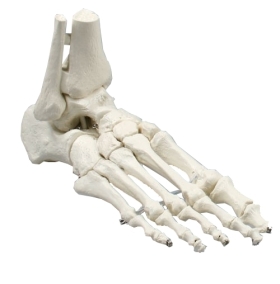
Sold: With stand
Incl. VAT Exl. VAT
Sold: Each
Incl. VAT Exl. VAT