





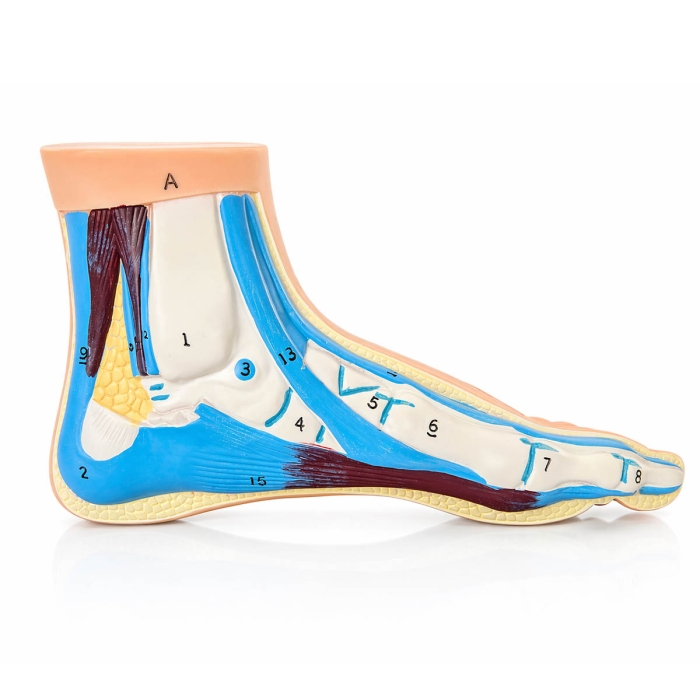
Anatomical Foot Model - Normal Foot
Anatomical Foot Model – Normal Foot is an essential educational tool designed to provide healthcare professionals, educators, and students with an accurate, detailed representation of the human foot.
This foot model is life-sized, ensuring that healthcare professionals can demonstrate real-world applications of treatments and conditions.
Algeos foot models can be used to teach the anatomy of the foot and the various foot types.

Product Description
Normal Foot Model
A life-sized anatomical foot model designed to help explain normal foot structure clearly in clinics, teaching spaces, and training environments.
It gives podiatrists, physiotherapists, orthotists, educators, and students a practical way to visualise bones, muscles, tendons, and ligaments when discussing anatomy, biomechanics, assessment, and treatment planning.
For patient communication, this type of model can make complex explanations easier to follow.
For training and study, it offers a durable visual reference that supports demonstrations, practical teaching, and anatomy revision without relying on diagrams alone.
Key selling points
- Life-sized normal foot model for realistic anatomical demonstration
- Useful for patient education, student teaching, and clinic-based explanation
- Shows key foot structures in a clear, visual format
- Portable design suited to consultation rooms, classrooms, and seminars
- Practical choice for podiatry, orthotics, physiotherapy, and rehabilitation settings
At a glance
- SKU: NV3306
- Sold as: Each
- Size: 26 x 10.5 x 13.5 cm
- Weight: 0.6 kg
- Designed as an educational and demonstration tool
What it does and how it works
This model provides a physical, three-dimensional representation of a healthy normal foot. Instead of relying only on printed charts or screen images, it allows the user to point directly to anatomical structures and explain how the foot is built and how different tissues relate to each other.
In practice, that means clearer conversations about foot function, gait, posture, injury, pressure patterns, and treatment decisions. It can also support comparisons with other foot types or pathological models when explaining how structure may influence movement and symptoms.
Common problems it may help with
Although this is not a treatment product, it may help professionals explain a wide range of foot and lower-limb issues more clearly. A visual model can improve understanding during consultations, training, and case discussion.
- General foot pain and arch-related discussions
- Plantar fasciitis and heel pain education
- Bunion, forefoot, and toe alignment explanation
- Stress fracture, tendon, and ligament discussions
- Gait, posture, and biomechanics teaching
- Orthotic and rehabilitation plan explanation
Applications and suitability
- Podiatry clinics explaining normal foot anatomy to patients
- Physiotherapy and rehabilitation settings discussing movement and loading
- Orthotic consultations where foot structure needs to be shown visually
- Medical, podiatry, and allied health teaching environments
- Student revision, practical demonstrations, and anatomy sessions
- Clinic reception or consultation room display where a visual teaching aid is useful
Who it may not suit
- Buyers looking for a wearable support, brace, insole, or treatment device
- Users needing a pathology-specific model such as flat foot or high arch foot
- Settings requiring an interactive digital assessment tool rather than a static visual aid
- Those wanting a model with removable parts or expanded musculature detail
The Normal Foot
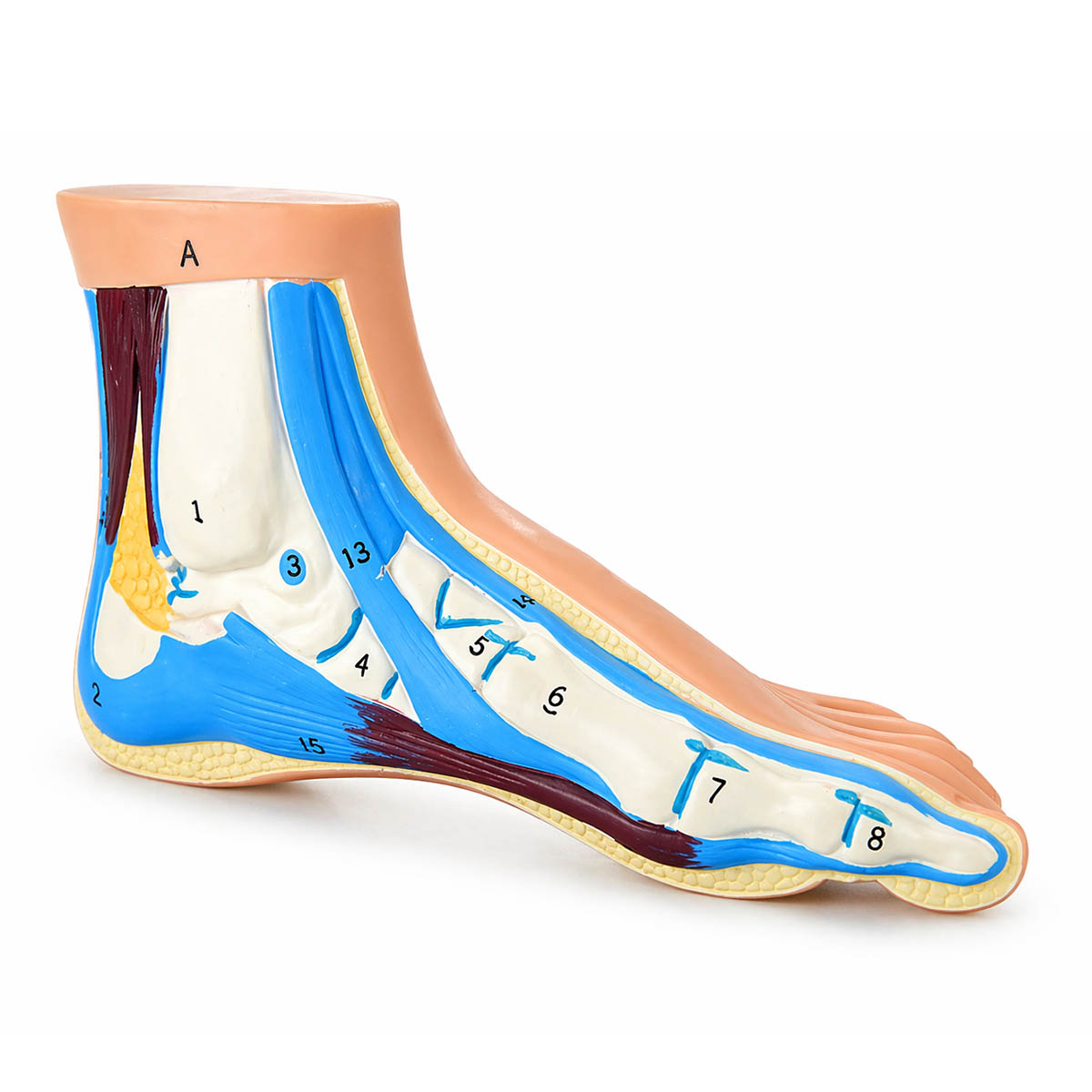
Anatomical normal foot model for clinical education
Product specifications
| Product type | Anatomical educational foot model |
|---|---|
| Foot type shown | Normal / healthy foot |
| SKU | NV3306 |
| Sold as | Each |
| Size | 26 x 10.5 x 13.5 cm |
| Weight | 0.6 kg |
| Main use | Patient education, anatomy teaching, training, and clinical demonstration |
| Typical environments | Clinics, hospitals, classrooms, training seminars, and teaching labs |
Usage instructions
- Place the model on a stable, clean surface where key structures can be seen clearly.
- Use it to identify and explain major anatomical landmarks during consultation or teaching.
- Compare normal anatomy with symptoms, scans, orthotic plans, or other foot types where relevant.
- Handle with care during transport, storage, and repeated demonstration sessions.
- Wipe clean according to local clinic or classroom hygiene procedures if used regularly in shared settings.
Benefits
- Makes anatomy easier to explain in plain English
- Supports clearer patient conversations and informed consent discussions
- Helps students visualise relationships between structures
- Useful for biomechanics and gait education
- Portable enough for use across multiple rooms or teaching settings
- Suitable for routine clinic education and professional training
Contraindications & warnings
This product is an educational model and is not intended to diagnose, monitor, or treat any medical condition. It should be used as a visual aid alongside appropriate professional assessment, clinical judgement, and patient-specific advice.
Store and handle it carefully to reduce the risk of accidental damage. It is not designed as a toy or for unsupervised use by children.
FAQs
What is this foot model used for?
It is used as a visual teaching and demonstration aid for normal foot anatomy. Clinicians, educators, and students can use it to explain structure, function, biomechanics, and treatment discussions more clearly.
Is this model life-sized?
Yes, it is described as a life-sized model of a normal human foot. That makes it more useful for realistic demonstration in consultations, teaching sessions, and anatomy training.
Who is this product most suitable for?
It is well suited to podiatrists, orthotists, physiotherapists, rehabilitation teams, medical educators, and students. It can also be useful in clinics and hospitals where visual patient education forms part of everyday practice.
Can it help explain common foot conditions?
Yes, it can support explanation of common foot problems by showing normal anatomy as a baseline reference. That can make it easier to discuss how conditions, injury, pressure, or structural changes may affect movement and comfort.
Is this a treatment product?
No, this is not a wearable support or therapeutic device. It is an educational model intended to improve understanding and communication rather than provide treatment.
Can it be used in teaching and exams?
Yes, it is suitable for classroom teaching, practical anatomy sessions, and professional training use. A physical model can help learners understand spatial relationships more effectively than flat images alone.
Is it easy to move between rooms or sites?
Yes, the model is described as lightweight and portable. That makes it practical for consultation rooms, seminar teaching, outreach education, and multi-room clinical use.
What if I need to compare normal, flat, and high-arch foot types?
In that case, a comparative foot model range or multi-model set may be more suitable. Using separate foot types side by side can make structural differences easier to explain during patient education or teaching.
Related Links
Product Summary
The Anatomical Foot Model - Normal Foot is a life-sized educational model used to demonstrate healthy foot anatomy in a clear, practical way. It is suited to clinics, hospitals, and teaching environments where podiatrists, physiotherapists, orthotists, educators, and students need a simple visual tool to explain structure, biomechanics, and treatment discussions.
Sold: Each
Incl. VAT Exl. VAT
Sold: Each
Incl. VAT Exl. VAT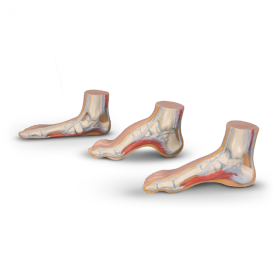
Sold: Set of 3
Incl. VAT Exl. VAT
Sold: Each
Incl. VAT Exl. VAT
Sold: Each
Incl. VAT Exl. VATSold: Each
Incl. VAT Exl. VAT
Sold: Each
Incl. VAT Exl. VAT
Sold: Each
Incl. VAT Exl. VAT
Sold: Each
Incl. VAT Exl. VAT
Sold: Each
Incl. VAT Exl. VAT
Sold: Each
Incl. VAT Exl. VAT
Sold: Each
Incl. VAT Exl. VAT
Sold: Each
Incl. VAT Exl. VAT
Sold: Each
Incl. VAT Exl. VAT
Sold: Each
Incl. VAT Exl. VAT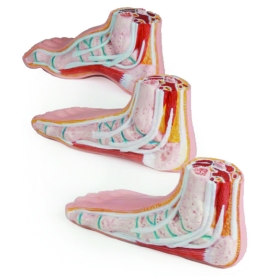
Sold: Set
Incl. VAT Exl. VATSold: Set
Incl. VAT Exl. VAT
Sold: With stand
Incl. VAT Exl. VAT
Sold: Each
Incl. VAT Exl. VAT