




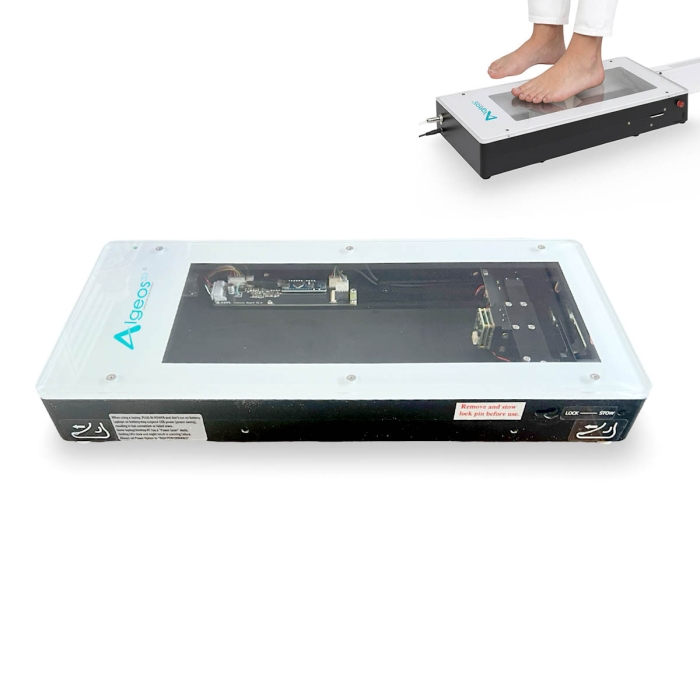
Algeos 3D Laser Foot Scanner
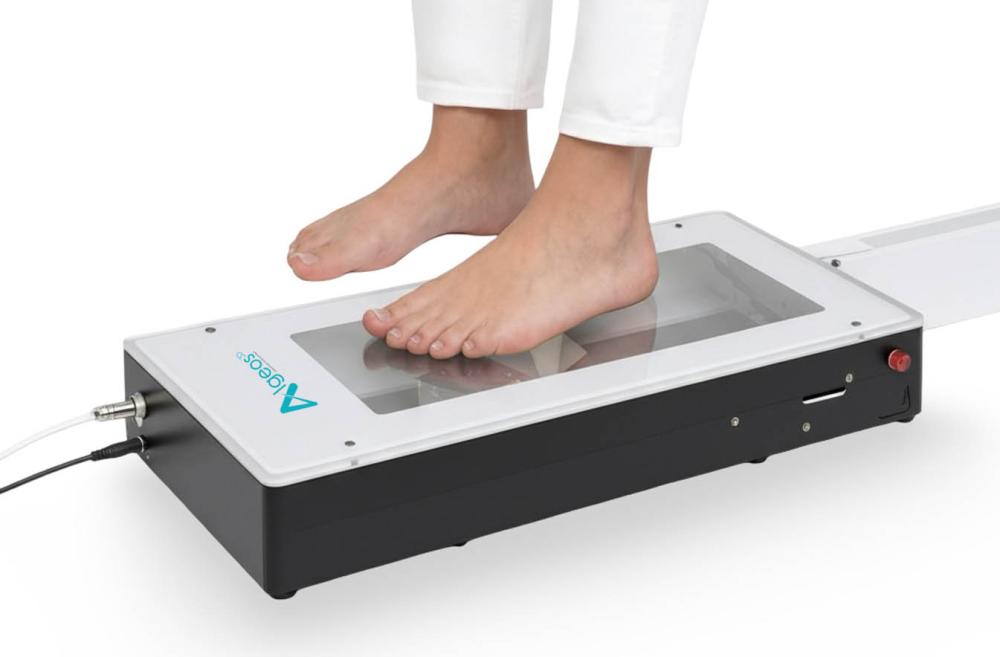
The Algeos 3D Laser Foot Scanner is a quick and accurate digital scanning system.
Built and branded especially for the Algeos3D Foot Orthotic design platform.
Using advanced laser triangulation, it captures clean, accurate 3D foot geometry in seconds, with support for non-weightbearing, semi-weightbearing, full-weightbearing and foam impression scanning.
Its built-in analysis tools automatically generate key clinical metrics, while open-format exports (OBJ, STL, PLY, JPG, PDF) ensure seamless integration into any orthotic design workflow.

Product Description
The Algeos 3D Laser Foot Scanner is a next-generation digital scanning system designed to transform the way clinics capture foot geometry for custom foot orthoses.
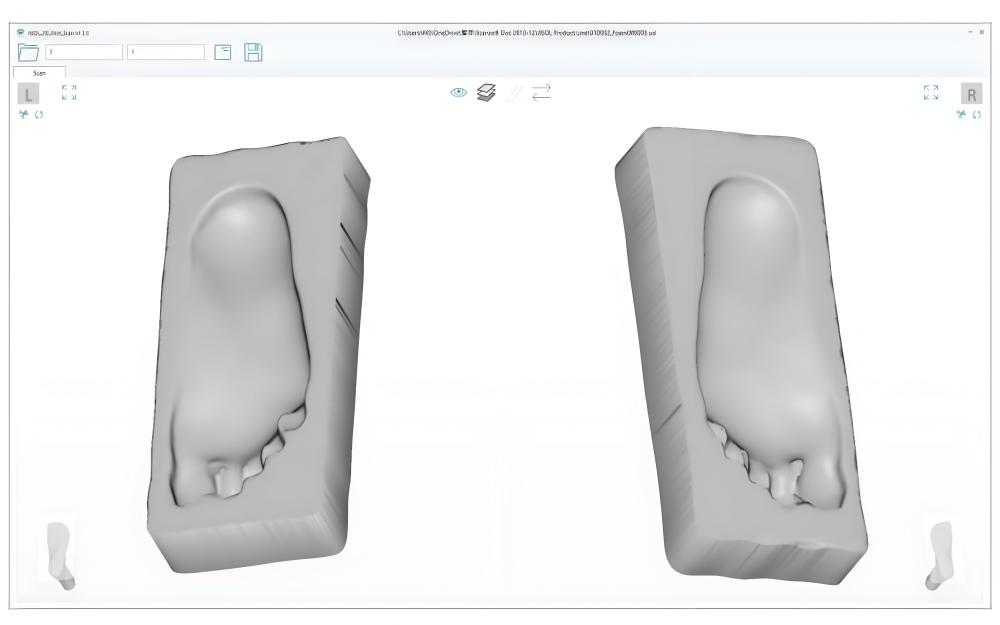
Built for busy podiatry practices, the scanner delivers rapid, accurate and hygienic data capture directly from the patient’s foot or from a foam impression box - eliminating the mess, delays and variability of plaster casting.
Powered by laser technology, this system gives clinicians an accessible, reliable route into digital orthotic manufacturing. Whether used as part of a hybrid workflow or a full end-to-end digital process, the Algeos 3D Laser Foot Scanner offers outstanding precision, seamless integration and repeatable results that support better patient outcomes.
Digital Foot Scanning Made Simple, Accurate and Fast
Modern orthotic practice increasingly depends on reliable digital data. The Algeos 3D Laser Foot Scanner has been developed to meet that need without adding complexity to your clinic. Combining fast scan speeds, high-resolution colour capture and automated clinical metrics, it provides a robust digital foundation for prescribing functional and accommodative foot orthoses.
Unlike mobile apps or basic depth cameras, this system uses laser triangulation - widely regarded as one of the most precise and repeatable 3D scanning techniques available. In under 10 seconds, the scanner captures dense 3D geometry of the plantar surface and, where required, the side walls.
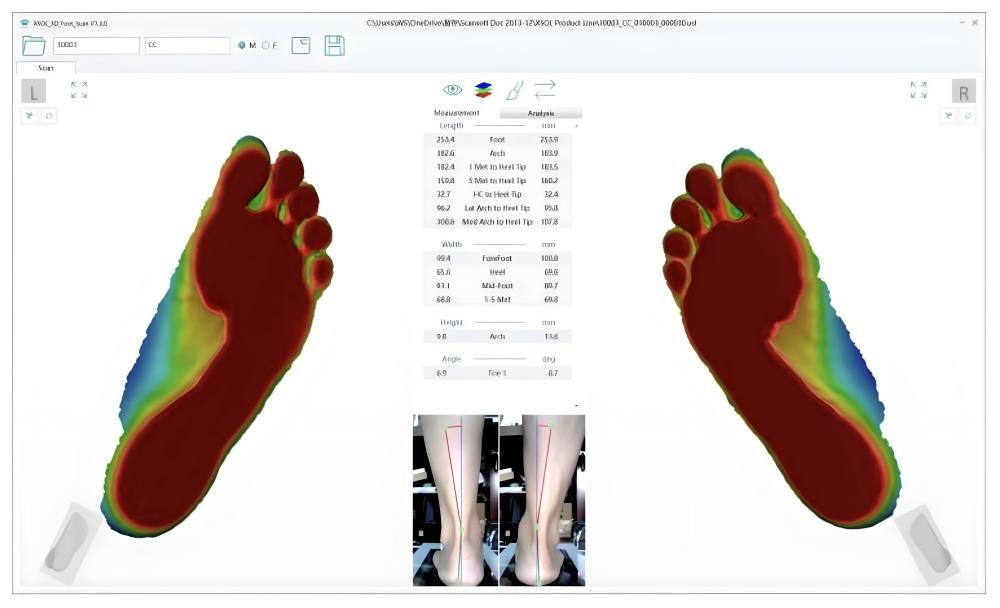
Its advanced colour texture mode allows marker tracking for accurate landmark placement, making it suitable for both clinical assessment and digital fabrication.
1. Dual Scanning Modes for Maximum Clinical Flexibility
The system supports both direct patient foot scanning and foam impression box scanning, making it suitable for:
- Full digital workflows
- Hybrid workflows
- Practices transitioning away from casting
- Labs that want consistency across multiple inputs
2. High Precision, High Speed Laser Triangulation
Scan times are exceptionally fast:
- Approximately 2.0 seconds for a one-way laser scan
- Approximately 2.0-4.9 seconds for colour texture depending on resolution
Laser triangulation ensures sub-millimetre accuracy (±1.0 mm), producing clean, reliable meshes suitable for CAD/CAM, 3D printing or milling workflows.
3. Seamless Digital Integration
The system outputs to a full suite of open 3D file formats, including:
- OBJ, STL, WRL, PLY for orthotic design
- JPG/PNG for visual records
- CSV for measurement data
- PDF for reports
Files can be transmitted directly to fabrication via FTP, or uploaded into the Algeos 3D platform or other CAD/CAM environments.
4. Built-In Foot Analysis Tools
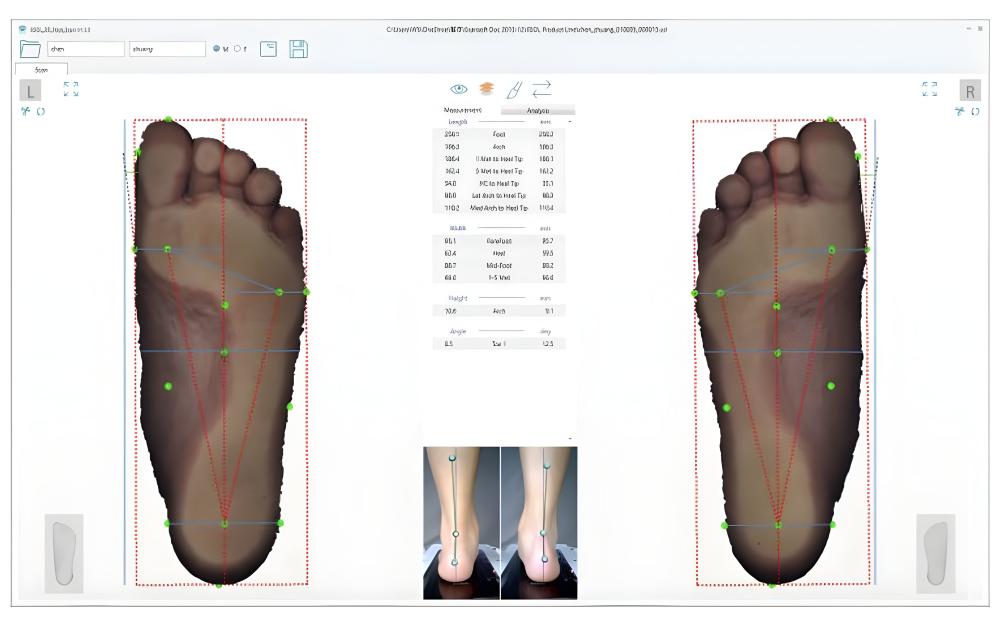
The integrated analysis suite automatically detects and calculates:
- Arch height
- Arch index
- Heel/leg inversion–eversion
- Shoe size estimations (US/UK/EU/CN/JP)
- Medial/lateral arch height
- Area height metrics
- Bunion position
- Key anatomical landmarks
All landmarks can be manually refined by dragging markers - ideal for precise orthotic prescriptions and repeatable measurements over time.
5. Advanced Scan Modes for Different Materials
The software includes dedicated scan modes for:
- Bare Foot
- Foot Shape (with variable exposure for different skin types)
- Foam Impression Box
- Plaster Cast (Internal)
Exposure values can be increased to handle dark foams or decreased to avoid reflection on white plaster casts. This optimises scanning performance and maintains the integrity of the digital model across different materials.
6. Portable, Lightweight, Clinic-Ready Design
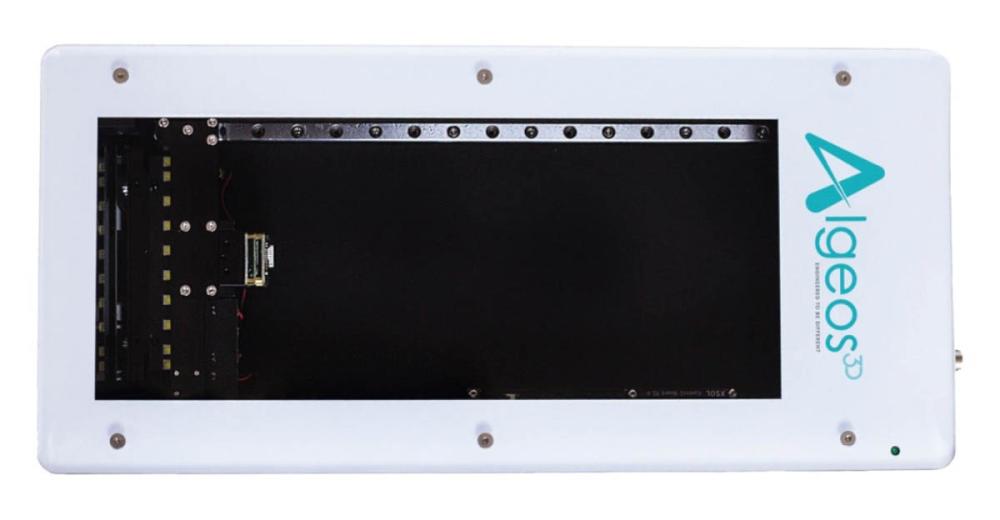
Weighing just 3.2 kg, the scanner is easy to move between rooms or locations. Its footprint - 455L x 212W x 55H mm - fits comfortably on clinic benches, in treatment rooms or within tight lab spaces, without dominating the working area.
7. User-Friendly Controls and Intuitive Interface
The scanner can be activated via:
- On-screen software controls
- Foot switch (for hands-free operation)
The interface offers:
- Multiple viewing angles (dorsal, plantar, medial, lateral and more)
- Colour, solid and iso-depth display modes
- Crop and noise-removal tools
- Side-by-side comparisons
- Custom reports with clinic branding
This combination of hardware and software design keeps the learning curve low and the day-to-day operation straightforward.
8. Robust Performance in Real Clinic Conditions
The scanner includes noise filtering and lighting compensation for:
- Bright clinic environments
- Common LED or fluorescent lighting setups
- Rooms with windows or mixed lighting
It performs best under neutral, non-yellow lighting and includes improved filtering compared to earlier USOL systems, ensuring clean data capture even in challenging ambient conditions.
9. Vendor-Neutral, Open Source Compatibility
Unlike closed scanning ecosystems, this scanner allows:
- Open access to 3D files
- Integration into a wide range of orthotic design systems
- Export into universal formats for long-term use
- Custom API integration through CMD/TCP commands
This ensures long-term freedom and avoids vendor lock-in, giving clinics confidence that their investment remains compatible with future software and workflow changes.
Applications
The Algeos 3D Laser Foot Scanner is designed for a wide range of clinical, orthotic and MSK scenarios, including:
- Custom foot orthoses manufacturing
- Podiatric biomechanical assessment and analysis
- Pre- and post-treatment comparison
- Foam impression and plaster cast digitalisation
- Monitoring foot posture changes over time
- Orthotic design within external CAD software
- Use within multidisciplinary MSK clinics and gait labs
- Digital arch height and heel alignment analysis
Clinics offering diabetic foot care, sports injury rehabilitation or orthotic therapy all benefit from the accuracy and speed of this scanner.
Why Choose the Algeos 3D Laser Scanner?
A. Trusted Technology Backed by Algeos
Algeos has supplied clinical orthotic equipment to UK and global markets for decades. The Algeos 3D Laser Foot Scanner builds on this heritage, giving clinics access to robust digital tools that integrate seamlessly with modern orthotic production.
B. Designed Around Real Clinical Workflows
The scanner was developed to remove friction from clinical routines. Its features reflect real-world needs:
- Fast boot-up and quick readiness
- Simple, intuitive user interface
- Automatic settings for most scan types
- Manual overrides when required
- Portable form factor for easy relocation
- Direct file export into multiple formats
This keeps appointment times lean and predictable, while maintaining high-quality data capture.
C. Smooth Transition from Analogue to Digital
Clinics still reliant on foam impressions or plaster casting can digitise these impressions instantly, without changing their existing practice on day one. Over time, they can transition towards full direct foot scanning as confidence grows and workflows evolve.
D. Reliable and Repeatable
Laser triangulation ensures consistent scans across:
- Multiple staff members
- Multiple clinics or treatment rooms
- Multiple scanning sessions over time
This reduces error margins in orthotic fabrication, supports quality assurance processes and enhances the reliability of long-term patient monitoring.
E. Open and Future-Proof
Because the file formats are universal, clinics:
- Retain ownership and control of their scan data
- Avoid being tied into closed digital ecosystems
- Can integrate the scanner into any future workflow or system
This provides long-term security and flexibility, making the scanner a sound strategic investment as digital orthotic technology continues to evolve.
Full Technical Specifications
Hardware Specifications
- Foot Plantar 3D with colour in non-weightbearing, semi-weightbearing and full-weightbearing positions
- Foam impression and plaster cast scanning support
- Laser 3D Scan: 2.0 seconds (one-way)
- Colour texture capture: 2.0 seconds (normal resolution) / 4.9 seconds (high resolution)
- High-resolution colour quality comparable to 2D office scanners
- Minimum PC requirement: CPU N100, 8 GB RAM
- Integrated GPU acceptable; minimum screen resolution 1080p
- Scan activation via software UI or foot switch
- Improved room-lighting noise filtering
- Heel camera
- Clean 3D mesh with ±1.0 mm accuracy
- Scan Volume: 330L x 140W x 80H mm
- Device Size: 455L x 212W x 55H mm
- Weight: 3.2 kg (7.1 lb)
- Load capacity: 180 kg (397 lb)
- Power: AC 100–240V; DC 12V/3A
- Customisable panel designs and colours for branding
- One-year limited warranty
 |
 |
 |
Software Specifications
- Compatible with Windows 10 and 11 (not compatible with Windows 7/8)
- Auto-analysis functions for arch type, bunion and heel angle
- Auto tracking for blue markers at 1st and 5th metatarsal points
- Auto tracking for three blue markers on the heel
- Manual landmark editing by dragging points on the 3D model
- PDF foot report generation with manual annotations
- User-editable report templates, enabling clinic branding and layout control
- User-defined UI and icon colour themes
- Default language: English, with translation into local languages possible
- Shoe size calculation for US/UK/EU/CN/JP standards
- Export formats: STL, WRL, OBJ, PLY, JPG, PNG, PDF report, CSV data files
- FTP function to send orders to shoe or insole fabrication
- User-defined RX form for orthopaedic shoe or insole prescription
- Developer options: CMD/TCP scanner calls for integration into external CAD software and databases
- Optional encryption to lock scanners and protect files
Clinical Workflow: What This Looks Like in Practice
A typical appointment using the Algeos 3D Laser Foot Scanner might follow these steps:
- Select scan mode
Choose Bare Foot, Foot Shape, Foam Impression or Plaster Cast according to your clinical objective and preferred technique. - Position the foot
Centre the heel and align the foot along the scanner’s axis, ensuring consistent orientation and reproducibility. - Press scan (or use the foot switch)
A one-way laser scan plus optional colour texture is captured in a matter of seconds. - Review the scan
Switch between colour, solid or iso-depth mode, crop noise, and confirm accuracy of the data. - Analyse
Auto landmarks appear. Clinicians can drag markers to refine measurements, adjust reference points and confirm metrics. - Generate report
A clinic-branded PDF report is created instantly, suitable for both internal notes and patient communication. - Export or send
Export files directly to orthotic CAD software or transmit via FTP to a fabrication partner or lab.
This structured workflow keeps appointments short while enabling highly accurate prescriptions and clear communication with patients and fabrication partners.
A Modern Digital Tool for Modern Podiatry Practice
The Algeos 3D Laser Foot Scanner brings high-precision laser scanning to clinics seeking a fast, reliable and future-proof digital solution. With dual-mode scanning, outstanding accuracy, open-source compatibility and powerful clinical analysis tools, it bridges the gap between traditional orthotic methods and next-generation digital manufacturing.
Lightweight, portable and easy to use, it slots neatly into existing clinical pathways and supports everything from day-to-day biomechanical assessments to full custom orthotic production.
For clinics aiming to improve efficiency, reduce mess, enhance accuracy and future-proof their orthotic offering, this scanner delivers exceptional value and performance.
Frequently bought together
Sold: Kit
Incl. VAT Exl. VATSold: Kit
Incl. VAT Exl. VAT
Sold: Sold per Pair
Incl. VAT Exl. VAT
Sold: Sold per Pair
Incl. VAT Exl. VAT
Sold: Sold per Pair
Incl. VAT Exl. VAT
Sold: Sold per Pair
Incl. VAT Exl. VAT
Sold: Sold per Pair
Incl. VAT Exl. VAT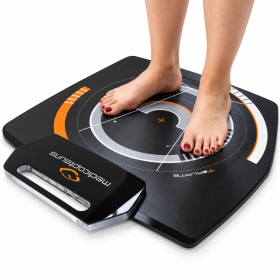
Sold: Each
Incl. VAT Exl. VATSold: Each
Incl. VAT Exl. VAT
Sold: Each
Incl. VAT Exl. VAT
Sold: Sold per Pair
Incl. VAT Exl. VAT
Sold: Sold per Pair
Incl. VAT Exl. VAT
Sold: Pair
Incl. VAT Exl. VAT
Sold: Each
Incl. VAT Exl. VAT
Sold: Each
Incl. VAT Exl. VAT