





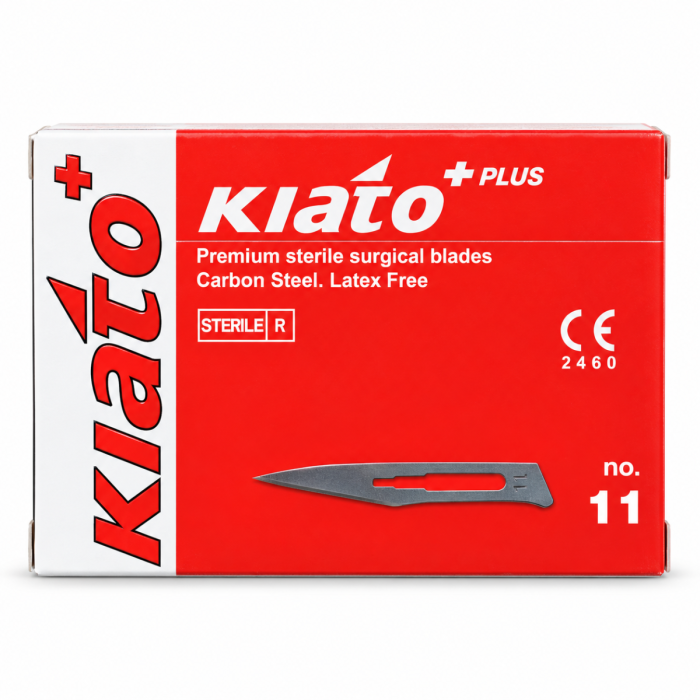
Kiato Plus Red Carbon Steel Blades for Podiatry - 100 Blades
Carbon steel blades manufactured from premium Swedish steel.
Individually packed, sterile.
Sold: Box of 100
Incl. VAT Exl. VAT
Product Description
Sterile Podiatry Blades, Box of 100
Kiato Plus Carbon Steel Blades are sterile, individually packed surgical blades designed for precise, controlled cutting during professional podiatry and chiropody procedures.
Available in three blade sizes – No. 10, No. 11 and No. 15 – the range provides different cutting-edge shapes for common foot care applications, from broader skin paring to detailed clinical work.
Each blade is supplied in an easy-peel sterile foil pack and is intended for single use, helping practitioners maintain consistent hygiene standards during routine treatment.
Best for: Podiatrists, chiropodists and suitably trained healthcare professionals requiring sterile scalpel blades for clinical foot care.
Not suitable for: Untrained home use, repeated use or use with incompatible scalpel handles.
Supplied: 100 individually sterile-packed blades per box.
Key Selling Points
Precision for Clinical Foot Care
Sharp carbon steel cutting edges support controlled skin paring and other procedures within the practitioner's clinical scope.
Three Blade Sizes
Choose No. 10, No. 11 or No. 15 to match the cutting-edge shape to the intended technique and treatment area.
Sterile and Single Use
Individually sealed, easy-peel foil packaging allows practitioners to open a fresh blade when required, with no blade reprocessing needed.
What Are Kiato Plus Carbon Steel Blades?
Kiato Plus blades are detachable surgical scalpel blades used with a compatible Kiato handle. They provide a sharp cutting edge for professional procedures requiring controlled removal or cutting of tissue.
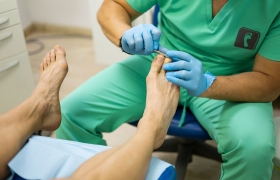
In podiatry, scalpel blades are commonly used for the reduction of callus and other areas of thickened skin when clinically appropriate. Their use requires an understanding of skin anatomy, blade handling and safe cutting techniques.
How they work: The selected blade is securely fitted to the correct scalpel handle. Its cutting-edge shape allows the practitioner to perform the intended procedure using controlled movements and appropriate pressure.
Carbon steel is widely used for surgical blades because it can be formed into a fine, sharp cutting edge. These disposable blades eliminate the need to sharpen or reprocess the blade between patients.
Common Foot Problems They May Help Manage
Calluses and Hard Skin
Thickened skin can develop where the foot experiences repeated pressure or friction. A trained practitioner may use a scalpel blade to reduce excess hardened tissue as part of a foot care treatment.
Corns
Corns are localised areas of thickened skin that may cause discomfort when walking or wearing footwear. Appropriate blade techniques may form part of professional corn management following assessment.
Localised Skin Build-Up
Some areas of hyperkeratosis require careful, targeted skin reduction. Selecting the appropriate blade shape helps the practitioner approach the treatment area with suitable precision.
Clinical note: Scalpel treatment addresses excess skin but does not necessarily resolve the pressure or friction causing it. Footwear advice, padding or orthotic treatment may also be appropriate.
Three Available Blade Sizes
The three blade patterns offer different cutting profiles. Choose the size appropriate for the planned procedure and the practitioner's preferred technique.
No. 10 Blade
Cutting profile: Broad, curved cutting edge.
Typical application: General skin paring and controlled reduction of broader areas of thickened skin.
Handle: Kiato No. 3.
No. 11 Blade
Cutting profile: Narrow triangular blade with a fine, pointed tip.
Typical application: Precision work requiring a pointed blade, where clinically indicated.
Handle: Kiato No. 3.
No. 15 Blade
Cutting profile: Small, curved cutting edge.
Typical application: Detailed skin paring and procedures requiring short, controlled cutting movements.
Handle: Kiato No. 3.
Important when ordering: Blade numbers identify different shapes and cutting profiles, not measurements in millimetres. Select the required blade size from the product options before adding a box of 100 to your basket.
Who Are These Blades Not Suitable For?
- Untrained users: Surgical blades should not be used for DIY corn removal, home callus cutting or routine cosmetic self-care.
- Incompatible handles: Do not attach the blades to handles that are not specified as suitable.
- Repeated use: The blades are designed for a single procedure and must not be reused or re-sterilised.
- Compromised packaging: Do not use a blade if its sterile wrapper is damaged, open or past its stated expiry date.
- Unassessed high-risk feet: Patients with neuropathy, poor circulation, diabetes-related foot complications or suspected infection require appropriate clinical assessment before sharp treatment.
Product Specifications
| Product | Kiato Plus Sterile Surgical Blades |
|---|---|
| Material | Carbon steel |
| Available blade sizes | No. 10, No. 11 and No. 15 |
| Pack quantity | 100 blades per box |
| Sterility | Sterile |
| Packaging | Individually packed in easy-peel, colour-coded foil packaging |
| Usage | Single use only |
| Handle compatibility | Kiato No. 3 handle for the listed blade sizes |
| Handle included | No – available separately |
| Intended users | Suitably trained healthcare professionals |
| Medical device classification | Class IIa |
| Disposal | Approved clinical sharps disposal system |
How to Use Kiato Plus Blades
- Select the blade size. Choose the appropriate blade shape for the planned clinical procedure.
- Check the packaging. Confirm that the individual sterile foil pack is sealed, intact and within its expiry date.
- Prepare the handle. Use a correctly cleaned and sterilised compatible Kiato handle in accordance with local infection prevention procedures.
- Fit the blade safely. Open the peel pack and attach the blade using an appropriate safe handling technique, without touching the cutting edge.
- Perform the procedure. Use controlled movements and clinical techniques appropriate to the treatment and patient assessment.
- Remove and dispose of the blade. Following use, remove it with an approved blade removal method and place it in an appropriate sharps disposal system.
Safe handling: Never attempt to remove an exposed used blade with bare fingers. Follow local sharps safety and infection prevention procedures at all times.
Benefits for Podiatry Practices
Controlled Clinical Cutting
Different blade profiles give practitioners a choice of cutting-edge geometry for different treatment requirements.
Convenient Sterile Presentation
Each blade is individually packed, making it straightforward to prepare a fresh sterile blade when required.
Practical Clinic Stock
Boxes of 100 provide a convenient supply of disposable blades for practices carrying out regular foot care procedures.
Contraindications and Safety Warnings
- Professional use: These are sharp surgical instruments intended for trained practitioners working within their clinical competence.
- Single use: Do not reuse, resharpen, autoclave or attempt to re-sterilise used blades.
- Skin assessment: Do not undertake sharp debridement without assessing the patient's skin, circulation, sensation, relevant medical history and treatment risks.
- High-risk patients: Extra precautions and specialist assessment may be required for people with diabetes, neuropathy, impaired circulation or other factors affecting skin integrity.
- Sharps injury: Always use approved techniques for attaching, removing and disposing of blades.
- Sterile integrity: Do not use blades from damaged or previously opened packaging.
- Handle fitment: Ensure the blade is correctly fitted to the compatible handle before beginning treatment.
- Storage: Keep blades in their original packaging, protected from moisture and unauthorised access.
Clinical suitability and technique should always be determined by the treating professional, in accordance with their training and applicable local procedures.
Frequently Asked Questions
What are Kiato Plus Carbon Steel Blades used for?
They are sterile surgical blades used by trained healthcare professionals for controlled cutting during clinical procedures. In podiatry, appropriate scalpel blades may be used for managing corns, calluses and other areas of thickened skin following clinical assessment.
What three blade sizes are available?
The three blade sizes are No. 10, No. 11 and No. 15. Each has a different cutting-edge profile, allowing practitioners to select the shape appropriate to their intended clinical technique.
What is the difference between No. 10, No. 11 and No. 15 blades?
No. 10 has a broader curved cutting edge, while No. 11 has a narrow, pointed profile. No. 15 has a smaller curved edge and is commonly selected for detailed work requiring shorter cutting movements.
Are Kiato Plus blades supplied sterile?
Yes, the blades are supplied sterile and individually sealed in easy-peel foil packaging. Always inspect the wrapper before use and do not use the blade if the sterile barrier has been compromised.
Which scalpel handle do I need?
The No. 10, No. 11 and No. 15 blade patterns use Kiato No. 3 fitment. Kiato blades should only be used with their specified compatible Kiato handles, which are purchased separately.
How many blades come in a box?
Each box contains 100 individually packed blades of the selected size. This quantity is suitable for maintaining a regular supply of sterile blades in a professional clinical setting.
Can the blades be reused or sterilised again?
No, Kiato Plus blades are designed for single use only and must be discarded after use. Reprocessing or autoclaving disposable carbon steel blades is not an appropriate substitute for opening a new sterile blade.
Can these blades be used to remove corns at home?
No, these surgical blades are intended for use by suitably trained professionals rather than for self-treatment. Attempting to cut corns or calluses at home can cause skin injury, bleeding or infection, particularly where circulation or sensation is impaired.
How should used Kiato Plus blades be disposed of?
Used blades must be treated as clinical sharps and disposed of using an approved sharps disposal system. Practitioners should use a suitable blade removal device or approved removal technique and follow local clinical waste procedures.
Related Products and Helpful Information
- Kiato Stainless Steel Scalpel Handles – compatible reusable handles for Kiato blades.
- BladeFLASK Surgical Blade Remover – point-of-use removal and containment of used blades.
- Podiatry Blades and Accessories – explore alternative surgical blades, scalpels and related clinical supplies.
- Guide to Corns and Calluses – understand common causes, treatment options and pressure management.
Product Summary
Kiato Plus Carbon Steel Blades are sterile, single-use surgical scalpel blades for professional podiatry and chiropody procedures. Available in three blade sizes – No. 10, No. 11 and No. 15 – they provide different cutting-edge profiles for controlled clinical work, including appropriate skin paring and callus management.
Each box contains 100 individually foil-packed blades. The listed sizes fit Kiato No. 3 scalpel handles, sold separately. Designed for trained healthcare professionals, the blades must be disposed of safely after a single use.
Frequently bought together
Sold: Full Kit
Incl. VAT Exl. VAT
Sold: Pack of 10
Incl. VAT Exl. VAT
Sold: Box of 100
Incl. VAT Exl. VATSold: Box of 100
Incl. VAT Exl. VAT
Sold: Pack of 25
Incl. VAT Exl. VAT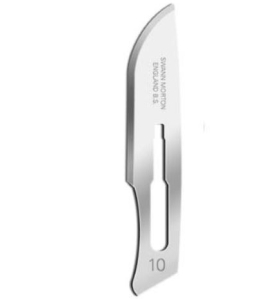
Sold: Pack of 100
Incl. VAT Exl. VAT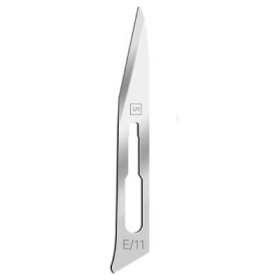
Sold: Box of 100
Incl. VAT Exl. VAT
Sold: Pack of 10
Incl. VAT Exl. VATSold: Pack of 10
Incl. VAT Exl. VAT
Sold: Box of 100
Incl. VAT Exl. VAT