





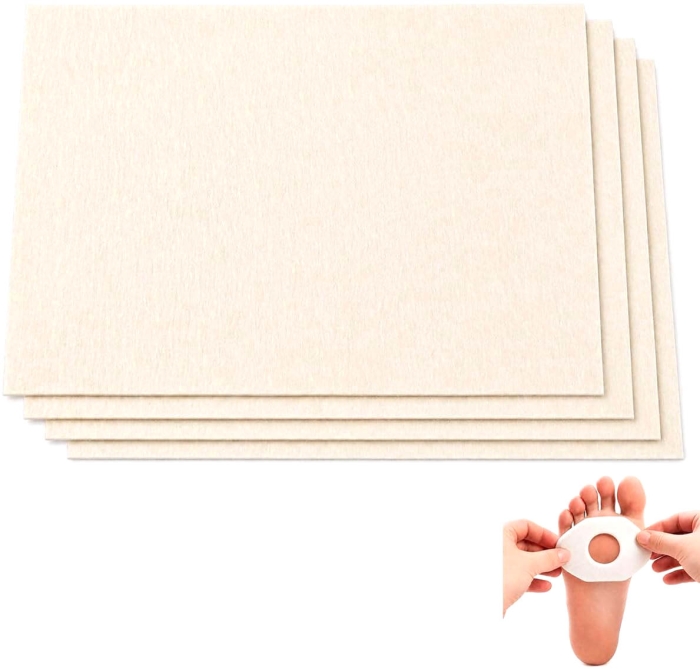
Hapla Soft Wool Felt - Podiatry Offloading - 22.5cm x 45cm
Hapla Soft Wool Felt is a premium footcare material widely used in podiatry for its excellent cushioning properties and versatility.
Hapla Soft Wool Felt is a highly effective footcare material that combines the natural benefits of wool with advanced design to offer exceptional cushioning and protection.
Sold: Pack of 4
Incl. VAT Exl. VAT
Product Description
Gentle Foot Cushioning & Pressure Relief
Soft, adhesive-backed wool felt for customised podiatry padding, pressure redistribution and protection of sensitive feet.
Hapla Soft Wool Felt is a versatile podiatry material designed to cushion vulnerable areas of the foot, reduce localised pressure and help minimise discomfort caused by rubbing and friction. Its soft wool construction makes it particularly useful when gentle padding is needed around sensitive skin, corns, calluses and prominent areas of the foot.
Each sheet can be cut and shaped to create individualised padding, making it suitable for professional footcare treatments and carefully selected everyday comfort applications.
Supplied in packs of 4 sheets, measuring 22.5cm x 45cm each, with 2 thickness options.
Key Selling Points
Soft Cushioning for Sensitive Feet
Comfortable wool fibres provide a gentle protective layer around areas affected by pressure, rubbing or tenderness.
Targeted Pressure Relief
Cut-to-shape padding allows cushioning to be positioned around specific pressure points, helping reduce concentrated loading on sensitive areas.
Hypoallergenic Adhesive Backing
Self-adhesive backing helps secure the prepared felt in position without the need for a separate adhesive product.
Customisable for Individual Needs
Available in two thickness options and easily trimmed into protective pads, cushioning sections and offloading shapes.
Breathable Wool Construction
Natural wool fibres provide soft cushioning while allowing moisture vapour to pass through the material.
Practical Pack for Clinical Use
Four generously sized sheets offer a convenient supply for creating multiple patient-specific padding applications.
What Is Hapla Soft Wool Felt and How Does It Work?
Hapla Soft Wool Felt is an adhesive-backed podiatry padding material used to protect the foot from unwanted pressure and friction. It is commonly cut into a specific shape and applied to create a cushioning layer between the foot and the surrounding footwear or contact surface.
The principle is simple: correctly positioned padding helps spread load over a wider area or redirect pressure away from a particularly sensitive point.
For example, a podiatrist may cut a recess into the felt so that a tender corn or callused area sits within the opening. The surrounding felt supports adjacent tissue, helping reduce direct contact with the painful area.
The wool fibres also provide a compressible layer that can help soften contact with footwear and reduce irritation caused by repeated rubbing.
Effective offloading depends on the shape, thickness, placement and suitability of the felt. Padding that is too thick or incorrectly positioned can increase pressure rather than relieve it.
Common Foot Problems It May Help With
Corns
Carefully shaped felt can be positioned around a corn to reduce direct pressure from shoes or walking. This may help improve comfort while the underlying cause is addressed.
Calluses
Localised cushioning may help reduce repeated loading around thickened skin. It is particularly useful where footwear pressure contributes to discomfort.
Forefoot Pressure
Custom-shaped pads may help cushion selected areas beneath the metatarsal region. Placement should reflect the individual's foot shape and pressure distribution.
Heel Discomfort
Soft felt can provide local cushioning around pressure-sensitive areas of the heel. It does not replace assessment or treatment of conditions such as plantar fasciitis.
Footwear Friction
Protective felt padding can help reduce contact between selected parts of the foot and the inside of footwear, provided the shoe has adequate room.
Prominent Bony Areas
Individually shaped cushioning can help protect pressure-sensitive bony prominences from repeated contact. Careful placement is essential to avoid creating new pressure points.
Important: Persistent pain, repeated corns or calluses, diabetic foot problems and suspected pressure damage require appropriate clinical assessment. Felt padding can form part of a management plan but does not treat the underlying cause on its own.
Applications and Suitability
Hapla Soft Wool Felt is suitable for a range of footcare applications where individually shaped cushioning is required.
- Podiatry and chiropody clinics: Creating customised protective pads and localised offloading arrangements.
- Routine footcare: Cushioning selected areas affected by footwear rubbing or localised pressure.
- Orthotic adjustments: Providing supplementary soft padding where appropriate within a wider orthotic treatment plan.
- Forefoot and heel protection: Preparing tailored shapes to protect sensitive contact areas.
- Clinical pressure management: Supporting professionally supervised offloading strategies where the felt has been assessed as suitable.
- Everyday footwear comfort: Providing additional cushioning where there is sufficient room inside the shoe and no increased rubbing.
Typical users: Podiatrists, chiropodists, foot health practitioners, orthotic technicians and individuals following appropriate footcare guidance.
Who May Not Be Suitable for Hapla Soft Wool Felt?
Although soft felt is widely used for protective foot padding, it is not suitable for every patient or application.
- Do not apply directly over an open wound, ulcer, infected area or damaged skin without appropriate clinical direction.
- People with diabetes, neuropathy, reduced circulation or impaired sensation should seek professional advice before applying foot padding.
- Do not use if there is a known sensitivity or allergy to wool, adhesive or other product components.
- Avoid use where additional material creates excessive tightness inside footwear.
- Do not continue using padding that causes increased pain, rubbing, redness or skin irritation.
- Do not rely on felt alone for significant foot deformity, severe pain or high-risk pressure ulcer management.
Anyone unable to inspect their skin reliably should have the padding fitted and monitored by an appropriate healthcare professional.
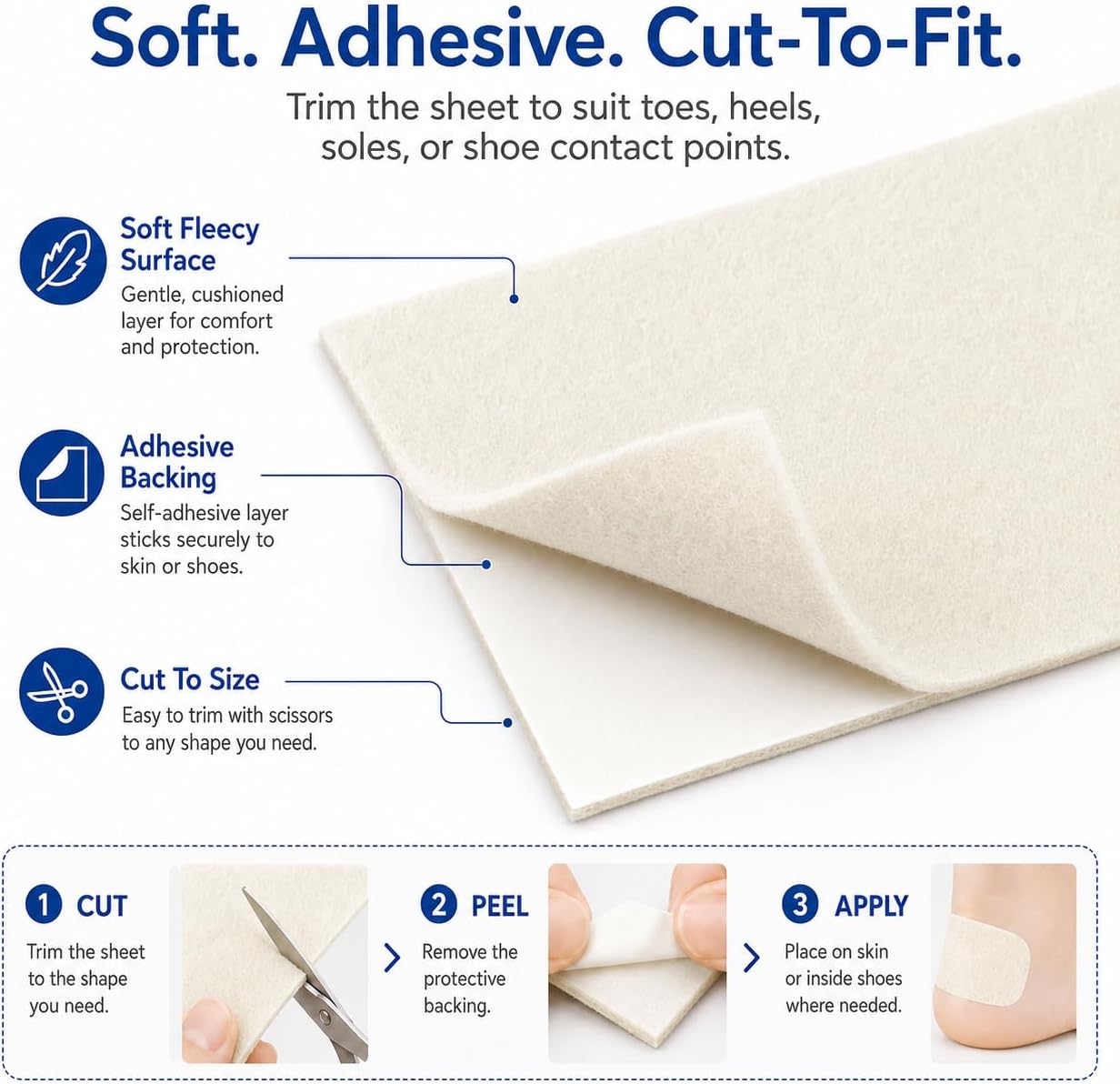
Hapla Soft Wool Felt Sheet
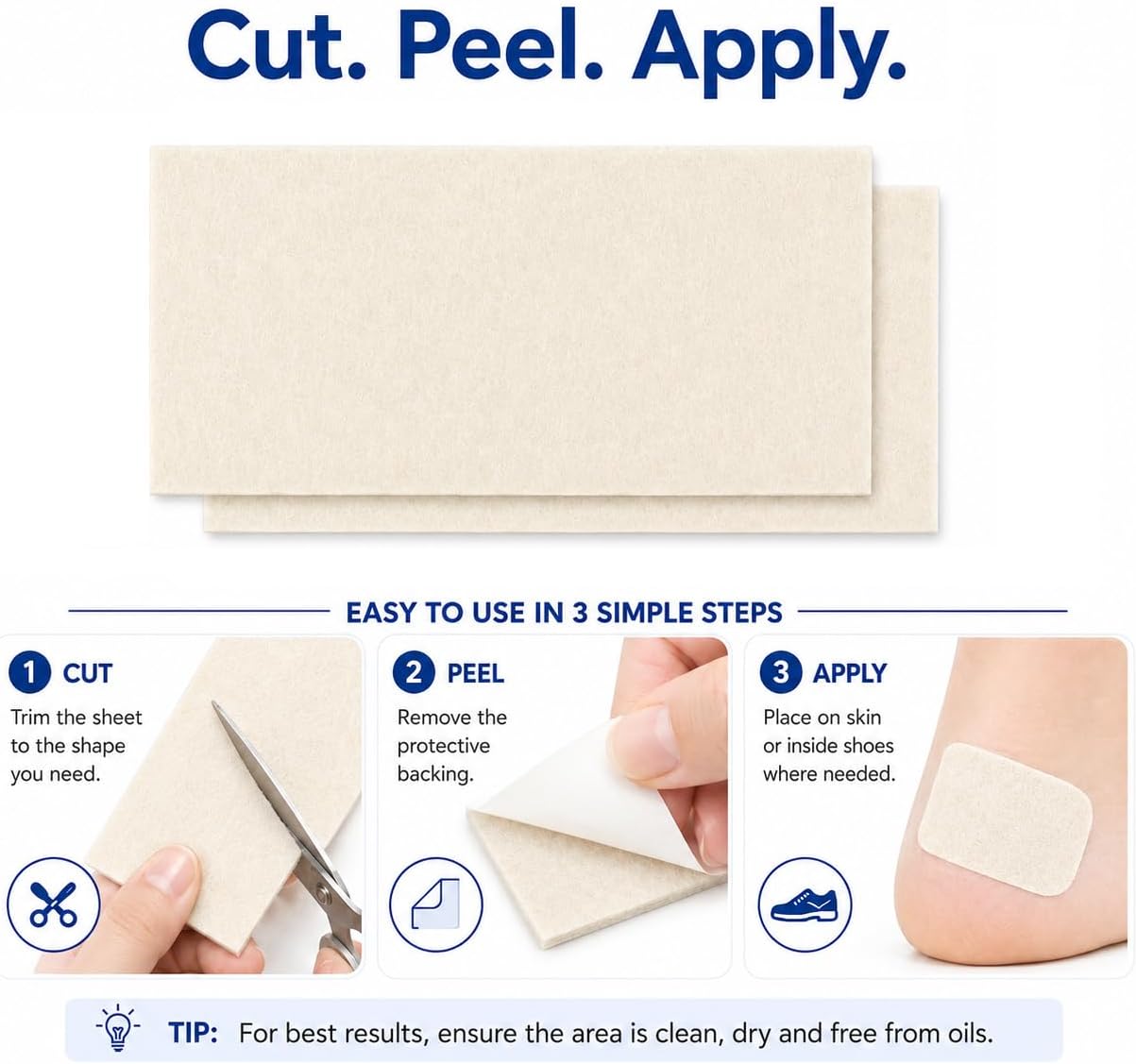
Soft Wool Material
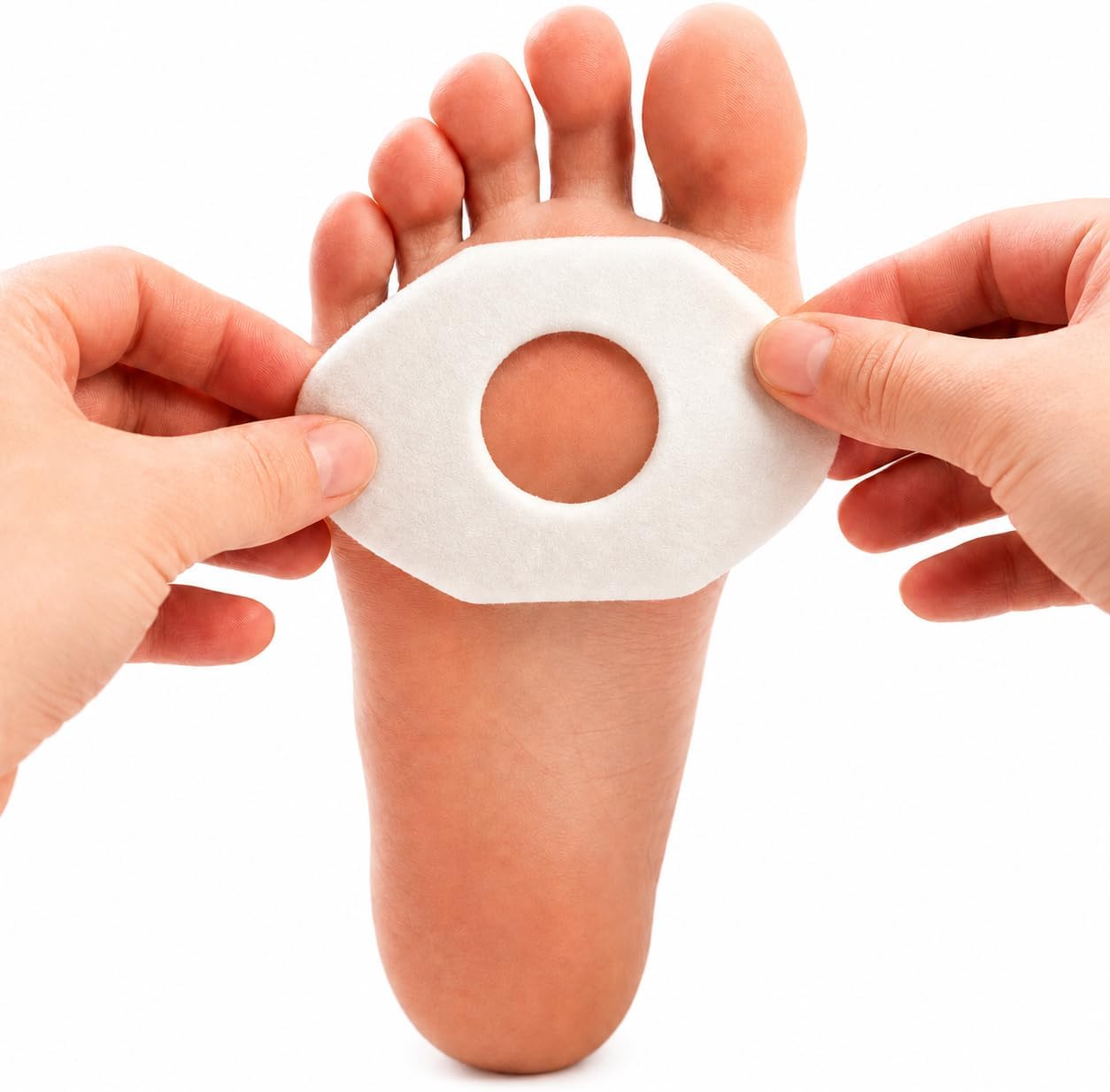
Customisable Podiatry Padding
Magento image editing: Each labelled placeholder can be replaced directly in the CMS editor with a product image. Use descriptive alternative text matching the image shown, such as "Hapla Soft Wool Felt adhesive-backed podiatry sheet". No unverified external image addresses are required.
Product Specifications
| Product | Hapla Soft Wool Felt |
|---|---|
| Material | Soft wool felt |
| Backing | Self-adhesive, hypoallergenic adhesive |
| Sheet Size | 22.5cm x 45cm |
| Thickness Options | 2 options – select the required variant |
| Pack Size | 4 sheets |
| Format | Cut-to-shape adhesive felt sheets |
| Primary Function | Cushioning, protective padding and localised pressure redistribution |
| Typical Applications | Podiatry offloading, corn and callus padding, footwear friction protection and selected orthotic applications |
| Typical Users | Podiatrists, chiropodists, footcare professionals and appropriately advised individuals |
Choosing a thickness: The most appropriate option depends on the required cushioning, available footwear space and intended application. Thicker padding is not necessarily more effective; correct positioning and pressure distribution are more important.
How to Use Hapla Soft Wool Felt
- Assess the pressure area. Identify the location of rubbing, tenderness or concentrated pressure. Seek professional assessment where symptoms are persistent or the skin is vulnerable.
- Choose the appropriate thickness. Consider how much cushioning is required and the space available within the footwear.
- Cut the felt to shape. Use suitable scissors to prepare a smooth, appropriately sized pad. A recess may be required when cushioning around a corn or callus.
- Prepare the application area. Ensure the intended surface is clean and dry, with intact skin if direct skin application is planned.
- Position the padding. Remove the adhesive backing and apply carefully, avoiding wrinkles, folded edges and unwanted pressure over tender areas.
- Check footwear fit. Confirm that the felt does not make the shoe too tight or create additional rubbing.
- Monitor and replace. Check the skin and padding regularly. Replace when compressed, displaced, soiled or no longer adhering effectively.
For complex offloading, diabetes-related foot concerns, post-operative care or ulcer management, application should be planned and monitored by a qualified clinician.
Benefits of Soft Wool Podiatry Padding
More Comfortable Contact
The soft wool surface cushions sensitive areas against direct contact with shoes and surrounding surfaces.
Individualised Offloading
Cut-to-shape felt enables pads to be designed around a specific pressure point rather than relying on a fixed shape.
Simple Clinical Application
Adhesive-backed sheets can be trimmed and positioned without an additional bonding product.
Flexible Treatment Options
Two thickness choices allow the practitioner to select padding according to the clinical application and available space.
Contraindications and Important Warnings
- Open wounds and ulcers: Do not apply directly to broken skin unless specifically directed by the treating clinician.
- Diabetes and neuropathy: Reduced sensation can make harmful pressure difficult to detect. Professional fitting and monitoring are recommended.
- Allergic reactions: Discontinue use if itching, rash, redness or other signs of sensitivity develop.
- Footwear restrictions: Excessive padding thickness may increase local pressure in tight shoes.
- Skin monitoring: Remove and reassess padding if discomfort, blisters, persistent red marks or skin changes occur.
- Clinical limitations: Felt padding does not replace wound dressings, medical offloading devices or treatment of an underlying foot condition.
Seek prompt clinical advice for wounds, spreading redness, signs of infection or new foot problems in individuals with diabetes or impaired circulation.
Frequently Asked Questions
What is Hapla Soft Wool Felt used for?
Hapla Soft Wool Felt is used to create cushioning and protective padding for selected areas of the foot. It is particularly useful for reducing localised pressure and friction associated with corns, calluses, footwear rubbing and sensitive pressure points.
How does wool felt help relieve foot pressure?
Wool felt provides a compressible cushioning layer between the foot and a contact surface. When correctly shaped and positioned, it can help distribute loading across surrounding tissue and reduce direct pressure on a targeted area.
Is Hapla Soft Wool Felt self-adhesive?
Yes, the felt has a hypoallergenic adhesive backing designed to hold prepared padding in place. Hypoallergenic does not mean allergy-free, so anyone with a known adhesive sensitivity should check suitability before use.
Can Hapla Soft Wool Felt be used for corns and calluses?
Yes, correctly shaped felt padding may help reduce pressure around a corn or callus and improve day-to-day comfort. Recurrent lesions may indicate an underlying footwear or biomechanical problem, so podiatry assessment is advisable.
Can I cut the felt to fit a specific area?
Yes, the sheets are designed to be cut and shaped for individual requirements. Smooth edges and accurate placement are important because poorly shaped padding may create additional pressure or discomfort.
Can people with diabetes use soft wool felt?
Felt padding may form part of a professionally supervised diabetic footcare plan, but it should not be applied independently to a high-risk foot. People with diabetes, reduced sensation or poor circulation should obtain clinical advice to avoid unnoticed pressure damage.
Can the felt be worn inside everyday shoes?
Soft wool felt may be suitable for everyday footwear when used as correctly fitted protective padding. The shoe must have enough space to accommodate it without squeezing the foot or introducing new friction.
How do I choose the correct felt thickness?
Thickness should be selected according to the area being protected, the cushioning required and available footwear space. The product has two thickness options, and a podiatrist can advise which is more suitable for a specific offloading application.
How often should wool felt padding be replaced?
Replacement depends on wear, compression, adhesion and the condition of the application area rather than a fixed number of days. Check the felt regularly and replace it if it becomes displaced, soiled, excessively compressed or uncomfortable.
Does Hapla Soft Wool Felt treat plantar fasciitis or heel pain?
The felt can provide local cushioning where heel pressure contributes to discomfort, but it is not a specific treatment for plantar fasciitis. Persistent heel pain requires assessment to identify its cause and determine whether insoles, exercises or another intervention are appropriate.
Related Links
Explore additional padding materials and options for protecting sensitive feet.
Product Summary
Hapla Soft Wool Felt is a soft, self-adhesive podiatry padding material used for foot cushioning, pressure redistribution and friction protection.
It can be cut into individual shapes to provide targeted protection around corns, calluses, sensitive skin and selected pressure points. Its wool construction offers comfortable cushioning, while the hypoallergenic adhesive backing helps secure the prepared padding.
Available in two thickness options and supplied as four sheets measuring 22.5cm x 45cm each, it is particularly suitable for podiatry clinics, footcare professionals and appropriate everyday protective padding applications. High-risk foot conditions and complex offloading requirements should be managed with professional clinical guidance.
Related Downloads
Frequently bought together
Sold: Pack of 4
Incl. VAT Exl. VAT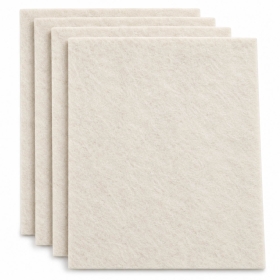
Sold: Single Roll
Incl. VAT Exl. VAT
Sold: Pack of 12
Incl. VAT Exl. VAT
Sold: Pack of 4
Incl. VAT Exl. VAT
Sold: Various
Incl. VAT Exl. VATSold: Various
Incl. VAT Exl. VAT
Sold: Pack of 12 Tubes
Incl. VAT Exl. VAT
Sold: 4 Sheets
Incl. VAT Exl. VAT
Sold: 4 Sheets
Incl. VAT Exl. VAT
Sold: Roll or Sheets
Incl. VAT Exl. VAT
Sold: Pack of 4
Incl. VAT Exl. VATSold: Pack of 4
Incl. VAT Exl. VAT
Sold: Pack of 4
Incl. VAT Exl. VAT

Sold: Pack of 4
Incl. VAT Exl. VAT