



Audience: parents, teachers, OTs & physios • Reading time: 10–12 minutes
What Is a Sensory Cushion?
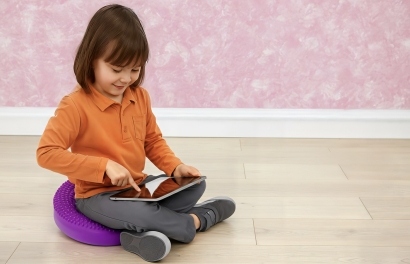
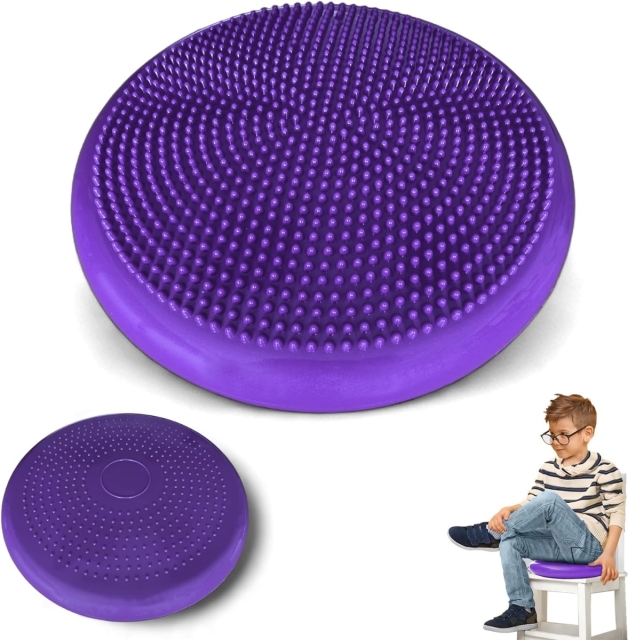
Sensory cushions (also known as wobble cushions, balance discs, or stability cushions) are seat pads. They offer gentle movement and sometimes provide tactile feedback. When a child sits on one, small weight shifts help activate the core. This encourages good posture and gives the nervous system steady input. Many children can focus better, feel calmer, and sit more comfortably at home, in class and during therapy.
A Short History: From Clinic to Classroom
These tools started in physiotherapy and occupational therapy. They were simple ways to help with posture and balance. As awareness of sensory processing differences grew, therapists started recommending inflatable discs and wedges for everyday settings. Schools then noticed an unexpected win: when cushions were introduced thoughtfully, some children were less restless, tasks were completed with fewer prompts and the overall classroom feel became calmer. Today, sensory cushions are common in UK SEN settings and increasingly seen in mainstream classrooms, homes and clinics.
Why They Work: The Science in Simple Terms
Active sitting nudges the body to make small corrections - engaging trunk and pelvic stabilisers while delivering proprioceptive input (the sense of body position). For children who crave movement or extra sensory input, this can be regulating rather than distracting. In practice, the cushion acts as a middle ground: children can move a little without leaving the chair and the movement is organised rather than disruptive. Therapists value this because improved postural endurance and better sensory regulation often translate to steadier handwriting, more attentive listening, and less fidgeting.
Step-by-Step: How to Choose the Right Cushion
- Clarify the goal: Focus & attention → inflatable wobble disc. calming & grounding → textured or weighted. posture & therapy → wedge or stable foam pad.
- Match age and chair size: 25–30cm for 3 - 6 years; 32 - 35cm for 7 - 12; 35-40cm for teens/adults.
- Texture preference: Smooth for comfort and sensory-sensitive children - light texture for sensory seekers.
- Firmness: Inflate softer for calming, firmer for active balance and core engagement. Foam gives consistent support without pumping.
- Environment: Classrooms need wipe-clean durability - home use prioritises comfort - clinics benefit from professional-grade materials.
- Weight capacity & durability: Check the manufacturer’s guidance - daily classroom use needs robust seams and valves.
- Portability: Deflatable discs are easy to transport between home and school - foam is quieter and puncture-proof.
- Budget & warranty: Expect a range from entry to premium - a warranty is useful for intensive school use.
Advanced Buyer’s Checklist (for Parents, Teachers & Clinicians)
- Material: PVC and rubber are easy-clean - consider low-odour or phthalate-free options for sensitive users.
- Valve type: Needle valves suit ball pumps - integrated valves are simpler for quick top-ups.
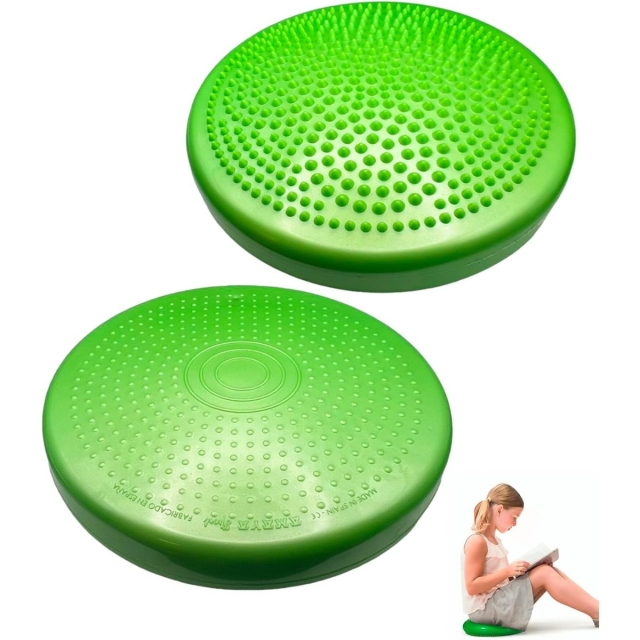
- Surface design: Dual-texture (smooth on one side, bumps on the other) gives flexibility for different pupils.
- Non-slip base: Look for a subtle grip so the cushion stays centred on the chair.
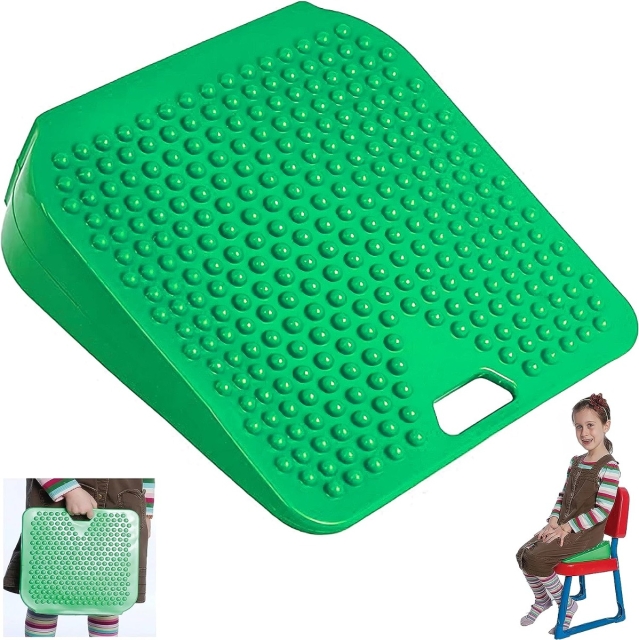
- Shape: Round discs are versatile - wedges create a gentle anterior tilt to counter slouching; flat pads are ideal for therapy drills.
- Noise profile: Foam and cloth covers reduce squeaks on hard chairs.
- Hygiene plan: In classrooms, assign cushions to individuals or sanitise between users.
- Storage: Keep out of direct heat and sharp edges; store inflated cushions lightly pressurised.
Comparison Table: Sensory Cushion Types
| Type | Best For | Pros | Cons | Typical Age |
|---|---|---|---|---|
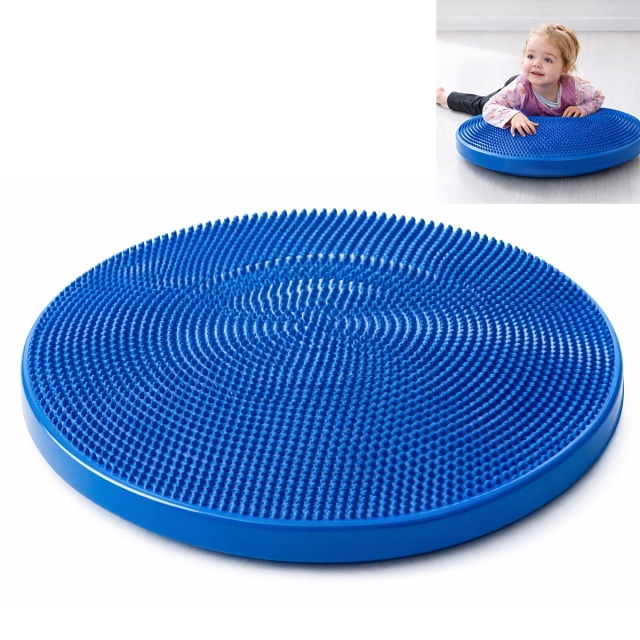
| Inflatable wobble disc | Focus & adaptable use (home/class) | Adjustable firmness; portable; affordable | Can puncture; occasional squeak on hard seats | 4+ years |
| Textured disc | Sensory-seeking children | Tactile feedback boosts alertness | May be too stimulating for tactile-sensitive users | 5+ years |
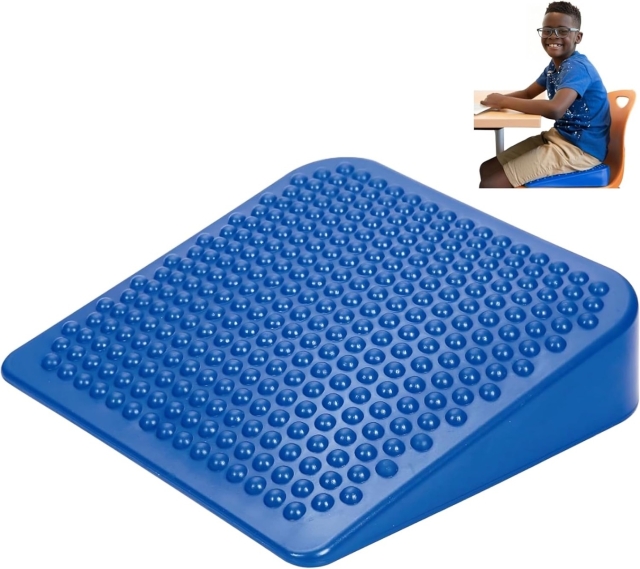
| Wedge cushion | Slouching or low postural tone | Encourages upright sitting; stable base | Less sensory input; not inflatable | 5+ years |
| Foam stability pad | Therapy & balance training | Quiet; durable; puncture-proof | Less adjustable; bulkier to transport | 6+ years |
| Weighted seat pad | Calming & grounding | Deep pressure can reduce restlessness | Heavier; not ideal for every chair | 5+ years |
| Hybrid (wedge + texture) | Mixed needs & older pupils | Posture plus sensory input in one | Usually pricier; availability varies | 7+ years |
Unsure where to begin? Start with an inflatable wobble disc. You can tune firmness for either calming or more active sitting, then switch to wedge or foam if posture remains the priority.
Where and How to Use Sensory Cushions
- Classroom: Place on a standard chair; agree on expectations (e.g. feet flat, hips back, eyes on task). Many teachers rotate cushions between pupils or assign them as reasonable adjustments.
- Home: Use during homework, reading, or mealtimes. Pair with routine cues “cushion on = focus on”.
- Therapy: Incorporate into balance tasks, postural endurance work, or handwriting warm-ups as advised by your OT/physio.
- On the go: Deflate for travel. For cars, prioritise safety; only use when it doesn’t affect restraint systems or posture in the seat.
Case Examples (Illustrative)
Year 3 classroom: A teacher introduces four inflatable discs, assigning them to pupils who struggle to remain seated. After a short settling period and with clear expectations, time on task improves and transitions are calmer. The class continues to use the discs during literacy and maths blocks.
Home study corner: A child who fidgets while reading can start with five minutes on a soft disc. Gradually, they can increase this time to fifteen minutes over two weeks. Parents report fewer prompts and smoother bedtime reading.
Therapy clinic: A physio uses a foam stability pad for seated reach activities and a wedge for writing posture. Over six sessions, trunk endurance and pencil control improve alongside tolerance for seated tasks.
Sensory Cushions vs Other Tools: What’s the Difference?
- Weighted lap pads: Great for calming and stillness; pair with a standard chair if movement is not the goal.
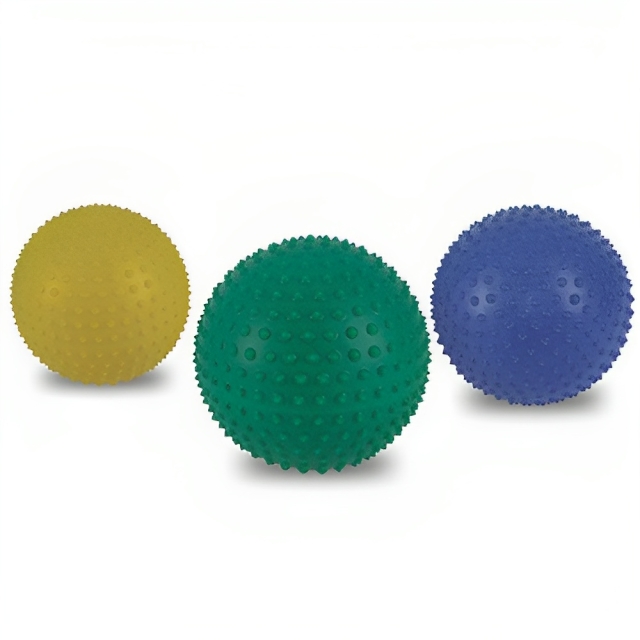
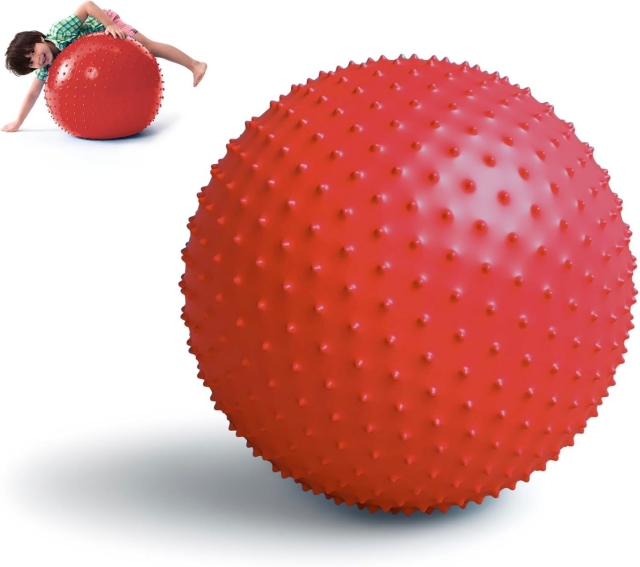
- Therapy balls (sitting balls): Offer more movement but require space and supervision; better for short tasks than long lessons.
- Chair bands: Foot fidgeting outlet; good adjunct to a cushion for children who kick or swing legs.
- Dynamic stools: Provide multi-directional movement but can be costly; cushions are usually the easier first step.
Choose the tool that matches the primary need. If posture and handwriting are top priorities, a wedge may beat a very bouncy disc. If sensory-seeking is the issue, light texture or a weighted pad could be the win.
Implementation Tips (So They’re Actually Used)
- Introduce gradually: start with 10–15 minutes, then increase.
- Teach expectations: “hips back, feet down, eyes on the task”.
- Pair with routines: reading time, writing time, homework time.
- Monitor and adjust: tweak inflation; switch sides if dual-texture; trial a wedge if posture remains tricky.
- Record observations: teachers and parents note changes in focus, fidgeting, and comfort to guide next steps.
Care, Cleaning, and Safety
- Wipe surfaces with mild soap and water; avoid harsh solvents that degrade seams.
- Inspect regularly for tears, valve leaks, or surface peeling—replace if damaged.
- Store away from sharp objects and direct heat; don’t leave on radiators or sunny car dashboards.
- Follow age and weight guidance, especially for shared classroom use.
- If a child reports dizziness or discomfort, pause use and seek professional guidance.
FAQs
- How long should a child sit on a sensory cushion?
- Begin with 10–15 minutes and increase as tolerated. Some pupils prefer short bursts across the day; others manage a full lesson. Individualise the plan.
- Do sensory cushions help handwriting?
- They can support posture and proximal stability, which may indirectly help fine motor control. Pair with task-specific strategies for best results.
- Are they allowed during exams?
- Many UK schools and exam boards consider sensory aids as reasonable adjustments. Confirm locally and document the adjustment in advance.
- What if my child finds texture irritating?
- Flip to the smooth side (if dual-texture) or choose a smooth disc/wedge. Tactile-sensitive children often prefer minimal texture.
- Will they damage chairs?
- Quality cushions are gentle on chairs. Non-slip dots help prevent sliding; a thin cloth layer can reduce friction squeaks on plastic seats.
- How long do they last?
- With regular use, 1–3 years is typical. Classrooms may see faster wear due to higher usage; warranties are helpful.
- Do they make kids more fidgety?
- Usually the opposite: the small, controlled movements channel energy productively. If movement becomes excessive, reduce inflation or switch to a wedge.
References & Further Reading
For parents and educators seeking deeper dives, explore occupational therapy resources on sensory processing, NHS guidance on posture and classroom seating, and peer-reviewed literature on active sitting and attention in school-age children.
Sold: Each
Incl. VAT Exl. VAT