



Article revised: 07/01/2026
Cracked heels (heel fissures) are common and often fixable, but they deserve respect - particularly if you are living with diabetes or reduced sensation. This clinical guide explains why heels crack, what matters clinically and how to build a simple routine that actually works.
Definition
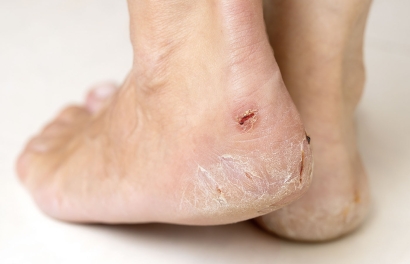
Cracked heels, also known as heel fissures, occur when dry, thickened skin around the heel splits under pressure. Fissures may be superficial or deep and painful. Deeper cracks can increase risk of infection, especially in people with diabetes, neuropathy or poor circulation. Clinical note A fissure is not just 'dry skin' - it is a structural break in the skin barrier.
How cracked heels happen and why it matters
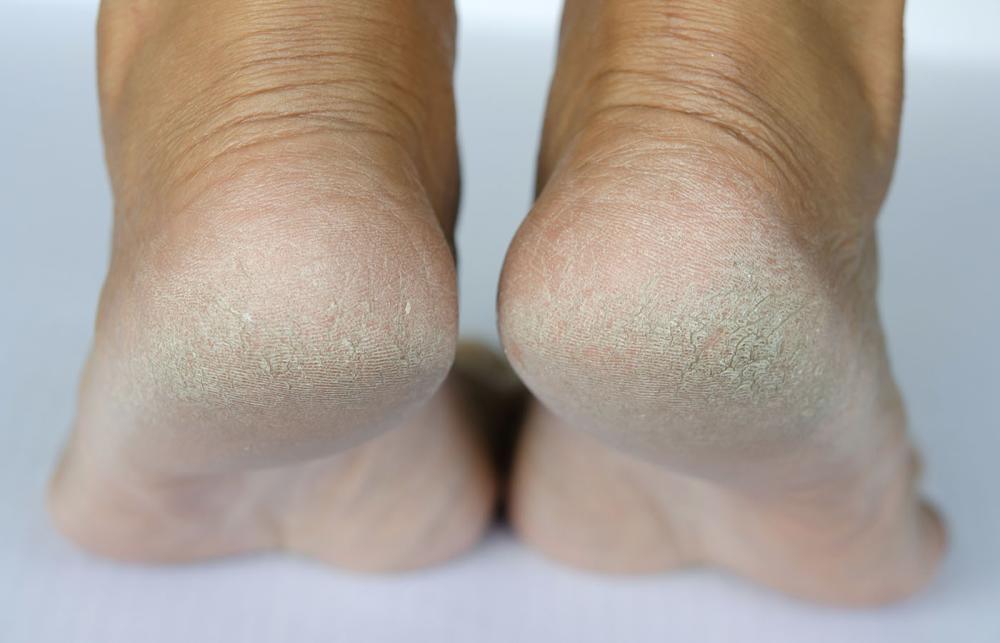
The heel’s skin is naturally different from much of the body. It is thicker, built for load-bearing and it has fewer oil glands. When hydration drops, the outer layer (stratum corneum) becomes less flexible. Add the daily shear forces of walking, prolonged standing or open-back footwear and the hardened rim around the heel can split.
Common contributors
- Dry environments - cold weather, low humidity and indoor heating.
- Mechanical stress - long shifts on hard floors, increased body weight, running and backless shoes.
- Skin changes - callus build-up, eczema or psoriasis.
- Health factors - diabetes, neuropathy, reduced circulation and ageing skin.
What users say (and what clinicians notice)
In clinic and at home, people tend to stick with routines that feel simple, fast and comfortable. The most common feedback is that a product must absorb well, not feel greasy and fit into real life. Clinicians often notice that adherence improves when:
- application is once daily or clearly scheduled
- the product softens thick skin as well as moisturising
- patients pair cream with practical habits like socks at night and supportive footwear
Some products also highlight professional endorsements. For example, Flexitol Intensely Nourishing Foot Cream is described as suitable for diabetics and approved by the College of Podiatry on the Algeos product page. Flexitol Intensely Nourishing Foot Cream (Algeos)
Step-by-step guide: a practical heel fissure routine
Step 1 - Check and classify
- Mild: dry skin and superficial lines.
- Moderate: visible cracks and callus rim, discomfort.
- Severe: deep fissures, bleeding, pain, signs of infection or high-risk health status.
If severe, or if you have diabetes, neuropathy or poor circulation, involve a podiatrist earlier rather than later.
Step 2 - Clean gently
Wash with lukewarm water and a mild cleanser, then dry carefully. Avoid soaking for long periods as it can worsen dryness. NHS patient information commonly advises moisturising daily and avoiding cream between the toes. Torbay and South Devon NHS - Skin Care for Feet (PDF)
Step 3 - Exfoliate safely (1 to 3 times weekly)
Use a pumice stone or gentle foot file on thickened skin after bathing, then stop. The goal is to reduce build-up gradually, not create raw skin. Never cut callus at home.
Step 4 - Apply an appropriate foot cream daily
Choose a product that matches the level of dryness and thickness. Urea is particularly useful because it attracts water into the skin and helps soften hard, thickened areas. Evidence and clinical reviews of urea creams in diabetic foot skin commonly report improved hydration with higher concentrations such as 25% compared with lower urea products. Anhydrosis in the diabetic foot: comparison of two urea creams (Diabetes on the Net PDF)
Step 5 - Lock it in
At night, apply cream then wear clean cotton socks to reduce evaporation and improve comfort. If slipping is a concern, apply earlier in the evening and allow time to absorb.
Step 6 - Reduce the triggers
- Choose closed-heel shoes or supportive sandals with heel containment.
- Use cushioning insoles if standing for long periods.
- Address biomechanical overload, for example with orthoses where appropriate.
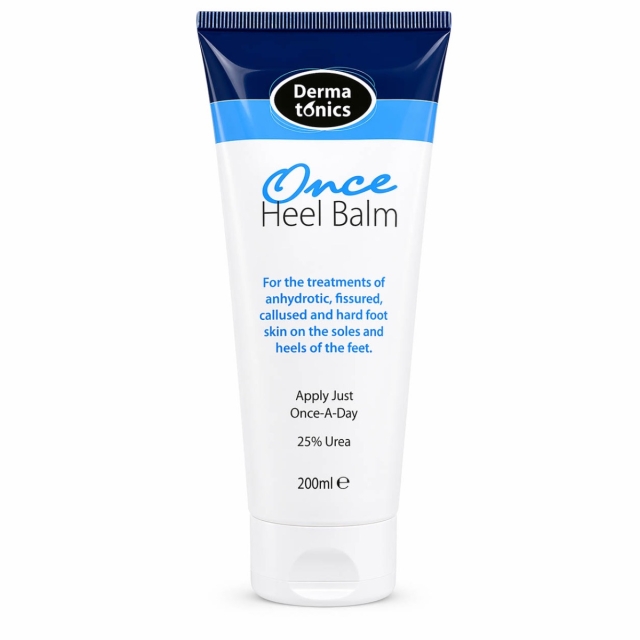
Spotlight: Dermatonics Once Heel Balm (25% urea)
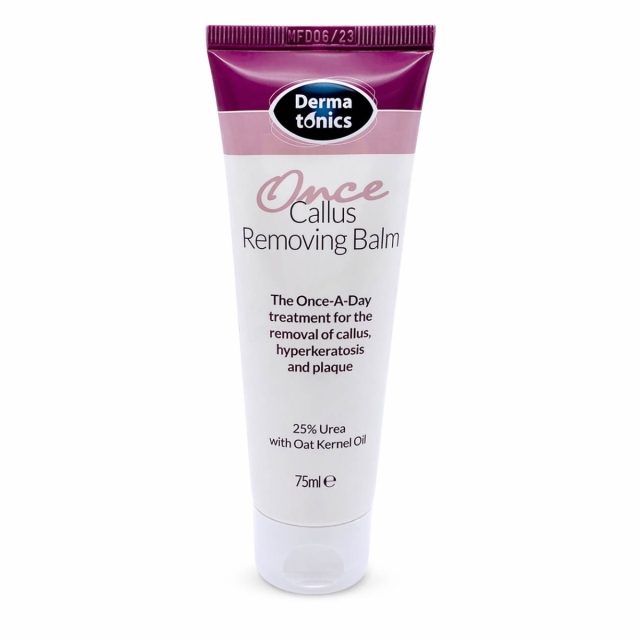
Dermatonics Once Heel Balm is designed as a once-daily option for rough, dry and callused heels. The formula includes 25% urea which combines strong moisturising action with gentle keratolytic softening, supporting both hydration and callus management. Dermatonics Once Heel Balm (Algeos)
Clinical evidence (as published)
- A study of 25 volunteers with rough, dry heels assessed once-daily application of a 25% urea heel balm and reported improved moisturising outcomes. Wounds UK - Moisturising properties of a heel balm (PDF)
- A clinical review in a neuropathy population reported improvements in skin scale after two weeks of once-daily Dermatonics Once Heel Balm use, with over 91% showing significant improvement. Diabetes on the Net - clinical review of Dermatonics Once Heel Balm (PDF)
Practical takeaway: for many patients, “once daily” is easier to maintain than multi-step regimens, which can improve consistency and outcomes.
Top 5 foot cream picks from Algeos (clinically useful options)
Below are five popular foot cream options available from Algeos, chosen to cover common real-world needs: intense heel repair, dry skin maintenance, callus-prone feet and lightweight daily use.
| Product | Best for | Notable features | Texture | Typical use |
|---|---|---|---|---|
| Dermatonics Once Heel Balm | Cracked heels and callus rim | 25% urea, designed for once-daily routine, commonly used in clinical settings | Balm | Once daily |
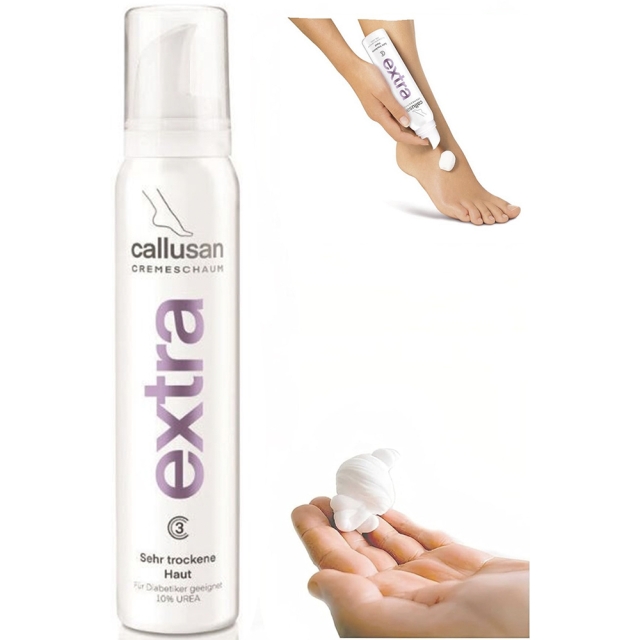
| Callusan EXTRA Foot Cream | Very dry feet including diabetic skin care support | Fast-absorbing mousse format, aimed at dry cracked feet | Mousse | Daily, as needed |
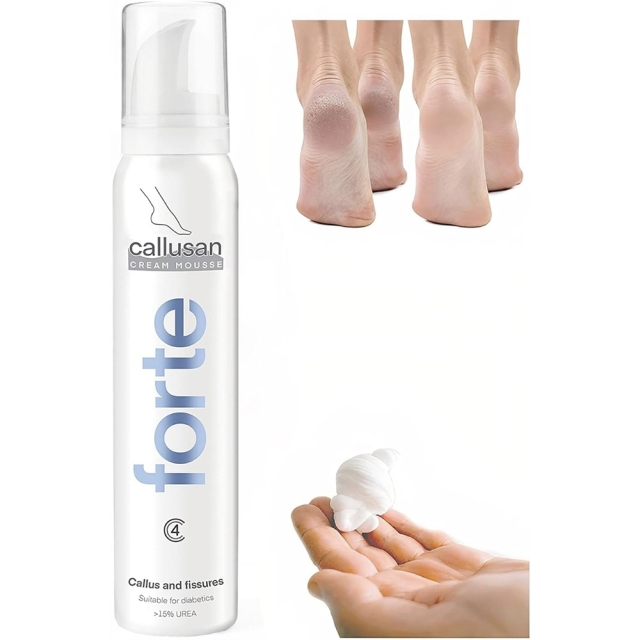
| Callusan FORTE Foot Cream Mousse | Callus-prone feet | High urea content positioning for calluses, lightweight application | Mousse | Daily, focus on thick areas |
| Flexitol Intensely Nourishing Foot Cream | Dry rough feet maintenance | Designed to penetrate thicker skin, positioned for regular use and suitable for diabetics on the product page | Cream | 2 to 3 times daily if needed |
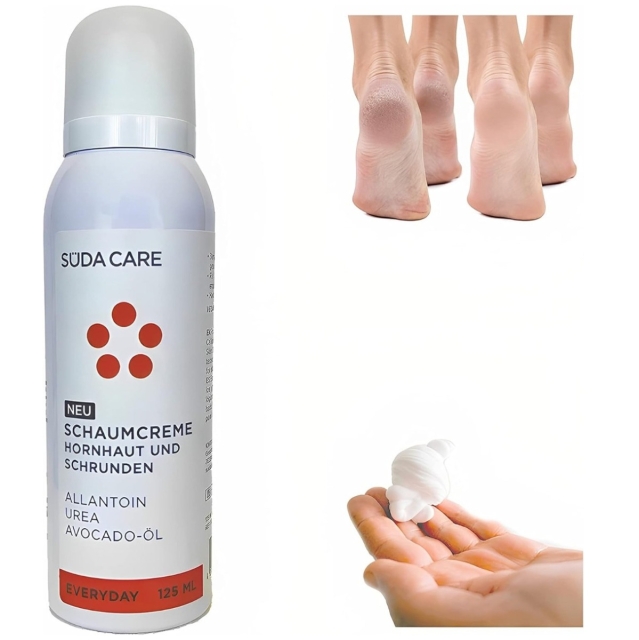
| SUDA CARE Everyday Foot Cream Foam (Dry and Chapped Skin) | Dry chapped skin needing a lighter feel | Foam format can suit patients who dislike heavy creams | Foam | Daily, after washing |
Tip for clinics: mousse or foam formats can be helpful for adherence when patients dislike residue, while higher urea balms suit thick heel rims and fissures.
Browse the full Algeos foot cream range: Cream for Feet (Algeos)

FAQ
Are cracked heels serious?
They can be. Superficial cracks are often manageable at home, but deeper fissures can become painful and can allow infection. If you have diabetes, neuropathy or circulation problems, treat any fissure as clinically important and seek advice.
What ingredient is most evidence-informed for heel fissures?
Urea is a strong all-round choice because it hydrates and softens thickened skin. Clinical literature in diabetic foot skin often reports stronger hydration improvements with higher urea concentrations such as 25% compared with lower strengths. Diabetes on the Net PDF
How long does it take to see improvement?
Many people notice smoother skin within 1 to 2 weeks with daily use, but deeper fissures may take longer. Consistency beats intensity. Build a routine you can keep doing.
Should I put cream between my toes?
Usually no. The toe-web spaces are naturally moist and adding cream may increase maceration risk. NHS leaflets commonly advise avoiding application between toes. NHS Skin Care for Feet (PDF)
Can I exfoliate every day?
Not usually. Over-filing can irritate skin and worsen cracking. Aim for gentle exfoliation 1 to 3 times weekly, then rely on moisturising daily.
When should I refer to podiatry?
Refer or advise review when fissures are deep, recurrent, painful, bleeding or associated with diabetes, neuropathy, peripheral arterial disease, deformity or suspected infection. NICE NG19 provides guidance on prevention and management of diabetic foot problems. NICE NG19
References and research sources
- Wounds UK. The moisturising properties of a heel balm in patients with rough dry skin (PDF). https://wounds-uk.com/wp-content/uploads/2023/02/content_10455.pdf
- Diabetes on the Net. A clinical review of Dermatonics Once Heel Balm (PDF). https://diabetesonthenet.com/wp-content/uploads/pdf/dotnc92b099e511705f109f5e6b10485e0d2.pdf
- Diabetes on the Net. Anhydrosis in the diabetic foot: a comparison of two urea creams (PDF). https://diabetesonthenet.com/wp-content/uploads/df6-3-122-36-1.pdf
- NICE. Diabetic foot problems: prevention and management (NG19). https://www.nice.org.uk/guidance/ng19
- Torbay and South Devon NHS Foundation Trust. Skin Care for Feet (PDF). https://www.torbayandsouthdevon.nhs.uk/uploads/22233.pdf
Sold: Each
Incl. VAT Exl. VAT