



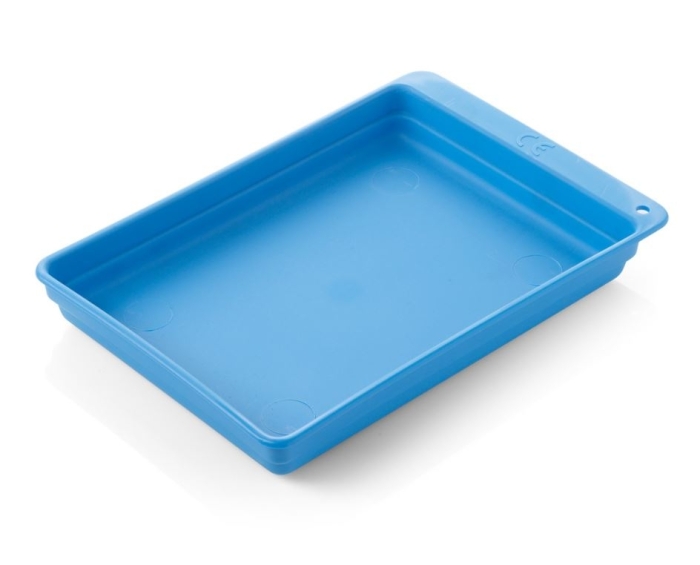
Clinic Trays and Lids - Autoclave Friendly
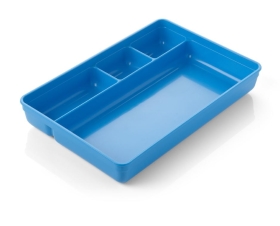
Long Life Re-usable Polypropylene Instrument Tray for use in Sterile Services, Decontamination Units, Hospitals and Clinics.
Sold: Each
Incl. VAT Exl. VAT
Product Description
Lightweight Autoclavable Clinic Trays
Durable, lightweight polypropylene clinic trays designed to organise and protect instruments during sterilisation, storage and transport.
Best for: Podiatry clinics, hospital departments, orthotic workshops and training facilities requiring organised, reusable instrument trays.
Not ideal for: Applications requiring heavy-duty stainless steel load-bearing capacity or sterilisation above 135°C.
- Up to 50% lighter than stainless steel trays
- Autoclavable up to 135°C
- Grip feature moulded below the rim for secure handling
What is it?
Clinic Trays & Lids are reusable, autoclave-compatible instrument trays manufactured from high-quality polypropylene. Designed for clinical environments, they provide a lightweight yet strong alternative to traditional stainless steel trays.
Available in two practical sizes, these trays support structured instrument management across decontamination, sterilisation and treatment workflows. A compatible lid is available separately, allowing enclosed transport and additional protection when required.
The smooth, carefully finished surfaces and rounded edges are designed to reduce the risk of tearing sterilisation wraps or pouches during packing. The moulded grip feature below the rim enhances handling security, particularly when wearing gloves or moving trays between clinical areas.
Who is it for?
These trays are suitable for a wide range of professional healthcare and technical settings where infection control and efficient workflow are priorities.
Typical users include:
- Podiatrists and foot health practitioners
- Orthotists and prosthetists
- Orthotic technicians and fabrication labs
- NHS and private hospital departments
- Sterile services and decontamination units
- University clinical training facilities
- Minor surgery and outpatient clinics
- Specialist footwear and orthotic workshops
Their lightweight design can be particularly beneficial in busy clinics where trays are handled repeatedly throughout the day.
What is it used for?
Clinic trays are used to organise, protect and transport instruments and small clinical tools before and after sterilisation.
Applications
- Holding podiatry instrument sets during treatment preparation
- Supporting autoclave sterilisation cycles
- Transporting cleaned instruments between rooms
- Organising minor surgical tools
- Separating clean and used instruments during workflow
- Storing instruments in enclosed trays with optional lids
Characteristics
- Manufactured from high-quality polypropylene
- Approximately 50% lighter than stainless steel alternatives
- Improved removal of blood residue compared to stainless steel surfaces
- Smooth edges and surfaces to minimise packaging tears
- Moulded grip feature below rim for improved control
- Compatible with multiple sterilisation methods
Typical Users
- Clinical teams preparing daily instrument sets
- In-house NHS workshops
- Private podiatry clinics with autoclave facilities
- Teaching hospitals and training providers
How to work with it
Instruments can be placed directly into the tray prior to sterilisation. Where enclosed storage is preferred, a lid can be ordered separately and fitted before or after sterilisation depending on local protocol. Trays should be positioned in the autoclave to allow adequate steam penetration and drying.
Expected Use Timeline
First use
Before first clinical use, the tray should be cleaned and processed in line with local infection control policies. Once sterilised, it can be introduced into standard instrument rotation.
Ongoing use
The trays are designed for repeated sterilisation cycles up to 135°C. With appropriate care and inspection, they can form part of long-term clinic workflow. Regular checks for warping, surface damage or distortion are recommended.
Problem → Solution
| Common problem | How the product helps |
|---|---|
| Heavy stainless steel trays causing handling fatigue | Polypropylene construction is up to 50% lighter, reducing manual handling strain. |
| Blood residue difficult to clean from metal surfaces | Material design may allow improved removal of blood residue compared to stainless steel. |
| Difficulty gripping trays with gloved hands | Moulded grip feature below the rim supports more secure handling. |
| Sterilisation wraps tearing during packing | Smooth edges and surfaces help reduce paper and pouch damage. |
| Need for flexible sterilisation options | Compatible with Autoclave, Ethylene Oxide and Hydrogen Plasma processes. |
Key Benefits
- Lightweight yet strong construction suitable for daily clinical use
- Autoclavable up to 135°C
- Compatible with multiple sterilisation methods
- Improved handling through integrated grip design
- Smooth surfaces to protect packaging materials
- Reusable and easy to integrate into existing protocols
Common Mistakes to Avoid
- Exceeding recommended sterilisation temperatures
- Stacking trays in a way that restricts proper steam penetration
- Using abrasive cleaning tools that may damage surfaces
- Assuming lid is included without ordering separately
If unsure about steriliser compatibility or loading configuration, consult equipment guidance or a decontamination lead.
How to Work With
- Inspect tray prior to use for any visible damage.
- Clean according to local infection control procedures.
- Place instruments evenly within the tray.
- If required, fit compatible lid (ordered separately).
- Process in autoclave (maximum 135°C) or validated EtO/Hydrogen Plasma cycle.
- Allow full drying before removal and reuse.
- Inspect after each cycle for signs of wear.
Technical specifications
| Material | High-quality polypropylene |
|---|---|
| Sterilisation compatibility | Steam Autoclave (up to 135°C), Ethylene Oxide, Hydrogen Plasma |
| Sizes available | 195mm x 135mm x 23mm 270mm x 150mm x 30mm |
| Weight | Approximately 50% lighter than comparable stainless steel trays |
| Lid included | No – Lid available separately |
| Reusable | Yes – subject to inspection and protocol compliance |
| Intended environment | Clinical, hospital, workshop and educational settings |
Frequently Asked Questions
Are the lids included with the trays?
No. Lids are available separately and must be ordered in addition to the tray.
Can these trays replace stainless steel trays?
They provide a lightweight alternative and may improve residue removal. Suitability depends on the specific clinical application and load requirements.
Are they suitable for daily autoclave use?
Yes, they are designed for repeated sterilisation cycles up to 135°C when used within validated protocols.
Will the trays warp in the autoclave?
When processed within recommended temperature limits and correctly loaded, they are designed to maintain shape. Regular inspection is advised.
Can they be used for transporting used instruments?
They may be used within appropriate infection control procedures. Always follow local guidelines for safe handling and segregation of contaminated instruments.
Do they support Hydrogen Plasma sterilisation?
Yes, the trays are compatible with Hydrogen Plasma sterilisation processes.
Complementary Products
- Compatible polypropylene tray lids
- Sterilisation wraps and pouches
- Instrument cassettes
- Autoclave baskets
- Instrument cleaning detergents and brushes
Written by: Algeos Product & Clinical Content Team
Last reviewed: February 2026
This content is provided for buyer guidance and product understanding. It does not replace clinical judgement, local infection control policy, or professional training.
Frequently bought together
Sold: Each
Incl. VAT Exl. VAT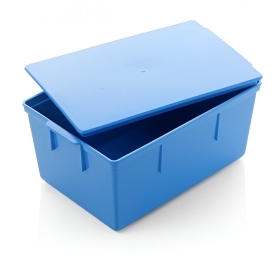
Sold: Each (with Lid)
Incl. VAT Exl. VAT
Sold: Each
Incl. VAT Exl. VAT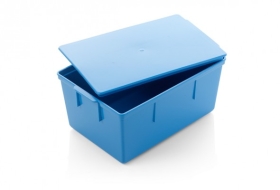
Sold: Each
Incl. VAT Exl. VAT
Sold: Each
Incl. VAT Exl. VAT
Sold: Each
Incl. VAT Exl. VAT
Sold: Each
Incl. VAT Exl. VAT
Sold: Pack of 10
Incl. VAT Exl. VAT
Sold: Pack of 100
Incl. VAT Exl. VAT
Sold: Pack of 100
Incl. VAT Exl. VATSold: Pack of 100
Incl. VAT Exl. VAT
Sold: Each
Incl. VAT Exl. VAT
Sold: Each
Incl. VAT Exl. VAT
Sold: Each
Incl. VAT Exl. VAT
Sold: Bundle
Incl. VAT Exl. VAT
Sold: Each
Incl. VAT Exl. VAT
Sold: Each
Incl. VAT Exl. VAT
Sold: Each
Incl. VAT Exl. VAT
Sold: Pack of 50
Incl. VAT Exl. VAT
Sold: Each
Incl. VAT Exl. VAT
Sold: Each
Incl. VAT Exl. VAT
Sold: Each
Incl. VAT Exl. VAT
Sold: Each
Incl. VAT Exl. VAT
Sold: Bundle
Incl. VAT Exl. VAT
Sold: Each
Incl. VAT Exl. VAT
Sold: Each
Incl. VAT Exl. VAT