




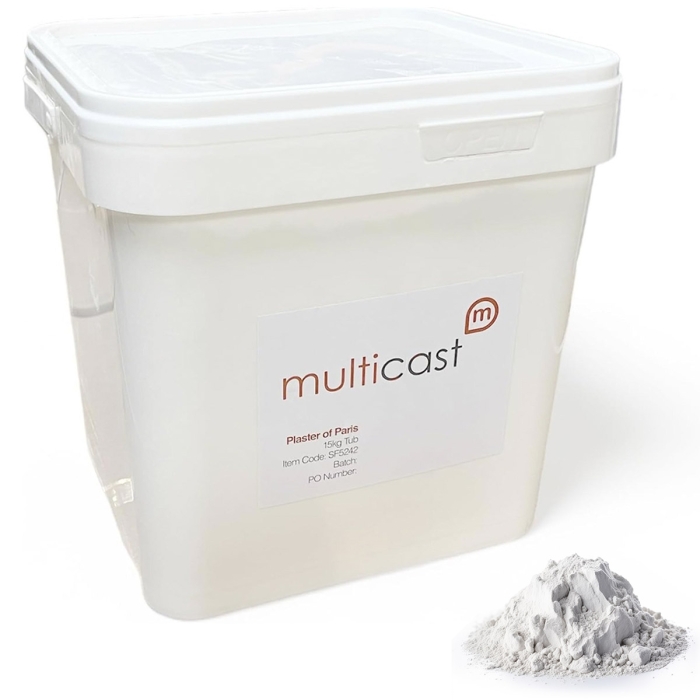
Plaster of Paris for Casting - 15kg Tub
Fine Casting Plaster of Paris is a premium hemihydrate plaster made from natural gypsum mineral.
Perfect for orthotic casting, creating intricate sculptures and detailed moulds.
Suitable for both clinical and non-clinical casting applications.
Easy to measure, mix and pour.
Sold: 15kg Tub
Incl. VAT Exl. VAT
Product Description
Fine casting plaster for casts and mould making
A versatile, fine-grade plaster designed for accurate casting, detailed mould work and reliable everyday use across healthcare, crafts and technical applications.
Best for: Orthotic foot casting, impression box work, general mould-making, and detailed casting projects.
Not ideal for: Structural building work, high-load applications, or situations requiring extended working times beyond standard plaster setting behaviour.
- Derived from naturally occurring high purity gypsum mineral
- Consistent fine powder for smooth mixing and detailed results
- Supplied in a practical 15kg tub for easy handling and storage
Expected Use
When mixed correctly, the plaster forms a smooth, workable slurry that pours easily and begins to firm within a typical plaster setting window. Users may notice warmth as the plaster sets, which is a normal characteristic of Plaster of Paris.
Casts are usually firm enough for careful handling within 30–60 minutes, depending on mix ratio, ambient temperature, and mould size. Fine surface detail becomes visible as the plaster fully sets.
Once fully dried, casts reach their usable strength and stability. For orthotic models and craft pieces, this allows trimming, smoothing and further processing without compromising detail.
What is it?
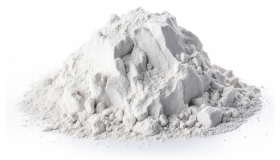
Fine Casting Plaster is an unformulated hemihydrate plaster made from high purity gypsum. Often referred to as Plaster of Paris, it is valued for its predictable setting behaviour, fine particle size and ability to capture intricate detail. The off-white powder mixes readily with water to create a smooth, pourable consistency suitable for impression work and mould filling.
Who is it for?
This plaster is suitable for a broad range of users, from healthcare professionals to educators, artists and home users. In clinical environments, it is commonly used in orthotic casting, including NHS and private healthcare settings, where accuracy and repeatability are important.
Outside healthcare, it supports creative and technical projects that require clean detail and dependable results.
What does it help with?
- Orthotic foot casting: Supports the creation of accurate positive models from foot impression boxes.
- Dental and anatomical models: May help achieve precise reproductions for study or planning.
- Sculpture and decorative casting: Enables smooth surfaces and fine detailing.
- Educational models: Useful for geography, biology, and demonstration pieces.
- DIY and repairs: Can assist with small household casting or filling tasks where plaster is appropriate.
How does it work?
When mixed with water, the plaster undergoes a controlled chemical reaction that causes it to set from a liquid slurry into a solid form. The fine powder consistency allows the mixture to flow into detailed areas of moulds or impressions. As the plaster sets, it expands slightly, helping capture surface detail before hardening into a rigid cast.
Problem to solution overview
| Common problem | How the plaster helps |
|---|---|
| Loss of fine detail in casts | The fine particle size supports clean reproduction of contours and textures. |
| Inconsistent setting times | Predictable plaster behaviour allows planning and repeatable results. |
| Difficulty filling complex moulds | Smooth, pourable consistency flows into narrow or detailed areas. |
| Messy storage and handling | Supplied in a robust 15kg tub for easier transport and storage. |
Key benefits
- Fine-grade plaster for smooth finishes and detailed impressions
- Suitable for both clinical and non-clinical casting applications
- Reliable setting characteristics when mixed correctly
- Easy to measure, mix, and pour
- Practical tub packaging reduces spillage and waste
- Adaptable for small-scale or larger casting projects
Casting Tips
For orthotic foot casting, ensure the patient’s foot is positioned comfortably and naturally in the impression box. The plaster should support the impression without causing pressure or discomfort. A correct cast feels snug during impression taking but should never be painful. If discomfort occurs, reassess positioning and technique before proceeding.
Common mistakes to avoid
- Adding too much water, which can weaken the final cast
- Pouring too quickly and trapping air bubbles in detailed areas
- Removing the cast before it has fully set
- Expecting the plaster to perform like high-strength or reinforced materials
How to use
- Prepare a clean mixing container and measure the required amount of water.
- Gradually add plaster powder to the water, allowing it to absorb before mixing.
- Stir gently until a smooth, lump-free consistency is achieved.
- Pour the mixture slowly into the mould or impression, filling from one side where possible.
- Tap or gently vibrate the mould to release trapped air.
- Allow the plaster to set undisturbed for the recommended time.
- Once firm, remove the cast carefully and allow it to dry fully before further work.
Technical specifications
| Product type | Fine casting plaster (Plaster of Paris) |
|---|---|
| Material | High purity gypsum (hemihydrate plaster) |
| Colour | Off-white |
| Pack size | 15kg tub |
| Available sizes | 15kg only (25kg tubs no longer available) |
| Typical set time | Varies by mix ratio and conditions |
| Application | Orthotic casting, mould-making, general casting |
| Care and storage | Store sealed in a dry environment |
Frequently asked questions
Is this plaster suitable for orthotic foot casting?
Yes. It is commonly used for creating positive models from foot impression boxes in both NHS and private healthcare settings.
How long does it take to set?
Initial setting typically occurs within 30–60 minutes, depending on water ratio, temperature, and volume.
Can it be used for craft and art projects?
Yes. Its fine consistency makes it suitable for sculptures, decorative moulds, and detailed craft work.
Is it safe for skin contact?
Standard precautions should be followed. A release agent or barrier is recommended for direct skin casting.
Can I adjust the working time?
Working time is influenced by mix ratio and ambient conditions. Additives are not recommended unless you are experienced.
Is it compatible with other orthotic materials?
The plaster is generally compatible with standard orthotic casting workflows and materials.
Complementary Products
- Foot impression boxes for orthotic casting
- Stockinette and basic casting accessories
- Trimming and smoothing tools for finished casts
Written by: Algeos Product & Clinical Content Team
Last reviewed: January 2026
This content is provided to support informed purchasing decisions. It is not intended as medical advice or a substitute for professional clinical judgement.
Related Downloads
Frequently bought together
Sold: Each
Incl. VAT Exl. VAT
Sold: Each
Incl. VAT Exl. VAT
Sold: Each
Incl. VAT Exl. VAT
Sold: Each
Incl. VAT Exl. VAT
Sold: Each
Incl. VAT Exl. VAT
Sold: Each
Incl. VAT Exl. VAT
Sold: Each
Incl. VAT Exl. VAT
Sold: 15kg Tub
Incl. VAT Exl. VAT