





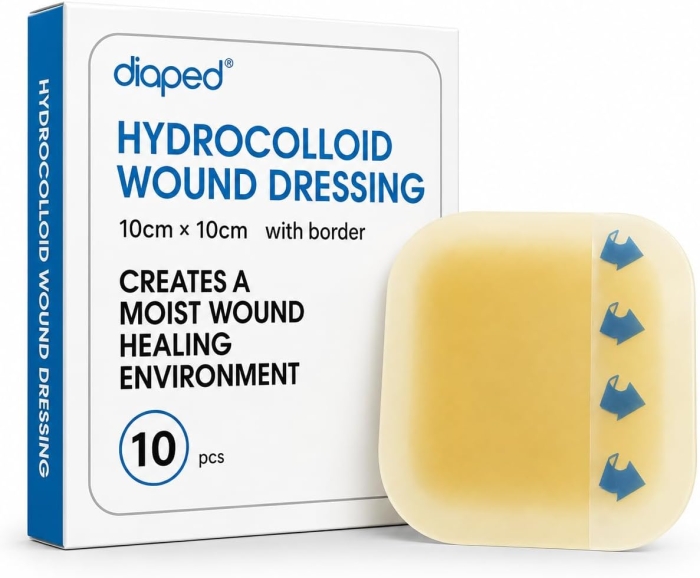
Hydrocolloid Dressing - With border - 10 x 10cm x Box of 10
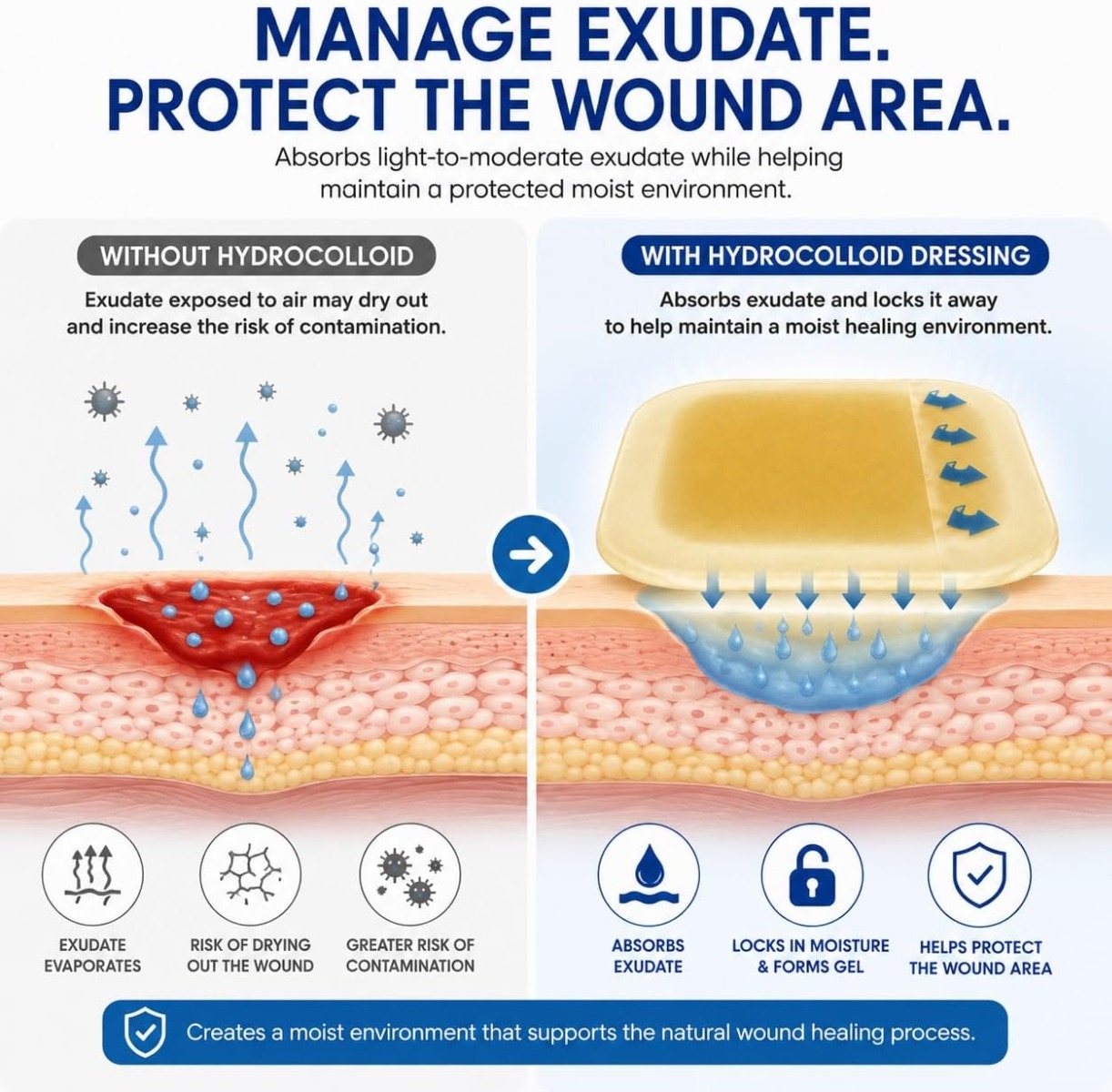
Hydrocolloid dressings absorb wound exudate and turn it into a soft gel, helping maintain a moist environment that supports natural healing.
A breathable PU backing allows moisture vapour to escape while helping shield the wound from water, dirt and external contaminants.
Ideal for light-to-moderate wounds.

Product Description
Hydrocolloid Dressing with Border – 10cm x 10cm
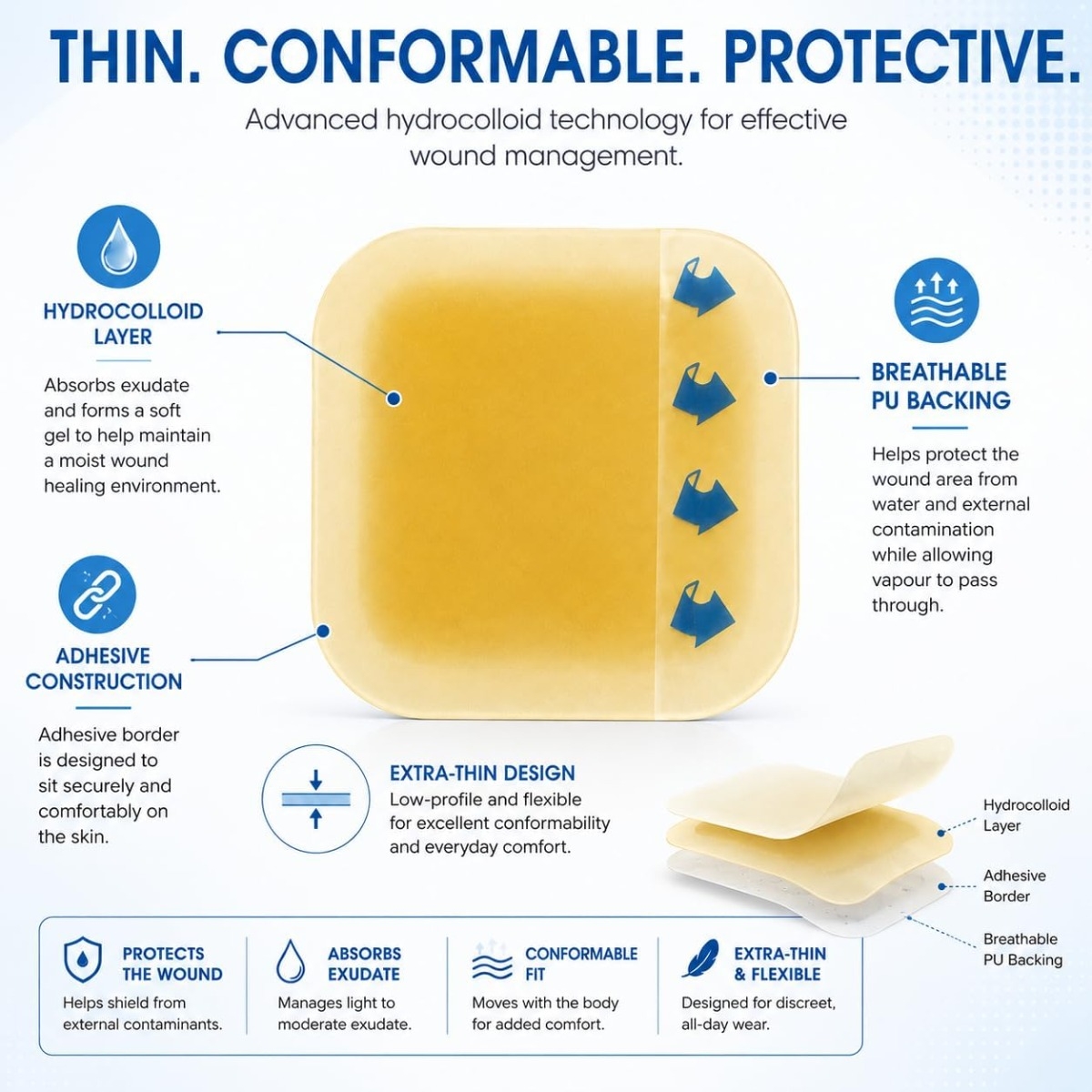
A thin, flexible hydrocolloid wound dressing designed to absorb light-to-moderate wound exudate while helping maintain the moist environment used in modern wound management. As fluid is absorbed, the hydrocolloid layer forms a soft gel, while the adhesive border helps keep the dressing securely positioned.
The breathable polyurethane backing allows moisture vapour to escape while helping shield the covered area from water, dirt and external contaminants. Supplied as a box of 10 dressings for professional wound care or appropriately guided home use.
Key Selling Points
Supports moist wound management
Absorbs wound exudate and forms a soft gel, helping prevent the wound surface from becoming excessively dry.
Secure bordered design
An integrated adhesive border helps minimise unwanted movement and can reduce the need for separate fixation in suitable applications.
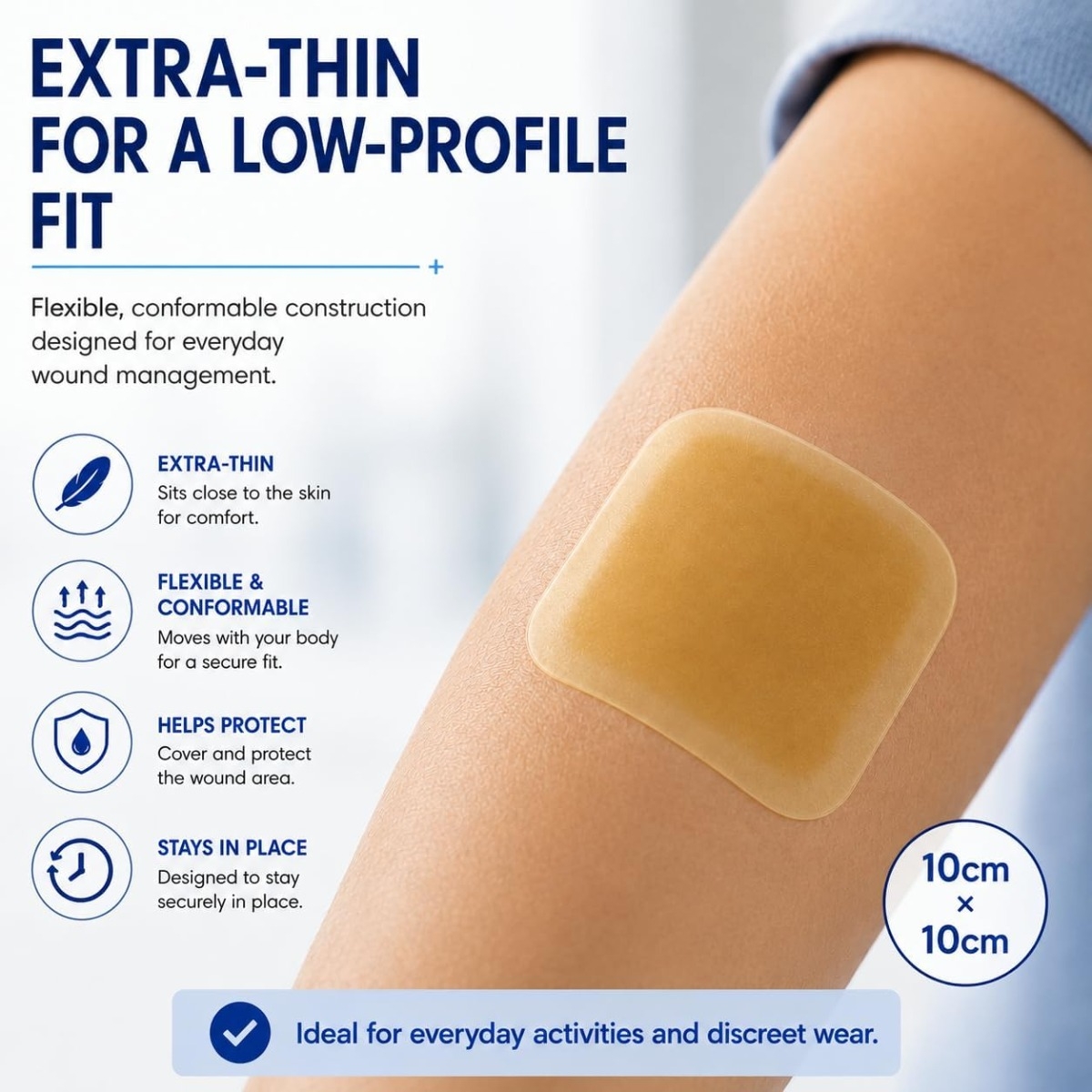
Thin and flexible
The low-profile construction conforms to the body and can sit neatly beneath clothing or other suitable protection without unnecessary bulk.
Breathable protective backing
The PU outer layer allows moisture vapour to pass through while helping protect the covered wound from water, dirt and external contaminants.
What It Does and How It Works
Hydrocolloid dressings are designed to manage wound moisture rather than simply covering the area with a dry dressing. The absorbent hydrocolloid layer draws in exudate and interacts with the wound fluid to produce a soft gel.
This gel helps retain an appropriately moist environment at the wound surface while the outer dressing provides protective coverage. In practical wound care, this type of moisture balance can support natural tissue repair and gentle autolytic removal of non-viable tissue where clinically appropriate.
The bordered construction helps maintain contact around the wound, while the flexible PU backing provides breathability and a protective outer surface.
Common Problems It May Help With
Light-to-moderate wound exudate
Helps manage fluid from selected wounds where a hydrocolloid dressing is appropriate and heavy absorbency is not required.
Superficial skin damage
Hydrocolloid dressings are commonly considered for superficial wounds such as minor abrasions, blisters and selected minor burns.
Pressure and friction-prone areas
The flexible dressing provides a protective layer over vulnerable skin and may be useful around areas exposed to footwear friction or pressure.
Selected ulcers and post-procedure wounds
Hydrocolloids may form part of a wound-management plan for selected superficial ulcers or suitable post-procedure wounds when exudate and wound condition are appropriate.
Applications and Suitability
This dressing is intended for selected wounds producing light-to-moderate levels of exudate. Its bordered, flexible format makes it a practical choice where secure positioning, moisture management and a relatively low-profile dressing are priorities.
- Clinical wound care and treatment rooms
- Podiatry and foot-care settings
- Selected superficial wounds and abrasions
- Friction blisters and superficial skin breakdown where a hydrocolloid is appropriate
- Selected pressure-related wounds following clinical assessment
- Appropriately assessed post-procedure wound care
- Informed home use where the wound is suitable and monitoring guidance is understood
For chronic wounds, wounds affecting people with complex health needs, or wounds where healing is delayed, dressing selection should form part of an appropriate clinical assessment.
Who It May Not Suit
Hydrocolloid dressings are not the preferred option for every wound. Clinical assessment is particularly important where the wound is producing heavy levels of fluid, requires frequent inspection, or shows features that may indicate infection.
- Heavily exuding wounds that need greater fluid-handling capacity
- Suspected or confirmed infected wounds unless specifically directed by a healthcare professional
- Deep cavity, undermined or tunnelling wounds requiring specialist dressing or packing techniques
- Fragile, highly sensitive or already macerated surrounding skin
- Wounds that need frequent direct visual assessment
Seek clinical advice if there is increasing pain, heat, spreading redness, swelling, pus, strong odour or unexpected deterioration.
Product Specifications
| Product type | Bordered hydrocolloid wound dressing |
|---|---|
| Dressing size | 10cm x 10cm |
| Pack format | Box of 10 |
| SKU | NV0460-B-FBA |
| Absorbent layer | Hydrocolloid layer that absorbs wound exudate and forms a soft gel |
| Fixation | Integrated adhesive border |
| Backing | Breathable polyurethane backing |
| Recommended exudate level | Light to moderate |
| Construction | Thin, flexible and low profile |
Usage Instructions
- Assess and clean the wound: Clean the wound according to the appropriate wound-care protocol or care plan.
- Dry the surrounding skin: Gently dry the healthy skin around the wound to help the adhesive border form a reliable seal.
- Position the dressing: Centre the hydrocolloid over the wound so that the adhesive area extends onto healthy surrounding skin.
- Apply without stretching: Smooth the dressing outward from the centre and press the border gently into place, avoiding creases where possible.
- Monitor during wear: Check for leakage, lifting edges, increasing discomfort or signs of wound deterioration. Change the dressing according to wound condition, exudate levels and the agreed care plan.
- Remove gently: Loosen an edge and peel the dressing slowly back close to the skin while supporting the surrounding tissue.
Always follow any instructions supplied with the dressing and any wound-care advice given by your healthcare professional.
Benefits
Moisture balance
Helps maintain the moist wound environment commonly used to support natural repair processes.
Exudate management
The hydrocolloid layer absorbs light-to-moderate wound fluid and transforms it into a soft gel.
Protective coverage
The polyurethane backing helps shield the covered wound area from water, dirt and external contaminants.
Secure positioning
The adhesive border helps keep the dressing in place and may reduce reliance on additional fixation products.
Low-profile comfort
A thin, flexible construction helps the dressing follow body contours and sit more discreetly beneath clothing.
Practical wound-care format
The 10cm x 10cm size provides useful coverage for a range of appropriately selected wound-care applications.
Contraindications & Warnings
- Do not rely on a hydrocolloid dressing to manage a wound that is producing heavy exudate.
- Seek clinical advice if infection is suspected or confirmed, particularly if pain, redness, swelling, heat, discharge or odour is increasing.
- Deep, tunnelling or undermined wounds require appropriate clinical assessment and may need a different dressing system.
- Monitor the surrounding skin for excessive moisture, whitening, irritation or maceration.
- Use extra caution where the surrounding skin is particularly fragile or sensitive to adhesive dressings.
- Wounds associated with diabetes, poor circulation or impaired sensation should be managed according to an appropriate clinician-led wound-care plan.
If the wound deteriorates, fails to progress as expected or you are uncertain whether a hydrocolloid dressing is suitable, seek advice from an appropriately qualified healthcare professional.
Frequently Asked Questions
What is a hydrocolloid dressing used for?
Hydrocolloid dressings are commonly used for selected superficial wounds producing low-to-moderate levels of exudate. They help manage moisture while providing protective coverage, and may be considered for abrasions, blisters, minor burns and selected ulcers where clinically appropriate.
How does a hydrocolloid dressing work?
The absorbent hydrocolloid layer interacts with wound exudate and forms a soft gel. This helps manage fluid while maintaining a moist wound environment that supports natural wound-management processes.
Is this dressing suitable for heavily exuding wounds?
No, hydrocolloid dressings are generally intended for wounds with light-to-moderate exudate rather than heavy fluid levels. A more absorbent dressing type may be required when exudate is heavy, so clinical assessment is recommended.
Can hydrocolloid dressings be used on infected wounds?
They are generally not the first choice when infection is suspected or confirmed because the wound may need closer monitoring and a different management approach. Increasing pain, heat, redness, swelling, pus or strong odour should prompt clinical review.
How often should the dressing be changed?
Change frequency depends on the amount of wound fluid, the condition of the dressing and the individual care plan. The dressing should be reviewed sooner if it leaks, lifts significantly at the edges, becomes overwhelmed with exudate or if pain or other symptoms increase.
Why can a hydrocolloid dressing look swollen after use?
A change in appearance can occur as the hydrocolloid absorbs wound fluid and forms a soft gel. This gel formation is part of the way hydrocolloid dressings manage exudate, although leakage or excessive swelling may indicate that the dressing needs changing.
Can the dressing be worn beneath clothing?
Its thin, flexible construction is designed to provide relatively low-profile wound coverage and can sit neatly beneath clothing in suitable locations. Avoid unnecessary rubbing or pressure over the wound, and make sure clothing or footwear does not disturb the dressing edges.
Is a hydrocolloid dressing suitable for home wound care?
It can be appropriate for informed home use when the wound has been properly assessed and a hydrocolloid dressing is suitable for its condition and exudate level. Complex wounds, chronic wounds, signs of infection or wounds associated with diabetes or circulation problems should receive appropriate professional guidance.
Related Links
Product Summary
10cm x 10cm bordered hydrocolloid wound dressing for selected light-to-moderately exuding wounds. The absorbent hydrocolloid layer forms a soft gel as it takes up wound fluid, helping maintain a moist wound environment, while the integrated adhesive border and breathable PU backing provide secure, flexible protective coverage. Supplied in a box of 10.
Frequently bought together
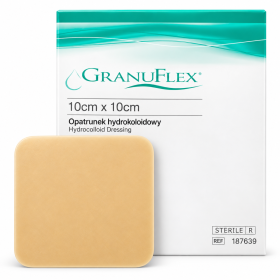
Sold: Pack of 10
Incl. VAT Exl. VAT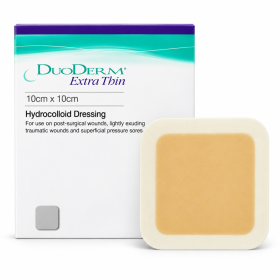
Sold: Pack of 5
Incl. VAT Exl. VAT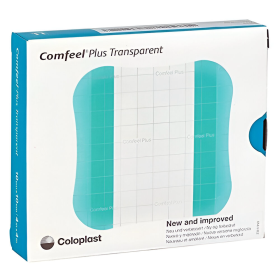
Sold: Pack of 10
Incl. VAT Exl. VAT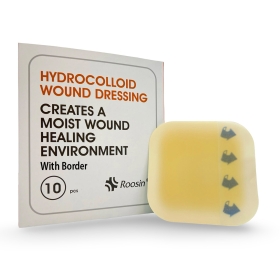
Sold: Box of 10
Incl. VAT Exl. VAT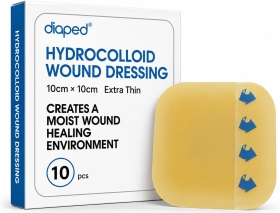
Sold: Box of 10
Incl. VAT Exl. VAT
Sold: Each
Incl. VAT Exl. VAT