




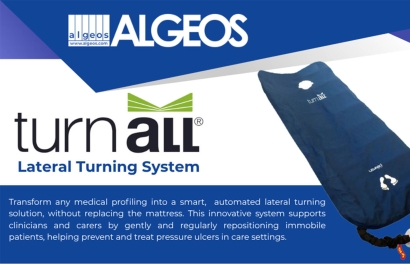
In the challenging world of pressure care, ensuring immobile or high-risk patients receive consistent repositioning is one of the most effective ways to prevent and treat pressure ulcers. In this blog post we explore how an automated lateral turning system like the Levabo Turn All Patient Turning Mattress System.
Pressure ulcers arise when sustained pressure, shear or friction over time results in tissue damage. Key risk factors include immobility, reduced sensation, older age, under- or over-nutrition, and comorbidities. Clinical guidelines recommend regular repositioning of immobile patients to relieve pressure, promote circulation, and avoid tissue damage.
One of the key recommendations from the international guideline groups (European Pressure Ulcer Advisory Panel EPUAP, National Pressure Injury Advisory Panel NPIAP, and Pan Pacific Pressure Injury Alliance PPPIA) is the use of a 30° lateral side-lying position for at-risk patients.
For carers and clinical teams, manual turning of patients every 2 hours or so places a burden on staffing, time and may increase risk of manual-handling injury for staff. Automation offers a compelling solution.
Introducing Levabo and its approach
Levabo is a Danish medical-device brand specialising in pressure-relief, repositioning, and wound-care aids. Levabo emphasises both patient care which is focused on pressure‑ulcer prevention and treatment, and the staff environment, aiming to reduce manual handling and improve workflow.
In the UK, Algeos serves as a key distributor and supplier of Levabo’s solutions. Algeos holds domestic distribution rights for the Levabo brand, enabling UK‑based hospitals, care homes and clinicians to access the Turn All system and related pressure‑care products through a local supplier.
How the Turn All System works
What it does:
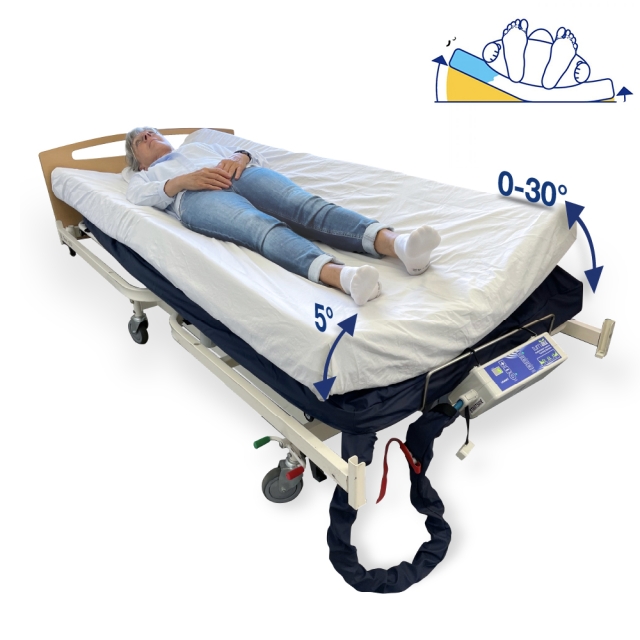
- It turns a standard profiling bed into an automated lateral turning bed by placing the system under the existing mattress.
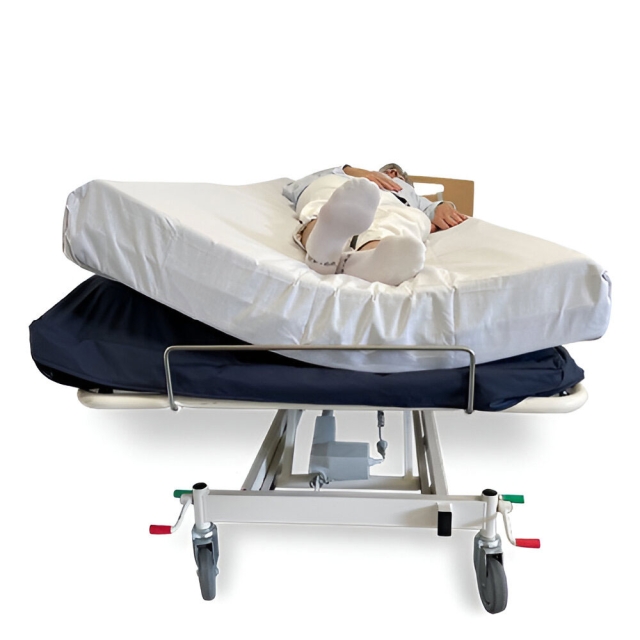
- It cycles the patient into a lateral position of up to 30 degrees alternately right and left.
- Timing intervals can be set so that consistent repositioning occurs without relying solely on manual intervention.
- The system includes a ‘side-support’ or counter wedge function: when one side lifts, the mattress slightly lifts on the opposite side to support the body and reduce shear forces (which are an independent risk factor for tissue damage)
Key benefits:
- Successful repositioning – by systematically repositioning the patient, the pressure over vulnerable areas is relieved, thereby reducing the risk of tissue breakdown.
- Shear reduction – the side-support function and smooth lateral motion reduce shear and friction, both of which contribute to pressure injuries.
- Improved blood-circulation – lateral turning improves circulation in compressed tissues and the overall microclimate under the mattress surface.
- Patient comfort and sleep continuity – the system is designed to operate gently and quietly so as not to disrupt sleep, which contributes to better patient outcomes.
- Staff-safely and efficiently – reducing manual turning decreases the physical workload and risk of injury to carers, frees time for clinical tasks and helps ensure turns aren’t missed in busy times.
Why Choose Levabo’s Turn All System?
- Evidence-based design: The system aligns with international guidelines (30° lateral position, interval repositioning) which underpins its pressure-ulcer prevention credentials.
- Counter-tilt: The 5° counter tilt increases patient comfort and ensures no risk of slipping.
- Versatility: Fits many standard beds, can be used in hospital, community, home-care settings.
- Bariatric support: The “3C” Bariatric version supports heavier patients (up to ~400 kg) which is vital given the elevated risk of pressure injuries in this group.
- Staff and workflow benefits: Reduces manual handling risk and frees nursing time for other patient-care tasks.
- Patient comfort and safety: Smooth, quiet turning, reduced shear, consistent repositioning - all key factors in better patient care.
Automated lateral turning systems like the Levabo Turn All (including the 3C Bariatric version) offer a powerful tool in the pressure-ulcer prevention and treatment arsenal. By systematically repositioning patients into a 30° lateral position, reducing shear, improving circulation, and reducing reliance on purely manual turning schedules, they support better outcomes for patients and care-teams.
Sold: Full System
Incl. VAT Exl. VAT