



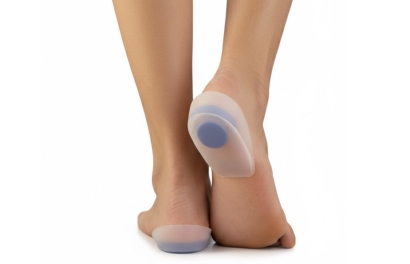
Silicone gel heel cups and heel pads are widely used conservative interventions for plantar heel pain. Their popularity stems from low cost, ease of use, and favourable safety.
This review synthesises current evidence regarding their biomechanical function, shock-attenuating properties, pressure-redistribution capabilities and clinical outcomes.
Applications in common heel pain conditions are discussed, along with known limitations, design considerations and contraindications.
Introduction
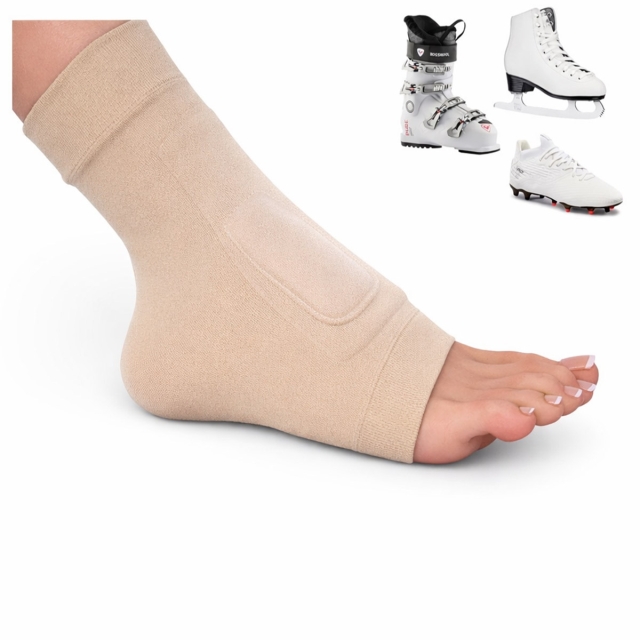
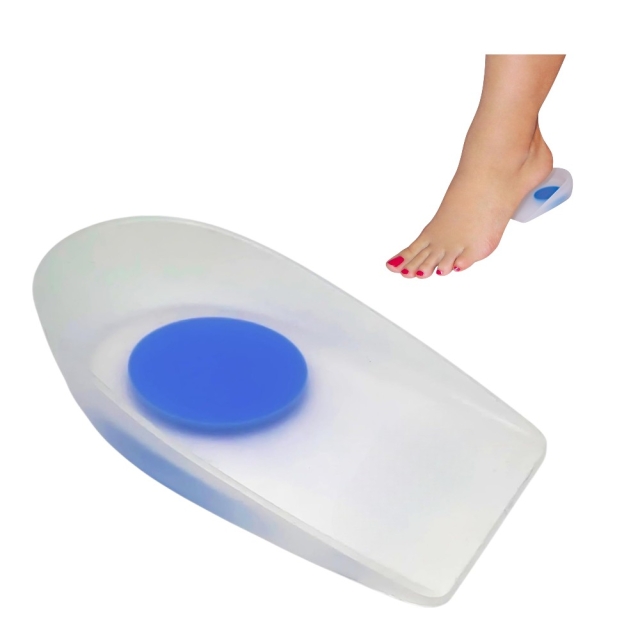
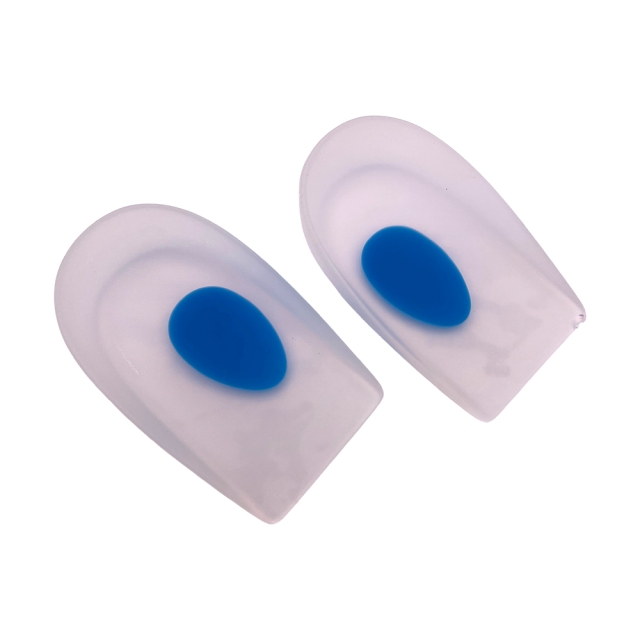
Silicone heel cups and pads are small, in-shoe devices made from medical-grade viscoelastic gel intended to reduce mechanical loading at the calcaneus. Their primary aim is to attenuate impact forces, increase comfortand decrease pain associated with plantar heel conditions.
Owing to their accessibility and low clinical risk, they are frequently recommended as a first-line intervention in primary care and musculoskeletal clinics. This review evaluates the scientific and clinical evidence underpinning their use and clarifies how these devices influence heel mechanics and symptoms across relevant conditions.
Common Causes of Heel Pain and Rationale for Use
Heel pain originates from a range of mechanical and inflammatory pathologies, and silicone heel inserts are employed across several diagnostic groups:
- Plantar fasciitis: The leading cause of persistent heel pain in adults, arising from overload and micro-tearing at the proximal plantar fascia. Heel cups are commonly used to reduce local stress and cushion the tender medial calcaneal tubercle.
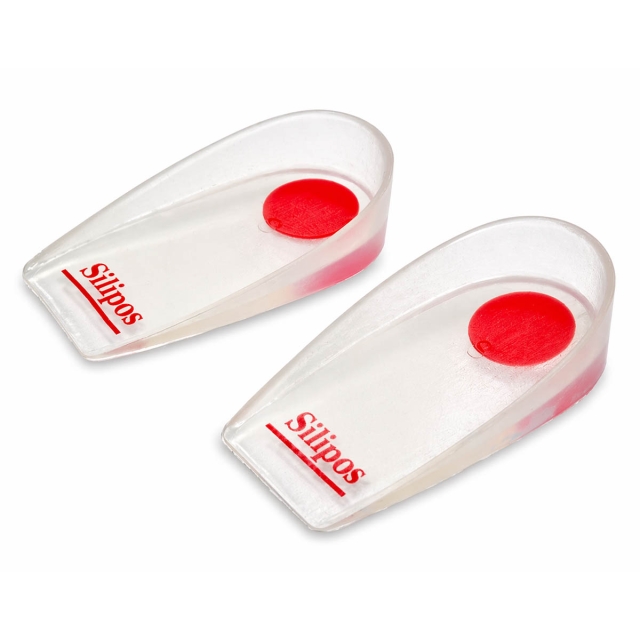
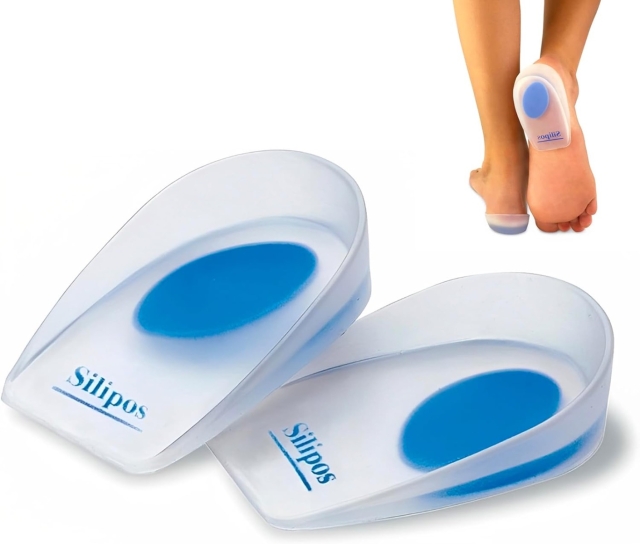
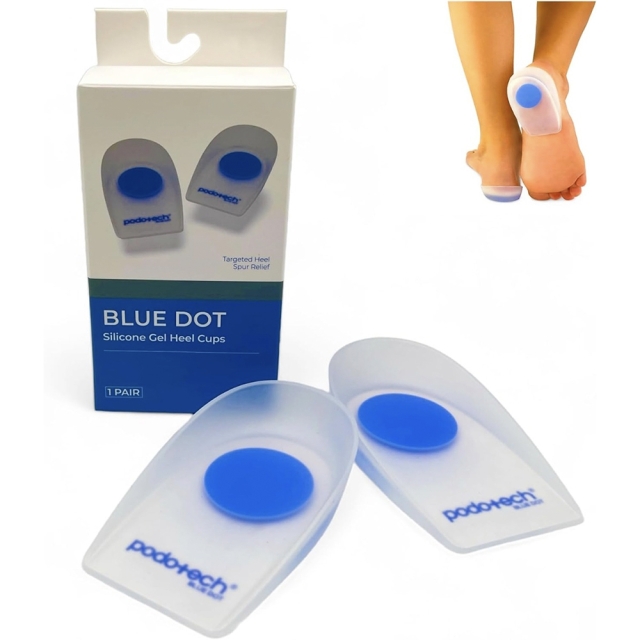
- Plantar calcaneal spur: A spur at the plantar calcaneus frequently coexists with plantar fasciitis. Dual-density silicone heel pads with a softer central zone are designed to off-load the spur region.
- Plantar heel bursitis: Inflammation of the subcalcaneal bursa benefits from reduced compressive loading; soft gel cups help minimise direct pressure.
- Heel fat pad atrophy: Degeneration or thinning of the heel fat pad diminishes natural shock absorption. Viscoelastic silicone cups aim to confine and augment the remaining pad, although robust clinical trials remain limited.
- Insertional Achilles tendinopathy: Pain at the calcaneal insertion of the Achilles tendon may be aggravated by tensile and compressive loads. A heel cup provides a minor heel elevation, reducing tendon strain and counter-pressure from footwear.
- Sever’s disease: A traction apophysitis of the calcaneal growth plate in children. Silicone heel cups help moderate impact forces during activity.
- General overuse and occupational heel soreness: Shock attenuation offered by silicone pads can reduce cumulative micro-trauma in individuals standing or walking on hard surfaces.
Across these conditions, mechanical stress - impact or tensile - is a major driver of symptoms. Silicone inserts aim to mitigate these forces via cushioning, containment of soft tissues and redistribution of plantar pressure.
Biomechanical Mechanisms
Fat Pad Containment and Support
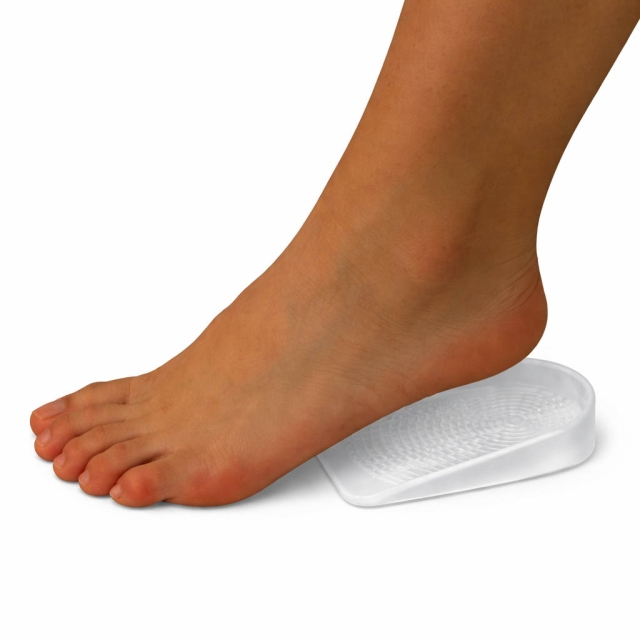
A key biomechanical action of heel cups is the containment of the natural heel fat pad. In normal loading, the fat pad dissipates impact through deformation; in plantar fasciitis and heel fat pad syndrome, this function may be compromised.
The raised rim of a heel cup restricts lateral splaying, helping maintain fat pad thickness during weight-bearing. Ultrasound elastography studies demonstrate increases in heel pad thickness and reductions in stiffness when standing with a heel cup, indicating improved shock-absorbing performance.
Modification of Lower Limb Posture
Most cups introduce a slight heel elevation, resulting in mild plantarflexion. This posture reduces tensile strain on both the Achilles tendon and plantar fascia during gait, potentially alleviating early-morning pain characteristic of plantar fasciitis. Chronic use of elevation should be monitored to avoid adaptive shortening of the tendon complex.
Cushioning and Shock Attenuation
Silicone’s viscoelastic material properties enable it to absorb and dissipate impact forces at heel strike. Clinical consensus supports the role of heel cushions in reducing heel impact during walking and running.
Laboratory studies show that gel heel cups compress under load, reducing peak loading rates and moderating force transmission proximally, potentially benefiting coexisting conditions such as knee pain or shin splints.
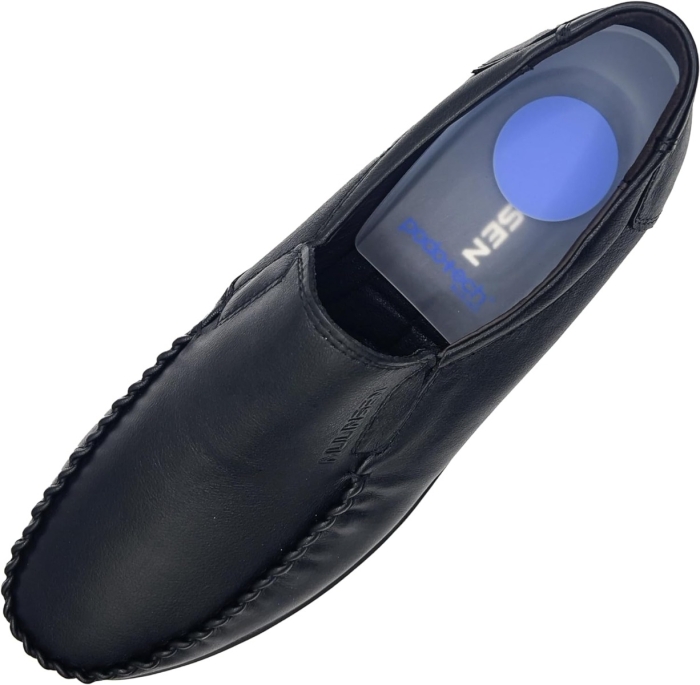
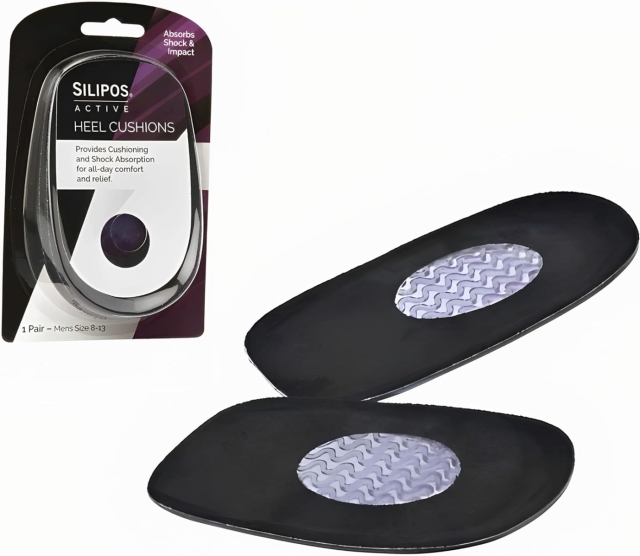
Dual-density designs concentrate softness at the painful region - typically the central or medial calcaneal area - while firmer rims provide structural support. This configuration redistributes pressure away from hyper-sensitive zones, reducing pain associated with heel spur syndrome and plantar fasciitis.
Pressure Redistribution
Effective redistribution of plantar pressure is essential for reducing tissue stress in heel pain conditions. Silicone heel cups achieve this through:
- Increasing contact area: By moulding around the heel contour, silicone pads enlarge the weight-bearing surface and reduce peak plantar pressures.
- Off-loading focal pathology: Softer central inserts or depressions under the medial calcaneal tubercle shift load to surrounding tissue, decreasing pain under the spur or fascia insertion.
- Assisting fat pad function: By confining the fat pad, cups maintain uniform pressure distribution across the rearfoot.
Design matters significantly. Pads with hollow central “donut” cut-outs have shown suboptimal results. A controlled trial demonstrated they increased local pressures, whereas full-length orthoses significantly reduced peak heel pressures. This highlights the importance of well-engineered silicone devices.
Clinical Effectiveness
Pain Reduction
Prospective clinical studies consistently report short-term pain reduction with silicone heel pads in plantar fasciitis. A 2015 series of 100 patients reported resolution or substantial improvement in 84% of cases after 1–6 months.
A 2016 study of 100 patients found that 81% demonstrated appreciable pain reduction with silicone heel pads, and both studies described excellent tolerability and minimal device-related complications.
Short-Term vs Long-Term Outcomes
Clinical improvements are most pronounced in the short term. After six or more months, a proportion of patients require adjunct interventions- stretching, physiotherapy, injections, or structured orthotics - suggesting that heel cups alone may not provide durable resolution in all cases.
Comparison With Other Orthotic Options
Evidence comparing heel cups with full-length orthoses is mixed:
- Some trials show full-length, total-contact insoles provide superior reductions in heel pressure and better long-term outcomes.
- Other studies note that simple silicone heel pads perform comparably to custom orthoses in selected patients.
- Combined therapy (for example, heel pad plus stretching exercises) often yields optimal results.
Effectiveness Across Specific Conditions
- Fat pad syndrome: Use is supported primarily by expert opinion and case reports, but clinical use is widespread.
- Sever’s disease: Anecdotally effective, with immediate pain reduction often reported in active children.
- Insertional Achilles tendinopathy: Benefits relate to heel lift mechanics and cushioning, although most evidence derives from studies of heel lifts rather than silicone-specific devices.
Limitations and Clinical Considerations
- Not aetiology-corrective: Heel pads address symptoms rather than underlying biomechanical drivers such as calf tightness, arch collapse, or training load. Multimodal management is recommended.
- Diminishing returns over time: Benefits may plateau if underlying pathology persists and no additional interventions are introduced.
- Design and fit variability: Poorly designed pads (for example, thick rims with hollow centres) can create new pressure points. Correct sizing and precise placement are essential.
- Bilateral use considerations: If only one heel is padded, leg-length discrepancy may occur; bilateral use is often preferred for thicker pads.
- Achilles tightening risk: Long-term heel elevation warrants concurrent calf stretching to reduce the risk of adaptive shortening.
- Diabetic foot considerations: Patients with neuropathy should monitor for pressure or friction due to reduced protective sensation, even with soft silicone materials.
- Potential for delayed diagnosis: Reliance on a heel pad may mask symptoms of more serious pathology, including stress fracture or nerve entrapment; persistent or worsening pain requires further evaluation.
Conclusion
Silicone gel heel cups and pads are an accessible, low-risk modality that provide cushioning, shock absorption and pressure redistribution for a range of heel pain conditions. Biomechanical research supports their ability to augment the heel fat pad, reduce impact forces, and slightly alter foot posture to decrease tensile stress.
Clinical evidence demonstrates significant short-term pain improvement in plantar fasciitis, with additional rationale for their use in heel spurs, fat pad atrophy, Sever’s disease, and insertional Achilles tendinopathy.
While beneficial, these devices should be viewed as adjuncts within broader conservative management. Their long-term effectiveness as standalone therapy is limited, and optimal outcomes occur when they are combined with interventions targeting underlying mechanical contributors. Used appropriately, silicone heel cups are a valuable component of evidence-based heel pain management.
References
- Chang AH, Rasmussen SZ, Jensen AE, Sørensen T, Rathleff MS. What do we actually know about a common cause of plantar heel pain? A scoping review of heel fat pad syndrome. J Foot Ankle Res. 2022;15:60. Available at: https://doi.org/10.1186/s13047-022-00568-x
- Chia JK, Suresh S, Kuah A, Ong JL, Phua JM, Seah AL. Comparative trial of foot pressure patterns between orthotics, Formthotics, bone spur pads and flat insoles in patients with chronic plantar fasciitis. Ann Acad Med Singapore. 2009;38(10):869–875. PDF: Annals of the Academy of Medicine Singapore
- Niazi NS, Niazi SNK, Niazi KNK, Iqbal M. Effect of the silicone heel pad on plantar fasciitis. J Pak Med Assoc. 2015;65(Suppl 3):S123–S127. Abstract: Europe PMC
- Chaudhary D, et al. Functional outcome and results of silicone heel pad in treatment of plantar fasciitis. Paripex – Indian Journal of Research. 2016;5(3):138–139. PDF: Worldwide Journals
- American Academy of Physical Medicine & Rehabilitation (AAPM&R). Plantar Fasciitis. PM&R KnowledgeNow. Available at: https://now.aapmr.org/plantar-fasciitis/
- Protalus. Heel Cups Explained (What They Are & How to Use Them). 2023. Available at: https://protalus.com/blogs/blog/heel-cups
- Richie DH Jr. Foot orthoses for plantar heel pain: evidence-based review. Lecture transcription. podiatry.com. Available at: https://www.podiatry.com/lecturehall/transcription/5289
- Lafuente Guijosa A, et al. Plantar fasciitis: evidence-based review of treatment. Reumatol Clin. 2007;3(4):159–165. Article: ScienceDirect
- Martin RL, et al. Heel pain – plantar fasciitis: revision 2014. J Orthop Sports Phys Ther. 2014;44(11):A1–A33. Guideline: JOSPT
Sold: pack of 2
Incl. VAT Exl. VAT