



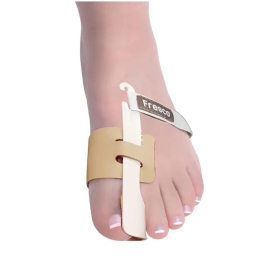
 Deramed Hallux Valgus Night Time Bunion Corrector£19.20 £16.00£20.54 £17.12
Sold: Sold per Pair
Incl. VAT Exl. VAT
SHOW PRICES WITH OR WITHOUT VAT? MANY BUSINESS CUSTOMERS PREFER TO VIEW PRICES EXCLUDING VAT.
0151 448 1228 (UK)
Foot & toe support buying guide
Footcare devics for bunions, hammer toes, toe alignment and everyday foot pressure relief
Foot supports are chosen for different reasons. Some people need cushioning to reduce rubbing in footwear. Others need a gentle splint, separator or sleeve to support toe position, ease pressure around a bunion, or make walking more comfortable after irritation or minor injury.
At Algeos, this collection is best suited to shoppers with condition-led intent: you know roughly what the problem is, but you need help selecting the right format.
Whether you are managing a developing bunion, crowded toes, flexible hammer toes, rubbing between digits, or looking for a simple support to complement arch support insoles or plantar fasciitis insoles, the aim is the same: better day-to-day comfort and a more suitable level of support.
What are foot supports?
Foot supports in this category are wearable devices designed to cushion, separate, align, protect or lightly stabilise parts of the foot and toes.
They are commonly used for bunions, overlapping toes, hammer toes, pressure points, rubbing in footwear and mild positional discomfort.
They are different from full-length insoles because they usually target a more localised problem rather than changing whole-foot loading.
How they help
A foot support can be a practical first step when the main issue is rubbing, toe crowding, mild deformity discomfort or a need for gentle protection. For broader biomechanical issues, people often combine them with heel lifts, diabetic insoles, metatarsalgia solutions or a more structured shell from the semi-bespoke orthotics range.
Who are they for?
These products are relevant for consumers, podiatrists, orthotic clinics and retailers supporting common foot complaints.
Why people use them
- To reduce rubbing, friction and pressure in shoes
- To cushion sensitive areas around bunions, joints and toes
- To support more comfortable toe alignment during daily activity
- To complement insoles, wider footwear or rehabilitation plans
- To help with mild to moderate symptoms before moving to more structured support
- To support conservative care after flare-ups, sport irritation or footwear changes
- To create a more tolerable fit when toes overlap, curl or drift
Common types of supports and when they are used
Bunion sleeves, pads and splints
These are used to reduce rubbing over the first metatarsophalangeal joint, improve shoe comfort and, in some cases, provide gentle positional support. They are often the first place to start for people browsing bunion correctors or reading the Algeos bunion treatment guide.
Toe crests, separators and spreaders
Best suited to crowded toes, overlapping toes, flexible hammer toes and interdigital rubbing. Shoppers comparing options often also look at the Silipos gel range and the wider Silipos brand page for toe care formats.
Sleeves and targeted compression supports
These are useful when the goal is light compression, soft tissue support or improved comfort around the arch or forefoot. They can sit alongside plantar fasciitis products, night splints or footwear-based offloading.
Soft supports are usually most useful for comfort, pressure redistribution and mild positional guidance. They are less suitable where there is significant deformity rigidity, marked swelling, broken skin, severe neuropathy, suspected fracture, or rapidly worsening symptoms.
Condition and use-case guide
| Concern | How a foot support may help |
|---|---|
| Bunions and hallux valgus discomfort | May reduce friction, cushion prominent areas and offer gentle alignment support during rest or light daily wear. |
| Hammer toes, claw toes and curled toes | Toe crests and separators can lift, separate or cushion toes to reduce pressure on joints, tips and shoe uppers. |
| Forefoot pressure and metatarsalgia | Local cushioning can improve comfort, but many people also need insole-based pressure redistribution. |
| Heel pain or plantar fascia symptoms | Soft sleeves may help comfort, but heel pain usually responds better when local supports are paired with insoles, stretching and overnight support. |
| Post-op, post-injury or footwear intolerance | Support products can reduce rubbing and improve tolerance in the short term, especially when paired with offloading footwear. |
| Broader instability or multi-site lower limb symptoms | A local support may not be enough on its own where there is ankle instability, gait change or more complex pathology. |
How to choose the right support
- Start with the exact problem location. Ask whether the issue is mainly over a bunion, between the toes, under the toes, at the forefoot, or related to the way the whole foot is loading.
- Decide whether you need cushioning, separation or alignment. If rubbing is the main problem, soft gel or fabric-lined protection may be enough. If toe crowding is the issue, separators or toe crests are usually more relevant.
- Think about footwear fit. Bulky devices can feel effective in hand but awkward in a narrow shoe. People with tighter footwear often do better with slim sleeves or low-profile separators.
- Match the support level to symptom severity. Mild, flexible issues often suit simple wearables. More persistent symptoms may need an insole, a brace, footwear modification, or clinical assessment.
- Consider whether you need a combined approach. Many shoppers get better results when a local support works alongside arch-supporting insoles, heel lifts or rehab-led plantar fascia care.
Helpful guides and related browsing routes
Bunion treatment guide
Clear conservative-care advice for people comparing sleeves, pads, separators and splints.
Hammer toe solutions
A practical route for shoppers deciding between toe crests, separators and more structured supports.
Plantar fasciitis at home
Useful if your symptoms overlap with heel pain, morning stiffness or strain through the plantar fascia.
Metatarsalgia treatment advice
Helpful for forefoot pressure where toe supports alone may not be enough.
Orthotic insoles overview
Compare local toe support with full-length orthotic solutions for broader biomechanical needs.
Plantar fasciitis products
A broader section covering insoles, shoes, splints and exercise-related options.
Product guides and FAQs
Browse the wider Algeos education hub for condition pages, comparisons and buying guidance.
Orthotics insights
Useful for clinicians and informed consumers who want a broader orthotic-therapy view.
Popular brands, product families and support routes
Silipos
Soft gel protection, separators, sleeves and digital cushioning for day-to-day toe comfort.
Gel cushioning range
Ideal for shoppers prioritising friction reduction, pressure redistribution and a softer interface.
Arch and orthotic support
Useful where the symptom pattern suggests broader foot mechanics rather than a local toe issue.
Algeos healthcare brands
Browse the broader mix of trusted orthotic and footcare brands available across the site.
Popular products
Bunion Buster Bunion Corrector
A more structured bunion-focused support for shoppers wanting a wearable alignment option.
Gel Toe Crest
A common starting point for flexible hammer toes, claw toes and pressure beneath the digits.
Toe Separators
Useful for rubbing, crowding, overlapping toes and gentle spacing between digits.
TheraStep Gel Toe Protector
A soft protective format for pressure-sensitive toes, blisters, corns and shoe friction.
FAQ
Are foot supports the same as orthotic insoles?
No. Foot supports in this category usually target a specific area such as a bunion, toe joint or pressure point. Orthotic insoles are broader devices designed to influence loading, comfort and foot mechanics across more of the foot.
What is the best type of support for bunions?
That depends on the aim. If the main issue is rubbing in footwear, a sleeve or gel protector may be enough. If you want more positional support, a bunion corrector or night-style splint may be more suitable. Wider footwear and pressure-reducing insoles can also help.
Do toe separators really help?
They can help when the main issue is friction, mild crowding, overlapping toes or a need for gentle spacing. They are usually most useful for comfort and protection rather than structural correction.
Can I wear foot supports inside normal shoes?
Usually yes, but shoe volume matters. Slim sleeves and low-profile separators tend to work better in everyday footwear. Bulkier splints may be better for home use or rest periods.
When should I choose a brace or offloading shoe instead?
If symptoms relate to instability, significant deformity, recovery after surgery, fracture management, or a need for stricter pressure relief, a brace or offloading shoe may be more appropriate than a simple foot support.
Are soft supports suitable for diabetes or neuropathy?
Extra care is needed. People with diabetes, neuropathy, poor circulation, ulcer history or reduced sensation should be cautious with self-selection and check fit carefully. If there is any doubt, seek clinician guidance before prolonged wear.
Sold: Sold per Pair
Incl. VAT Exl. VAT