




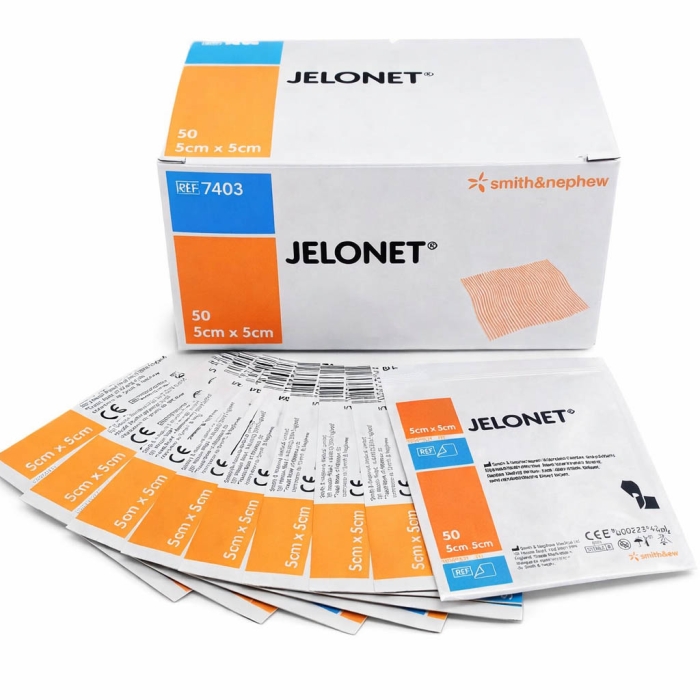
JELONET Paraffin Gauze Dressing - 5cm x 5cm
Soothing, low-adherent dressing allows the wound to drain freely into an absorbent secondary dressing.
Open-weave construction allows exudate to drain freely into a secondary absorbent dressing.
Sterile presentation supports clean wound care practice.
Suitable for a broad range of minor and superficial wound care applications.

Product Description
Paraffin Gauze Dressing
JELONET is a sterile, low-adherent paraffin tulle gras dressing for protecting delicate wounds while allowing wound fluid to pass into a suitable secondary dressing.
It is designed for situations where you need gentle wound contact, easy conformability and less disruption during dressing changes.
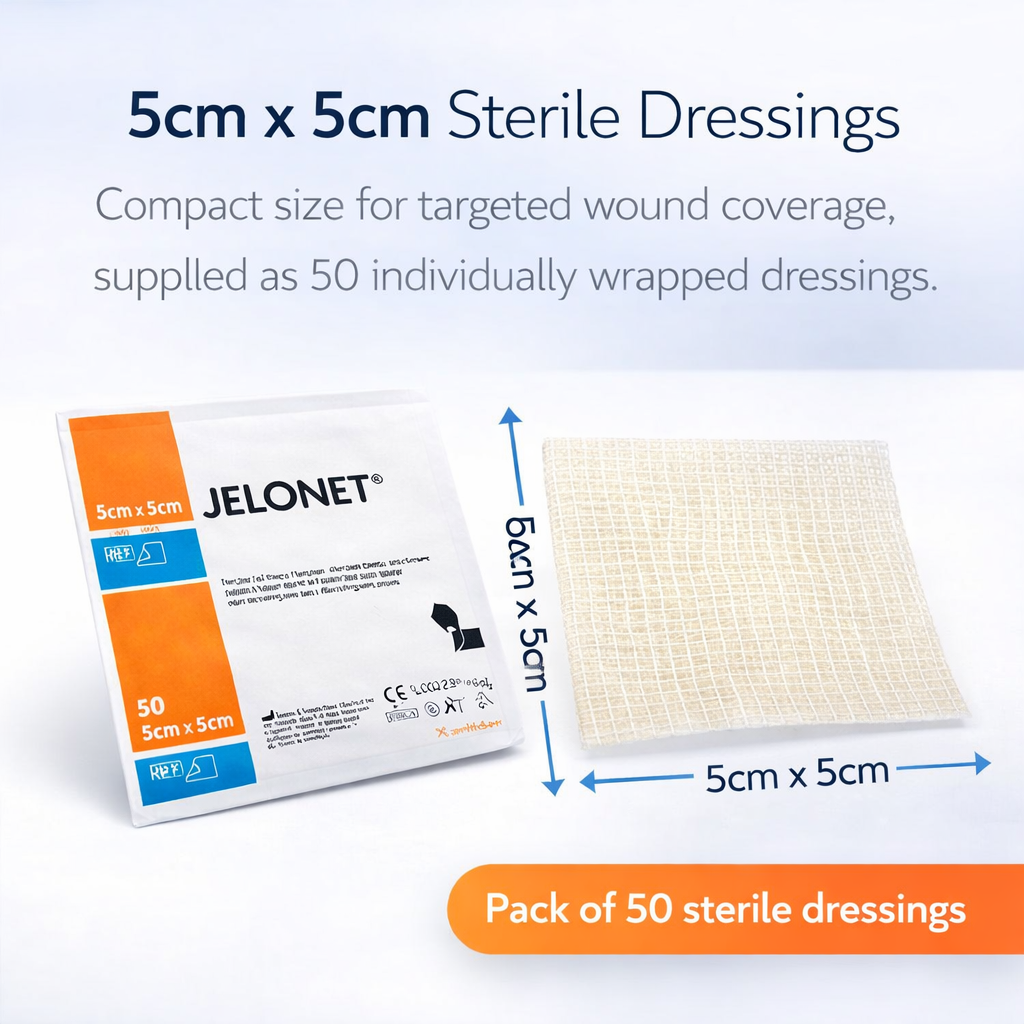
This 5cm x 5cm size is well suited to smaller wound areas and is supplied in a pack of 50 sterile dressings.
It is commonly used in professional wound care and can also support clinician-guided home use where a non-medicated primary dressing layer is required.
Key Selling Points
- Low-adherent paraffin gauze helps reduce trauma when the dressing is removed.
- Open-weave construction allows exudate to drain freely into a secondary absorbent dressing.
- Sterile presentation supports clean wound care practice.
- Flexible gauze format sits comfortably over delicate or uneven wound areas.
- Interlocking threads help resist fraying when the dressing is cut to size.
- Non-medicated format can be used alongside the topical treatment selected by the clinician.
- Suitable for a broad range of minor and superficial wound care applications.
- Pack of 50 offers practical stock levels for clinics, treatment rooms and regular dressing changes.
What It Does and How It Works
This dressing acts as a gentle wound contact layer. The paraffin coating helps stop the gauze from drying onto the wound surface, which can make removal easier and help protect fragile healing tissue.
The open-weave tulle gras structure does not trap fluid in the dressing itself. Instead, it allows exudate to pass through into an appropriate secondary absorbent dressing, helping the wound stay protected while supporting practical exudate management.
Because it is non-medicated, it does not determine the topical therapy being used. That gives clinicians flexibility when a specific antiseptic or antibiotic approach is required as part of a wider wound care plan.
Common Problems It May Help With
- Minor burns and scalds
- Skin loss wounds
- Lacerations and abrasions
- Delicate superficial wounds that need gentle coverage
- Donor graft sites
- Recipient graft sites
- Leg ulcers where a paraffin gauze contact layer is clinically appropriate
- Wounds where a low-adherent primary layer is preferred
Applications and Suitability
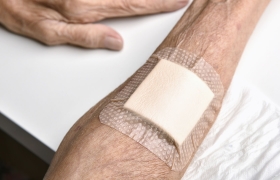
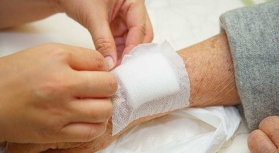
This dressing is suitable as a primary wound contact layer beneath an absorbent secondary dressing. It is a practical option when the wound needs protection, drainage and a softer dressing change experience.
It is commonly used in clinics, community care, treatment rooms and other professional wound care settings. It may also be used in home care when advised by a clinician or wound care specialist.
The 5cm x 5cm size is useful for smaller wound areas or when precise coverage is needed. Because it can be cut to size, it can also help when the dressing needs to be shaped neatly without excessive fraying.
This product type is regularly selected by healthcare professionals who need a simple, established and adaptable paraffin gauze dressing as part of a wider dressing regimen.
Who It May Not Suit
- People with known sensitivity to paraffin or dressing materials.
- Users looking for an absorbent standalone dressing, as this product is designed to work with a secondary dressing.
- Situations where self-treatment is not appropriate and clinical wound assessment is needed.
- Anyone unable to manage sterile dressing technique without support or instruction.
JELONET Paraffin Gauze Dressing
Product Specifications
| Product name | JELONET Paraffin Gauze Dressing |
|---|---|
| Size | 5cm x 5cm |
| Pack size | Pack of 50 |
| Format | Sterile paraffin tulle gras dressing |
| Construction | Open-weave gauze with interlocking threads |
| Adherence profile | Low-adherent |
| Medication | Non-medicated |
| Use with | A suitable absorbent secondary dressing |
| SKU | NV1732 |
Usage Instructions
- Cleanse the wound according to local protocol or clinical guidance.
- Open the sterile dressing carefully and maintain aseptic handling throughout application.
- If needed, cut the dressing to fit the wound and a small surrounding margin using sterile scissors.
- Place the dressing gently over the wound surface without stretching it tightly.
- Cover with an appropriate absorbent secondary dressing to manage exudate.
- Secure in place using the preferred fixation method for the treatment setting.
- Change the dressing according to wound condition, exudate levels and local care protocol.
Benefits
- Helps protect fragile tissue during healing.
- Supports gentler dressing changes on sensitive wounds.
- Encourages practical fluid transfer into a secondary absorbent layer.
- Offers flexibility where wound care needs to be tailored with topical treatment.
- Useful for clinicians who need a familiar, easy-to-handle paraffin gauze dressing.
- Can be trimmed without heavy fraying, which helps tidy application.
- Suitable for smaller wound areas thanks to the compact 5cm x 5cm format.
- Pack quantity supports efficient stockholding in busy care environments.
Contraindications & Warnings
- Do not use if sensitivity to paraffin or dressing materials is known or suspected.
- For single use only.
- This dressing should be used with a suitable secondary dressing and within an appropriate wound care plan.
- Paraffin is flammable, so the dressing should be kept away from naked flames, ignition sources and smoking materials.
- Infected wounds, complex wounds and non-healing wounds should be assessed and managed under appropriate medical supervision.
FAQs
What is JELONET used for?
JELONET is used as a primary wound contact dressing for delicate wounds where gentle coverage is important. Typical uses include minor burns and scalds, skin loss wounds, lacerations, abrasions, graft sites and some ulcer care plans where a paraffin gauze layer is appropriate.
Its main role is to protect the wound surface while allowing exudate to move into a secondary absorbent dressing. That makes it a practical choice when wound contact needs to be low-adherent rather than dry and sticking.
Does this dressing stick to the wound?
It is designed to be low-adherent rather than fully adhesive or absorbent. The paraffin coating helps reduce sticking to the wound bed, which can make dressing changes less traumatic for sensitive tissue.
That said, dressing performance can vary with wound type, exudate level and change frequency. Using the correct secondary dressing and changing the wound dressing according to protocol are important for best results.
Do I need a secondary dressing with JELONET?
Yes. JELONET is intended to be used with a suitable absorbent secondary dressing because its open-weave structure allows fluid to pass through rather than hold exudate on its own.
This layered approach helps protect the wound surface while also managing wound fluid more effectively. Choosing the right secondary dressing depends on the wound and the level of exudate present.
Can the dressing be cut to size?
Yes, it can be cut to size when needed. The interlocking thread construction helps reduce fraying, which makes it easier to shape the dressing neatly for smaller or more awkward wound areas.
When trimming the dressing, sterile scissors and appropriate aseptic technique should be used. This helps maintain dressing cleanliness and supports safer wound care practice.
Is JELONET medicated?
No, this dressing is non-medicated. That means it does not contain an active antiseptic or antibiotic ingredient within the dressing itself.
This can be useful when the wound care plan requires a specific topical treatment selected by the clinician. It gives more flexibility than a dressing with a fixed medicated formulation.
How often should it be changed?
Change frequency depends on the wound, the amount of exudate and the wider treatment plan. The dressing should be replaced according to clinical assessment, local protocol or when strike-through and dressing saturation indicate a change is needed.
There is no single schedule that suits every wound. If there is uncertainty, a wound care professional should advise on the right dressing interval.
Can it be used at home?
It may be used at home when a clinician has advised that it is suitable and the user or carer understands how to apply it correctly. This is especially relevant when the wound is straightforward and the care plan is already established.
However, more serious, infected or slow-healing wounds should not be self-managed without professional input. Good hygiene, correct dressing selection and timely review remain important.
Are there any important safety precautions?
Yes. The dressing should not be used by anyone with known sensitivity to paraffin or the dressing materials, and it is for single use only.
Because paraffin is flammable, the product should be kept away from ignition sources. Where wounds are infected, deteriorating or clinically complex, medical supervision is important.
Related Links
Product Summary
JELONET Paraffin Gauze Dressing 5cm x 5cm is a sterile, low-adherent wound contact dressing supplied in a pack of 50. It is designed to protect delicate wounds, support gentler dressing changes and allow exudate to pass into a secondary absorbent dressing, making it a practical option for burns, abrasions, lacerations, graft sites and other wounds that benefit from a non-medicated paraffin gauze layer.
Frequently bought together
Sold: Various Pack Sizes
Incl. VAT Exl. VAT
Sold: Pack of 50
Incl. VAT Exl. VAT
Sold: 3 packs of 50
Incl. VAT Exl. VAT
Sold: Pack of 50
Incl. VAT Exl. VAT
Sold: 3 packs of 50
Incl. VAT Exl. VAT
Sold: Pack of 50
Incl. VAT Exl. VAT
Sold: Pack of 50
Incl. VAT Exl. VAT
Sold: Pack of 50
Incl. VAT Exl. VAT
Sold: 3 Packs of 50
Incl. VAT Exl. VAT
Sold: 3 packs of 50
Incl. VAT Exl. VAT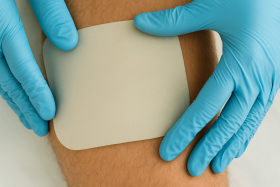
Sold: Pack of 50
Incl. VAT Exl. VAT