




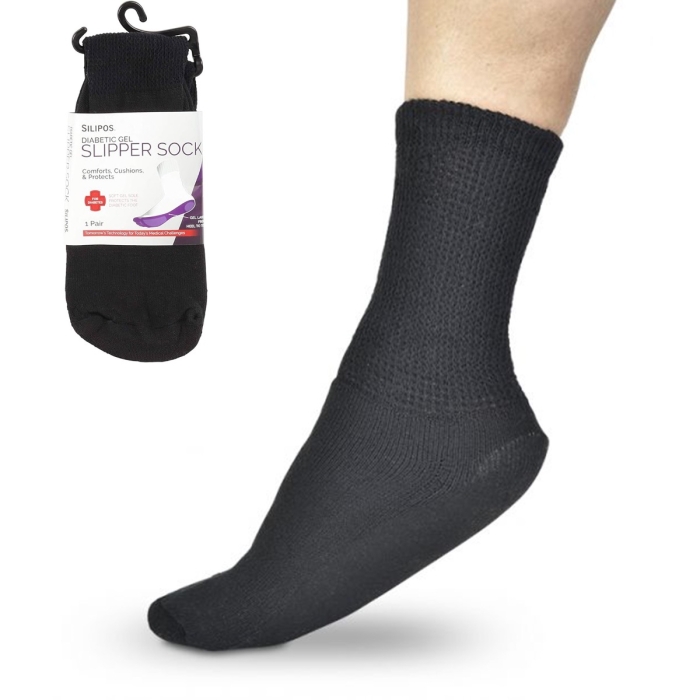
Flexi Diabetic Socks
Designed specifically for those with neuropathic feet, Flexi Diabetic Gel Socks provide unparalleled comfort and protection.
The innovative gel material ensures optimum circulation, keeping your feet healthy and problem free.
Sold: Pair
Incl. VAT Exl. VAT
Product Description
Flexi Diabetic Gel Socks for Neuropathy and Diabetic Feet
Protective, gel-cushioned socks designed to support comfort for neuropathic and diabetic feet by cushioning the sole, reducing friction, and helping manage everyday pressure points.
Best for: People with diabetic neuropathy or reduced sensation who want extra cushioning and friction reduction; those prone to callus build-up, rubbing, or sore areas; and anyone looking for a protective daily-wear sock that feels soft and supportive.
Not ideal for: Very tight footwear with limited space (gel cushioning adds bulk), people who require prescribed compression hosiery, or anyone with open wounds or active ulceration unless advised by a clinician.
- Gel cushioning throughout the sole for comfort and pressure distribution
- Designed to reduce friction, abrasion, and shear forces
- Retail-packed for convenient in-clinic resale and everyday use
What is it?
Flexi Diabetic Gel Socks are specialised protective socks designed for people who need extra care and comfort around the feet. They feature a gel layer through the sole to provide cushioning and help distribute pressure more evenly during standing and walking.
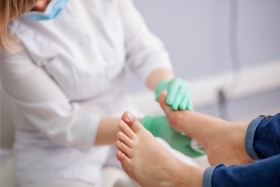
This is particularly relevant for people living with diabetes or neuropathy, where reduced sensation can make it harder to notice rubbing, high-pressure areas, or small injuries early.
In addition to cushioning, the socks are designed to minimise friction and shear. These forces are common contributors to callus formation and skin breakdown, particularly in areas that experience repeated rubbing inside footwear.
By providing a softer, more protective interface between the foot and the shoe, gel socks can support day-to-day comfort and help reduce the risk of avoidable irritation.
The socks are retail-packed, making them suitable for clinic environments where patients may want to purchase a protective sock option directly, as well as for individuals managing their foot comfort at home.
Who is it for?
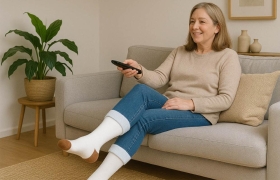
These socks are intended for adults who want additional protection and cushioning during everyday activities. They can be worn with diabetic footwear or with standard shoes that have enough room to accommodate the gel-cushioned sole.
They are commonly chosen by:
- People with diabetic neuropathy: where reduced sensation increases the importance of cushioning and friction control.
- Those prone to callus and rubbing: particularly under the heel, ball of the foot, or along bony prominences.
- People with fat pad atrophy: where the foot’s natural cushioning has reduced over time.
- People with arthritis: who may benefit from a softer, pressure-reducing interface inside footwear.
- Anyone on their feet for long periods: seeking more comfort and protection during daily wear.
What does it help with?
Flexi Diabetic Gel Socks are designed to address common comfort and protection challenges for diabetic and neuropathic feet. They are not a replacement for medical care, but they may help reduce everyday risks associated with rubbing and pressure, and they can be a helpful part of a broader foot-care routine.
Condition-to-practical benefit examples
- Diabetic neuropathy: cushioning and friction reduction help protect areas you might not feel developing irritation.
- Callus-prone feet: reduced shear forces may help slow callus build-up in high-friction zones.
- Heel and forefoot pressure sensitivity: gel sole can help soften impact and spread pressure more evenly.
- Fat pad atrophy: acts as a soft-tissue supplement, adding protective cushioning under load.
- Arthritic discomfort: softer contact and reduced rubbing can support comfort during daily wear.
How does it work?
When walking and standing, pressure and friction repeatedly act on the skin and soft tissues of the foot. In people with neuropathy, the protective “warning signs” of discomfort may be dulled, making it easier for a small pressure point to turn into a blister, callus, or more serious skin breakdown.
These socks aim to help by:
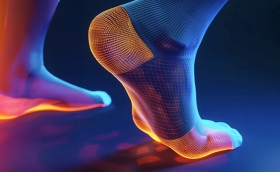
- Cushioning the sole: gel in the sole helps absorb impact and reduce peak pressure points.
- Reducing shear and abrasion: a protective layer between the foot and shoe helps minimise rubbing forces that can damage skin.
- Conforming to foot shape: the sock adapts to the foot, aiming for a comfortable, personalised fit that stays in place.
- Supporting a healthier skin environment: a comfortable sock can help maintain a stable interface and reduce repeated irritation from footwear movement.
These socks can be worn as part of a daily routine, particularly during periods when you are on your feet more, or when your shoes tend to cause rubbing.
Expected comfort and use timeline
First use: You should notice extra cushioning underfoot and a softer feel inside your shoes. Ensure footwear is not overly tight, as gel cushioning can add volume.
Short-term use (days): Many people find the socks reduce rubbing in common friction areas. If you notice any tightness at the toes or top of the foot, reassess shoe fit and sock size.
Ongoing use (weeks): With consistent use and appropriate foot checks, gel socks can become a regular part of protective footwear routines. If you have neuropathy, continue regular self-checks or clinician-recommended monitoring, as reduced sensation can mask developing issues.
Problem and solution overview
| Common problem | How the socks help |
|---|---|
| Rubbing inside shoes leading to blisters or sore spots | Designed to reduce friction, abrasion, and shear forces |
| High pressure under the heel or ball of the foot | Gel cushioning helps distribute pressure and soften impact |
| Reduced sensation (neuropathy) makes injuries harder to notice | Protective underfoot padding helps reduce risk from unnoticed pressure points |
| Callus build-up in repeated friction areas | Lower shear forces may help reduce callus formation triggers |
| Fat pad atrophy causing “thin” cushioning underfoot | Acts as a soft tissue supplement by adding cushioning where it’s needed |
Key benefits
- Gel cushioning through the sole for comfort and protection
- Designed to reduce friction, abrasion, and shear forces
- Helps support daily wear for neuropathic and diabetic feet
- May aid in reducing callus formation linked to rubbing and pressure
- Provides a soft-tissue supplement for fat pad atrophy
- Can be used with diabetic shoes or standard footwear with enough room
Fit and comfort check
These socks should feel snug, not tight. If you have neuropathy, it is especially important that socks do not create pressure bands that you might not feel.
- Check that toes can move freely and the sock does not bunch or wrinkle inside the shoe.
- If your shoes feel suddenly tight, consider sizing up footwear, loosening laces, or choosing roomier styles.
- Inspect your feet after wear, especially when first trying the socks, to ensure there are no red marks or rubbing areas.
Common mistakes to avoid
- Wearing with tight shoes: gel cushioning adds bulk and can increase pressure in narrow footwear.
- Skipping foot checks: if you have neuropathy, inspect feet regularly for redness, blisters, or skin changes.
- Using on open wounds without guidance: for ulcers or broken skin, follow clinician advice on dressings and protective wear.
- Using harsh cleaning products: strong chemicals may damage materials and irritate skin.
How to use
- Choose the correct size: select the size that matches your foot to avoid tightness or bunching.
- Put on carefully: ensure the gel-cushioned sole is positioned smoothly under the foot.
- Check for wrinkles: smooth out any folds that could create pressure points.
- Wear with suitable footwear: use with diabetic shoes or roomier everyday shoes for best comfort.
- Inspect after use: particularly if you have neuropathy, check skin for red marks or irritation.
- Clean as recommended: hand wash and air dry to maintain material performance.
Technical specifications
| Product type | Diabetic gel-cushioned socks (protective underfoot padding) |
|---|---|
| Primary purpose | Comfort, cushioning, and friction reduction for neuropathic and diabetic feet |
| Cushioning location | Gel throughout the sole |
| Friction management | Designed to reduce friction, abrasion, and shear forces |
| Ulcer prevention support | Designed to help reduce risk factors associated with skin breakdown (not a medical treatment) |
| Fit | Conforms to foot shape for a personalised feel |
| Use with diabetic shoes | Suitable with or without diabetic shoes (ensure adequate footwear space) |
| Sizes | Medium: Women’s UK 7+; Men’s UK 7–9 Large: Men’s UK 7–11 |
| Seams | Designed for comfort with minimal irritation (avoid pressure points from bulky seams) |
| Care | Hand wash with mild soap and water; rinse thoroughly; air dry |
| Storage | Store in a cool, dry place away from direct sunlight |
| Sales unit | 1 pair (retail-packed) |
Frequently asked questions
How do gel diabetic socks help with neuropathy?
Neuropathy can reduce sensation, making it harder to notice pressure points or rubbing. Gel cushioning and friction reduction can help protect the skin by softening impact and reducing abrasion inside footwear.
Can these socks prevent ulcers?
They are designed to help reduce risk factors associated with ulcer formation, such as friction and high pressure. They are not a substitute for medical treatment, regular foot checks, or clinician-led care.
Can I wear them with standard shoes?
Yes, provided the shoe has enough room. Because the gel sole adds cushioning, tighter shoes may feel restrictive and could create unwanted pressure.
Are they suitable for arthritis?
They can be a comfortable option for arthritic feet because cushioning and reduced friction may help reduce irritation during walking and standing.
How should they fit?
They should feel snug and smooth, without tight bands or wrinkles. If you have neuropathy, avoid anything that leaves deep sock marks or compresses the foot.
How do I care for them?
Hand wash with mild soap and water, rinse well, and air dry. Avoid direct heat sources that could damage the gel materials.
When should I speak to a clinician?
If you have an open sore, active ulceration, signs of infection, sudden swelling, colour change, or increasing pain, seek medical advice promptly. Regular foot checks are recommended for anyone with diabetic neuropathy.
Complementary product suggestions
For a more complete diabetic foot-care routine, consider pairing gel socks with well-fitting diabetic or extra-depth footwear, soft accommodative insoles, blister prevention products where appropriate, and gentle moisturising care to maintain healthy skin (avoiding moisture between toes unless advised). Regular foot checks and nail care support can also be helpful, especially for those with reduced sensation.
Content credibility
Written by: Algeos Product & Clinical Content Team
Last reviewed: January 2026
Purpose: This content is intended to support informed purchasing decisions and safe product use. It does not provide diagnosis or replace personalised medical advice.
Frequently bought together
Sold: pair
Incl. VAT Exl. VAT
Sold: Pair
Incl. VAT Exl. VAT
Sold: Each
Incl. VAT Exl. VAT
Sold: Pair
Incl. VAT Exl. VAT
Sold: Pair
Incl. VAT Exl. VAT
Sold: Pair
Incl. VAT Exl. VAT