



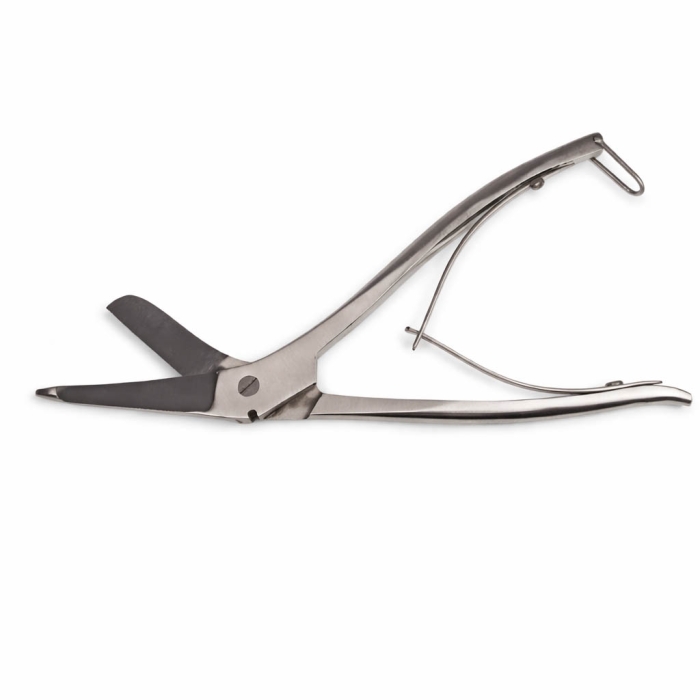
Plaster Cast Shears for Plaster Cast Removal and Trimming
Professional-grade plaster cast shears designed for controlled cutting of plaster and casting materials.
Notched stainless steel blades help reduce slippage and improve cutting accuracy.
Reusable, rust-resistant construction suitable for repeated clinical use.
Fully autoclavable for effective sterilisation and infection control.

Product Description
Professional Plaster Cutting Shears
Durable, professional-grade plaster cast shears designed for controlled cutting of plaster and casting materials in clinical, educational and workshop settings.
Best for: Healthcare professionals, technicians and students who need reliable hand tools for trimming or removing plaster and synthetic casts.
Not ideal for: Cutting metal, wire, or non-medical industrial materials.
- High-quality stainless steel construction
- Notched blade design for controlled cutting
- Reusable and fully autoclavable
What is it?
Plaster Cast Shears are specialist cutting tools used during the application, modification, or removal of plaster and synthetic casting materials. Unlike general-purpose scissors, plaster shears are designed to handle thicker, rigid materials while maintaining control and precision.
This 22cm pair of shears is manufactured from stainless steel and includes a notched blade profile. The notch helps guide plaster material during cutting, reducing slippage and supporting more predictable results when working close to sensitive areas.
These shears are suitable for repeated professional use and can be sterilised using standard autoclave procedures, making them appropriate for clinical environments where hygiene and infection control are essential.
Who is it for?
Plaster Cast Shears are intended for use by individuals who are familiar with handling clinical or technical cutting instruments. They are commonly used across a range of healthcare and educational settings.
- Podiatrists and foot health practitioners
- Orthotists and prosthetists
- Casting / orthopaedic technicians
- Physiotherapy and rehabilitation clinics
- Hospitals and outpatient departments
- Medical and allied health training environments
- Workshops where plaster casting techniques are taught or demonstrated
While the shears are robust and practical, they are not designed as household scissors and should be used by those who understand safe handling of sharp instruments.
What does it help with?
Plaster Cast Shears support safe and efficient handling of casting materials during different stages of treatment or fabrication. They are commonly used to trim edges, adjust cast shape, or assist with partial removal where precision is required.
- Trimming plaster casts → Allows cleaner edges and improved comfort around the limb
- Adjusting cast shape → Helps refine fit during setting or modification
- Cast removal preparation → Supports controlled cutting before other removal tools are used
- Educational demonstrations → Enables students to practise proper plaster handling techniques
The shears are designed to support careful, incremental cutting rather than rapid or forceful removal.
How does it work?
The cutting action is based on a strong scissor-style mechanism combined with a notched blade edge. When the blades close, the notch helps grip the plaster material, preventing it from sliding away from the cutting edge.
This design supports:
- More controlled cutting through thick plaster layers
- Reduced hand strain compared to forcing standard scissors
- Improved accuracy when working near edges or contours
The stainless steel construction maintains blade alignment and sharpness over repeated uses and sterilisation cycles.
Expected use timeline
As a hand tool, comfort relates to handling, control, and familiarity rather than wear on the body. Users typically adapt quickly, but safe use improves with experience.
First use
On initial use, the shears may feel heavier than standard scissors due to their solid construction. Controlled, slower cuts are recommended while becoming familiar with the blade action.
Short-term use (first few days)
With repeated use, most users find the balance and resistance predictable. The notched blade becomes easier to position accurately as technique improves.
Ongoing use (weeks)
Over time, the shears become a reliable part of routine plaster work. Regular cleaning and appropriate sterilisation help maintain smooth operation and cutting performance.
Problem and solution overview
| Common problem | How the product helps |
|---|---|
| Plaster slipping while cutting | Notched blade helps guide and hold material during cutting |
| Difficulty cutting thick casts | Robust stainless steel blades designed for dense materials |
| Tools wearing quickly in clinical use | Durable construction supports repeated use and sterilisation |
| Concerns about hygiene | Fully autoclavable for routine clinical sterilisation |
Key benefits
- Designed specifically for plaster and casting materials
- Notched blade supports controlled, precise cutting
- Stainless steel construction for strength and durability
- Reusable tool suitable for busy clinical environments
- 22cm length offers good leverage without excessive bulk
These shears are designed to feel secure and balanced in the hand. A firm, comfortable grip is important for control, but cutting should never require excessive force.
If significant pressure is needed, check blade alignment, material thickness, and cutting angle rather than forcing the tool.
Common mistakes to avoid
- Using the shears to cut materials they are not designed for, such as metal or wire
- Applying excessive force instead of repositioning the blades
- Skipping cleaning before sterilisation, which may affect longevity
- Assuming they replace powered cast removal tools for full cast removal
How to use
- Position the notched blade against the plaster material to be cut.
- Apply steady, controlled pressure to close the blades.
- Make small, incremental cuts rather than attempting to cut through large sections at once.
- After use, clean thoroughly and prepare for sterilisation if required.
Technical specifications
| Product type | Plaster cast shears |
|---|---|
| Length | 22 cm |
| Material | Stainless steel |
| Blade design | Notched cutting edge |
| Reusable | Yes |
| Autoclavable | Yes |
| Left / right hand use | Universal |
| Weight | Not specified |
| Pack contents | 1 pair of plaster cast shears |
Frequently asked questions
Can these shears be used on synthetic casting materials?
They are designed primarily for plaster and similar casting materials. Performance on synthetic materials can vary depending on thickness and composition.
Are the shears suitable for full cast removal?
They are typically used for trimming and controlled cutting. Full cast removal often requires powered or specialist removal tools.
Can they be sterilised in an autoclave?
Yes, the stainless steel construction makes them suitable for standard autoclave sterilisation.
Do they require sharpening?
With normal professional use and correct care, sharpening is not frequently required. Cutting performance should be monitored over time.
Are they safe for student use?
They can be used in training environments under appropriate supervision and instruction.
Will they rust over time?
The stainless steel construction is rust-resistant when cleaned and dried correctly after use and sterilisation.
Complementary and pairing suggestions
- Plaster bandages and casting materials
- Protective gloves for plaster handling
- Cast padding and liners
- Additional cast trimming or finishing tools
Content credibility
Written by: Algeos Product & Clinical Content Team
Last reviewed: February 2026
This content is provided to support informed purchasing decisions. It is intended as general product guidance and does not replace professional training, diagnosis, or medical advice.
Frequently bought together
Sold: Each
Incl. VAT Exl. VAT
Sold: Each
Incl. VAT Exl. VAT
Sold: Each
Incl. VAT Exl. VAT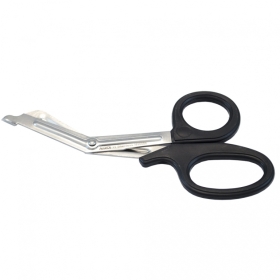
Sold: Each
Incl. VAT Exl. VAT
Sold: Each
Incl. VAT Exl. VAT
Sold: Each
Incl. VAT Exl. VATSold: Each
Incl. VAT Exl. VAT
Sold: 15kg Tub
Incl. VAT Exl. VATSold: 15kg Tub
Incl. VAT Exl. VAT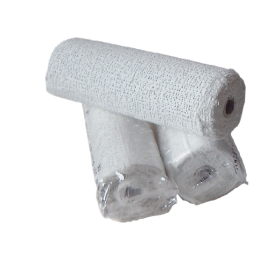
Sold: Multiple Widths
Incl. VAT Exl. VATSold: Multiple Widths
Incl. VAT Exl. VAT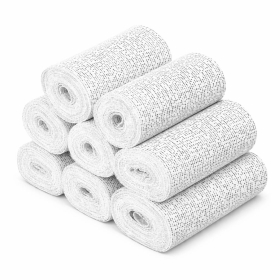
Sold: Pack of 12
Incl. VAT Exl. VATSold: Pack of 12
Incl. VAT Exl. VAT
Sold: Each
Incl. VAT Exl. VAT
Sold: Each
Incl. VAT Exl. VAT