




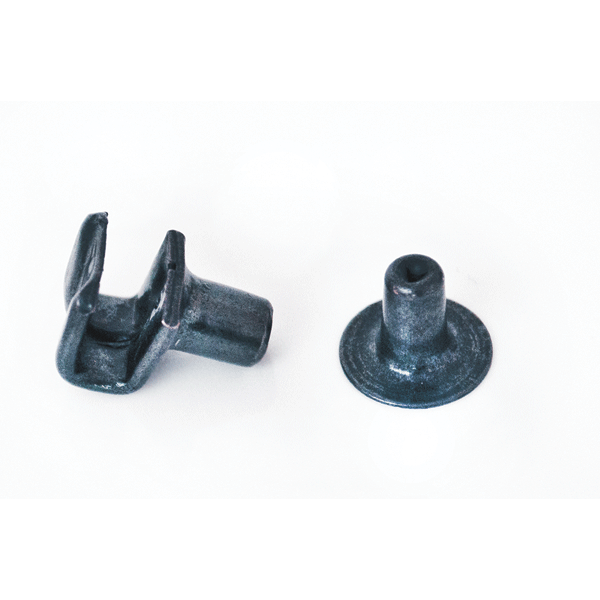
Ski Hooks - Fastening for Footwear and Orthotic Devices
Open hook design for rapid lace engagement and release.
Metal construction for strength and durability.
Suitable for high-tension lacing systems.
Designed for repeated use in demanding footwear environments.
Sold: Pack of 1000
Incl. VAT Exl. VAT
Product Description
Durable Boot Lace Hook Hardware
Heavy-duty metal lace hooks designed for secure, adjustable fastening in footwear and orthotic device construction.
Best for: Boot manufacture, orthotic footwear modification, repairs, and technical footwear requiring quick lace adjustment.
Not ideal for: Use as an in-shoe orthotic insert or internal foot support device.
- Sturdy metal construction for repeated lacing cycles
- Open-hook design for rapid tension adjustment
- Suitable for boots, orthotic shells, and custom footwear
What is it?
Algeos Ski Hooks are robust, hook-shaped lace fasteners used in footwear and orthotic device manufacture. Despite appearing under orthotics categories, they are not foot support inserts. Instead, they are hardware components designed to be fitted into the upper section of boots, footwear, or orthotic shells.
Each hook functions as an open lace anchor point. Unlike traditional closed eyelets, ski hooks allow laces to be looped quickly over the hook and tensioned with minimal friction. This design makes them particularly useful in boots and orthotic devices where repeated adjustment is required.
Typically manufactured from durable metal, ski hooks are intended to withstand regular use, repeated lacing cycles, and the mechanical stresses associated with technical footwear.
Who is it for?
These ski hooks are intended for professional and specialist users involved in footwear construction, modification, and repair.
- Orthotists and prosthetists fabricating custom ankle-foot devices
- Orthotic technicians and in-house hospital workshops
- Footwear manufacturers and bespoke boot makers
- Specialist shoe repairers and footwear technicians
- Sports podiatrists modifying ski or hiking boots
- Educational institutions teaching footwear construction
- Advanced DIY users with appropriate tools and experience
They are particularly suitable where secure lace tensioning is essential but frequent adjustment is expected, such as in ski boots, walking boots, work boots, and custom orthotic footwear.
What is it used for?
Applications
- Fitting lace hooks to the upper shaft of hiking or ski boots
- Replacing damaged or worn lace fasteners in work boots
- Upgrading closed eyelets to open hooks for faster lacing
- Securing lacing systems on custom orthotic shells
- Repair and refurbishment of specialist footwear
- Prototype footwear development and testing
Characteristics
- Open hook design for rapid lace engagement and release
- Metal construction for strength and durability
- Suitable for high-tension lacing systems
- Designed for repeated use in demanding footwear environments
Typical Users
- Boot manufacturers producing technical outdoor footwear
- Orthotic labs fabricating custom ankle or lower limb devices
- Workshops carrying out boot repairs or modifications
- Sports footwear specialists adjusting fit systems
How to work with it
Ski hooks are mechanically fixed into the upper material of a boot or orthotic shell. Installation typically involves preparing the upper, positioning the hook accurately, and securing it using appropriate fixing methods compatible with the material.
Accurate spacing and alignment are important to ensure even lace tension and wearer comfort. Installation should be performed by trained personnel using suitable tools.
Expected Use Timeline
First use
Once correctly fitted, ski hooks allow immediate lace engagement. The wearer should experience quicker fastening and easier tension adjustment compared to traditional eyelets.
Ongoing use (weeks and beyond)
Over time, the hooks are designed to tolerate repeated lacing cycles. Routine inspection is recommended in high-use environments to check for loosening, material fatigue, or sharp edges caused by wear.
Service life will depend on usage intensity, lace type, environmental exposure, and installation quality.
Common Problems and How This Product Helps
| Common problem | How the product helps |
|---|---|
| Slow lacing in tall boots | Open-hook design allows rapid lace looping without threading through closed eyelets. |
| Difficulty adjusting lace tension mid-activity | Hooks allow selective tightening or loosening in specific zones. |
| Worn or damaged lace eyelets | Can replace or upgrade traditional eyelets in repair settings. |
| Need for secure upper fixation in orthotic shells | Provides stable anchor points for lacing systems on rigid or semi-rigid devices. |
| Frequent donning and doffing of technical footwear | Speeds up fastening while maintaining secure hold. |
Key Benefits
- Supports fast and efficient lacing in technical footwear
- Durable metal construction suited to repeated use
- Allows targeted tension control across boot uppers
- Compatible with a wide range of lace types
- Useful for both new builds and repair applications
- Appropriate for orthotic device integration where secure fastening is required
Common Mistakes to Avoid
- Assuming ski hooks are in-shoe orthotic inserts rather than hardware components
- Installing without correct spacing, leading to uneven lace tension
- Using inappropriate fixing methods for the upper material
- Failing to inspect regularly in high-wear environments
How to Work With Ski Hooks
- Assess the boot or orthotic shell and confirm suitable placement height and spacing.
- Mark positions carefully to maintain symmetrical alignment.
- Prepare the upper material according to its composition (leather, synthetic, or composite).
- Fix the hook securely using appropriate tools and compatible fastening hardware.
- Check for stability, ensuring no sharp edges or protrusions remain.
- Test lace engagement and tension before returning footwear to service.
For complex orthotic applications, fitting should be undertaken by trained professionals familiar with device construction.
Technical specifications
| Product type | Metal lace hook fasteners |
|---|---|
| Material | Metal construction (exact composition varies by batch) |
| Finish | Varies by option |
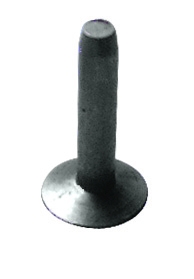
| Size | Varies by option. For example, dimensions of the hook: diameter 8mm, height 10mm |
| Application area | Boot uppers, orthotic shells, technical footwear |
| Left / Right | Universal |
| Pack contents | Varies by pack size selection |
| Care | Inspect periodically; replace if bent, cracked, or excessively worn |
Frequently Asked Questions
Are these orthotic insoles for skiing?
No. Ski hooks are hardware components used in footwear or orthotic device construction. They are not in-shoe foot support inserts.
Can they be fitted to existing boots?
Yes, provided the upper material and structure are suitable. Installation should be carried out using appropriate tools and methods.
Are they suitable for high-tension lacing?
They are designed for use in technical footwear where firm lace tension may be required. Final performance depends on correct installation and overall boot design.
Do they rust?
Durability depends on the metal finish and environmental exposure. Regular inspection is advisable in wet or demanding conditions.
Can they be used on orthotic ankle-foot devices?
They may be integrated into certain custom orthotic shells where a lace fastening system is required.
How long do they last?
Service life varies depending on usage frequency, lace abrasion, and environmental factors. Routine inspection helps maintain safety and performance.
Complementary and Pairing Suggestions
- Boot laces suitable for technical or outdoor use
- Orthotic shell materials for custom device fabrication
- Footwear repair tools and rivet-setting equipment
- Reinforcement patches for boot upper modification
- Protective coatings for metal hardware
Written by: Algeos Product & Clinical Content Team
Last reviewed: February 2026
This content is provided for buyer guidance and product understanding. It is not a substitute for clinical assessment, device prescription, or professional training.
Frequently bought together


Sold: Pack of 1000
Incl. VAT Exl. VAT
Sold: 1000
Incl. VAT Exl. VAT
Sold: Pack of 1000
Incl. VAT Exl. VAT