





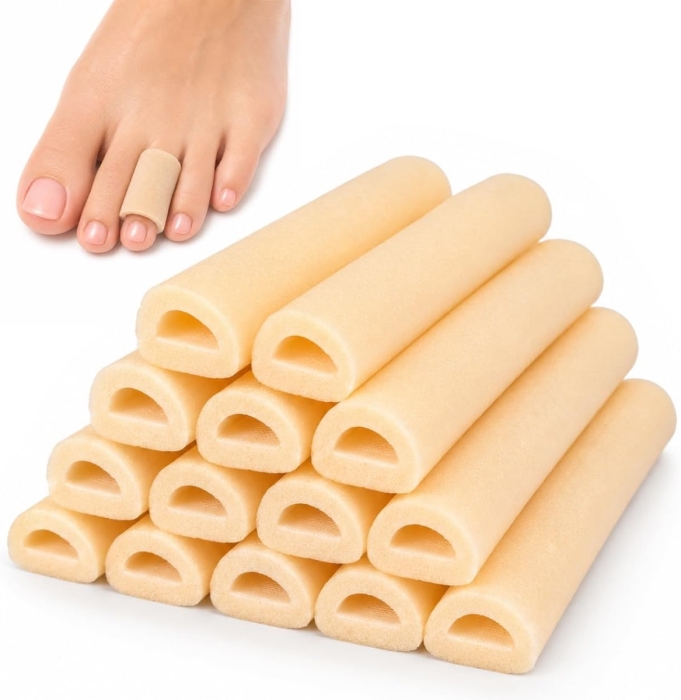
Tubular Toe Foam with Overlap - 25cm Length
Tubular toe foam dressing aids ideal for friction and pressure relief.
Used daily in clinic by Podiatrists and foot health professionals.
- Corns: helps reduce direct pressure on sensitive areas, like bunions (Hallux Valgus).
- Blisters: cushions the skin and limits further rubbing
- Callused skin: provides a soft interface to reduce irritation
- Shoe-related discomfort: adds padding between toes and footwear
- Finger friction: protects against repetitive contact or rubbing
Sold: Pack of 12
Incl. VAT Exl. VAT
Product Description
Toe Foam with Overlap – Protective Foam Dressing for Toes and Fingers
Soft, adaptable cushioning to help reduce pressure, friction and rubbing around sensitive toes and fingers.
Tubular Toe Foam with Overlap provides a protective layer between delicate skin and everyday sources of irritation, including footwear and neighbouring toes. Its soft, compressible construction helps cushion localised pressure points, while the overlapping edges provide additional coverage where it is needed.
Each 25 cm tube can be trimmed to the required length, making it a practical solution for individual footcare, routine toe protection and professional podiatry treatments.
Best for: Toe rubbing, footwear pressure, sensitive corns, callused skin, friction-prone areas and general protection of toes or fingers.
Not ideal for: Open or infected wounds without appropriate clinical dressings, severely constricted footwear or conditions requiring rigid immobilisation.
Available sizes: AX, BX, CX and DX | Length: 25 cm per tube | Pack: 12 tubes
Key Selling Points
Everyday Pressure Protection
Soft foam helps cushion uncomfortable contact between toes, footwear and surrounding surfaces, improving comfort during routine activity.
Extra Coverage with Overlap
The overlapping construction provides an additional cushioning layer where the foam edges meet, helping protect sensitive areas from repeated rubbing.
Cut to Your Required Length
Each 25 cm tube can be trimmed with scissors to provide the amount of coverage needed for an individual toe or finger.
Simple, Non-Adhesive Application
The flexible tubular design slides over the digit without requiring adhesive against the skin, allowing straightforward application and removal.
What Does Tubular Toe Foam Do and How Does It Work?
Tubular toe foam is a protective cushioning material designed to surround a toe or finger and reduce direct contact with sources of pressure and friction.
When a sensitive toe repeatedly rubs against the inside of a shoe or an adjacent toe, pressure becomes concentrated on a relatively small area of skin. This can aggravate existing corns, hard skin or areas prone to friction blisters.
The foam provides a soft interface that compresses under load, helping distribute some of this contact pressure across the protected area.
How the Overlap Design Helps
Unlike a basic foam tube with a simple edge construction, the overlapping design allows one edge of the material to sit over another. This creates additional cushioning in the overlapping area while retaining the flexibility needed for normal toe or finger movement.
The material can be cut to suit the required area of protection, whether the concern is rubbing along the side of a toe, pressure across its upper surface or irritation around a finger.
Correct sizing remains important. Additional padding should improve comfort without creating excessive pressure inside footwear.
Important distinction: Tubular toe foam provides external cushioning and protection. It does not remove corns, correct toe deformities, realign joints or treat the underlying cause of persistent pressure.
Common Problems Tubular Toe Foam May Help With
This type of protective dressing is particularly useful where discomfort results from repeated mechanical pressure or friction.
Corns and Localised Pressure
Provides a cushioning layer around tender areas, helping reduce direct contact with footwear or neighbouring toes. It may improve comfort while the underlying pressure source is assessed or managed.
Friction and Blister-Prone Skin
Helps reduce repeated rubbing during walking and daily movement. It may be useful for protecting intact skin that regularly becomes irritated by footwear.
Calluses and Sensitive Skin
Creates a soft barrier over areas of hard or sensitive skin, helping limit additional irritation from direct contact.
Shoe-Related Toe Discomfort
Adds targeted cushioning where the upper, side or end of a toe comes into contact with footwear, provided the shoe has enough room for the additional material.
Rubbing Between Toes
Provides a protective surface where adjacent toes make repeated contact, helping reduce friction without requiring a rigid support.
Finger Pressure and Friction
Can be trimmed and applied to suitable fingers where localised cushioning is required during everyday activities or appropriate protective care.
Applications and Suitability
Tubular Toe Foam with Overlap is suitable for everyday protective footcare and professional applications where flexible, non-adhesive cushioning is appropriate.
Everyday Footcare
- Protecting toes that rub against shoes
- Cushioning areas prone to corns or hard skin
- Reducing irritation during walking or standing
- Providing temporary protection for sensitive digits
- Supporting comfort in footwear with adequate toe space
Professional Foot Health Use
- Podiatry and foot health clinics
- Routine conservative pressure management
- Individualised toe padding applications
- Protective cushioning following appropriate clinical assessment
- Short-term post-procedure protection when considered suitable by the treating clinician
Choosing the Right Application
Tubular foam is most appropriate when a flexible cushioning sleeve is needed around a toe or finger. For problems involving significant toe misalignment, persistent joint pressure or structural deformity, a different type of toe support or clinical treatment may be more suitable.
Who May Not Be Suitable for Tubular Toe Foam?
Although tubular foam provides straightforward protection, it is not appropriate for every skin or foot condition.
- Open or infected wounds: Do not use directly over open, infected or draining wounds without appropriate dressings and professional guidance.
- Marked swelling: A tube may become constrictive if swelling increases or the selected diameter is too small.
- Reduced sensation or circulation: People with diabetes, neuropathy, poor circulation or fragile skin should seek professional advice before use.
- Very tight footwear: Additional foam can increase pressure if there is insufficient room inside the shoe.
- Conditions requiring immobilisation: Soft cushioning does not replace a prescribed splint, brace or rigid protective device.
Product Specifications
| Product | Tubular Toe Foam with Overlap |
|---|---|
| Product Type | Protective tubular foam dressing |
| Material | Soft, compressible foam |
| Construction | Tubular sleeve with overlapping edges |
| Tube Length | 25 cm per tube |
| Size AX | Approximately 15 mm internal diameter – smaller toes |
| Size BX | Approximately 18 mm internal diameter – medium toes |
| Size CX | Approximately 21 mm internal diameter – medium to larger toes |
| Size DX | Approximately 25 mm internal diameter – larger toes, including big toes where appropriate |
| Application Areas | Toes and fingers |
| Adjustment | Trim to the required length |
| Adhesive | Non-adhesive application |
| Care | Single-use recommended; replace when soiled, worn or compressed |
| Pack Contents | 12 tubes |
Size and Fit Guidance
Select the internal diameter according to the toe or finger requiring protection. The sleeve should remain in position without squeezing the digit, restricting movement or creating uncomfortable pressure.
If the fit causes tightness, throbbing, numbness or increased discomfort, remove the foam and reassess the size.
How to Use Tubular Toe Foam
- Select the correct size. Choose an internal diameter that fits the toe or finger comfortably without excessive compression.
- Measure the required coverage. Identify the area needing cushioning and allow sufficient length to cover it securely.
- Trim the foam. Use clean scissors to cut the tube to the required length, keeping the cut edges smooth and even.
- Apply gently. Slide the tube over the intended digit without stretching or forcing the material.
- Position the overlap. Ensure the overlapping edges sit smoothly and do not create a concentrated pressure point.
- Check the fit. Confirm that the digit remains comfortable and that shoes or gloves have sufficient space for the additional cushioning.
- Inspect regularly. Check comfort during use and remove the dressing at the end of the day to inspect the skin.
- Replace when necessary. Use fresh foam when the material becomes compressed, damaged or soiled.
What to Expect During Wear
On first use: The foam should provide a noticeable cushioning layer without feeling restrictive.
During everyday activity: The material may compress slightly as it adapts to movement and contact pressure. Check that it continues to sit comfortably.
With continued use: Foam can gradually lose cushioning as it becomes compressed or worn. Replace the dressing when it no longer provides comfortable protection.
Benefits of Tubular Toe Foam Protection
Targeted Cushioning
Protects specific areas of discomfort without needing to pad the entire foot.
Flexible During Movement
Soft, compressible construction follows normal digit movement rather than providing rigid restriction.
Personalised Coverage
Trim-to-length tubing accommodates different areas of pressure and individual protection requirements.
Convenient for Clinic and Home
Simple application makes it practical for routine footcare and professional cushioning treatments.
Protection Without Adhesive
Suitable where a removable sleeve is preferred over adhesive padding applied directly to the skin.
Multiple Sizes Available
Four internal diameters make it easier to select protection appropriate to different toe and finger sizes.
Contraindications and Important Warnings
Safe Use and Skin Protection
- Do not apply directly over open, infected, bleeding or heavily draining wounds without an appropriate primary dressing and professional assessment.
- Do not use a size that causes tightness, numbness, throbbing, discolouration or reduced comfort.
- Seek professional advice before use where diabetes, neuropathy, reduced circulation or fragile skin increases the risk of unnoticed injury.
- Avoid placing additional cushioning inside footwear that already presses tightly against the toes.
- Inspect the skin regularly for redness, soreness, moisture-related changes or increasing irritation.
- Remove immediately if pain worsens or there are signs of restricted circulation.
- Do not rely on tubular foam to correct structural toe problems or replace prescribed immobilisation.
- Replace foam that becomes soiled, damaged, flattened or unable to provide effective cushioning.
Persistent pain, recurrent skin breakdown, signs of infection or worsening symptoms should be assessed by an appropriate healthcare professional.
Frequently Asked Questions
What is Tubular Toe Foam with Overlap used for?
It is used to cushion toes or fingers against repeated friction, rubbing and localised pressure. The soft sleeve creates a protective layer between the skin and surfaces such as footwear or neighbouring digits. It is particularly useful for sensitive areas affected by corns, hard skin or recurrent irritation.
How do I choose the correct tubular toe foam size?
Choose the internal diameter according to the size of the toe or finger requiring protection. AX is approximately 15 mm, BX 18 mm, CX 21 mm and DX 25 mm. The correct size should stay comfortably in place without squeezing the digit, creating numbness or restricting circulation.
Can tubular toe foam be worn all day inside shoes?
It can be used during normal daily activity when the selected size fits comfortably and footwear provides sufficient space. Check the fit periodically, particularly when standing or walking for extended periods. Remove the dressing at the end of the day to inspect the skin and assess whether replacement is needed.
Will toe foam help with corns and friction blisters?
The foam may help reduce rubbing and direct contact pressure that can aggravate corns or blister-prone skin. It provides cushioning rather than removing corns or treating an underlying foot condition. Existing open blisters or damaged skin require appropriate wound care before protective foam is considered.
Does tubular toe foam stay in place without adhesive?
The tubular construction is designed to fit around the toe or finger without adhesive being applied directly to the skin. Choosing an appropriate diameter helps the sleeve remain positioned during normal movement. If it slips repeatedly, reassess the fit rather than using a smaller size that may constrict the digit.
Can tubular toe foam be used on fingers as well as toes?
Yes, it can provide protective cushioning around suitable fingers as well as toes. The tube can be trimmed to cover the particular area affected by friction or pressure. As with toe applications, it should fit without tightness or restriction of normal movement.
Can I use tubular foam over broken skin or after a procedure?
It should not be applied directly over an open, infected or draining wound without appropriate clinical dressing and advice. Following a minor procedure, protective foam may be considered if the treating clinician confirms that it is suitable. The foam is primarily a cushioning aid and should not be treated as a replacement for a primary wound dressing.
Can tubular toe foam be reused, and when should it be replaced?
Single-use application is recommended for hygiene and consistent cushioning. Although short-term reuse may be possible in some circumstances, the foam should be replaced when it becomes flattened, worn, damaged or soiled. Fresh material helps maintain effective protection and avoids unnecessary irritation from deteriorating padding.
Is tubular toe foam suitable for people with diabetes or poor circulation?
People with diabetes, reduced skin sensation or poor circulation should obtain professional advice before applying toe protection. These conditions can make pressure-related skin damage harder to detect, particularly if cushioning is too tight. Appropriate sizing, regular inspection and individual clinical guidance are especially important.
Related Products and Footcare Solutions
Different forms of cushioning and toe protection may be appropriate depending on the location and cause of discomfort. Explore these related options for more targeted support.
- Gel Toe Protectors – Explore flexible protective sleeves and gel cushioning products for sensitive toes.
- Gel Toe Caps for Fingers and Toes – An alternative for cushioning and protecting the ends of toes or fingers.
- Gel Toe Separators – Consider where adjacent toes rub together and additional spacing may help.
- Bunion Protection Pads – Targeted cushioning options for pressure around prominent big toe joints.
- Chiropody Felt and Padding – Explore cut-to-shape protective materials for professional and everyday pressure management.
Product Summary
Tubular Toe Foam with Overlap is a soft, non-adhesive protective dressing used to cushion toes and fingers against pressure, friction and rubbing. Its overlapping foam construction offers adaptable coverage for sensitive skin, corns and blister-prone areas. Supplied in packs of 12, each 25 cm tube can be cut to length. Available in four internal diameters, AX to DX, for everyday footcare and professional podiatry applications.
This information is intended as general product guidance and does not replace individual medical assessment or treatment advice.
Frequently bought together

Sold: 4 Sheets
Incl. VAT Exl. VAT
Sold: Sheet 1 x 1m
Incl. VAT Exl. VAT
Sold: Pack of 10 Pairs
Incl. VAT Exl. VAT
Sold: Pack of 12 Tubes
Incl. VAT Exl. VAT
Sold: Pack of 2
Incl. VAT Exl. VAT


Sold: Pack of 3
Incl. VAT Exl. VAT
Sold: Pack of 2
Incl. VAT Exl. VAT
Sold: each
Incl. VAT Exl. VAT
Sold: Pack of 2 Strips
Incl. VAT Exl. VAT
Sold: Pack of 12
Incl. VAT Exl. VAT
Sold: Pack of 2
Incl. VAT Exl. VAT
Sold: pack of 4
Incl. VAT Exl. VAT
Sold: Pack of 12
Incl. VAT Exl. VAT


Sold: Pack of 12
Incl. VAT Exl. VAT