



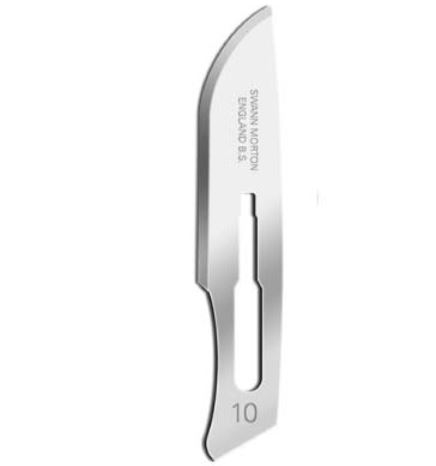
Swann Morton Green Sterile Stainless Steel Blades
Sterile Swann Morton Green scalpel blades, individually foil-wrapped and supplied in boxes of 100.
Single-use stainless steel blades designed for consistent, controlled cutting in clinical and professional settings.
Multiple blade patterns available to suit podiatry/chiropody work, minor procedures, and dermaplaning workflows.
Compatible with a range of No.3 and No.4 fitting scalpel handles (handle fit depends on blade number).
Sold: Pack of 100
Incl. VAT Exl. VAT
Product Description
Swann Morton Green Stainless Steel Scalpel Blades
Sterile, single-use stainless steel surgical scalpel blades supplied in individual foil packs (box of 100), with a choice of blade patterns to suit podiatry, minor surgery and dermaplaning workflows.
Best for: Clinics and practitioners needing sterile, consistent blades for routine procedures, with the flexibility to choose a blade number for the task.
Not ideal for: Reuse, autoclaving, or non-professional handling of sharps.
- Individually foil-wrapped sterile presentation for straightforward infection-control routines
- Stainless steel construction with familiar blade patterns across multiple clinical disciplines
- Multiple fitment options (No.3 or No.4 fitting depending on blade number)
What is it?
Swann Morton Green Blades are sterile surgical scalpel blades supplied in boxes of 100, with each blade individually sealed in a foil pack. Green commonly refers to this sterile presentation format within Swann Morton’s range, supporting quick access in treatment rooms and consistent handling from pack to procedure.
The blades are intended for single use and should be disposed of in an appropriate sharps container after each procedure. They are not designed to be reprocessed.
Important handling note: These blades should not be autoclaved. Autoclaving blades with other instruments can contribute to corrosion issues and may cause rust staining on other stainless-steel instruments. In day-to-day practice, the simplest and safest approach is to use each blade once and dispose of it responsibly.
Who is it for?
This product range is suitable for trained professionals working with sterile sharp instruments, including:
- Podiatrists and chiropodists performing debridement, paring and other routine foot care procedures (blade pattern dependent)
- Clinicians carrying out minor surgical procedures requiring controlled incisions (blade pattern dependent)
- Aesthetics professionals using surgical blade patterns as part of dermaplaning protocols (where appropriate training, consent, hygiene and contraindication screening are in place)
- Teaching environments where standardised blade numbers support skill development and consistent technique (with sharps safety controls)
Because these are surgical blades, safe practice and appropriate training are essential. They can cause injury if handled incorrectly.
What does it help with?
Different blade numbers are designed for different tasks. Choosing the right pattern helps improve control and reduces the temptation to use excessive force.
- Paring / debridement: supports controlled removal of dead or damaged skin (blade dependent)
- Short, precise incisions: for minor procedures where accuracy matters
- Stab incisions: where a strong pointed tip is needed (blade dependent)
- Longer incisions: where a broader leading edge supports continuous cutting (blade dependent)
- Dermaplaning/exfoliation workflows: where a curved edge blade is commonly selected (blade dependent)
How does it work?
Each blade is manufactured to a defined pattern and fits onto compatible reusable scalpel handles. The handle provides stability and grip, while the blade shape determines how the cutting edge meets tissue. Stainless steel construction supports reliable performance during a single procedure.
Because each blade arrives sterile in an individual pack, it can be opened close to the point of use. This supports infection-control protocols and helps reduce cross-contamination risk compared with reusing cutting edges.
Expected use timeline
First use: A new blade should feel sharp and responsive immediately, allowing cutting with light, controlled pressure rather than force.
Short-term (during the procedure): Performance is intended to be consistent for the duration of a single procedure. If the blade begins to drag or feel less precise, replace it rather than applying more pressure.
Ongoing use (weeks): Ongoing performance is achieved by using a fresh sterile blade for each procedure and maintaining a consistent sharps safety routine (safe opening, safe fitting, safe removal and disposal).
Problem to solution overview
| Common problem | How the product helps |
|---|---|
| Need sterile blades ready to use in clinic | Individually foil-packed sterile blades support clean workflow and simple stock control |
| Using the wrong blade shape for the job | Multiple blade patterns allow you to choose a profile that matches the procedure and improves control |
| Blade drag leading to extra pressure | Single-use format encourages timely replacement to maintain a clean cutting edge |
| Reprocessing causing staining or corrosion issues | Not designed for autoclaving; single use helps avoid reprocessing-related instrument staining |
| Sharps safety concerns during removal/disposal | Foil packs support controlled opening; pairing with blade removal solutions can reduce handling risk |
Key benefits
- Sterile and individually packaged to support infection-control routines
- Single-use format simplifies protocol compliance and reduces reprocessing concerns
- Stainless steel specification for dependable single-procedure performance
- Wide choice of blade numbers to match clinical technique and visibility needs
- Compatible with common No.3 or No.4 fitting handles (blade dependent)
- Box of 100 supports busy clinics and consistent replenishment cycles
Usage tips
When a blade is correctly fitted to the handle, it should sit firmly with no wobble. Any movement is a sign the blade is not seated correctly or the handle is not compatible.
Controlled, not forced: A sharp blade should cut with light pressure. If you find yourself pushing, reassess the blade choice for the task and replace the blade if needed.
Stable technique: Work with a stable hand position and good visibility. If your workflow involves pointed blades (for example No.11), maintain careful depth control and avoid grip positions that reduce precision.
Common mistakes to avoid
- Reusing blades across multiple patients or procedures (single use only)
- Autoclaving blades (can contribute to staining/corrosion on other instruments)
- Selecting a blade number that doesn’t suit the intended technique (increases risk of slips and over-pressure)
- Removing blades by hand without an appropriate safe method or disposal plan
How to use
- Prepare a clean working area and ensure an appropriate sharps container is within reach.
- Open one foil pack immediately before use, maintaining sterility.
- Attach the blade to a compatible scalpel handle using a safe technique appropriate to your setting.
- Carry out the procedure with controlled movements and appropriate lighting/visibility.
- Remove the blade using a safe method and dispose of it promptly in a sharps container.
- Do not attempt to clean, sterilise, or reuse the blade.
Blade options and typical uses
The “Green Blades” range includes multiple blade numbers. The notes below describe typical applications and handle compatibility as provided.
| Blade number | Typical features and uses | Fitment / compatible handles |
|---|---|---|
| E11 | Designed for paring or debridement of dead or damaged skin during podiatry and chiropody treatments, using closed edge blade technology. | Fitment No.3. Fits handles 3, 3L, 3 Graduated, 5B, 7, 9, B3, B3L. |
| 10 | Curved cutting edge. Common traditional shape used for small incisions in skin and muscle. Also used in beauty/aesthetics for dermaplaning of the skin. | Fits handles 3, 3L, 3 Graduated, 5B, 7, 9, B3. |
| 10A | Straight-edged blade with a strong tip. Useful for minor procedures requiring a precise point (for example removing splinters or thorns). | Fits handles 3, 3L, 3 Graduated, 5B, 7, 9, B3. |
| 11 | Elongated triangular blade sharpened along the hypotenuse, with a strong pointed tip. Commonly used for stab incisions (for example lancing), and other small incisions in clinical contexts including podiatry of the foot, ankle and lower extremities. Often held like a pencil for control. | Fits handles 3, 3L, 3 Graduated, 5B, 7, 9, B3. |
| 15 | Small curved cutting edge for short, precise incisions. Used across a variety of procedures including excision work where controlled, accurate cuts are needed. | Fits handles 3, 3L, 3 Graduated, 5B, 7, 9, B3, B3L. |
| 20 | Larger version of No.10 with a curved cutting edge and flat, unsharpened back edge. Used for orthopaedic and general surgical procedures. | Fits handles 4, 4L, 4 Graduated, 6B. |
| 21 | Larger version of No.10 with a curved cutting edge and flat, unsharpened back edge. Larger than No.20 and smaller than No.22. | Fits handles 4, 4L, 4 Graduated, 6B. |
| 22 | Larger version of No.10 with a curved cutting edge and flat, unsharpened back edge. Used for skin incisions. Larger than No.20 and No.21. | Fits handles 4, 4L, 4 Graduated, 6B. |
| 22A | Alternative pattern within the 22 series. | Fitment No.4. Fits handles 4, 4L, 4 Graduated, 6B. |
| 23 | “Leaf-shaped” blade sharpened along the leading edge, commonly used for making longer incisions. | Fits handles 4, 4L, 4 Graduated, 6B. |
| 24 | Slightly larger than No.23; more semi-circular shape, sharpened along the leading edge. Used for long incisions in general surgery. | Fits handles 4, 4L, 4 Graduated, 6B. |
| 25 | Fitment-based option within the No.4 system. | Fitment No.4. Fits handles 4, 4L, 4 Graduated, 6B. |
Technical specifications
| Sterility | Sterile (each blade individually foil packed) |
|---|---|
| Material | Stainless steel |
| Presentation | Individual foil packs (x100 per box) |
| Single / reusable | Single use only; do not autoclave |
| Fitting system | No.3 or No.4 fitting depending on blade number (see blade table) |
| Compatible handles | Varies by blade number (see blade table) |
| Care and cleaning | Not designed for reprocessing; dispose of after use in an appropriate sharps container |
Frequently asked questions
Are Swann Morton Green Blades supplied sterile?
Yes. Each blade is supplied sterile in an individual foil pack, with 100 packs per box.
Can these blades be autoclaved?
No. They are intended for single use and should not be autoclaved. Autoclaving with other instruments can contribute to rust staining on other stainless-steel instruments.
Which handle do I need?
That depends on the blade number. Many of the smaller blades listed (including E11, 10, 10A, 11, 15) use No.3 fitting handles, while larger blades (20–25 and 22A) use No.4 fitting handles. Use the blade table above to match blade number to handle compatibility.
Which blade is commonly chosen for podiatry paring/debridement?
The E11 is described as ideal for paring or debridement of dead or damaged skin during podiatry and chiropody treatments. Blade choice should always match practitioner technique and patient needs.
Which blade is commonly used for dermaplaning?
Within the list provided, the No.10 blade is commonly referenced for dermaplaning due to its curved cutting edge. Dermaplaning involves sharp instruments and should only be performed by appropriately trained professionals following robust hygiene and sharps safety protocols.
How often should blades be replaced?
These are single-use blades, so they should be replaced after each procedure. If a blade feels like it is dragging or you need extra pressure to cut, replace it immediately to help maintain control.
Do I need anything else for safer blade removal?
Many clinics use blade removal solutions and a sharps disposal routine to reduce direct handling during removal. If your workflow involves frequent blade changes, consider using an appropriate removal method within your local safety protocol.
Complementary and pairing suggestions
- Reusable scalpel handles: Choose a handle that matches the blade fitting system you use most often (No.3 or No.4).
- Sharps disposal supplies: A correctly sized sharps container placed within reach supports safer disposal.
- Blade removal aids: Where used in your setting, removal tools can reduce direct hand contact with the blade during removal.
- Clinical consumables: Dressing materials, protective gloves and skin-prep items may support a complete treatment workflow (application dependent).
Written by: Algeos Product & Clinical Content Team
Last reviewed: February 2026
This content is intended to provide product guidance and support informed purchasing decisions. It does not replace professional training, diagnosis, or medical advice.
Frequently bought together
Sold: Pack of 100
Incl. VAT Exl. VAT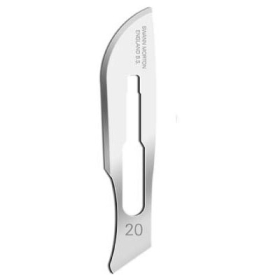
Sold: Box of 100
Incl. VAT Exl. VAT
Sold: Pack of 25
Incl. VAT Exl. VAT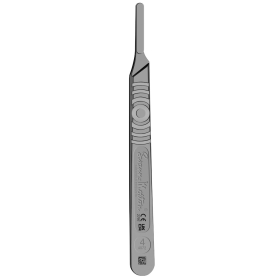
Sold: each
Incl. VAT Exl. VAT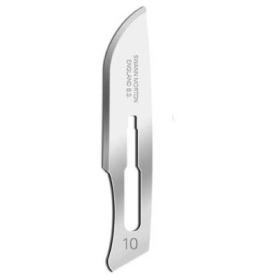
Sold: Box of 100
Incl. VAT Exl. VAT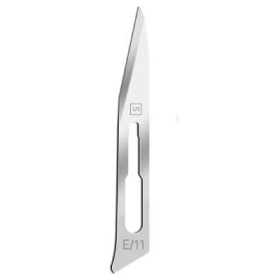
Sold: Box of 100
Incl. VAT Exl. VAT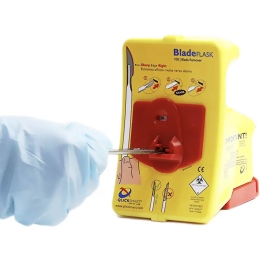
Sold: Each
Incl. VAT Exl. VATSold: Each
Incl. VAT Exl. VAT
Sold: Pack of 10
Incl. VAT Exl. VAT
Sold: Pack of 10
Incl. VAT Exl. VATSold: Pack of 10
Incl. VAT Exl. VAT
Sold: Pack of 100
Incl. VAT Exl. VAT