SHOW PRICES WITH OR WITHOUT VAT? MANY BUSINESS CUSTOMERS PREFER TO VIEW PRICES EXCLUDING VAT.
0151 448 1228 (UK)




- Home
- Orthotic Therapy
- Orthotic Components
- Functional Insole Additions
Functional Insole Additions
Functional Insole Additions from Algeos are used for orthtoic insole production and insole adaptions. The range include toe extension plates designed specifically for Morton’s Toe. These plates help provide additional support by extending under the toes, relieving pressure on the metatarsal heads and improving the alignment of the foot.
The range also includes carbon fibre plates and semi-rigid or rigid orthotic blanks, offering customisation for improved foot control. These additions are ideal for treating conditions like plantar fasciitis and metatarsalgia, ensuring patient comfort and support in everyday wear.
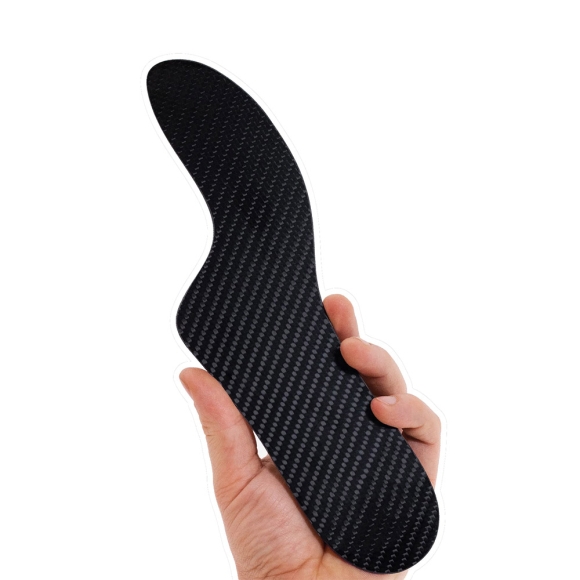
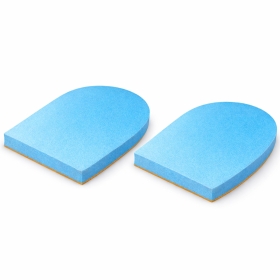

Functional Insole Additions: Range Guide
Functional insole additions are the “fine-tuning” parts of orthotic therapy - used to increase rigidity, improve motion control, reinforce weak areas, and target specific pathologies without rebuilding the entire device from scratch.
The Algeos Functional Insole Additions range includes toe extension plates (notably for Morton’s Toe), carbon fibre / composite plates and semi-rigid to rigid orthotic blanks that can be selected and combined to improve foot control and day-to-day comfort.
What this range is designed to do
- Increase forefoot rigidity / reduce painful motion (e.g. Turf Toe, hallux rigidus, Morton’s Toe) using extension plates and rigid sole plates.
- Add structural control where a device needs more “backbone” (carbon composite blanks, PPC shell blanks, glass fibre blanks).
- Support targeted fabrication workflows (templates for consistent cutting, thermoforming materials for repeatable outcomes).
Range overview
On the Functional Insole Additions category page you’ll find a focused selection of tools and reinforcement components, including:
- Insole template cutting guide set
- Carbon composite orthotic blanks (XT ranges)
- Shannon Plates (rigid sole plates) for Turf Toe / hallux rigidus
- Carbon NRG plates (Morton’s toe extension, flat plates, contoured rocker plates)
- Rigid carbon/glass composite insole option (TFC)
- Semi-rigid glass fibre blanks
- Polypropylene shell blanks (PPC)
- AFO stiffener inserts (Xstal Alexandra “boomerangs”)
- Carbon weave blank option (TL-2100)
- Carbon composite blank option (XT Ice)
Product-by-product: what to use, when and why
1) Insole Template Set (Cutting Guides) – accuracy and speed
If you’re doing any regular chairside or workshop insole fabrication, templates reduce variability and speed up repeatable production. The Algeos Insole Template Set is made from 3mm polyethylene and is positioned as an essential tool for podiatrists, orthotists and footwear professionals - supporting accurate tracing, cutting and shaping across a full size range.
Use when: you want consistent outlines for top covers, mid-layers, reinforcement plates, or full-length insoles - or you’re training staff and want repeatable results.
2) Carbon NRG Morton’s Toe Extension Plates – forefoot motion control
These are designed specifically to provide rigid support and motion control for Morton’s Toe and are also positioned for hallux rigidus and Turf Toe. They use a blend of carbon and glass fibres in a durable polyolefin matrix, with the explicit goal of limiting motion at painful toe joints while remaining suitable for prolonged use inside footwear/orthoses.
Use when: you need targeted forefoot stiffening (toe extension) to reduce painful dorsiflexion/propulsion demands and protect the MTP complex.
3) Carbon NRG Flat Plates – rigid reinforcement without a rocker profile
Carbon NRG Flat Plates are described as high-strength components for rigid support in conditions such as Turf Toe and hallux rigidus. They share the same carbon/glass fibre + polyolefin matrix approach and aim to restrict motion while maintaining structural integrity and consistent pressure distribution.
Use when: you want a “straightforward” stiffening layer (often under a top cover or integrated into a shell build) without introducing a rocker geometry.
4) Carbon NRG Contoured Plates (Rocker Design) – pressure redistribution + gait assistance
These are positioned as high-performance plates offering rigid support for Turf Toe and hallux rigidus, with a rocker design intended to redistribute pressure and aid gait correction while remaining lightweight.
Importantly for fabrication: they’re described as easy to shape and bond, with a recommended forming temperature of 210°–250°C and compatibility with conventional contact adhesives.
Use when: you’re aiming for rigid support plus a rocker effect to assist rollover and offload sensitive forefoot structures.
5) Shannon Plates (Turf Toe / Hallux Rigidus) – rigid sole plate reinforcement
Shannon Plates are described as rigid sole plate insoles made from carbon composite and polypropylene layers, aimed at reinforcement and stability - specifically for Turf Toe and hallux rigidus.
They’re also described as lightweight and unbreakable, and can be moulded to cast or adjusted to fit a surgical shoe sole.
Use when: you need a dedicated rigid sole plate solution to reduce painful forefoot motion and add robust stability to a device or surgical shoe setup.
6) XT Silverdot Carbon Composite Blanks – moulded 'functional foot orthotics' control
The XT Carbon Composite range is described as being used for moulded “functional foot orthotics” when full control is required. The material is described as rigid, manufactured from carbon fibre composite and polypropylene and positioned as a lighter alternative to heavy steel sole plates.
Multiple thickness options, “no creep,” and the ability to re-heat and re-mould.
Use when: you’re fabricating a functional orthosis that needs strong directional control and durability without adding excessive weight.
7) XT Ice Carbon Composite Blanks – similar control profile with XT Ice option
XT Ice Composite materials are likewise described for moulded “functional foot orthotics” requiring full control, using carbon fibre composite and polypropylene, and positioned as a strong, lightweight rigid orthotic material.
Use when: you want the XT composite behaviour in the XT Ice variant (often selected by workshops standardising on a specific blank option).
8) TL-Silver Glass Fibre Orthotic Blanks (Semi-Rigid) – spring-back support in a thin profile
These blanks are described as thin and light, providing strong support with spring back.
Use when: you need semi-rigid control with a lighter feel, or you’re balancing support with comfort and formability.
9) Carbon Fibre Insoles (Glass-Carbon Rigid Insole, TFC) – rolling insole use case
This product is described as a 2.5mm glass-carbon rigid insole, noted as best used as a rolling insole for diabetic patients, and described as made for shaping single curves (harder to shape around the heel).
It also explains that TFC (Thermo Formable Composite) combines localised carbon strength with thermoplastic modelling properties and can be custom formed using a heat gun or oven.
Use when: you want a rigid “rolling” insole concept, particularly where controlled rollover is clinically desired, while recognising the shaping limitations around the heel curvature.
10) Aortha PPC Foot Orthotic Blanks – efficient polypropylene shell workflow
Aortha PPC Foot Orthotic Blanks are described as pre-shaped shells made from copolymer polypropylene (PPC), selected for a balance of rigidity, impact resistance and controlled flexibility.
Use when: you’re producing custom foot orthoses that need repeatable forming and controlled flexibility (rather than purely soft cushioning materials).
11) TL-2100 Carbon Blanks – carbon weave reinforcement option
TL-2100 Carbon Blanks highlight a carbon weave for enhanced performance/support/protection, using a plain weave of 3K carbon fibres, with grades differing by carbon volume and thickness. The weave is designed for high longitudinal strength in an orthotic.
Use when: you want a weave-based carbon blank option and you’re selecting stiffness by grade/thickness in your workflow.
12) Xstal Alexandra AFO Boomerangs – composite stiffeners for AFO reinforcement
These boomerang-shaped stiffener inserts are described as high-strength composite reinforcements designed to be incorporated into ankle-foot orthotics (AFOs) to improve stability and structural integrity, suitable for long-term use under daily wear.
Use when: you’re reinforcing AFO designs and need rigid inserts to add stability without redesigning the entire brace.
Selection guide (quick clinical matching)
| Clinical need | Best-fit product types | Why it works |
|---|---|---|
| Morton’s Toe / forefoot joint protection | Carbon NRG Morton’s Toe Extension Plates | Rigid toe extension limits painful motion and stabilises the forefoot. |
| Turf Toe / Hallux rigidus | Shannon Plates; Carbon NRG Flat/Contoured Plates | Rigid sole plate / plate reinforcement reduces aggravating motion; rocker option assists rollover. |
| High control functional orthoses | XT Silverdot / XT Ice carbon composite blanks | Carbon composite + polypropylene for strong, lightweight rigidity; re-heatable/re-mouldable. |
| Semi-rigid, thinner profile support | TL-Silver Glass Fibre Orthotic Blanks | Thin/light with spring-back; good comfort/control balance and deep heel cup formability. |
| Rolling insole concept (notably diabetic use case) | Glass-Carbon Rigid Insole (TFC) | Rigid 2.5mm plate positioned for rolling insole use; thermoformable composite behaviour. |
| Repeatable polypropylene shell fabrication | Aortha PPC Foot Orthotic Blanks | Pre-shaped PPC shells support predictable thermoforming and efficient production. |
| AFO strengthening | Xstal Alexandra AFO Boomerangs | Composite stiffeners incorporated into AFOs to enhance rigidity and stability. |
Fabrication notes (practical workshop pointers)
- Thermoforming: Carbon NRG plates are described as adjustable using heat, with a recommended forming temperature of 210°–250°C.
- Bonding: Carbon NRG plates are described as bonding well with conventional contact adhesives - useful when building layered orthoses with top covers and mid-layers.
- Re-moulding: XT composite blanks explicitly note they can be re-heated and re-moulded, which helps when you’re iterating fit and control.
- Shaping limitations: The TFC rigid insole option is described as suitable for shaping single curves and harder to shape around the heel—factor that into device selection and workflow.
- Efficiency tooling: Templates reduce cutting time and errors; the set is positioned for accurate creation/customisation of insoles in clinical settings.
How to explain these additions to patients (fast, plain-English)
- 'This plate limits painful bending' (toe/forefoot plates) to reduce irritation and protect healing tissue.
- 'This layer makes your orthotic more supportive without making it bulky' (carbon/glass fibre reinforcements).
- 'This shape helps you roll through your step more smoothly' (rocker/rolling concepts where appropriate).
Summary: building better orthoses with functional additions
The Algeos Functional Insole Additions range is a practical toolkit for professionals: templates for precision cutting, multiple reinforcement plate geometries for forefoot and whole-foot motion control and thermoformable blanks (carbon composite, glass fibre, PPC shells) to support repeatable fabrication and targeted clinical outcomes.
Sold: Pair
Incl. VAT Exl. VAT