




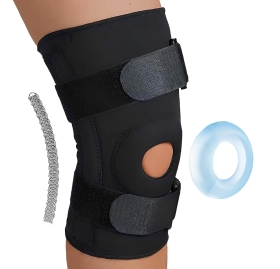
 Bodytonix Stabilising Knee Brace£17.70 £14.75
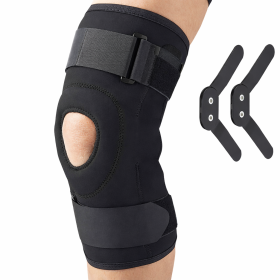 Bodytonix Hinged Knee Brace - Ligament Stabilisation Support£21.00 £17.50
Sold: Each
Incl. VAT Exl. VAT£31.20 £26.00Sold: Each
Incl. VAT Exl. VAT
SHOW PRICES WITH OR WITHOUT VAT? MANY BUSINESS CUSTOMERS PREFER TO VIEW PRICES EXCLUDING VAT.
0151 448 1228 (UK)- Home
- Orthotic Therapy
- Braces and Supports
- Knee Supports and Braces
Knee Supports and Braces
Algeos offers a comprehensive range of knee supports and braces are designed to provide support, stability and pain relief for various knee conditions and injuries.
Our product range includes hinged braces for maximum support and recovery, elastic knee supports for mild to moderate support, patella braces for targeted kneecap stabilisation, ROM braces for controlled movement during recovery and a range of compression knee sleeves for lightweight, uniform compression.
These products cater to athletes, post-surgical patients and individuals with chronic knee issues, ensuring tailored solutions for every need. Many of our devices are dispensed daily in the NHS.
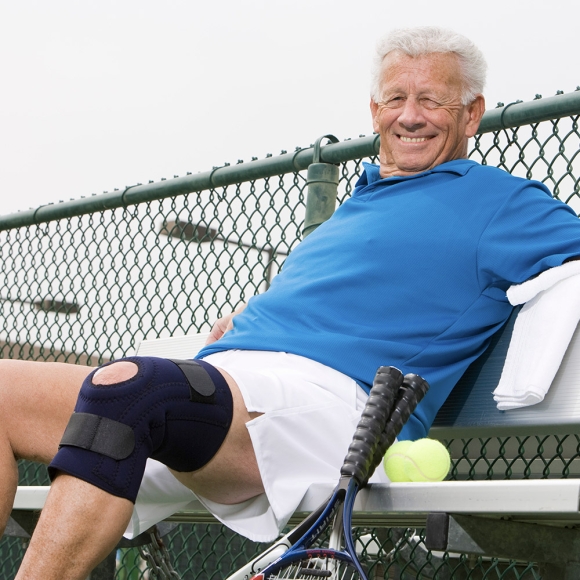


Product Selection Guide
Knee Supports and Braces are essential tools for managing knee pain, providing support, and aiding in recovery from various knee-related injuries or conditions. They come in multiple types, each designed to address specific issues.
Choosing the right brace involves understanding your specific needs and the different types available. Here’s a detailed guide to help you select the most suitable brace using products available from Algeos.
Understanding Knee Supports and Braces
Supports and braces serve various functions, such as offering support during physical activity, providing stability after an injury, or reducing pain from chronic conditions like arthritis. They are typically used to:
- Support Weak or Injured Knees: Braces can help stabilise the knee joint - providing extra support to weak or injured areas.
- Prevent Injuries: Athletes often use knee braces to prevent injuries by offering additional protection and support.
- Aid in Recovery: Post-surgery or injury, braces help in the recovery process by immobilising the knee to ensure proper healing.
- Manage Chronic Conditions: Conditions like arthritis can benefit from knee braces as they help reduce pain and improve joint function.
Choosing the Right Brace
When selecting a brace consider the following factors:
- Type of Injury or Condition
For ligament injuries or post-surgery, a Neoprene Hinged Brace or ROM Brace provides the necessary stability and control.
For patellar issues, a Patella Stabilising Brace is ideal.
For general support and mild injuries an Elastic Knee Support or Compression Knee Sleeve can offer the needed support without restricting movement. - Level of Activity
If you are highly active or engage in sports choose a brace that allows flexibility and movement, like the Compression Knee Sleeve or Elastic Knee Support.
For less active individuals or those needing significant support, the Neoprene Hinged Brace or ROM Brace is more suitable. - Comfort and Fit
Ensure the brace fits properly. Too tight, and it can restrict blood flow - too loose, and it won't provide adequate support.
Look for breathable materials, especially if you plan to wear the brace for extended periods. - Specific Needs
For those with arthritis, a brace that provides warmth and compression, like the Neoprene Hinged Brace, can help reduce pain and improve function.
Elderly individuals or those with sensitive skin may prefer a Compression Knee Sleeve for its gentle support and comfort.
Choosing the Correct Size
Knee braces come in various sizes. It's crucial to follow the manufacturer’s sizing guidelines to ensure the brace fits correctly. Measure your knee's circumference at the specified point (usually around the patella) and compare it to the sizing chart provided by the manufacturer.
Selecting the right brace involves understanding your specific needs, the type of injury or condition you have, and your activity level. For more information, consult a healthcare professional.
FAQ
1. What is the purpose of a knee brace?
A knee brace is designed to stabilise and support the knee joint. It can help reduce pain, improve movement, and protect the knee from further injury or strain - for example, following ligament damage, a meniscus tear or in cases of osteoarthritis. Learn more from the NHS.
2. How does a knee brace actually work?
Knee braces control movement by limiting harmful motion, redistribute pressure away from vulnerable areas and provide compression to support surrounding muscles and ligaments. Read more at Verywell Health.
3. Do I need to wear a brace all day?
That depends on your condition. After surgery or a serious injury, you may need to wear it most of the day. For mild pain or extra support during activity, part-time use may be enough. Always follow clinical advice - more at KneeSupports.com.
4. Can I wear the brace at night?
Sometimes yes, but proceed with caution. Wearing a brace overnight may restrict circulation or cause skin irritation if it’s too tight. Unless advised by a healthcare professional, most people only wear braces during activity. See Podobrace UK for details.
5. What’s the difference between a knee brace and a knee sleeve?
A knee sleeve or support provides mild compression and helps reduce swelling. A structured brace offers stronger stability and limits unwanted motion - better suited for injuries or chronic joint issues. Full explanation at Verywell Health.
6. How do I choose the right knee brace?
Start with your goal: injury recovery, prevention, or chronic support. Choose from sleeves (light support), wrap-around braces (moderate stability), or hinged/rigid braces (maximum control). Proper sizing is key for comfort and circulation. More guidance at GymYog UK.
7. How should I care for my knee brace?
Wash it regularly (hand or machine wash per label), avoid tumble-drying unless allowed and inspect straps or hinges for wear. Contact your clinician if you notice redness, skin irritation, or reduced support. See Northern Care Alliance NHS for advice.
8. Are there situations when I shouldn’t wear a knee brace?
Yes, if it causes numbness, swelling, tingling or skin sores. Avoid use if you have serious circulation issues such as arterial insufficiency. A brace supports treatment but can’t replace rehabilitation. More information at Verywell Health.
9. Will a knee brace heal my injury?
No, a brace supports healing but doesn’t fix the problem alone. It works best alongside physiotherapy, rest, strengthening, or medical care. Think of it as a helpful assistant - not the cure. Learn more at MedPoint.
10. When should I see a healthcare professional?
If pain worsens, swelling increases, or the brace causes numbness, discomfort, or skin changes, get assessed. Always seek professional advice if you’re unsure which brace is right for you. More insights at Cleveland Clinic.
Sold: Each
Incl. VAT Exl. VAT