





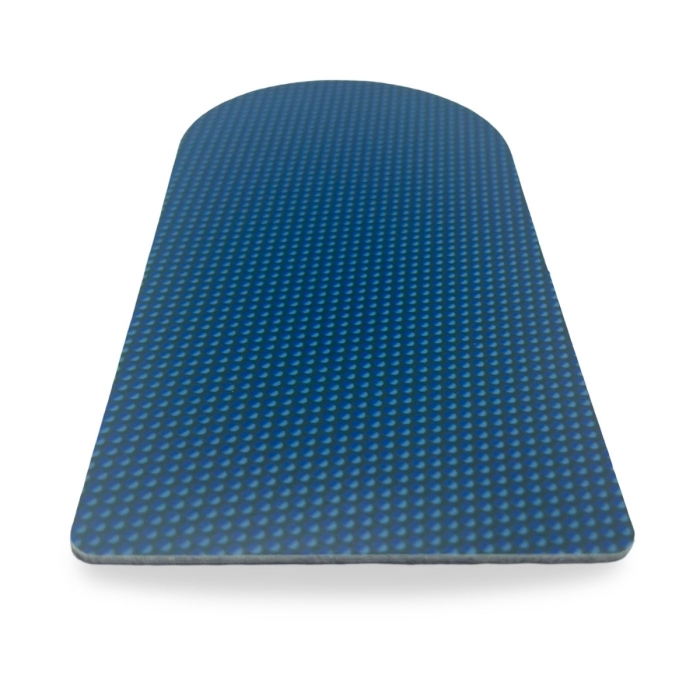
XT Bayteck Carbon Blanks for Foot Orthotics
The XT Carbon Composite range of materials are used for moulded ‘functional foot orthotics’ when full control is required.
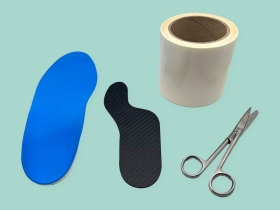
This blank has a stylish blue lamination for good looking devices.
Sold: Each
Incl. VAT Exl. VAT
Product Description
High-Performance Carbon Orthotic Blanks for Functional Foot Orthotics
Rigid carbon composite blanks designed for moulded functional foot orthotics where maximum control, strength and lightweight performance are required.
Best for: Functional foot orthoses requiring high rigidity, deep heel cups and strong directional control.
Not ideal for: Soft accommodative devices where cushioning and flexibility are prioritised over structural control.
- Carbon fibre composite reinforced with polypropylene
- Available in multiple thicknesses for graded flexibility
- Engineered for durability and resistance to fatigue
What is it?
XT Bayteck Carbon Composite Orthotic Blanks are high-performance sheets manufactured from a carbon fibre composite combined with polypropylene. They are specifically developed for the production of moulded functional foot orthotics requiring full biomechanical control.
Unlike traditional steel sole plates historically used in surgical footwear manufacture, carbon composites provide comparable rigidity at a significantly reduced weight. This allows orthotic laboratories and clinics to produce devices that are thin, strong and comfortable to integrate into a wide range of footwear.
The composite structure enables excellent strength-to-thickness performance. Each blank is formulated with a unique resin system designed to provide resistance to cracking, impact and fatigue under repeated loading. The material demonstrates no creep, no relaxing and no bottoming out under normal orthotic use.
These blanks are particularly suitable for devices incorporating deep heel cups and directional rigidity, helping clinicians and technicians achieve consistent rearfoot control and midfoot stability.
Who is it for?
XT Bayteck Carbon Composite Orthotic Blanks are intended for professional and specialist users involved in orthotic design and fabrication.
- Orthotists and prosthetists
- Orthotic technicians and fabrication laboratories
- NHS and hospital-based workshops
- Private podiatry clinics producing custom devices
- Sports podiatrists and MSK clinicians
- Footwear manufacturers integrating structural plates
- Universities and teaching institutions
- Bespoke footwear makers and specialist repairers
They are suitable for professionals who require predictable performance, structural integrity and long-term material stability in functional orthotic design.
What is it used for?
XT carbon composite blanks are used in the fabrication of moulded functional foot orthotics where high levels of control and structural strength are required.
Applications
- Functional foot orthoses for biomechanical control
- Devices incorporating deep heel cups
- Rearfoot control orthotics
- Sports performance orthoses requiring recoil and spring characteristics
- Orthotic plates in specialist or surgical footwear
- Devices for individuals requiring high rigidity due to activity level or body weight
Characteristics
- Composite carbon fibre and polypropylene structure
- High strength at reduced thickness
- No creep or long-term deformation under typical orthotic loading
- High resistance to cracking, fatigue and impact
- Superior recoil and spring-back characteristics
- Re-heatable and re-mouldable within controlled conditions
- Machines and finishes cleanly
Typical Users
Clinicians and technicians selecting XT blanks are typically producing devices where stiffness and precision control are more important than cushioning. This includes sports orthotics, high-demand occupational devices and complex biomechanical prescriptions.
How to work with it
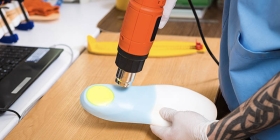
The material is supplied in blank form and is heat moulded over a positive cast or mould using vacuum forming techniques. It can be trimmed, ground and finished using standard orthotic workshop tools. When heated correctly, the material softens sufficiently to contour accurately before returning to a rigid state on cooling.
Expected use timeline
First use
Once fabricated and fitted, the orthotic device may feel firm compared to semi-flexible or accommodative materials. A short adaptation period is common as the patient becomes accustomed to the level of control and rigidity.
Ongoing use
Over weeks and months of wear, the carbon composite structure is designed to maintain its shape and functional characteristics. Unlike some thermoplastics, it does not typically demonstrate creep or gradual flattening when used appropriately within its thickness category.
Regular review is recommended as part of standard orthotic care, particularly for high-activity users.
Problem → Solution
| Common problem | How the product helps |
|---|---|
| Orthotic plate too heavy for everyday footwear | Carbon composite construction provides high rigidity at reduced weight compared to traditional steel plates. |
| Material cracking under repeated stress | Unique resin formulation offers resistance to cracking, impact and fatigue. |
| Loss of support over time due to creep | Engineered to resist creep, relaxing and bottoming out under normal use. |
| Insufficient control in deep heel cup designs | Blank sizing and directional rigidity support deep heel cup fabrication and rearfoot control. |
| Difficulty achieving spring response in sports devices | Superior recoil characteristics assist in responsive orthotic performance. |
Key benefits
- High strength-to-thickness ratio for thin yet rigid orthoses
- Multiple thickness options for graded flexibility and control
- Resistant to fatigue, cracking and long-term deformation
- Lightweight alternative to traditional metal sole plates
- Re-heatable and re-mouldable under controlled workshop conditions
- Clean machining and finishing for professional fabrication
Common mistakes to avoid
- Selecting a thickness that does not match patient weight or activity level
- Overheating beyond recommended temperatures, which may affect material performance
- Using rigid grades where accommodative cushioning is clinically indicated
- Attempting complex modifications without appropriate workshop equipment
How to work with XT Carbon Composite Blanks
- Prepare a positive cast or mould and apply a suitable cast release liner such as PTFE (Teflon).
- Pre-heat an oven to approximately 200°C (400°F).
- Place the blank on the release liner and heat for approximately 3–5 minutes until softened.
- Transfer the softened panel carefully onto the mould.
- Promptly apply vacuum and close the rubber membrane to ensure accurate contouring.
- For deeper arches, gently massage out wrinkles while material remains pliable.
- After approximately one minute, remove the moulded insert and allow it to cool.
- Trim and finish using appropriate workshop tools.
Always use heat-protective gloves and follow standard workshop safety procedures.
Technical specifications
| Specification | Details |
|---|---|
| Material | Carbon fibre composite with polypropylene |
| Thickness options | 1.6mm – XT Ease Flex (ultra thin, gentle support) 1.8mm – XT Semi Flex (very thin, comfort and control) 2.0mm – XT Semi Rigid (thin, strong support with spring back) 2.2mm – Medium Rigid (moderate support) 2.4mm – XT Rigid (rigid support for heavy use) 3.0mm – XT Ultra Rigid (for extreme activities and higher loads) |
| Flexibility range | Varies by thickness selection |
| Form | Flat orthotic fabrication blank |
| Re-heatable | Yes, under controlled heating conditions |
| Machining | Suitable for trimming and finishing using standard orthotic workshop equipment |
| Pack contents | Supplied as individual blanks (size varies by option) |
Frequently asked questions
Can these blanks be reheated if adjustment is required?
Yes. The material can be reheated and re-moulded under controlled workshop conditions. Care should be taken to avoid overheating.
How do I choose the correct thickness?
Thickness selection should be based on patient weight, activity level, footwear constraints and required level of biomechanical control.
Are carbon composite blanks suitable for sports orthotics?
Yes. The recoil and spring characteristics may assist in performance-focused devices where rigidity and energy return are desired.
Do they lose shape over time?
The material is designed to resist creep and long-term deformation under normal orthotic use.
Can they replace steel sole plates?
In many applications, carbon composites provide a lighter alternative to traditional steel plates while maintaining high rigidity.
Are they suitable for accommodative orthoses?
They are primarily designed for functional control. Softer materials may be more appropriate where cushioning and pressure redistribution are the main objectives.
Complementary product types
- Top cover materials and cushioning foams
- Adhesives suitable for carbon composites
- Vacuum forming membranes and release liners
- Grinding and finishing tools
- Posting materials for rearfoot and forefoot correction
Written by: Algeos Product & Clinical Content Team
Last reviewed: February 2026
This content is provided for professional buyer guidance and product selection support. It is not a substitute for clinical assessment or medical advice.
Frequently bought together
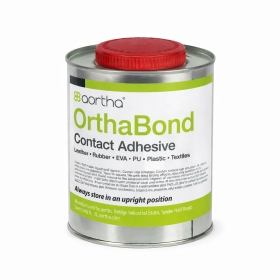
Sold: 1 Litre
Incl. VAT Exl. VAT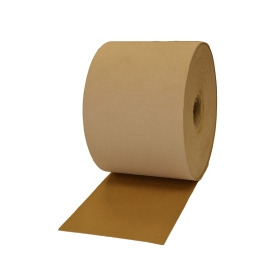
Sold: 10m Roll
Incl. VAT Exl. VAT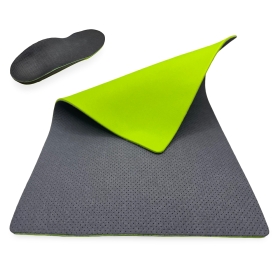
Sold: Sheet 1m x 1m
Incl. VAT Exl. VAT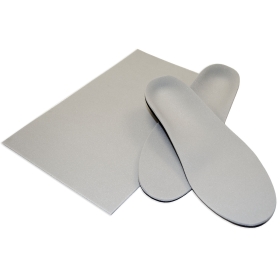
Sold: Sheet
Incl. VAT Exl. VAT
Sold: Each
Incl. VAT Exl. VAT