SHOW PRICES WITH OR WITHOUT VAT? MANY BUSINESS CUSTOMERS PREFER TO VIEW PRICES EXCLUDING VAT.
0151 448 1228 (UK)







Supports for Sprained Ankle – Buying Guide
A sprained ankle is one of the most common joint injuries, affecting people of all ages and activity levels. Whether caused by sport, uneven ground, work-related slips or everyday mishaps, ankle sprains can lead to pain, swelling, bruising and a feeling of instability that makes walking uncomfortable and unpredictable.
Choosing the right ankle support is a key part of protecting the joint, supporting recovery and reducing the risk of re-injury.
This guide explains the different types of ankle supports available in this range and how to choose the most appropriate option depending on the severity of the sprain, stage of recovery and daily activity demands.
What is an ankle sprain?
An ankle sprain occurs when the ligaments that stabilise the ankle joint are stretched or torn, usually when the foot rolls inwards. Symptoms can range from mild discomfort and swelling to significant pain, instability and difficulty weight-bearing.
While many ankle sprains recover well with appropriate care, inadequate support or returning to activity too quickly can increase the risk of chronic ankle weakness or repeat injury.
How ankle supports help recovery
Ankle supports are designed to assist healing by:
- Providing compression to help manage swelling and improve comfort
- Limiting excessive movement that may aggravate injured ligaments
- Improving joint stability during walking, work, or sport
- Restoring confidence when returning to normal activity
The level of support required will vary depending on the severity of the sprain and whether the ankle feels stable or prone to 'giving way'.
Types of ankle supports
Compression ankle supports
Compression ankle supports and sleeves are often the first choice for mild sprains or lingering swelling. They apply gentle, even pressure around the joint without significantly restricting movement.
These supports are lightweight, comfortable under footwear, and suitable for everyday use at work or during light activity.
They are commonly used in the early stages of recovery or for ongoing ankle weakness where stability is generally good but extra reassurance is needed.
Strapped and lace-up ankle braces
For moderate sprains or ankles that feel unstable, strapped or lace-up ankle braces provide a higher level of support. Designs with figure-of-eight straps or adjustable lacing help control unwanted side-to-side movement while still allowing natural walking motion.
These supports are popular for sport, rehabilitation, and return-to-activity phases, where protection is needed without full immobilisation.
Rigid ankle braces and stabilisers
Rigid or semi-rigid ankle braces offer stronger control for more significant ligament injuries. They are designed to limit inversion and eversion movements while maintaining forward motion of the foot.
These braces are often used following more severe sprains or when additional protection is needed during demanding activity.
Walking boots and ROM walkers
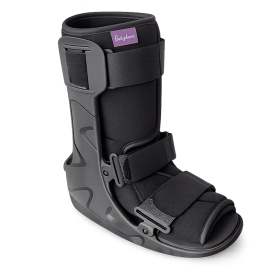
In cases of severe ankle sprain, post-injury protection, or when movement needs to be restricted, walking boots and range-of-motion (ROM) walkers provide a higher level of immobilisation. These boot-style supports protect the ankle joint, reduce loading on injured tissues, and allow safer weight-bearing during recovery.
These are typically used under clinical guidance and may form part of a structured rehabilitation plan.
Ankle taping and strapping solutions
Sports tapes and elastic adhesive bandages are included in this range for users who prefer strapping techniques or require additional support alongside a brace. Taping can offer customised support and is commonly used in sports settings or during rehabilitation programmes.
Cold therapy products
Cold therapy products, such as instant or reusable cold packs, are often used in the early stages following an ankle sprain to help manage pain and swelling. They are frequently used alongside compression supports as part of initial self-care.
How to choose the right support
When selecting an ankle support, consider the following:
- Severity of the sprain – Mild sprains may only need compression, while more unstable injuries benefit from bracing or immobilisation.
- Stage of recovery – Early protection needs often differ from return-to-activity support.
- Activity level – Work demands, sport, and daily walking all influence the level of support required.
- Comfort and fit – A support should feel secure but not restrictive, and fit comfortably inside footwear where needed.
Solution Comparisons
| Support type | Best suited for | Support level |
|---|---|---|
| Compression sleeve | Mild sprains, swelling, daily comfort | Low |
| Strapped or lace-up brace | Moderate sprains, instability, sport | Medium |
| Rigid brace | More severe ligament injuries | Medium–High |
| Walking boot / ROM walker | Severe sprains, post-injury protection | High |
When to seek professional advice
If pain is severe, swelling is worsening, weight-bearing is not possible, or symptoms do not improve over time, professional assessment is recommended.
Persistent ankle instability or repeated sprains may benefit from clinical evaluation and guided rehabilitation.
The ankle supports in this range are designed to meet a wide variety of needs - from mild sprains requiring simple compression to more significant injuries needing structured support or immobilisation.
Selecting the correct support can make a meaningful difference to comfort, confidence, and recovery outcomes. Whether you are managing an ankle sprain at home or supporting rehabilitation under clinical guidance, the right ankle support helps protect the joint and support safer movement every step of the way.
Sold: Each
Incl. VAT Exl. VAT