




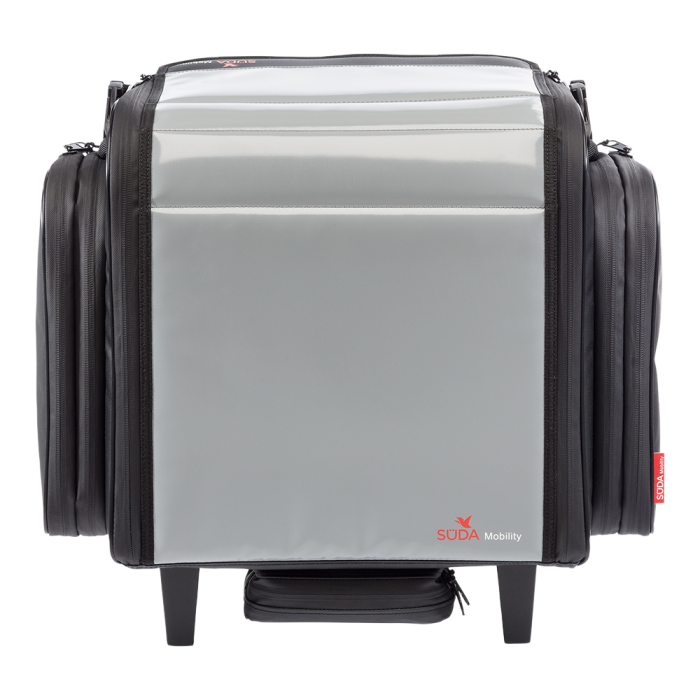
Podiatry Mobile Working Domiciliary Case
The Mobile Working Domiciliary Case can easily fit a SUDA drill, a mobile working magnifying light and a tablet.
Separate compartments (for foot switch, etc), and exterior pockets can extend for extra storage when needed.
*Contents not included*

Product Description
Mobile Podiatry Working Domiciliary Case
A compact healthcare carry case designed to keep essential equipment organised, protected and easy to transport during domiciliary visits, clinic sessions and mobile working days.
Best for: Healthcare professionals who need a practical, portable case for carrying instruments like a drill, portable lamp, consumables, paperwork, and day-to-day treatment essentials between locations.
- Compact format designed for mobility and easier handling
- Multiple compartments to support organised working
- Durable build intended for repeated professional use
What is it?
The Mobile Working Domiciliary Case is a lightweight, structured carrying unit developed for professionals who work across different care environments. It is intended to help clinicians and support staff transport the tools and supplies they need in a neat, accessible, and professional way. Whether travelling between patient homes, moving between treatment rooms, or working in community settings, the case provides a reliable base for daily essentials.
Its compact footprint makes it easier to carry than larger storage boxes or heavier rigid cases, while still offering enough room for the items commonly needed during visits or sessions. The organised internal layout supports a more efficient workflow by helping users separate products, instruments, paperwork, and accessories into logical sections.
The case is especially useful when mobility matters. In community and domiciliary work, practitioners often need to enter and leave multiple locations during the day, sometimes navigating stairs, narrow hallways, busy clinics, or limited parking access. A case that is easy to handle can make those routine movements simpler and more manageable.
Rather than acting as a large equipment trunk, this product is better understood as a compact mobile working case: something that helps the user stay organised, presentable, and prepared without carrying more than is necessary.
Who is it for?
This case is designed for healthcare professionals who work on the move and need a practical way to carry treatment essentials. It is suitable for users who value portability, structure, and a tidy working setup. Its size and layout make it appropriate for professionals who regularly move between patients, rooms, or workplaces and want fast access to the items they use most often.
Typical users may include podiatrists, foot health practitioners, therapists, community nurses, care teams, outreach clinicians, and other professionals delivering treatment or assessment away from a fixed workstation. It can also suit training environments, demonstration settings, and satellite clinics where a compact equipment case is more practical than larger static storage.
It is particularly helpful for people who want to reduce time spent searching through loose supplies. By assigning different items to designated compartments, the user can create a repeatable setup that supports faster preparation and smoother visits.
What does it help with?
The Mobile Working Domiciliary Case is designed to support day-to-day professional mobility and organisation. It does not perform a clinical treatment function, but it can improve how equipment is carried, stored, and presented during mobile work.
- Frequent travel between appointments: helps keep essential tools contained and easier to carry
- Disorganised equipment: supports a clearer storage system with separate compartments and pockets
- Time lost finding supplies: makes commonly used items quicker to locate during visits
- Need for a professional setup: presents equipment in a more structured and orderly way
- Limited workspace on site: helps the user bring only what is needed in a controlled format
- Daily wear and tear from mobile use: durable construction is designed for repeated handling and transport
For many users, the value of a case like this is not just storage capacity. It is the improvement in workflow. When the right tools are stored in the right place, visits can feel more controlled and less rushed. That can be especially useful in busy schedules where reliable preparation matters.
How does it work?
The case works by combining portability with structured storage. Its lightweight design helps the user transport equipment more comfortably, while the internal compartments and pockets help separate different types of items. This means instruments, consumables, paperwork, and accessories can be organised according to the user’s preferred routine.
In practical terms, this supports a more consistent setup from one appointment to the next. Items can be loaded in the same place each time, reducing the chance of forgetting something important or misplacing frequently used tools. The compact external dimensions also help prevent overpacking, which can improve handling and reduce unnecessary weight.
The case can be carried by hand and moved between work environments without requiring a permanent treatment base. For clinicians who regularly travel to patient homes or community sites, that flexibility is an important part of staying efficient throughout the day.
The durable construction is intended to withstand regular use, while the overall format is designed to balance storage with portability. In short, the case supports professional mobile working by helping users carry what they need in a tidy, manageable, and accessible way.
Expected use timeline
First use: Most users will find setup straightforward, especially when loading the case with the tools and consumables they use most often. The main adjustment period usually involves deciding how to organise compartments in a way that matches individual working habits.
Short-term use over the first few days: As the case becomes part of a routine, users often refine where they place heavier items, frequently used products, and cleaning materials. This can make access quicker and help improve balance during transport.
Ongoing use over weeks: With regular use, the case can support a more consistent mobile workflow. The benefits are usually seen in better organisation, easier movement between settings, and a more professional presentation of equipment. Results depend on how the case is packed, maintained, and matched to the demands of the user’s working day.
Problem → solution
| Common problem | How the product helps |
|---|---|
| Carrying loose tools and supplies between appointments feels awkward and inefficient | The compact case provides one organised place for essential items, helping reduce clutter and making transport simpler. |
| Important items are hard to find during a visit | Multiple compartments and pockets allow equipment to be sorted by type or frequency of use for faster access. |
| Heavier storage options are tiring to move during a busy day | Its lightweight design helps support easier handling for professionals working across multiple locations. |
| Equipment can look untidy or improvised in front of patients | A well-structured case supports a more organised and professional appearance during home visits and clinic work. |
| Daily transport leads to wear on ordinary bags or casual carriers | The durable construction is intended for routine professional use and repeated movement between settings. |
| Packing too much creates unnecessary strain and disorganisation | The compact size encourages a more focused, practical selection of tools and supplies for the day. |
Key benefits
- Compact dimensions make the case easier to handle in domiciliary and community settings
- Lightweight 4kg design supports better day-to-day portability
- Multiple storage sections help keep instruments and supplies organised
- Durable construction is designed for repeated professional use
- Suitable for a range of care environments including home visits and clinics
- Helps support a tidier, more prepared, and more professional working setup
This product does not have a body fit in the clinical sense, but comfort in use still matters. When packed correctly, the case should feel manageable to lift and carry rather than overloaded or awkward. A good setup is secure, balanced, and practical for the length of the working day.
As a general guide, aim for a load that feels compact and 'non-rattling' in terms of how items are arranged inside the case. Heavier tools should sit lower in the case to help stability, while frequently used items should be placed where they can be reached without rummaging.
If the case feels unbalanced, too heavy, or difficult to access quickly, review the layout before the next visit. This can reduce strain, improve usability, and help avoid damage to contents.
Common mistakes to avoid
- Overloading the case with more equipment than is needed for routine visits
- Placing heavier items at the top, which can affect balance and make carrying less comfortable
- Using the compartments without a consistent storage plan, making tools harder to find
- Delaying cleaning or maintenance after regular use, which can shorten the life of the case and affect presentation
How to use
- Review the tools, consumables, and paperwork required for the day’s visits or clinic sessions.
- Place heavier items in the lower part of the case to help maintain stability during transport.
- Use the compartments and pockets to separate instruments, dressings, accessories, and administrative items.
- Store the most frequently used items where they can be reached quickly and safely.
- Carry the case by the handle, keeping it balanced when moving between locations.
- After use, empty any disposable or used contents as appropriate, wipe the case clean with mild soap and water, and allow it to dry before repacking.
- Inspect the case regularly for signs of wear and replace damaged parts or discontinue use if safe transport is compromised.
Technical specifications
| Specification | Details |
|---|---|
| Product type | Mobile working domiciliary case |
| Dimensions | 35 x 25 x 35cm |
| Weight | 4kg |
| Construction | Durable, robust build for repeated daily use |
| Storage layout | Multiple compartments and pockets for organised storage |
| Primary use setting | Home visits, clinics, and mobile healthcare services |
| Carry style | Hand-carried by handle |
| Colour | Varies by option |
| Left / right specific | Not applicable |
| Care and cleaning | Clean regularly with mild soap and water |
| Pack contents | Mobile working case; internal accessories vary by option |
Frequently asked questions
Is this case suitable for domiciliary visits?
Yes. It is designed for mobile healthcare work and is well suited to professionals travelling between patient homes or community care settings with essential equipment.
Will it hold everything needed for a full treatment day?
That depends on the type and volume of equipment required. The case is intended to be compact and efficient rather than oversized, so it suits focused daily essentials better than very large equipment loads.
Is it easy to carry?
The 4kg case weight and compact dimensions are intended to support portability. Actual carrying comfort will depend on how heavily the case is packed and how items are distributed inside.
Can it be used in clinic settings as well as on the move?
Yes. It is suitable for clinics, community settings, and home visits, particularly where a tidy, accessible storage solution is useful.
How should I organise the contents?
A practical approach is to place heavier items lower down, keep delicate or frequently used items in easy-reach compartments, and use separate sections for instruments, disposables, and paperwork.
Is it designed for outdoor or rough transport conditions?
It is built for professional daily use, but it remains a hand-carried case. It is best used in a controlled professional context rather than as heavy-duty field luggage.
How do I maintain it?
Regular cleaning with mild soap and water, plus routine checks for wear and tear, will help keep the case presentable and suitable for ongoing professional use.
Complementary / pairing suggestions
This case can work well alongside other mobile practice essentials that support organised, professional care delivery. Suitable pairings may include instrument trays, disposable consumable organisers, protective pouches for small tools, documentation folders, clinical waste accessories, and compact treatment supports used during home visits or satellite clinics.
For users aiming to create a more efficient mobile setup, it can also be paired with product types that help separate clean items from used items, improve inventory checks, or protect delicate instruments during transport. The most practical combination will depend on the user’s role, treatment style, and the number of appointments completed in a typical day.
Content credibility
Written by: Algeos Product & Clinical Content Team
Last reviewed: March 2026
This content is intended as buyer guidance to help users assess product suitability, storage practicality, and everyday use. It is not diagnosis or medical advice.
Note for image with products - contents not included
Frequently bought together
Sold: Each
Incl. VAT Exl. VAT
Sold: Each
Incl. VAT Exl. VAT
Sold: Each
Incl. VAT Exl. VAT