





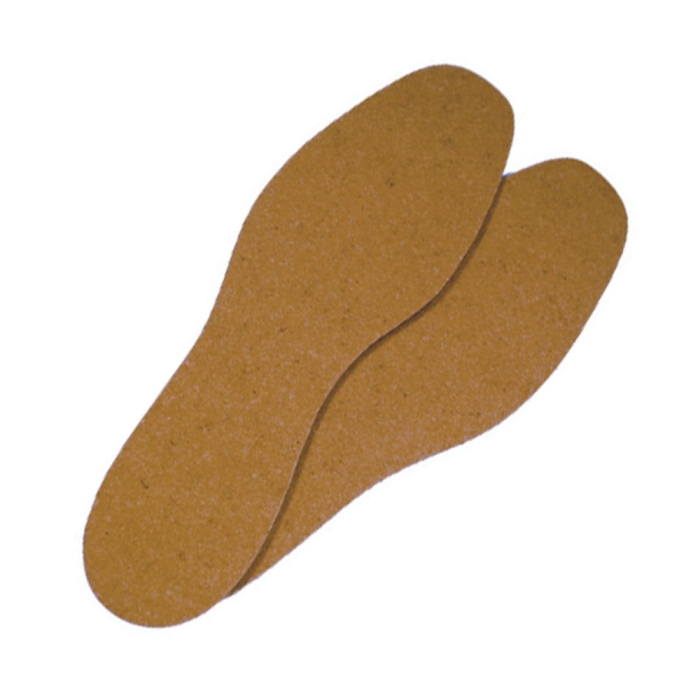
Leatherboard Insoles for Simple Insoles
Sold: Pair
Incl. VAT Exl. VAT
Product Description
Durable Leatherboard Base Insoles
Premium-quality leatherboard insoles supplied in pairs, designed to provide a strong, supportive base for custom and semi-custom orthotic fabrication.
Not ideal for: Direct cushioning without modification or applications requiring soft shock absorption alone.
- Firm structural support
- Moisture-absorbing leatherboard material
- Easy to cut, shape and bond
What is it?
Leatherboard Insoles are flat, full-length insole bases manufactured from durable leatherboard material. They are designed specifically for professional orthotic use, offering a stable platform onto which corrective, accommodative or supportive additions can be applied.
The firm construction provides structural integrity within footwear while remaining workable in clinical and laboratory settings. Supplied in pairs, they are suitable for bilateral applications and can be adapted to suit a wide range of shoe types and patient requirements.
Leatherboard has long been valued in orthotic fabrication due to its balance of rigidity, workability and moisture management. These insoles continue that tradition, providing a reliable base layer that can be modified with pads, wedges, covers and top layers.
Who is it for?
Leatherboard Insoles are intended for professional and technical users involved in orthotic fabrication and footwear adaptation.
- Podiatrists and foot health practitioners
- Orthotists and prosthetists
- Orthotic technicians and fabrication laboratories
- NHS and hospital-based workshops
- Sports podiatrists and MSK clinicians
- Specialist shoe repairers and footwear technicians
- Bespoke footwear makers
- Universities and training institutions teaching orthotic fabrication
They are particularly suitable where a firm foundation is required to support the addition of valgus pads, arch supports or other corrective elements.
What is it used for?
Applications
- Base layer for custom orthoses
- Semi-custom orthotic modifications
- Integration of valgus or varus wedges
- Arch support build-ups
- Stabilisation within everyday footwear
- Workshop-based footwear adjustments
- Educational training in orthotic construction
Characteristics
- Firm and supportive leatherboard construction
- Designed to accept bonded additions
- Moisture-wicking properties
- Resistant to wear in clinical use
- Easily cut and shaped with standard orthotic tools
- Supplied in matched pairs
Typical Users
Clinicians fabricating custom insoles chairside, laboratory technicians producing semi-custom devices, and footwear professionals undertaking structural shoe modifications commonly use leatherboard bases as a dependable starting point.
How to work with it
The insoles can be trimmed to size using standard cutting tools. Additions such as pads, wedges or top covers can be bonded securely using appropriate adhesives. Once shaped and assembled, the insole can be fitted into footwear and adjusted as required to optimise comfort and function.
Expected Use Timeline
First use
Following trimming and any required additions, the insole can be fitted immediately into appropriate footwear. Initial fitting should include assessment of comfort, alignment and shoe compatibility.
Ongoing use (weeks and months)
Leatherboard provides a durable base suitable for regular wear. Over time, periodic review may be required to assess structural integrity, particularly in high-demand users or where significant corrective additions are applied.
Moisture-wicking properties help maintain comfort during daily wear, though insoles should be allowed to dry fully between uses where possible.
Common Problems and How Leatherboard Insoles Help
| Common problem | How the product helps |
|---|---|
| Need for a firm base for orthotic additions | The structured leatherboard provides a stable platform for bonding pads and wedges. |
| Inadequate arch support in footwear | Allows integration of custom arch build-ups and valgus additions. |
| Moisture build-up inside shoes | Leatherboard material helps wick moisture away from the foot. |
| Insoles breaking down under regular use | Durable construction resists wear in demanding clinical applications. |
| Difficulty shaping rigid bases | Material can be cut and contoured using standard orthotic tools. |
Key Benefits
- Provides firm structural support for custom orthotic fabrication
- Accepts bonded additions such as valgus pads and wedges
- Moisture-absorbing properties support foot comfort
- Durable and resistant to wear in clinical settings
- Easy to cut, shape and customise
- Supplied in pairs for balanced bilateral application
Common Mistakes to Avoid
- Using as a standalone cushioning insole without appropriate top cover where comfort requires additional padding.
- Failing to match the insole thickness and rigidity to the footwear type.
- Overbuilding corrective additions without checking shoe depth and fit.
- Neglecting periodic review in high-demand or athletic users.
How to Work With Leatherboard Insoles
- Select the appropriate size pair for the intended footwear.
- Mark trimming lines to match the shoe last or existing insole template.
- Cut carefully using suitable orthotic cutting tools.
- Sand or smooth edges where necessary for a clean finish.
- Bond corrective elements such as valgus pads, arch supports or wedges using appropriate adhesive.
- Add a top cover if required for comfort or hygiene.
- Fit into footwear and assess alignment and comfort.
- Review with the patient and adjust as clinically indicated.
Technical specifications
| Specification | Detail |
|---|---|
| Material | Leatherboard |
| Construction | Firm, supportive base layer |
| Fit | Universal full-length insole (trim-to-fit) |
| Pack contents | Supplied in pairs |
| Colour | Varies by batch |
| Care | Allow to dry naturally; avoid prolonged saturation |
| Intended use | Base for custom or semi-custom orthotic fabrication |
Frequently Asked Questions
Are these insoles ready to wear without modification?
They are primarily designed as a base for orthotic additions. For comfort, many applications will require additional padding or top covers.
Can valgus pads be bonded directly to the leatherboard?
Yes. The firm surface is suitable for bonding corrective elements using appropriate adhesives.
Do they absorb moisture?
The leatherboard material helps wick moisture away from the foot, supporting comfort during wear.
Are they suitable for sports footwear?
They can be used in sports footwear where a firm orthotic base is required, provided adequate shoe depth and compatibility are confirmed.
How durable are they?
They are built for durability in clinical and workshop settings. Longevity depends on patient activity levels and the type of additions applied.
Can they be trimmed to different sizes?
Yes. They are designed to be cut and shaped to fit a range of shoe sizes and styles.
Complementary Products
- Valgus and varus wedges
- Arch support pads
- Top cover materials
- Orthotic adhesives
- Grinding and finishing tools
Written by: Algeos Product & Clinical Content Team
Last reviewed: February 2026
This content is provided for buyer guidance and professional reference. It is not a substitute for clinical assessment, diagnosis, or medical advice.
Frequently bought together
Sold: Pack of 5 Pairs
Incl. VAT Exl. VAT
Sold: Pair
Incl. VAT Exl. VAT
Sold: Pair
Incl. VAT Exl. VAT
Sold: 1 x 1.5m Sheet
Incl. VAT Exl. VAT
Sold: Sheet
Incl. VAT Exl. VAT
Sold: Pair
Incl. VAT Exl. VAT